

Michael Hudson : Vladivostok speech
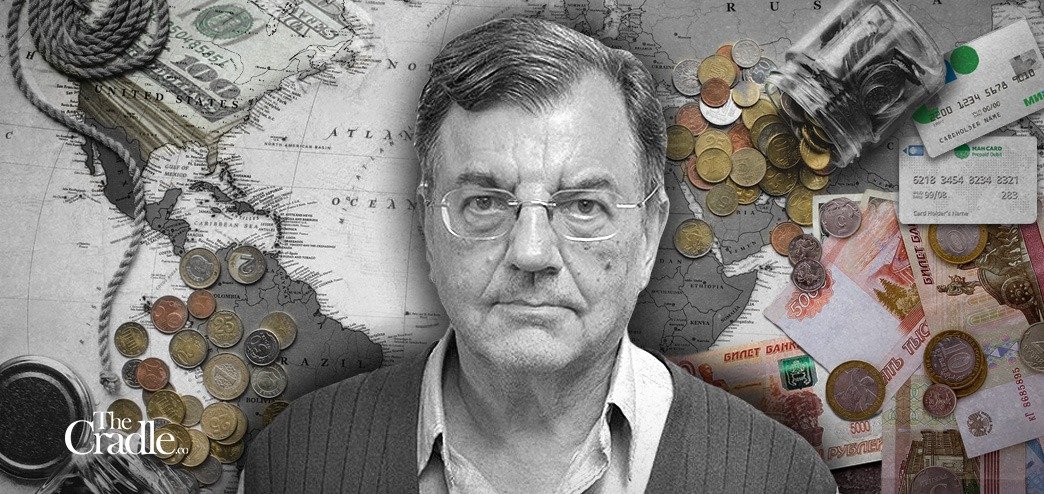
Vladivostok speech, September 1, 2026.
The Coming world depression requires a New International Economic Order led by Russia, China and Iran.
1. My comments will be on:
How today’s oil crisis will cause a wave of financial defaults that will cause a world financial depression some time this autumn. This crisis will disrupt the foreign trade and financial domestic investment that is the focus of this conference.
The question is, how will this crisis be resolved? And how will the governments of Russia, China and their neighboring Asian countries deal with this? What kind of new trade and financial arrangements will have to be made?
You all know that America’s blockage of Persian Gulf oil exports has disrupted 25% of the world’s trade in oil, fertilizers and also food. Prices for these commodities will soar so high that many oil-based industries will have to close down, because they cannot make a profit at the new, higher oil prices.
On the national level, governments will be forced into budget deficits to subsidize the price of electricity so that their citizens can heat and light their homes and businesses can remain open.
There is no way that many countries can afford to pay higher prices for their oil, fertilizer and food imports, and also pay their foreign debts falling due. Most of these debts are in dollars.
Many countries in Asia and the Global South will be forced to make a political choice: They cannot afford to subsidize their industry and citizens to afford this higher-priced oil if they also have to pay their scheduled foreign debt service.
So something has to give. Countries will face a choice between paying their dollarized debts and protecting their own economies by buying the food and fuel that they need and providing social support to help their citizens get through this crisis.
2. This crisis will be a political catalyst in ending the existing U.S. dollar-centered world monetary order, and with it the role of the IMF. As the major survivors of this crisis, the Russian and Chinese governments will naturally take the lead in this new order.
Contrast this with what happened in the 1980s when Latin American debt defaults began spreading after Mexico’s default on its bonds in 1982. The Brady debt writedowns were arranged by private bondholders themselves, trying to salvage what they could.
The Asian debt crisis of 1997 led to foreign takeovers, and forced countries to submit to IMF loan condition demanding that countries who borrowed had to neoliberalize their economic policies. There was a great property transfer to international creditors who bought up many Asian assets and tried to press Russia to sell off more assets.
3. So how will the financial crisis be resolved this time?
The world needs new rules for the monetary and balance-of-payments relations between surplus and deficit countries in a way that will stop forcing indebted economies to suffer chronic austerity and depression. The great problem is how to deal with new credit by governments – in a way that avoids transferring property and economic control to the creditor nations.
The only ways to do this is to wipe out the existing backlog of dollarized debts. If Russia and China are to provide the credit to enable their trade and investment partners, including those in the Belt and Road Initiative, it would be unreasonable for their support to be diverted to pay foreign bondholders for the enormous backlog of loans that have retarded the growth of the countries that are most seriously affected by America’s Oil War that is at the root of today’s international trade and financial instability.
This involves not only dedollarizing the world economy. It requires creating an alternative to the pro-creditor rules that U.S. diplomats created back in 1945.
It is obvious that countries will have to take on new debt to survive the oil crisis. The new arrangements by Russia and China in their balance-of-payments relations with
Asian and Global South countries will have to confront the problem of how to create an international credit system that will enable trade-surplus and investor nations such as China and Russia to achieve fair mutual gains that will not impose debt dependency on their trade partners and debtors in the way that the U.S. dollarized order has done.
4. Solving this problem shaped the debate in 1944 between John Maynard Keynes on behalf of the British Treasury and his American counterparts regarding how to shape the postwar economic order, above all between creditor and debtor countriess.
Britain worried that the United States would run a trade surplus and that Britain and other European countries would run deficits.
Britain saw that it would lose control of its empire and its Imperial Preference System that obliged India and former colonies to spend the monetary reserves that they had accumulated during World War II in Britain. Under the U.S. free-trade rulers, these savings were spent largely on U.S. exports or invested in the United States.
Keynes worried that an increasingly wealthy United States. America would accumulate rising creditor claims on Britain and the rest of Europe. Acting on behalf of the British Treasury, he proposed an institution that could create its own supra-national book-keeping system of credit and debt swaps among central banks by a fiat bancor serving as its money-of-account. The basic principle of such fiat credit was much like what the IMF created with its Special Drawing Rights. But instead of simply being lent to debtor countries to pay their creditors (and thereby support their exchange rates) on the condition that they impose self-destructive austerity plans, Keynes called for the adjustment to take the form of a write-down of the creditor nations’ financial claims on debtors, making such payment unnecessary.
This writedown would extinguish the creditor nation’s accumulation of official savings that took the form of its claims on the most deeply indebted member countries that could not pay except by imposing economically destructive austerity and privatizing the public domain by selling it to investors in the creditor nations. Failure to do this would force a halt the public spending and credit needed to sustain their growth, concentrating it in the creditor nations – whose monetary inflows would be increasingly likely to be used to inflate financial bubbles and crashes.
This framework seeks to avoid the buildup of a new debt that will polarize the international economy instead of promoting mutual gains from investment. The U.S. support for an IMF called for debtor countries to pay simply by slashing government spending and taxing labor and industry to lower prices to a degree that would starve the home market and, by doing so, “freeing” domestic production to be exported to earn the foreign exchange to pay their debts, as if all output and production were “fungible.”
Private-sector creditor interests have a blind spot. They fail to acknowledge the adverse impact of austerity on productivity, public infrastructure development and the rising living standards, education and health investment needed to make labor more productive. Austerity does not succeed in its purported aim to enable debtor countries to pay their debts. Austerity plans drives them even further into debt – and this debt simply finances their trade dependency.
And this trade and debt dependency has been used as a lever to force countries to sell off their public domain to the creditor nations. The result has been a vast post-1945 asset grab that has polarized the international economy instead of helping “developing nations catch up.”
The United States already held 75% of the world’s monetary gold reserves, and would raise this proportion to 80% by the time it embarked on the Korean War in 1950-1951. That threw it into chronic balance-of-payments deficit, and finally drove it off gold in 1971.
DESCRIBE THE US TREASURY BILL STANDARD.
It simply prints dollars and tells other countries to invest them in buying U.S. Treasury bonds and securities. This recycling has financed the U.S. military Cold War spending, and also its trade deficits resulting from its deindustrialization since the 1980s as its economy has sought to privatize public infrastructure and the allocation of money and credit creation.
WHAT IS THE MORAL BASIS FOR A NEW ECONOMIC ORDER FINANCED LARGELY BY CHINA, RUSSIA AND IRAN?
Mutual aid. This can be achieved by creditors taking an equity position in the economies of countries whose public infrastructure they will finance through such programs as China’s Belt and Road initiative. The aim is for loans to be made for productive purposes, not simply to enable countries to pay debts that result from the kind of past trade and debt dependency that has characterized the post-1945 U.S.-centered world financial order.
IN SUMMARY: The pro-creditor basis of international monetary and financial relations that has governed the past century will be replaced by a de-dollarized system in which the interests of debtor countries are protected from the ability of creditors to insist that payment of foreign debt service must be placed over the domestic objectives of growth.
https://telemost.yandex.ru/j/36937748728100
Which countries are the most vulnerable? The oil-dependent and food deficit countries. Asia and the Global South.
They will have to depend on credit from Russia and China, and take on debts to Iran that may be guaranteed by China.
They are the only nations that are willing to take equity participation in infrastructure under the new system instead of traditional debt bondage.
This is a realistic prospect because the system of aid for productive mutual gain will compensate China and Russia.
It will isolate them and their trading partners from the West. And in time, this will enable them to avoid the military expense of protecting themselves against America’s threat of war and the use of the only lever that the United States has left to influence foreign countries: Its ability to create chaos, such as by President Trump’s Liberation Day tariffs and his war to create a choke point in the world oil trade by attacking Russia, Venezuela and Iran.
Question after the presentation:
Michael, you describe a scenario where high oil prices and debt burdens push countries in the Global South toward default. Which countries are most vulnerable today?” “And who, in your opinion, is willing to take equity participation in infrastructure under the new system instead of traditional debt bondage? Is this scenario realistic in the coming years?
Currency Killer Part 2 Howard Lutnick https://theleahfiles.substack.com/ (the link to #1 is in 2) leah dissects tether & its tools: bessent, lutnick & trump. it’s unclear if leah knows tether relocated from the virgin islands, what is obvious is that leah knows how to follow money…but has not yet investigated… Read more »
Michael does not have a small ask .