

China vs. United States – Two Historic Anniversaries – Two Different Destinations
By Peter Koenig
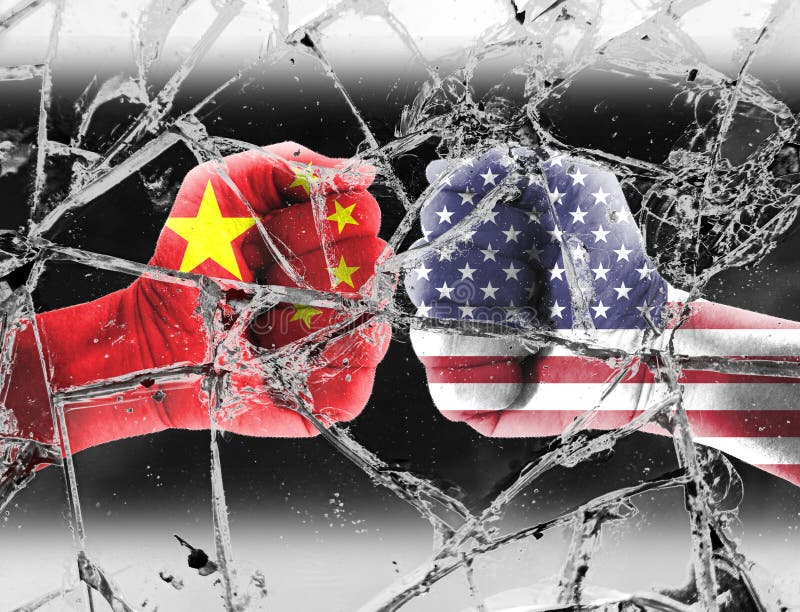
Today, 1st of July 2026, is the 105th Anniversary of the Chinese Communist Party (CPC). This coming Saturday, 4th of July, is the 250th Anniversary of the United States Independence. Two Historic Anniversaries of the world’s two strongest economies – two different directions.
China has achieved her greatness in science and technological accomplishments, i.e., the globe’s nominally second largest economy, in a mere 77 years, since the Communist Party’s Revolution in 1949.
The US needed 250 years to become the world’s nominally largest economy. The accent is on nominally, because that is the linear western approach of measuring all countries, all cultures, all races and all humanity, with the same two-dimensional measuring stick. It is like putting apples, pears, berries, plums, cherries….. in the same colorful fruit basket, pretending they are all the same.
If one measures however, the output of these two countries – of all countries – with a slightly more differentiated criteria, namely one that accounts for what a country’s output can buy at home, the one indicator that really counts in practical terms, the economic term is Purchasing Power Parity (PPP), China had already surpassed the United States 10 years ago, to be number One today.
How come that the country celebrating 105 years of her centrally steered Communist Party, that has led her people through one of recent history’s most important Revolutions, has achieved not only more economic purchasing power, but also a much higher level of societal equality, consciousness and contentment, than the country that was founded 250 years ago on the principles of “Freedom and Democracy” and federal autonomy?
The explanation may be not just “simple”. Its complexity is linked to two fundamentally different philosophies. Basically, in the recent few thousand years, the western individual short-term and instant gratification way of Judo-Christian thinking, is confronted with eastern long-term peaceful planning, based on the six thousand year old Dao philosophy, of communal and shared benefits. “Judo-Christian” religions include, Judaism, Christianity, and Islam. They are the largest and most famous monotheistic faiths (collectively called the Abrahamic religions).
This instant-gratification way of thinking is also one of the most violent and aggressive societal life forms, the world has known in the last several thousand years.
–
The western mainstream describes the differences of these two crucial anniversaries like this:
“The [Chinese] CPC anniversary is about the party’s historical role in making and directing the state, whereas the American anniversary is about the people’s right to found a state by rejecting imperial rule. So, although both are major national commemorations in the same week, they point into opposite directions: one emphasizes disciplined political leadership as the source of national achievement, the other emphasizes liberty as the source of political legitimacy.”
A more neutral interpretation would conclude quite the opposite.
The CPC’s continuous leadership has given the state a direction of priorities, commencing with nutritional self-sufficiency, followed by production and services aiming at equal distribution, to reach full autonomy of goods and services. Once this settles the needs of the home land, the frontiers may open for trade. China has used a similar approach more than 2,100 years ago with the original Silk Road, spanning more than the huge Eurasian Continent.
It happened during the Chinese Han Dynasty, when Emperor Wu dispatched imperial envoy Zhang Qian to explore Central Asia. This created a 6,400+ kilometer trade superhighway stretching from Chang’an (modern Xi’an) all the way to the Mediterranean. It was a peaceful road for trading, simultaneously connecting people of different cultures and races.
Today, Chinese workers develop technologies for the good of the people (the state), not primarily for the private sector, nor for instant profit. The last 105 years have shown that almost endless socioeconomic growth is possible, if the idea is defended by a government that aims at wellbeing and benefits for all, instead of enriching a few, at the cost of many.
The process is not finished and may be never ending, as we are living in a dynamic world. But by and large, China has achieved a (non-material) Happiness Indicator that surpasses by far “contentment and happiness” (same criteria) in the western openly capitalist world, meaning individualized and mostly unshared benefits / profits, creating jealousy and greed, two negative attributes of human beings.
The US foundation was based on the ideal of rejection of imperial rule. However, the contrary has happened. The US has become the most aggressive, destructive, imperial ruler in the last 250 years, not just internally, mostly externally, by conquering countries by subjugation and modern colonialism, exploiting their riches, a trait, further enhanced by a 1913-created pyramid or Ponzi-type monetary system, that allows indebting countries for further, deeper exploitation and literal enslavement.
In this western individualistic “me-me-me society”, there are hardly any legally enforced limits to regulate human behavior. As of today, the principle of “the stronger wins”, or more colloquial “Dog-eats-Dog”, is still very much alive and kicking, and ever more so, as greed increases proportionately with surging possessions.
There is a contradiction in the theoretical ideal, “the rejection of imperial rule” and the people’s right to unlimited possessions, to acquire with whatever means they can. Corruption, though officially illegal, is a big tool in this process. Exploitation of “inferior” economies is of the order. It is made possible by the mentioned Ponzi-model monetary scheme (the US dollar), initiated by the “ancient” City of London (CoL).
The district’s (CoL) modern identity as a premier global financial hub. It began to crystallize toward the end of the 16th century, accelerating rapidly in the 18th and 19th centuries as the hub of the British Empire. Ever since, the City of London has gradually taken over financial control of the world. Today, the CoL is no longer part of London nor the UK, but is fully autonomous like the Vatican, thus escaping constitutional laws of their respective host countries, the UK and Italy. The City of London and the Vatican, also a large financial domain, work closely together.
Even though the dollar dominates with currently over 60% the world’s trading currency, this western system is not sustainable. It has no friends, because it creates enemies through sanctions and dollar- and debt-linked dependencies. It is colonialism in “modern ways”. Whereas China, is not interested in territorial expansion and exploitation but rather in international trading according to the “win-win” principles.
Today’s China has re-invented the ancient Silk Road, in the form of the Belt and Road Initiative (BRI). The BRI was launched in 2013 by Chinese President Xi Jinping. He first proposed the overland “Silk Road Economic Belt” during a speech in Kazakhstan in September 2013, followed by the “21st-Century Maritime Silk Road” during a visit to Indonesia in October 2013.
Originally called the “One Belt One Road” (OBOR) strategy, it was officially rebranded as the Belt and Road Initiative (BRI) in 2016 to convey a more collaborative global framework.
That is what China’s philosophy stands for: Collaboration, instead of domination. In the last ten years, China’s BRI has acquired more than 180 members. As of July 2026, China’s BRI has approximately 152 member countries and over 30 international organizations that have signed official cooperation documents or Memorandums of Understanding (MoUs) with China. A true initiative to PEACEFULLY connect people, societies, cultures, through infrastructure, trade and research.
The west, led by the United States, celebrating on 4 July her 250th Anniversary, in the last 80 years or so, has started directly or indirectly untold numbers of wars and conflicts, causing between 30 and 40 million deaths around the globe, generating untold instant-profit for the war industry.
China’s international collaboration, mostly through the BRI, has shaped a peaceful connection between more than 180 countries and international organizations, aiming at a world in Peace and working towards shared benefits for all.
——–
Peter Koenig is a geopolitical analyst, regular author for Global Research, and a former Economist at the World Bank and the World Health Organization (WHO), where he worked for over 30 years around the world. He is the author of Implosion – An Economic Thriller about War, Environmental Destruction and Corporate Greed; and co-author of Cynthia McKinney’s book “When China Sneezes: From the Coronavirus Lockdown to the Global Politico-Economic Crisis” (Clarity Press – November 1, 2020).
Peter is a Research Associate of the Centre for Research on Globalization (CRG). He is also a non-resident Senior Fellow of the Chongyang Institute of Renmin University, Beijing.
July 4th is not about Americans “rejecting imperial rule.” That is one of the founding lies of the self-styled “Land of the Free.” July 4th is about replacing British imperial rule with American imperial rule. The British Empire spawned its bastard child, the American Empire of today. Or as a… Read more »