

UN Security Council : Russia and China on West Asia, specifically the Occupied Palestinian Territories
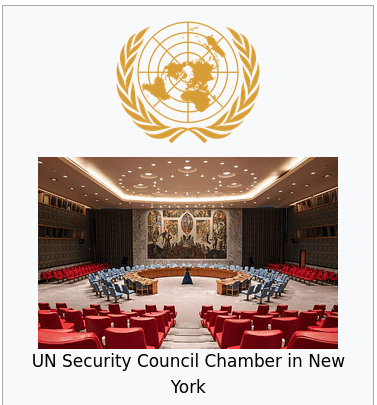
Statement by Chargé d’Affaires a.i. Anna Evstigneeva at a UNSC Briefing on the Situation in the Middle East, including the Palestinian Question
Madam President,
We are grateful to Ramiz Alakbarov, Deputy Special Coordinator for the Middle East Peace Process, for his detailed assessment of the situation in the Occupied Palestinian Territory (OPT) in the context of the implementation of Security Council Resolution 2334. We have thoroughly studied the Secretary-General’s written report on this matter. We have also closely listened to the civil society representative.
Regrettably, what we have heard today gives us no cause for optimism. The Israeli authorities have been consistently pursuing a policy of consolidating their administrative and legal control over the OPT. The pace and scale of settlement construction and expansion have long since broke all records. There have been taken unprecedented decisions to proceed with construction in the E1 area and to revise the legal status of Areas A and B, in violation of the Oslo Accords. These steps are aimed at creating irreversible facts on the ground and further shrinking the territory under Palestinian control. Russia’s position is unequivocal: Israeli settlements in the West Bank are illegal, and Israel must immediately halt all settlement activity in the OPT.
However, it is impossible to get accustomed to the acts of violence in the West Bank, which at times take on the most horrific forms. It is unbearable to look without tears at the images of happy parents holding their smiling seven-month-old son, Sam Abu Haikal, knowing that he was killed by gunfire from Israeli soldiers who believed that the approaching vehicle carrying the family posed a threat to them. As Under-Secretary-General Tom Fletcher has observed, children die in large numbers when they begin to be viewed as “collateral damage.” Under no circumstances should the killing of children become part of everyday reality. If it does, humanity is doomed.
We take note of the statement by the Israel Defense Forces (IDF) that an investigation into this incident is under way. We call for those responsible to be held accountable to the full extent of the law.
The same approach should apply to all other incidents of violence in the West Bank, regardless of whether the perpetrators are settlers, Israeli security forces, or Palestinians. No one should be above the law. Regrettably, as noted in the UN Secretary-General’s report, the number of daily attacks by settlers has risen to an unprecedented level, with many of them occurring in the presence of Israeli security personnel. Based on the Secretariat’s finding, one can conclude that settler violence has become systematic in nature, and that the judicial and law enforcement institutions are not taking any meaningful steps to address this problem.
At the same time, we share A. Guterres’s concern regarding legislative measures expanding the grounds for imposing the death penalty in the West Bank and Gaza Strip. We call on the Israeli authorities to reconsider this decision.
Madam President,
The situation in Gaza is no better. The process of implementing the arrangements on a ceasefire in the Gaza Strip agreed upon last October between Israel and Hamas continues to stall. UN Security Council Resolution 2803, which endorsed President Trump’s peace plan for a settlement in the Palestinian enclave, unfortunately remains a dead letter. So far, the advent of a lasting peace is hardly discernible. Time and again, we receive new reports of IDF operations in Gaza, resulting in further civilian casualties. Equally alarming is the reported arbitrary expansion by Israelis of the territory under their control. Significant restrictions on the import and delivery of humanitarian aid remain in place.
The International Stabilization Force (ISF) has yet to be established. No agreement has been reached on a mechanism for the disarmament of Hamas. There is still no clear prospect for the complete withdrawal of Israeli troops from the enclave. Nor has any specific timeline been set for the transfer of administrative authority to the Palestinian technocratic body, the National Committee for the Administration of Gaza (NCAG), which is still unable to move from Cairo to the Strip. Obviously, there is currently no talk of any practical steps to begin reconstruction work in the Gaza Strip. In essence, the US administration’s peace efforts on the Palestinian track have been put “on hold.”
Against this backdrop, the US-Iran understandings and the relief of tension across the Greater Middle East offer hope that the current stalemate on the Palestinian-Israeli track can still be surmounted. A negotiated solution is the only viable option on this path, since military means alone cannot fully address legitimate security concerns of the parties concerned. Indeed, for all the difficulties in implementing the agreements brokered by the United States, Qatar, Egypt, and Turkey, if it were not for a diplomatic solution, the human toll would have been far greater, and Israeli hostages would have continued to languish in the dungeons of Gaza. However, we must not be content with what has been achieved, and we should continue vigorous efforts to bring the parties closer together, while relying on a universally recognized framework of international law.
We stand convinced that the two-State solution to the Palestinian question is still feasible to implement. A comprehensive settlement of the Palestinian-Israeli conflict is the only way to guarantee lasting peace for all the peoples of the region, whereby the State of Palestine, within the 1967 borders and with its capital in East Jerusalem, will coexist in peace and security with Israel. Russia stands ready to contribute in every possible way to international efforts aimed at achieving this outcome.
Thank you.
Remarks on the Palestinian-Israeli Issue by Ambassador Fu Cong at the UN Security Council Briefing
Madam President,
I thank Deputy Special Coordinator Alakbarov, Mr. Itay Epshtain, and Ms. Mariam Barghoutiis for their briefings.
The question of Palestine lies at the heart of the Middle East issue. It is a matter of international fairness and justice and has a direct bearing on peace and stability in the Middle East. Today, violence and death continue in Gaza, tensions remain high in the West Bank, and the foundations of the two-State solution are being steadily eroded. The prospects for resolving the question of Palestine are facing even greater challenges. The international community must reverse this negative trajectory, take robust action to end the suffering of the Palestinian people without delay, and ensure that justice is done for Palestine. China wishes to highlight three priorities.
First, peace and stability must be restored in Gaza. The ceasefire agreement has yet to bring genuine peace. Israel continues its bombardment and military operations while expanding its military occupation. More than 1,000 Palestinians have been killed in Gaza since then, with, on average, one child losing his or her life every day. The humanitarian situation in Gaza remains catastrophic. Essential supplies are in critically short supply, sanitary conditions are appalling, and more than two million people are struggling to survive amid the rubble. History has repeatedly shown that security is indivisible. No country can build its own security on the insecurity of others. Military occupation and pressure can never bring lasting peace. We call on all parties, Israel in particular, to fully implement the ceasefire agreement and achieve a genuine and lasting ceasefire in Gaza. Israel must fulfill its obligations under international humanitarian law as the occupying Power, lift restrictions on humanitarian access, and support and facilitate the delivery of assistance by humanitarian agencies, including UNRWA.
Second, tensions in the West Bank must be de-escalated. Despite strong calls from the international community, the situation in the West Bank continues to deteriorate. The occupying Power has accelerated settlement expansion, tolerated settler violence, and continued to encroach upon Palestinian territory. Under severe restrictions, the West Bank economy is on the brink of collapse, while the Palestinian Authority faces an acute fiscal crisis. Security Council resolution 2334 and the advisory opinion of the International Court of Justice have made it abundantly clear that the illegal occupation and settlement activities undermine the foundations of the two-State solution and must come to an immediate end. Violating the legitimate rights of the Palestinian people and undermining security and stability in the West Bank will only fuel hatred and ultimately backfire. We urge Israel to immediately cease all settlement activities, curb settler violence, and ensure serious accountability for attacks. Israel should lift its unjustified restrictions on the West Bank economy, promptly transfer the withheld clearance revenues, and stop undermining the governance capacity of the Palestinian Authority.
Third, the two-State solution must be fully implemented. The two-State solution is the only viable path to resolving the question of Palestine. It cannot be denied, nor can it be replaced. Gaza and the West Bank are integral parts of the State of Palestine. Any arrangements or the establishment of new mechanisms must adhere to the principle of Palestinians governing Palestine, respect the will of the Palestinian people, and contribute to, rather than undermine, the implementation of the two-State solution. The international community should build greater consensus and reinvigorate the prospects for the two-State solution, reject any attempts to alter the demographic composition or territorial status of Palestine, oppose all unilateral actions that undermine the foundations of the two-State solution, and support the early establishment of an independent State of Palestine based on the 1967 borders, with East Jerusalem as its capital and enjoying full sovereignty.
Madam President,
The question of Palestine has remained unresolved for decades, but the basic framework for its settlement has long been established. The path to peace is already before us. What is needed is political will and courage. War cannot continue forever. It must ultimately give way to understanding and mutual trust. We call on all parties to place the well-being of the Palestinian people and peace and stability in the Middle East above all else, and to work together for the early realization of a comprehensive, just, and lasting solution to the question of Palestine. China remains committed to making unremitting efforts toward that end.
I thank you, Madam President.