

Kinetic Updates: Gaza and Lebanon
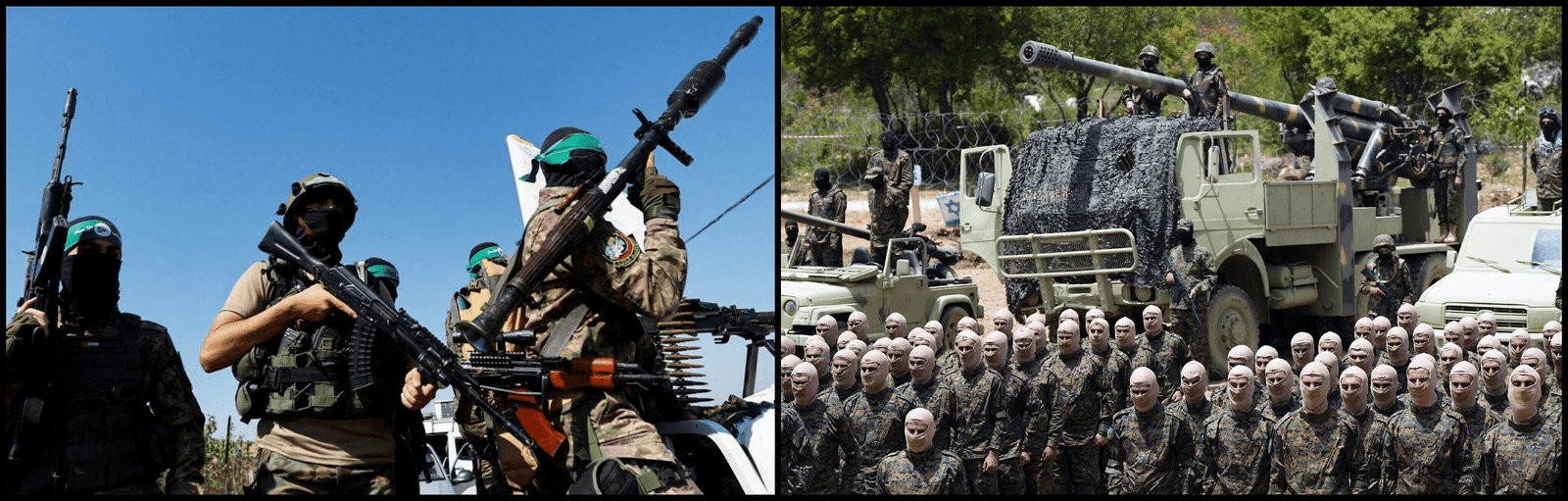
Gaza insights by The Electronic Intifada.
Is Israel running out of armored vehicles? with Jon Elmer
Lebanese insights by Elijah J. Magnier.
A free article by Elijah Magnier about the adaptive changes in the rules of engagement, deterrence due to mutual recognition of potential for widespread destruction
The calculus of conflict between Hezbollah’s deterrence and Israel’s destruction: Understanding the Dynamics of War.
Written by Elijah J. Magnier
In the aftermath of the Israeli air strikes on the areas of Baalbek, Nabatieh and Tyre, an important debate has emerged as to whether Israel’s actions represent an evolution or a breach of the protocols of engagement that Hezbollah has established since 8 October. This situation underscores Hezbollah’s role as the frontline defender of Gaza, which is currently enduring harsh aggression and destruction from a military and administrative power that overlooks the moral obligations outlined in the Geneva Conventions and international law. These obligations emphasise the protection of civilians and the provision of basic necessities, even in the midst of conflict. However, the unfolding scenario and the resulting military engagements required innovative tactical responses, reflecting the evolution and diversification of weapons and targeting strategies. These developments required a multi-faceted approach to combat without violating established rules of engagement.
Military experts familiar with the nuanced dynamics of the conflict between Hezbollah and Israel indicate that the confrontation has entered a phase of escalating intensity. This phase is characterised by the use of sophisticated weaponry and technological advances, facilitating the testing of various new weapons and countermeasures. These tests are designed to assess each side’s ability to inflict significant casualties on the other and to develop defensive strategies. Throughout the conflict, there has been a progressive escalation in the variety of weapons, the choice of targets and the fluctuation in the volume and concentration of fire across the primary front. This front is limited by the border zone, which extends up to eight kilometres into territory controlled by the warring parties.
Israel, however, has established a new paradigm to which Hezbollah appears to have adapted, provided it does not violate the established protocols of engagement, which are encapsulated by three principles: the protection of civilians, the preservation of urban areas, and the protection of infrastructure on both sides, with an emphasis on military targets. Despite the inevitability of civilian casualties on both fronts, Hezbollah demonstrates a stricter adherence to these rules of engagement than Israel. Both parties categorise these unintended civilian losses as ‘collateral damage’, a term used in military jargon. But neither is indifferent to the plight of the innocent victims.
Israel’s current strategy, which it intends to maintain as long as the conflict remains within manageable bounds, revolves around targeting and attempting to neutralise specific categories of adversaries, including
– Active Hezbollah fighters and frontline leaders, including officials and members from the border regions and elite units such as Al-Radwan.
– Hezbollah members and leaders involved in the Palestine Unit, who contribute to Palestinian support through military training, technological assistance, logistical support, intelligence, command and coordination.
– Hezbollah Air Defence Force personnel and commanders.
– Individuals and leaders whom Israel, based on its intelligence assessments, regardless of their veracity, believes to be associated with the Palestinian entity.
– Palestinian, Syrian, Iraqi and Iranian entities, wherever they may be, as long as they are associated with supporting the Palestinian cause.
This strategic equation transcends geographical boundaries, with the intelligence services and the Israeli Air Force operating wherever specific targets are located – whether in the south, the capital, the Bekaa, Syria, Iran or elsewhere – and reaching them wherever possible. The Israeli Air Force operates on the premise that there are no geographical constraints on its operations and targets individuals in all areas of Lebanon, provided they are military targets. However, it refrains from targeting Hezbollah leaders who are not actively involved in the ongoing conflict, recognising the potential for unintended escalation.
The catalyst for Israel’s adaptation of its military tactics was Hezbollah’s deployment of the fifth-generation Kornet missile system. This move took Israel by surprise, given the precision, volume of fire and vast arsenal of laser-guided missiles at Hezbollah’s disposal, with over a thousand missiles deployed in a matter of months. In response, Israel turned to Israeli-American technological innovation to neutralise these laser-guided threats, with some success. In the face of this, Hezbollah reverted to using older generations of laser weapons that were unaffected by modern countermeasures. Israel responded to this new strategic environment by concentrating on concealing critical assets such as tanks and command centres.
Meanwhile, Hezbollah escalated by targeting visible surveillance equipment and using suicide TV drones against concealed assets, introducing a new class of weapons. Israel’s attempts to mitigate its losses led to an intensified strategy involving the widespread destruction of border communities and the use of its superior air capabilities within the confines of established rules of engagement. Both parties tacitly agreed to evacuate civilians from critical border areas, allowing the tactical demolition of homes as part of the conflict dynamic.
However, Israel’s continued focus on precise targets deep inside Lebanon, aimed at establishing a new strategic balance, forced Hezbollah to unveil a novel anti-aircraft capability. This innovation drove Israel to extreme but strategically measured responses. Israel in turn stepped up its defences, successfully using electronic countermeasures to divert or deceive Hezbollah’s anti-aircraft missiles. This escalation forced Hezbollah to innovate further by introducing a weapon capable of evading Israeli electronic interception. This breakthrough technology, developed by Iran and supplied to Hezbollah, challenged Israel’s dominance in air superiority. It enabled Hezbollah to shoot down Israel’s sophisticated Hermes 450 drone, which Israel considers a compact military aircraft capable of operating at 20,000 feet and armed to the teeth.
This development shifted Israel’s strategic posture slightly, allowing for targeted strikes within the bounds of operational flexibility. Israel targeted a specific Hezbollah air force facility responsible for missile launches, while refraining from attacking multiple sites associated with the same unit, despite their presumed inclusion in Israel’s list of potential targets.
The escalation necessitated the use of Hezbollah’s air defence forces, expanding the scope of the conflict with the leadership’s strategic awareness. This expansion was a direct response to Israel’s increasing threats, underscored by explicit warnings that Hezbollah’s sophisticated and anti-aircraft arsenal would indiscriminately target areas across Lebanon. Nevertheless, Hezbollah demonstrated its restraint and capability by deploying powerful, previously rarely used rockets, as seen in Safed. This action served as a stark reminder to Israel that any escalation would be met with a formidable response. Hezbollah’s strategic posture suggests that it can inflict significant damage on targets across the border and deep inside Israeli territory if necessary.
Both parties recognise that the dynamics of engagement could shift to allow for targeted strikes anywhere, including into each other’s territory. However, such actions would be undertaken deliberately to ensure that the conflict remains manageable despite the expanded geographical scope of engagement.
The conflict has forced Hezbollah to deploy its air defence capabilities, resulting in an expanded area of operations that is fully recognised by its leadership. This strategic adjustment was in response to Israeli warnings that Hezbollah’s sophisticated anti-aircraft systems could target regions throughout Lebanon. Hezbollah demonstrated its capabilities by deploying powerful missiles that had previously been used sparingly, signalling to Israel that any threats would be met with formidable retaliation. Hezbollah has shown that it can inflict significant damage not only across the border but deep inside Israeli territory if necessary. Either side can escalate by accurately and correctly targeting strategic locations in the other’s territory, ensuring that the conflict remains within controlled parameters.
This war does not extend to an all-out war where civilian are targeted as well as cities, airports, ports, infrastructure and energy resources. The fighting remains strictly military, even by Israel’s standard, despite the inevitable civilian unintended casualties resulting from the hostilities. Hezbollah’s response has been significantly determined, especially when it fired over 100 rockets in 24 hours at targets such as Safad, the Golan Heights, the regional headquarters of the “Golan Division” and command centres on various units along the Lebanese borders. In addition, Hezbollah uses armed and surveillance drones that penetrate deep into Israel, reaching areas beyond Haifa such as Afula, 90 km from the borders, sometimes without public acknowledgement so as not to provoke further Israeli retaliation.
This controlled conflict is governed by evolving rules of engagement, influenced by each party’s advances in weaponry or the impact of their actions on the other. Despite the mutual interest in preventing the situation from escalating out of control, the underlying problem remains significant: The Israeli military, considered the most powerful in the Middle East, has had to accept a deterrence framework and rules of engagement established by Hezbollah. This represents a significant challenge to Israel’s prestige and standing on the world stage, and illustrates the complex dynamics of modern asymmetric warfare.
In the event of a full-scale conflict, Israel’s military capabilities are undeniably formidable, with unrivalled air dominance, superior firepower and a substantial supply of munitions backed by the United States and its Western allies, who share compatible weapons systems. On the other hand, Hezbollah has the capability to sustain a daily launch of 500 rockets and missiles for at least a year, a testament to its significant arsenal capable of inflicting significant damage on Israel’s infrastructure, energy, economy and military and civilian population.
This mutual recognition of the potential for widespread destruction serves as a powerful deterrent against escalation to all-out war. Both sides are acutely aware of the devastating consequences of such a conflict, not only in terms of immediate military casualties, but also in terms of long-term effects on civilian life and national stability. This understanding underpins a cautious approach to engagement, with neither party eager to provoke a situation that could spiral into an uncontrollable war. While the balance of power is skewed in terms of conventional military strength, it is balanced somewhat by the capacity for sustained and effective resistance, ensuring a delicate stalemate that neither side is willing to disrupt without considering the serious consequences.
Related Posts
-

Roger Waters on Tucker Carlson : 9/11, JFK, Gaza, and Why the Israel Lobby Is Trying to Destroy Him
July 19, 2026 -
Gaza, West Bank, Lebanon : While the unprecedented funeral continues apace …
July 7, 2026 -
Gaza
January 25, 2026 -

And Then There Was One
January 1, 2026 -

On the Silk Road to Isfahan
October 11, 2025 -

Apocalypse in Gulf is now or never
October 8, 2025 -

A historical timeline of Israel’s brutality towards Palestinians
September 28, 2025 -
People are continuously involved in calling out the Israeli attacks on Gaza: States and Governments not so.
September 8, 2025 -

The War & Genocide Thread
August 13, 2025 -

Naim Qassem: Calls to Disarm Hezbollah are Unconstitutional and Only Serve Israel
August 6, 2025
That’s a nice history of the finely calibrated escalation between Hezbollah and Israel: a fragile surface tension that so far no one has wanted to plunge a stick into. Let the record show that this balance of force was established by Hezbollah from the beginning, and it is Hezbollah that… Read more »
The levels of attrition the Zionists experience is unprecedented in their history. In the past, 1/10 of the current daily casualty numbers would have prompted retreat and compromise. What they suffer collapses the rationale for their settler state. Already about a million fled West Asia. That’s about 1 in 7… Read more »