

FM Sergey Lavrov, The Impact of Global Economy on International Security (based on remarks at the G20 Foreign Ministers’ Meeting)
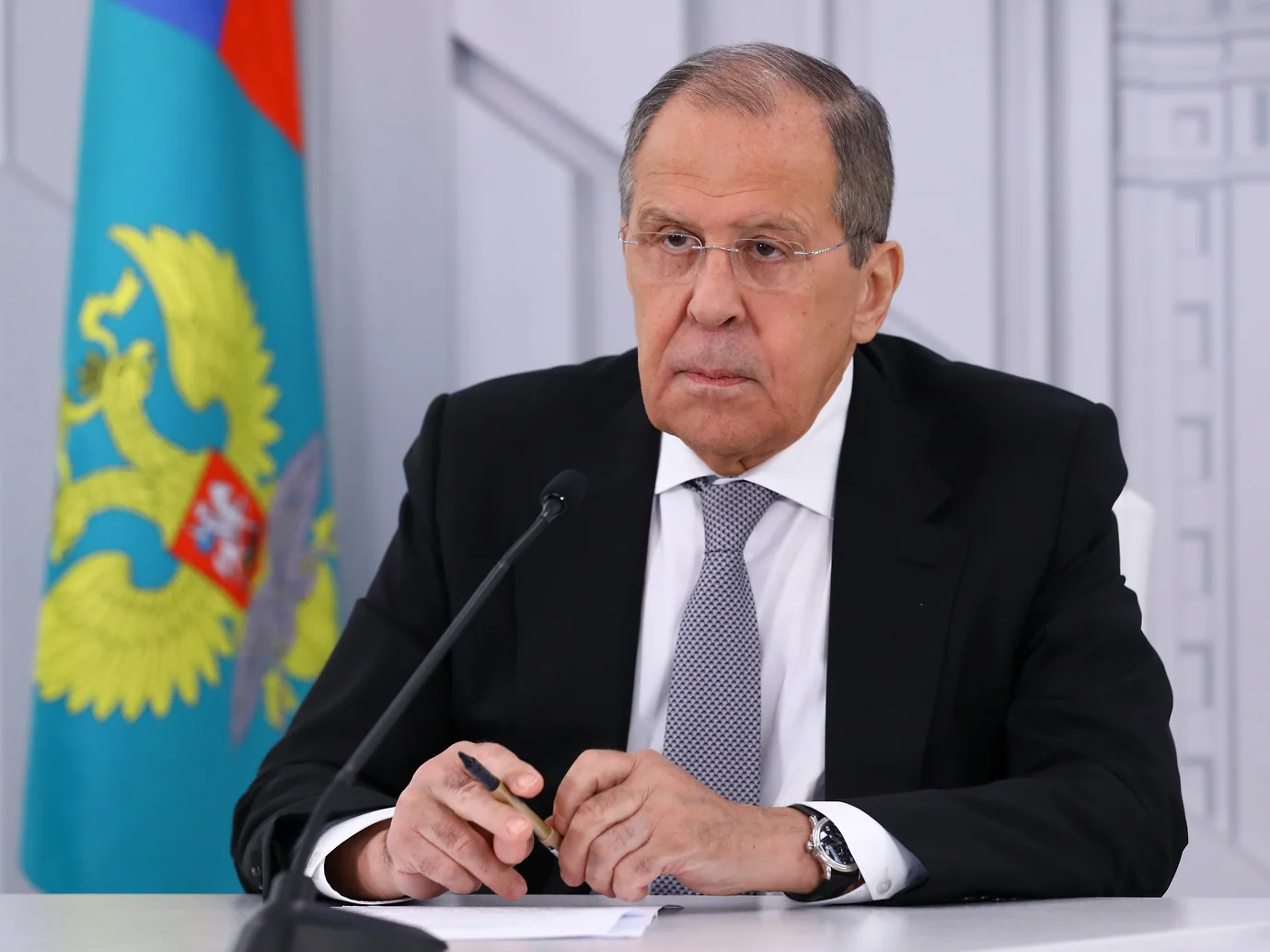
“The future lies in the democratization of international economic relations.”
Russian Foreign Minister Sergey Lavrov on the global economy and its connections with international security.
Russia, the global economy and international security: Challenges and opportunities
A meeting of G20 foreign ministers took place in the United States not long ago. The participants focused on the global economy and its interconnection and interdependence with international security. I offered a number of assessments in my remarks at the meeting that I would like to share with a wider readership.
Geopolitical Context
In an ideal world, the global economy and international security should complement each other and jointly provide a foundation for peaceful coexistence and shared prosperity. Instead, the economy is increasingly becoming an arena of confrontation, with trade wars being unleashed to suppress geopolitical competitors in the wake of hot wars. This is precisely what lies behind the war waged by the West against Russia through the Kiev regime, which was illegally brought to power in the 2014 coup the next morning after Germany, France, and Poland had acted as guarantors of the agreement on the crisis settlement reached between the President of Ukraine and the opposition.
The objective process of the emergence of a multipolar world order is being met with outright hostility in the West. In keeping with a colonial mindset that has by no means disappeared, the rising centres of growth in the Global South and East are being denied the right to participate in global governance in proportion to their weight in international affairs.
Protectionist barriers, and even outright blockades, in the way of the dissemination of advanced technologies are multiplying. The abuse of reserve-currency status and of insurance, freight, and stock exchange services has reached unprecedented proportions. Unilateral restrictive measures and their extraterritorial application to third-country jurisdictions, the theft of sovereign assets, and terrorist attacks on critical infrastructure have become commonplace forms of unfair competition. The Nord Stream gas pipelines, which were blown up under the direction of handlers in London, are a case in point.
The European Union, which is turning itself into a military bloc and is clearly affected by delusions of grandeur, has harked back to the days of slavery and piracy and taken to openly seizing foreign vessels and stealing their cargoes. To justify this plunder, it has invented the term “shadow fleet,” which has no basis in international law, as well as so-called price caps. Markets are being thrown into turmoil by this kind of geopolitical lawlessness.
All these actions by the West are in direct violation of international law. They create uncertainty and additional costs, and undermine global economic connectivity and long-term resilience. In effect, they are dismantling the very globalisation model that the West itself created and promoted for decades as the ideal system of global economic governance, a kind of “economic end of history.” The global economy is becoming fragmented, with the movement of goods, capital, and services increasingly regionalised. According to international estimates, no more than 70 percent of global trade flows are now conducted within the WTO framework.
Global energy and food security
A stable global energy system is an essential prerequisite for sustained economic growth and the adoption of innovative technologies. The digital transformation is driving energy demand to new heights. According to the International Energy Agency, by 2030 AI will consume as much energy as all of Japan does today. We must be prepared for this.
For the time being, however, the normal functioning of energy markets is being undermined by a number of factors: geopolitical tensions, disruptions to supply chains, escalating protectionism, unlawful sanctions, and the seizure of other countries’ tankers. The accumulated investment shortfall in conventional energy resources is taking its toll as well. It has been caused by attempts to impose, as a universal template, a poorly thought-out and largely reckless green agenda.
Feeling emboldened by the EU’s unconditional support, the Kiev regime has come to believe that it can act with impunity carrying out terrorist attacks against critical infrastructure, and not only Russian. The facilities of the Caspian Pipeline Consortium, whose major shareholders include Kazakhstan and the United States, have been attacked on numerous occasions. US President Donald Trump’s calls on Ukraine to stop fuelling the energy crisis have been ignored. To this day, those who organised the acts of sabotage against the Nord Stream pipelines mentioned above have not been brought to justice.
The aggression against Iran, which led to the closure of the Strait of Hormuz, was a serious destabilising factor that has dealt a severe blow to the energy sector. Freedom of navigation must not be applied selectively. It must be guaranteed everywhere for all countries and in all maritime areas. This applies equally to the Red Sea and the coast of Somalia, the Baltic, Mediterranean, and the Black Sea, the English Channel, the coastal waters of the European Union, the Caribbean, and all other parts of the world’s oceans. It is unacceptable for NATO, the EU, or their member states to claim the right to dictate what happens in any maritime area.
It must be understood that the use of force, especially by a declining power, and policies of pressure, blackmail, and diktat are doomed to fail and will be met with in-kind and asymmetric responses.
Food security is another important component of global security. More than 600 million people worldwide are going hungry as of this writing. The problem is not a lack of resources, but sanctions and barriers. This year, G20 trade ministers condemned the weaponisation of food supplies, and even the EU was forced to agree. What is needed now is to translate words into concrete action (although, as we know, Europe’s political elites are notorious for failing to honour the commitments they make).
Some Western representatives are trying to bring the discussion down to calls, or even demands, to ensure the export of Ukrainian grain across the Black Sea. But we have already been through the so-called Black Sea Grain Initiative with the UN Secretary-General playing a coordinating role. He proved utterly incapable of ensuring that the provisions of the agreements concerning Russia’s interests were implemented, working exclusively in the interests of the Kiev regime.
Supply chains
The importance of efficient supply chains to the global economy in stimulating growth, promoting a mutually beneficial division of labour, and reducing costs can hardly be overstated. Today, however, we are witnessing a trend towards replacing universal and non-discriminatory trade rules with bloc-based logic.
In line with their neocolonial frameworks, Western countries are openly seeking to control the flow of strategic resources, including energy supplies and critical minerals. To this end, they demand that legitimate participants in international trade disclose sensitive information and relinquish their independent regulatory frameworks.
Against this backdrop, the Global Majority continues to seek mutually beneficial and equitable cooperation. Countries of the Global South and East that were previously dependent on Western markets are actively diversifying their supply chains. Trade routes are becoming decentralised and de-westernised. The results speak for themselves: developing economies in the Asia-Pacific region are expected to grow by around 5 percent in GDP terms in 2026.
Russia in the global economy: A constructive contribution despite challenges
The European Union used to be Russia’s principal economic partner, accounting for up to 40 percent of our foreign trade. Brussels decided to sever these ties, and did so in breach of EU member states’ obligations under their long-term contracts with our country, proudly declaring that the overriding priority for today’s European elites was to “punish” Russia. Incidentally, the illegitimate sanctions have done less damage to our country than they have inflicted losses running into trillions on Europe, fuelled inflation in the United States, and reduced living standards in many countries (hence the surge in protest sentiment across the European Union). It is no accident that Brussels keeps quiet about the cost of Russophobia to European economies.
We, for our part, have suffered no significant losses, having redirected our trade towards the markets of the Global Majority, which enthusiastically absorb 80 percent of Russian exports, including 70 percent in Asia.
Russia is a responsible and reliable supplier of hydrocarbons, food, fertiliser, and, more recently, digital technologies.
Unlike our opponents, our country does not use the economy to settle geopolitical scores or engage in positional battles with competitors. Since 2022, we have supplied Europe with energy resources worth $320 billion. The agreement reached by the leaders of Russia and the United States to suspend restrictions on Russian diesel exports came as an important contribution to energy security. We have already begun implementing this agreement, and prices fell immediately as a result.
Russia will continue to contribute to normalising global fuel and energy markets, the maintenance of global energy security, and the balanced and sustainable development of countries and macro-regions. We are among the leading exporters of hydrocarbons to Asia, Africa, and Latin America. Significantly, Russian deliveries of oil and mineral resources to ASEAN countries alone increased by 40 percent in the first quarter of this year. We are building up our unique expertise in nuclear energy and implementing cutting-edge projects, including small modular reactors and floating nuclear power plants.
In October, Moscow successfully hosted the 8th Summit of the Gas Exporting Countries Forum and the Russian Energy Week International Forum, which featured comprehensive discussions on the oil and gas markets. The main conclusion was that the sustainable development of the energy sector for the benefit and prosperity of the nations is possible only if it is depoliticised.
We attach great importance to ensuring global food security. Russia is one of the world’s leading suppliers of food and fertiliser to 160 countries and fulfils all its commitments. We will continue to meet our partners’ needs, paying particular attention to the African continent, including through the provision of food aid free of charge under the World Food Programme. This commitment is enshrined in the Declaration and Joint Action Plan adopted at the third Russia-Africa Summit in Moscow on October 28-29.
Our country’s transit potential is growing. Trans-Arctic routes are emerging as a safe and cost-effective alternative to southern transport corridors. Shipping along the Northern Sea Route has reached an all-time high: the number of voyages along this route in early 2026 was 1.5 times higher than in the same period last year, while cargo volumes increased by 25 percent. The forecast for 2026 stands at 40 million tonnes. Trade along the International North-South Transport Corridor and through the Eastern Operating Domain is expanding as well.
Within the BRICS framework, independent payment and settlement, reinsurance, and stock exchange platforms are being developed. The initiative to establish a Greater Eurasian Partnership provides a solid foundation for this work. It is designed to integrate the potential of the SCO, ASEAN, the EAEU, and other subregional organisations, linking the countries of the continent through transport routes and projects within a common open economic space.
Conclusion
We are convinced that the future lies in the democratisation of international economic relations and the restructuring of the global economy on a genuinely multipolar basis. Global markets and supply chains must be open, competitive, and inclusive, while trade and investment cooperation must be based on equality and predictability.
Progress in this area will accelerate once tangible steps are taken to reform the Bretton Woods institutions so that the actual economic weight of the countries of the Global Majority is properly reflected in their governing bodies. Incidentally, the G20 set this objective back in 2008 at its first summit in Washington D.C., and those involved there are, of course, well aware of why this decision has yet to be implemented. We call for this commitment to be honoured, for an end to reliance on neocolonial methods, and for a choice to be made in favour of cooperation based on the principles of non-discrimination and mutual respect.
For its part, Russia and its partners and like-minded countries, primarily within BRICS, the SCO, the EAEU, and the CIS, will continue working to advance a constructive agenda aimed at building a fairer and more prosperous world for all countries without exception.
Related Posts
-
Reflections on the Nuremberg War Crimes Tribunals
November 19, 2025 -

FM Sergey Lavrov’s message to participants of a solemn meeting dedicated to the 80th anniversary of the United Nations
October 23, 2025 -
Remarks and answers to media questions by Russia’s FM Sergey Lavrov and Iran’s FM Abbas Araghchi following talks
February 25, 2025 -

Foreign Minister Sergey Lavrov’s interview with Rossiya Segodnya, December 29, 2024
December 29, 2024 -

FM Sergey Lavrov’s remarks and answers to media questions at the conclusion of BRICS and Global South and Global East countries meetings
June 14, 2024