

Foreign Minister Sergey Lavrov’s interview with RT India, Moscow, May 13, 2026
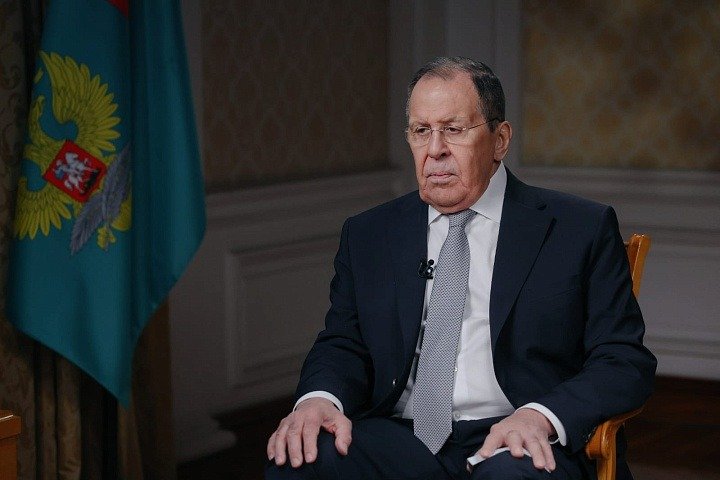
Foreign Minister Sergey Lavrov’s interview with RT India, Moscow, May 13, 2026
https://mid.ru/en/foreign_policy/news/2107824/
[These are FM Lavrov’s comments in the run-up to the BRICS Foreign Ministers’ Meeting scheduled for May 14 and 15th. India’s S Jaishankar will host. Mr Lavrov exposes the western attempt to control all oil chokepoints and energy supṕly points. He does not mince words and his disdain is clear for all to see. I followed this trend throughout the interview and bolding is mine. Mr Lavrov also exposes the core problem that probably has everything to do with the current BRICS coma and the reason why BRICS could not arrive at a coherent and inclusive statement regarding the War on Iran or Israel’s Wars on its neighbors. He says irreconcilable differences emerged between Iran and the UAE while working on a draft statement. This prevented a statement from materializing.]
Question: You’ve been dealing with New Delhi for over two decades now. This special and privileged strategic partnership has got all the right optics. It’s got the summits, and it’s got buzzwords like “oil” and “defence” that recently have been making headlines. What is the real substance of the India-Russia partnership today?
Sergey Lavrov: It’s not only oil and gas. It’s much more.
The nature of Russia-India relations is much broader, and it did not begin twenty or even thirty years ago. Everything started when India gained independence. From the very beginning, Indian leaders visited the Soviet Union, and Soviet leaders visited India. This helped lay a solid foundation based on trust-based personal relations between the leaders of the two countries which is always a good thing. Concurrently, a solid foundation for partnership between India and our country was being laid.
The understanding of what this partnership was all about evolved over time. It started out as a partnership, then became a strategic partnership, and was later elevated to a level of privileged strategic partnership. Later, under Manmohan Singh, Russia-India relations reached the level of a particularly privileged strategic partnership. The fact that the economies of Russia and India complement one another also works to the advantage of both countries.
India was highly interested in military-technical cooperation from the very beginning, which also played an important role. For a long time after it had gained independence, not a single Western country was willing to help India develop its own military technology. Russia took a different approach. Our cooperation with India started out in a seller/buyer format. The situation has changed dramatically over time, and we are no longer just selling weapons and military equipment to India. We are selling less, because we are gradually moving towards s joint production in India. Russia and India started out with BrahMos missiles, then diversified into the production of Kalashnikov assault rifles, and now India engages in manufacturing T-90 battle tanks under licence.
Let’s take a look at other areas of interest. There are other plans in addition to full-scale cooperation as part of the Intergovernmental Commission on Trade, Economic, Scientific, Technical and Cultural Cooperation. In December 2025, when President Putin visited New Delhi, a Programme for the Development of Strategic Areas of Russia-India Economic Cooperation to 2030 was adopted, covering high technologies and other areas of focus. A similar programme on military-technical cooperation to 2030 was signed as well. So, there are medium-term and long-term plans.
We are expanding cultural and humanitarian cooperation. Film festivals, cross-cultural weeks, and other bilateral cultural events are held alternately in Russia and India.
We regularly hold meetings involving representatives from academic communities of the two countries. Indian students come to study in Russia, and we strongly encourage this. Thus, Russia-India relations continue to remain one of the most important stabilising factors in the region and around the world.
Question: Indian Prime Minister Narendra Modi talks about Viksit Bharat, a developed India by 2047. How do you see Russia contribute to that vision? What role can Russia play in India of tomorrow?
Sergey Lavrov: First and foremost, it is for Indians themselves to decide what they want their country to look like by the centenary of independence. Without a doubt, Prime Minister Narendra Modi is one of the most energetic leaders the world has ever known. He possesses great energy and channels it towards extremely important goals such as achieving maximum sovereignty across all spheres: the economy, the military, defence, culture, and the preservation of India’s civilisational wealth, which is unmatched by any other country. Eurasia is unique not only because it is the largest and richest continent. Our continent still has to play its role in stabilising the global situation. I digress, but it’s an important point.
There is no entity that would be common for entire Eurasia. There is the OSCE, ASEAN, the South Asian integration framework involving India, the SCO, and post-Soviet institutions such as the CIS, the EAEU, and the CSTO, but there is still no such thing as single umbrella entity. This doesn’t have to be necessarily an organisation, but at least some kind of a forum where all of Eurasia could engage in meaningful dialogue. This is largely accounted for by the fact that Europe has stuck to its neocolonial and colonial mindset and still wants to impose its rules on everyone. Following in the steps of the EU, NATO is also extending its reach across Eurasia, voicing its concern over developments in the South China Sea, the Taiwan Strait, Southeast Asia, and Northeast Asia.
Countries with great histories, great civilisations that have survived to this day and continue to evolve must at some point acknowledge their responsibility and take Eurasianism from its colonial or neocolonial past to a stage of partnership, mutual understanding, and overcoming status differences that persist in the minds of some of our Western colleagues, as well as fostering inter-civilisational dialogue. I believe Russia, India, and China have a special part to play in this process.
Returning to your question about what exactly India can achieve by 2047. First, that depends on the Indian people and on the determination of the Indian leadership, and Prime Minister Modi consistently demonstrates such determination. Even at an early stage, before 2047 was articulated as a goal, he introduced the Make in India concept. Russia was probably the first country not merely to take this concept into account in its practical dealings with India. We began producing BrahMos cruise missiles even before Make in India became an official motto and our Indian partners’ required operating pattern.
India is experiencing tremendous growth averaging, I think, around 7 percent annually for as long as Prime Minister Modi has been in office. The country needs large amounts of energy. We recently heard your prime minister call for electricity conservation in light of the Persian Gulf, or rather the Strait of Hormuz, crisis after the US-Israeli aggression against Iran.
But Russia has never been known for failing to fulfill its obligations to India or anyone else for that matter when it comes to energy supplies.
The Kudankulam Nuclear Power Plant is our flagship project. It meets a significant share of India’s needs. Cooperation on the construction of new power units for this nuclear plant is continuing. Even so, India needs more. We continue supplying hydrocarbons such as gas, oil, and coal.
In addition to nuclear energy and hydrocarbons, we and our Indian friends engage in green energy. Given the scale of India’s growth, nothing will go to waste. I believe building energy-security potential that will remain reliable for many years to come is a wise approach. To reiterate, Russia values its reputation as a reliable supplier, cherishes it, and has never compromised it.
I mentioned military-technical cooperation earlier. India’s defence capability is an area of our relations where we have practically no secrets from our Indian friends. As I mentioned earlier, when India went independent, the West for many years did not want to cooperate in this sphere at all. Later, when it became interested in supplying weapons to India, it always did so carefully guarding its own secrets. We, however, do not keep any secrets from our Indian colleagues.
Question: When Rosneft and Lukoil came under sanctions, Indian oil imports from Russia dropped drastically. Was that a moment of concern in Moscow? Did that in any way change the way Moscow views New Delhi as a partner?
Sergey Lavrov: India had absolutely nothing to do with this. It was an unlawful and illegitimate decision by the United States. Moreover, Ukraine was used as a pretext.
President Trump has repeatedly argued that Ukraine was Joe Biden’s war, not his. We appreciate the fact that President Trump initiated dialogue with us and with President Putin. We have communicated at the levels of heads of the US State Department and our Foreign Ministry, and the Aide to the President of Russia holds meetings with President Trump’s special representative. Many good words are being said about the enormous potential for mutually beneficial, modern, technological, energy-related, and other projects between Russia and the United States.
However, nothing is happening in real life. Aside from this regular dialogue – which is normal in relations between people and countries – everything else follows the pattern initiated by President Biden. The sanctions imposed under him have remained in force. Moreover, the Trump administration has adopted its own initiatives in order to punish Russia’s economy.
You mentioned Lukoil and Rosneft. The goal – and no one is trying to hide it – is to make these companies leave international business altogether. In fact, the United States has adopted a series of doctrinal documents, one of which proclaims that the United States must dominate global energy markets.
Take Venezuela, for instance. Nobody is even mentioning now that the operation carried out by the United States was supposedly aimed at dismantling a narcotics network allegedly run by President Nicolas Maduro. Now everyone is openly saying that Venezuela is cooperating with the United States and that its national oil company is coordinating its future activities with the United States.
The Strait of Hormuz is another case in point. According to President Trump, the aggression against Iran began because, Iran had terrorised everyone across the board for 47 years. But until February 28, 2026, the Strait of Hormuz was open to traffic, and the whole world used this waterway which accounted for bringing one-fifth of all energy to the global markets. Now the Americans are demanding that the Strait of Hormuz be reopened. But it was never closed. It is always important to look at what lies beneath.
Back to Russia on international markets. Efforts are being made to push Lukoil and Rosneft out of the global, including African, markets. These companies, especially Lukoil, but Rosneft too, operated multiple facilities in North Africa and elsewhere.
The same applies to the Balkan markets, where our companies also operated successfully.
If we look at other regions, I already mentioned Venezuela, with which Rosneft cooperated extensively. Now the Americans want to take that business over. It is unlikely to remain cooperation among peers.
Look at the Americans planning to reinstate the Nord Stream pipelines that were blown up. Under Biden, the Americans claimed that these pipelines would never go into operation again. Now they blame Ukrainians for blowing them up (three out of the four pipelines were damaged), and the Americans want to buy out the share previously owned by European companies.
They want to purchase it at roughly one-tenth of what the Europeans paid for it. If they succeed, they will force the Germans to reclaim their national dignity and say fine, we will use this pipeline again. However, the prices will no longer be based on agreements between Russia and Germany. Prices will instead be dictated by the Americans, who will have bought the pipeline from the Europeans.
They also want – they’ve been open about it – to take control of the transit gas pipeline running from Russia to Europe across Ukraine in order to control these flows as well. So their goal is entirely clear: they want to bring every significant energy supply route under their control.
I am confident that India is fully cognisant of what is happening. This is not the kind of force majeure that the Europeans constantly invoke when turning down contracts for Russian energy supplies out of hand. They are now trying to ban our gas and oil supplies simply because they want to punish Russia. As you may be aware, we never punish anyone and always fulfill our obligations to our partners in good faith regardless of whether we are dealing with friendly or not so friendly countries. Once we strike an agreement, Russia traditionally honours its commitments under any deal.
Western traditions are very different. They are quite fond of cancelling history and agreements, come up with excuses to once again live at the expense of others, and punish, punish, and punish. As the birthplace of colonialism, Europe has largely lost these capabilities. Now the United States is fully demonstrating them, plunging Europe into a deep energy and food crisis.
Europe will probably be impacted more than anyone else by the crisis in the Strait of Hormuz. Beyond that, bans on Russian gas and oil imports mean switching to US liquefied natural gas, which is dramatically more expensive. European budgets will therefore come under an even heavier strain, on top of the hundreds of billions of euros Europe is pouring into Ukraine for it to continue the European-driven aggression against Russia.
Incidentally, when European leaders are foaming at the mouth defending their stance and declaring that Ukraine is on the cusp of victory and that Russia will suffer a strategic defeat, while celebrating another €90 billion allocated to Ukraine, I just wonder whether their parliaments know how much more expensive energy has become for European consumers now that it comes from entirely different sources instead of cheap Russian oil and gas.
But I can guarantee that India’s interests as they apply to Russian supplies will not suffer. We will do everything to ensure that this unfair and dishonest competition does not damage our agreements.
It is also important to keep the broader picture in mind. The Nord Stream pipelines have been blown up. Now we are witnessing an aggression in the Strait of Hormuz. Word is out that the Bab-el-Mandeb Strait could also become a zone of confrontation, and the ensuing damage to global energy markets would be immeasurable. In this regard, both in our relations with India and in the broader Eurasian context – within the framework of the SCO – it is important for us to develop solutions that ensure protection against the risks posed by such aggressive moves by Western countries aimed at breaking up the global economy and subordinating it to their self-serving interests.
Two years ago, when Russia chaired BRICS – now India holds the chairmanship – we proposed a number of initiatives precisely aimed at creating independent settlement and payment infrastructure. These included a cross-border payment initiative, a BRICS grain exchange, a new investment platform, and an entity to reinsure trade risks. Until recently, all these areas were completely monopolised by Western institutions. But by gradually developing infrastructure and mechanisms protected from arbitrary interference, and by increasing settlements in national currencies rather than dollars and euros, we are creating guarantees for future growth.
India’s plans to 2047 need such a safety net, because today the collective West may dislike what Russia and China are doing. Tomorrow, any other country could end up in their place. The Eurasian countries, including the Arab Gulf states, are closely watching how the Americans are dealing with their problems. They are concerned about what will happen when Washington’s wrath is directed at a country that can hardly be thought of as their target today. Everyone is concerned about this.
We need to move forward. I hope that the issue of creating secure mechanisms, supply chains, and settlement platforms will be one of the central themes at the BRICS foreign ministers’ meeting beginning on May 14, as well as at the BRICS summit in India in September. Right now, this is on the list of the most urgent tasks.
Question: Because of the escalation in the Strait of Hormuz, they are pushing several Asian countries, including Japan, to increase their Russian oil imports. How do you view this shift especially given the Western pressure on these countries to not buy Russian oil at all?
Sergey Lavrov: Pressing everyone into not buying Russian oil is a dirty tactic. You can describe it in different ways – colonial or neocolonial – but these are methods of exploitation. Deep down, they are designed to strong arm everyone into buying expensive US oil and liquefied natural gas rather than cheap Russian oil. In this way, they seek to rule the world through controlling global energy supplies.
Not everyone is yielding to this pressure, though. India has firmly and repeatedly stated that it will independently decide from whom and in what volumes it will buy its energy. It was rumoured occasionally that an unidentified Indian buyer had refused to buy oil from tanker carrying Russian oil. To reiterate, India has clearly stated its position.
The Japanese have also addressed this issue. Their new foreign minister, Toshimitsu Motegi, made it clear that Japan would continue to exert pressure on Russia and remain one with its Western partners, but doing without Russian oil is a challenge for them. If they are willing to buy from us… We have never turned the economy or existing agreements into political tools.
Question: The blockade of the Strait of Hormuz has driven up global oil prices. Does this reflect a larger pattern where Western countries start conflicts and the Global South pays the price?
Sergey Lavrov: This point is certainly valid, but the main factor was the US push to control as many sources and shipping routes as possible which was exploited by Israeli Prime Minister Benjamin Netanyahu. At one point he admitted that he had been waiting for long decades for Washington to become convinced of the need to attack, defeat, and destroy Iran. Ultimately, though, consumers are on the receiving end of it, that’s true.
One of the principles of globalisation promoted for many years by the US-led West has been destroyed. That principle concerned dialogue between energy producers and consumers. Such dialogue unfolded, among other places, within the G20. OPEC+ has always been mindful of the buyers’ interests and maintained a trust-based conversation with them. Now all of that is being dismantled so that one actor alone can dominate these markets. At least the Trump administration is open about it. All countries should learn the lesson.
With regard to how the global economy will take it, experts are already arguing that even if the conflict ended now, it would hardly be possible to bring things to pre-war levels before the end of 2026. If it continues for several more weeks or months, the horizon for recovery from the crisis will move even further away.
Question: During the India-Pakistan conflict, when drones, missiles, jets, S-400 systems were in play, the world reacted, and so did Russia. But if I may, many in India expected a stronger response or a stronger show of support from Russia, given the depth of this relationship. How did you, Mr Foreign Minister, view the conflict?
Sergey Lavrov: Since Soviet times, we have consistently sought to help India and Pakistan overcome the differences that inevitably arose following the collapse of the British Empire and the emergence of its former territories, including India and Pakistan, and later Bangladesh, as independent states.
After the dissolution of the USSR, we ourselves faced numerous challenges in relations with our neighbours. Although these problems did not emerge immediately, they became increasingly apparent over time. We also remember well how the West sought to dismantle what remained of the Soviet Union and even the Russian Federation itself, doing everything possible to turn the former Soviet republics against Russia.
I do not rule out the possibility that external factors are also playing a significant role in India’s relations with its neighbours. The West would prefer that countries in the region remain preoccupied with disputes among themselves rather than focus on the task we discussed today – the development of Eurasian continental integration. Such integration does not align with Western interests. Instead, the West seeks to shape its own order in Eurasia, creating various formats and groupings “quads,” “trios,” and others.
When the terrorist attack took place in April 2025, President of Russia Vladimir Putin was among the first world leaders to strongly condemn it and convey his sincere condolences to the leadership and people of India. We have always viewed developments in India with great sympathy. Unfortunately, the country has repeatedly faced natural disasters and terrorist attacks, and such events never leave us indifferent.
During that period, we sought to help ease the crisis and facilitate some form of dialogue. I held discussions with both Indian Foreign Minister Subrahmanyam Jaishankar and Pakistan’s Deputy Prime Minister and Foreign Minister Ishaq Dar.
At the same time, we understand the position of our Indian friends that these matters should primarily be addressed through bilateral relations – as is also the case with China. India is not interested in external mediation or any form of outside tutelage. We fully respect this approach and consider it both understandable and reasonable.
As for what more could have been done, I would ask for a concrete example. What exactly is meant by that? Terrorist attacks occur in many countries around the world, and Russia itself has experienced more than enough of them. Recently, Ukrainian terrorist attacks on Russian territory have been especially provocative, with drones and missiles deliberately directed at residential areas where there are no military facilities. In such situations, we hear sincere words of sympathy and support from our friends. If our partners believe that additional steps could be taken… we cannot impose ourselves. But we are open to hearing any requests or proposals they may have.
Question: The chairmanship of BRICS rotates every year, and it’s India’s turn now. You’re going to be in New Delhi very soon. What does Russia expect from BRICS under India’s presidency this year?
Sergey Lavrov: BRICS originated from the RIC “trio” of Russia, India, and China. It later expanded with the inclusion of Brazil and South Africa, and what began as a group of five has now grown into a “ten.” Each country holding the chairmanship naturally brings its own national perspective to the agenda.
In defining its priorities, India has focused on goals that, first, reflect its national interests, including progress towards the objectives set for 2047; second, uphold the principle of consensus, which remains indispensable within BRICS; and third, ensure continuity in the group’s work and development.
I have already mentioned the decision adopted at the Kazan summit to develop settlement, payment, reinsurance, and exchange mechanisms that would be independent of the arbitrary restrictions and political whims of our Western colleagues. India is committed to continuing this work, although it will naturally require time. The Indian side has presented a highly active agenda across all three key dimensions of BRICS: trade, economic, and financial cooperation; political and security issues; as well as cultural and humanitarian interaction. A wide range of initiatives and events is planned in each of these areas, and I have no doubt that they will further strengthen and enrich the BRICS framework.
Question: Islamabad is mediating between Washington and Tehran, or at least trying to. While BRICS includes Iran, it includes the UAE, Saudi Arabia, and the mediation is happening elsewhere entirely. Missed opportunity for BRICS, Mr Foreign Minister?
Sergey Lavrov: What a strange thing to hear from someone representing a country chairing BRICS.
If our Indian friends are interested, I think we would only welcome if BRICS could play a proactive role in helping overcome the crisis in the Strait of Hormuz. We are not chairing BRICS, but as participants in BRICS we suggested drafting a statement. However, irreconcilable differences emerged between Iran and the UAE while we worked on coordinating the draft, which prevented this statement from materialising.
I think that at the Ministerial Meeting, which is scheduled to open the day after tomorrow in New Delhi, if the chair proposes to come back to the topic and discuss it on its merits while setting emotions aside by focusing on the root causes of the current developments, we would support an initiative of this kind.
Let me reiterate that recalling the root causes is always instrumental. The West excels at disregarding them, as we can see. We have experienced this during the Ukraine crisis. The West organised a government coup in 2014 which violated an agreement signed just a day before that, despite the EU acting as its guarantor. And that agreement was cancelled by staging a bloody government coup. All citizens of Crimea and Donbass who did not agree with the government coup were declared terrorists and had to endure a war against them. Crimea held a referendum later in 2014. The West immediately labelled it as an annexation of Crimea, which signalled the start to the Ukrainian war. We started to explain that Crimea simply refused to live under the authority of those who used Western weapons and Western money to illegally seize power, but they are unwilling to hear it.
By the same token, when we are discussing the situation in the Strait of Hormuz at the UN Security Council, the United States says that we need to condemn Iran. We are saying that Iran is responding to something, after all. Our position consists of designating the root cause by saying that it was an unprovoked aggression against Iran. But they are attempting to persuade certain Arab countries of a different logic, claiming that these are two different wars.
They suggest that the war waged by the United States and Israel against Iran is a just war because they are seeking to destroy the nuclear bomb, though, first, no such bomb exists, and second, in June 2025, President Trump already claimed that all Iranian nuclear stockpiles of Iran had been annihilated. Now they are once again on a quest to get rid of the nuclear issue. As for the second war, it is a matter of Iran waking up one day and sealing off the Strait of Hormuz.
You know, in the Soviet Union, people would always whisper in their kitchens about how primitive Soviet propaganda was. But I believe that it was way ahead of what we are hearing right now from the Western ideologists who are trying to justify the atrocities happening right now.
I believe that BRICS offers quite a fitting platform for launching initiatives. We will see how it pans out.
Sometimes it seems that there is overwhelming desire to advance without facing any major hurdles. Let me share a secret with you without going into details. When preparing materials for the BRICS foreign ministers’ meetings, for example, we tend to list all global challenges, and BRICS countries reaffirm their position on the key crisis situations across the globe. There was a proposal to have BRICS countries reaffirm their position in favour of the two-state solution to the Israeli-Palestinian issue – but it ran into massive resistance recently, although there was nothing special about it, just business as usual. No one questioned this position before.
It means that all of the efforts that are being taken right now on Venezuela, Iran, Cuba, Greenland, and now Canada – it was also mentioned as one of the upcoming issues on the agenda – all of these issues are moving us away from settling the most protracted, the most negative crisis in the world – that is, the crisis around Palestine.
Now we are all talking about creating the State of Palestine. However, Israel said that a Palestinian state should never exist. President Trump launched his own initiative about the Gaza Strip, but not to create a state of Palestine there.
We are now talking about establishing a Palestinian state. But Israel said that there will never be a Palestinian state of any kind. President Trump has put forward his own initiative regarding the Gaza Strip. But it was not designed to bring about the creation of a Palestinian state. He did not even mention the West Bank. His proposal was aimed at creating a recreational zone there, an entertainment venue, a casino.
The very notion of justice is about to vanish from the discourse, as they say, even if no one has cancelled the UN resolutions. This is also related to the root causes. There is this willingness to forget the root causes and change the agenda by reframing it in a way that would enable the West to promote its global development concept in general in an effort to make sure that the entire world remains dependent on the Western tenets, Western energy, and Western financial institutions.
We have never suggested that BRICS focuses on placing any condemnations at the centre of its work. Still, BRICS represents a constructive alternative; this platform deserves our appreciation and we must treasure it by reinforcing it from year to year and promoting our positive vision, our experience, and our actual efforts.
Question: The last few months, Western commentators, they are constantly labelling the BRICS bloc as fragmented and fractured – all that because of a lack of consensus on Iran. But do you think, Mr Foreign Minister, that the absence of consensus or a joint statement signals failure?
Sergey Lavrov: These days, words don’t mean much. Actions are what count. Our American colleagues themselves prove that words do not need to be overthought – it is real action that matters, and we can all see what that looks like. So if BRICS’s role in the Strait of Hormuz crisis is just about issuing a statement, then no – that’s not what we mean.
For us, BRICS is a platform. Representatives of two “camps” (if I can call them that) are present at the table: Iran and the United Arab Emirates. Both are very close strategic partners of ours. For many years, we have been promoting a Collective Security Concept for the Persian Gulf Region that includes all the Arab monarchies and the Islamic Republic of Iran.
I have no doubt that when plans to stir up aggression against Iran were being hatched, one of the goals was to prevent the normalisation of relations between Iran and the Arab states. More broadly, I remember how, years ago, King Abdullah II of Jordan held a summit on Sunni-Shia reconciliation. Now, everything is being done to ensure that reconciliation never happens – to paint Iran, one of the major Shia countries, as a true pariah, and to pull its other Gulf neighbours into structures that, first, will not focus on resolving the Palestinian issue, and second, will force them to betray the Palestinian cause as the price for normalising relations with Israel.
I am convinced of this not just because we are formalists who insist on implementing UN resolutions on a Palestinian state for their own sake. I have no doubt that without a Palestinian state, we will perpetuate a hotbed of extremism for decades to come – one that will harm everyone, including Israel and its Arab neighbours. Because Israel, as we know, responds disproportionately to extremism and terrorist attacks. That would be a perpetual motion machine – an irritant keeping the crisis in its hot phase for years. I think many people understand this. Israel, with US support, wants to break the Palestinian settlement and turn it into something else, scattering Palestinians across the globe – to Indonesia, Somalia, maybe even India. We have not received any offers yet. We are returning to the days when everything was decided by force, when no one respected international law. President Trump recently said he has no interest in international law.
I see that as a very constructive alternative – to promote normal, mutually respectful relations through BRICS, with the goal of finding a balance of interests without antagonising anyone. And most importantly, this should not even be seen as an alternative, but just as something that should be on our agenda.
Question: India and China remain divided by border tensions – there was no face to face for some five long years until Kazan, hosted by President Putin. When you saw Mr Modi and Mr Xi shake hands in the very cold Kazan, how did you, Mr Foreign Minister, feel personally? Because you’d assume so much went behind the scenes. Did Moscow work some quiet magic?
Sergey Lavrov: We never tried to push any agreements or meetings on anyone. We were simply glad that the leaders of two of our closest friends, neighbours and strategic partners met in Kazan by mutual agreement. We were happy to provide the venue. I hope that conversation was useful. At the very least, after that conversation, border talks resumed (and are still ongoing) following the well-known conflict. A lot of those agreements have already been reached. I have spoken with my colleague, Indian External Affairs Minister Subrahmanyam Jaishankar, as well as with Chinese Foreign Minister Wang Yi, and they confirm that progress is being made and negotiations continue.
There will be another BRICS summit, where the two leaders may well be together again. If the host country has the opportunity for bilateral talks with individual participants – including the Chinese President – I think that will be seen very positively by all.
I mentioned RIC (Russia–India–China) a little earlier – a “troika” (trio) first proposed by my great predecessor, Minister, and later Prime Minister Yevgeny Primakov back in 1998. Since then, there have been nearly 20 foreign ministers’ meetings, but not in the last five years. First the COVID-19 [pandemic] hit, then the border conflict between India and China occurred. I think it would make perfect sense to resume Russia–India–China meetings, at least at ministerial level. I still remember how constructive the conversations in that format always were.
Beyond bilateral dialogue between New Delhi and Beijing, broader platforms – RIC, BRICS, the SCO – are also helping to build trust and foster a sense that we all belong to the same great Eurasian continent.
Question: If I asked you to describe India-Russia in one word, what would that be, Mr Foreign Minister? But also: what would the wider world lose if India and Russia drifted apart – and what would it gain if they stayed closely aligned?
Sergey Lavrov: There isn’t just one word for these relations. Not because human languages aren’t rich enough, but because it is hard to imagine a relationship so full and deep. A situation where our paths diverge simply does not exist – it is unthinkable. We began our conversation with the very foundation of Russian-Indian relations: friendship.
“Hindi Rusi bhai bhai” – that’s not just a fun slogan to chant; it has become part of our culture. Indian cinema, Raj Kapoor, more recent television series and films – they are immensely popular in Russia, everywhere, in every corner. The economy, joint energy production, military cooperation, nuclear and other forms of energy, cultural and humanitarian ties, and a high-level political dialogue marked by unprecedented trust – all of it is rock solid.
And most importantly, as I said, there are the feelings our peoples have for each other. So anyone worried about the future of Russia-India friendship can rest assured. We must always be aware of the threats that some are posing to our relations, trying to undermine them, creating closed structures, and making attempts to impose their own rules on how to deal with Russia. We see all of that, and so do our Indian friends. That makes it all the more valuable that those attempts keep failing.
Related Posts
-
FM Lavrov : UNGA – Sep 26, 2026
September 26, 2026 -

Foreign Minister Sergey Lavrov’s interview with the RBC television channel, Moscow, August 28, 2026
August 28, 2026 -
FM Lavrov : Remarks at third BRICS Foreign Minister’s Council
May 17, 2026 -
FM Sergey Lavrov’s interview: Al Arabiya television channel, Moscow, February 18, 2026
February 18, 2026 -
UNSC: Colour Revolution in Iran: Tehran denounces terrorist acts and foreign interference
January 18, 2026 -
I’m just a Pilgrim
June 12, 2025 -

Caption This
June 8, 2025 -

Crocus Terror: USUK points back at itself!
April 1, 2024 -

Terror in Moscow: what went down
March 28, 2024 -

Fallout from Moscow’s Crocus City Hall
March 25, 2024