

Mohsen Rezaei: “There is not a house in the world where people do not spit in Trump’s face”
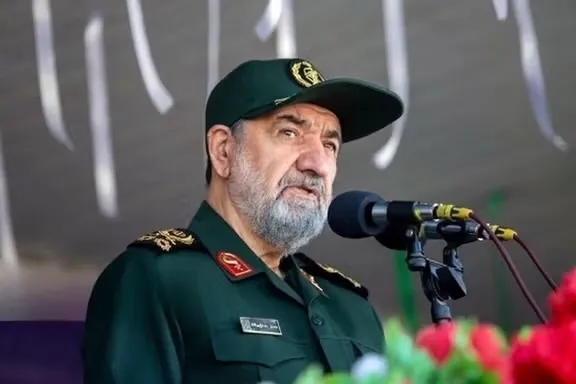
Full text of the interview of Major General Mohsen Rezaei on Iranian state television, Saturday 31 October 2026.
Mohsen Rezaei is Secretary of Iran’s Supreme National Security Council. A former Commander-in-Chief of the Islamic Revolutionary Guard Corps (IRGC), he is also Secretary of the Supreme Council for Economic Coordination and a member of the Expediency Discernment Council.
“The war against Iran has such international repercussions and has affected the lives of the whole world because of the resistance of the Iranian nation, the victories achieved, and Iran’s place on the world economic map. It is no longer possible for an event directed against the Iranian nation to take place and for the Iranian nation alone to suffer from it: all the nations of the world suffer from it. What is the situation in America now? Wherever Trump goes for a campaign speech, without exception, he has to answer the question of why he started the war. It is therefore clear that this war has had many consequences that occupy the minds and thoughts of all the inhabitants of the world.
These immense consequences, which today affect people’s lives throughout the world, are due to Iran’s resistance and capacity, geographical position and civilization. Thus, the war has made known and brought to light many little-known facets of the power of the Iranian nation. Look now at the life of the American people: in that country there is no family and no individual who has not suffered from the attack on Iran; even the incomes of those who were rich have fallen, not to mention people for whom fuel, gasoline, heating appliances and expenses have risen terribly. This affects everyone’s life. It was not like this in the Vietnam War, nor in other wars. Yes, in the Vietnam War too, a great many American soldiers were killed, but that war did not have these wide-ranging effects throughout the world; whereas the American attack on Iran has affected the whole life of the people of the world. Consequently, in my opinion, there is not a house in the world where people do not spit in Trump’s face and do not insult him. […]
I have not yet replied to the letter from the American Vice President; their tone has completely changed, and it is a very good sign: thanks to God, the Iranian nation has consolidated its victory and its power.”
Source: IRIB
Translation: resistanceaxis.substack.com
- Iran at the heart of the new regional alliances
- Response to the statements of Macron and Merz
- Negotiations with the United States and Iranian intransigence
- Will Iran acquire the nuclear weapon?
- How Iran is governed in wartime
Journalist: [After the greetings and introductions] In Tehran, we held a quadripartite meeting, with the presence of officials from three countries, Saudi Arabia, Pakistan and Turkey, which drew a great deal of media attention. Why did this meeting take place, with what objectives, and to what extent have those objectives been achieved?
Iran at the heart of the new regional alliances
Mohsen Rezaei: After the victories of the Iranian nation in the recent wars, the 12-day war [June 2025], the 40-day war [March–April 2026], the 17-day war [July 2026], and the heavy defeats suffered by America, it has become clear to many that the Americans not only do not create security, but are a hotbed of insecurity. In particular, following Israel’s illegitimate aggressions against Lebanon, Syria, Gaza and Jordan, an important question has arisen as a result of the victories of the Iranian nation: what will be the future order of this region, what security arrangements to administer these 25 countries of West Asia [the Middle East], what kind of security, and how is it being put in place?
Alongside this question, a new perception is taking shape: America will probably leave the region in the coming years. Who will replace America: China, Russia, or the countries of the region themselves? Can Israel build a proxy hegemony for America? Two very important questions have thus emerged, and the cause of these two questions is the resistance of the Iranian nation, the heavy defeat suffered by America and the incapacities from which it has suffered.
This shows, first of all, the greatness of the Iranian nation, that is, that the Iranian nation has the capacity to determine the fate of superpowers and to settle scores with them. They sought to sow fear in the heart of the Iranian nation; the Iranian nation dealt them a great rebuff, and the consequences and the aftershocks of this resistance have reached the whole of Europe, which I will address in connection with the remarks made by Macron and the German Chancellor. Several movements have now begun. One of them is that Rubio travelled to Italy and kicked off the return of Europe, with Great Britain as its pivot, to West Asia in place of America. Secondly, China and other countries of the East of the world, in Asia too, are seeking to enter this region in one way or another. Trump himself, besides Israel, had come to wonder whether it might not be possible to build a substitute from the countries that maintain friendly relations with America, and they were seeking to create certain pacts.
All these efforts, over these past year or two, have shown that if the voice of the Iranian nation is not heard, no pact takes hold, no alliance forms. Consequently, in any security arrangement that is to be formed, Iran must have its place. That is why we had not invited these friendly countries; they themselves asked to come to see us so that we could talk together about regional arrangements. In the discussions, there was no mention of the Mecca pact, nor of the Yemen question; in the official matters, the whole discussion was about what the future arrangements of the region should look like.
Journalist: What was each one’s position toward the Zionist regime?
Mohsen Rezaei: Among the interesting things, there was this: I thought they had become more “Hezbollahi” [resistance fighters] than many of our friends! They spoke so firmly against Israel. His Highness Prince Khalid [Saudi Minister of Defense] said: “After Iran, Israel will go after Turkey, then us, Saudi Arabia.” Mr. Ibrahim Kalin, head of Turkey’s intelligence and security agencies, strongly confirmed Prince Khalid’s statements; Mr. Asim Munir [Commander-in-Chief of Pakistan’s army] also spoke of the threat from Israel and of the bond forming between Hindus and Jews against Muslims and Pakistan. These remarks were based on information and concerns that they harbor, regarding Israel’s future, about themselves. It is precisely this that enabled us to arrive at a good synthesis, and we set one, two, three and four [points of agreement], and we discussed together the priority of defending Muslims against Israel, the need to make Israel leave southern Lebanon, southern Syria, Gaza, as well as the question of the West Bank.
The communiqué we issued said that, at the first meeting of the four countries, regional arrangements had been discussed. It was agreed that these meetings would continue and that the foreign ministers of these three countries would come to Iran again. In fact, the Tehran meeting is turning into a new arrangement in the region, and that is what we want too; we believe that foreign powers must leave the region and that the countries of the region themselves must preserve their security. I gave explanations on why unity is important for security and why division engenders insecurity, and I retraced a course from the time of the Soviet Union, of America and Great Britain, as well as of the other countries that came from outside the region, set up shop, and trampled the interests of the countries of the region in favor of their own, or the settling of scores that existed between the powers. Fruitful discussions took place during these three or four hours, and a good basis was laid for the future of the region’s security.
Journalist: Has the resistance of the Iranian nation brought about a change of regional approach regarding the endogenous and exogenous nature of security in the region?
Mohsen Rezaei: Yes, that is exactly it. That is to say, in reality, a new regional order, if we can put it that way, is taking shape: a new order of the region in an endogenous manner and without interference from countries outside this region. It can have its own rules and principles. I explained to them how we defeated America, what their objectives were; I explained their plans; they themselves had information, but with the details I gave, they were more convinced.
In truth, it has been proven that, when a country like Iran can stand up to 5,000 NATO flights toward the region [Note: this is the figure for flights coming from the European Union, not including those taking off from the Middle East] and to the entire American and Israeli army, if a country like Iran can emerge victorious, then if we four countries were all together, our power becomes far greater than that and we could establish lasting security in the region. In my opinion, it has become clear that Iran has a good place in the future of the region and that, without Iran, security will not be established in any way. Iran must certainly be present in any arrangement that is organized.
Response to the statements of Macron and Merz
Journalist: You mentioned the situation of Europe and the remarks of the French President and the German Chancellor; do you have an analysis and would you like to develop a few points?
Mohsen Rezaei: France is a great country of Europe and plays a role on that continent, and Germany as well. These two men, Macron as well as the German Chancellor, were very happy at the beginning of the Israeli attack; even the German Chancellor’s expression was that “this dirty work that Europe wanted to do, Netanyahu has done,” and they very nearly threw a party.
What do they say today? Now, Macron as well as the German Chancellor say that this war waged against Iran has placed Europe before very many problems. Macron says that these problems that have arisen in our streets are due to the war waged against Iran. Germany says that our economic problems are due to the war against Iran. Zelensky said that the rise in the price of diesel is linked to the Strait of Hormuz: Mr. Trump, why are you giving a wrong address?
Note: German Chancellor Friedrich Merz provoked a fierce controversy in June 2025, at the G7 summit in Canada, by declaring that Israel was doing the “dirty work” for Western countries by striking Iran’s military and nuclear infrastructure. He expressed his respect for Israel’s courage in the face of an Iranian regime that he described as a source of terror and global destabilization.
On 18 October 2026, Macron declared, regarding the national protests, “These protesters expressed a concern about the cost of living, about the price of fuel, which have their source in the conflict launched in the Persian Gulf, in which France did not take part and whose consequences we are suffering.” Trump retorted that uncontrolled immigration was to blame.
In the wake of the demonstrations of 17 October, here is the response of the spokesman of the Iranian Ministry of Foreign Affairs to Macron:

Let us imagine: while the war against Iran has such international repercussions and has affected the lives of the whole world, there must be a reason for this; the reason is the resistance of the Iranian nation, the victories achieved and Iran’s place on the world economic map. It is no longer possible for an event directed against the Iranian nation to take place and for the Iranian nation alone to suffer from it: all the nations of the world suffer from it. What is the situation in America now? Wherever Trump goes for a campaign speech, without exception, he has to answer the question of why he started the war. He cannot give a single speech without having to answer this question; he has to answer it. Whenever a journalist asks him questions, one of them is always: “Why did you launch the war against Iran?” It is therefore clear that this war has had many consequences that occupy the minds and thoughts of all the inhabitants of the world.
These immense consequences, which today affect people’s lives throughout the world, are due to Iran’s resistance and capacity, geographical position and civilization. Thus, the war has made known and brought to light many little-known facets of the power of the Iranian nation. Look now at the life of the American people: in that country there is no family and no individual who has not suffered from the attack on Iran; even the incomes of those who were rich have fallen, not to mention people for whom fuel, gasoline, heating appliances and expenses have risen terribly. This affects everyone’s life. It was not like this in the Vietnam War, nor in other wars. Yes, in the Vietnam War too, a great many American soldiers were killed, but that war did not have these wide-ranging effects throughout the world; whereas the American attack on Iran has affected the whole life of the people of the world. Consequently, in my opinion, there is not a house in the world where people do not spit in Trump’s face and do not insult him.


Negotiations with the United States and Iranian intransigence
Journalist: Let us move on to an update on the latest situation of diplomacy: the political comings and goings continue, mediators come and go in Tehran. Two important events have occurred: one is the presence of a Qatari delegation in Tehran, which is still striving to negotiate, and its mediating role; the other is a letter that the American Vice President, Vance, addressed to you. Let us begin with the Qatar affair and the latest update on the negotiations?
Mohsen Rezaei: Of course, our recent diplomatic discussion began more than a month ago. Because of the Americans’ repeated solicitations for us to enter into a negotiating discussion, we told them that we would not have a negotiation with them, but that we would send them our conditions. Consequently, until action is taken according to our conditions, there will be no negotiation. Act according to our conditions. These same intermediaries told us: write your conditions and give them to us, through Pakistan and Qatar; Iraq began an effort, which remained unfinished. We sent our seven conditions; we said that until action was taken according to these conditions, neither would the Strait of Hormuz open nor would there be any negotiation. They said: and then what? We said that there is no “then”, first we must see a change of behavior on your part; we are no longer returning to that diplomacy of the past; first we must see a change of behavior, and you must implement the seven conditions; if you change your behavior and we see the seven conditions implemented, then we can sit down together and see what needs to be done.
Journalist: So the framework is that of the conditions that had already been mentioned in Islamabad too; are the seven conditions not based on that?
Mohsen Rezaei: No, it is different. First, from the point of view of method, it is completely different. We sent our conditions, they replied to us; we saw that, in their reply, firstly, they had somewhat diluted the implementation of our seven conditions, and secondly, they had also put forward subjects that would have to be discussed later; we wrote to them that their replies are not convincing. After this reply was sent, the mediations began again: Mr. Asim Munir took the trouble to come to Iran, the Qataris came to Iran, they made a second proposal, better than the first, but this time again we did not want to approach things with optimism, for fear that they might want to attack us again; a message was therefore explicitly conveyed and Mr. Araghchi told them that Iran is distrustful of you: you come, you want to negotiate, then you attack after the midterm elections. Once that was said, their third reply reached us, much better than before, that is to say it expressed clearly that the Americans are ready to accept our seven conditions.
Then we again had a few ambiguities; Mr. Araghchi informed them of these ambiguities. He went to Washington, he brought back replies yesterday, and the discussions of this new round have begun. We therefore regard diplomacy as serious, but we will in no case retreat on the rights of the Iranian nation. Why are we doing this? Some say: why do you insist so much? Do you have something in hand that you do not want to reveal? Why insist so much? Our first answer is that if Trump and America are not punished here, tomorrow any other country will say: if we attack Iran, we will pay no price.
Our main deterrence is to make sure that the war ends in such a way that no one dares to attack Iran any more. We are not being stubborn; we are acting rationally and in light of the country’s future national security: why did you commit the aggression? Why did you cause damage? If we do not restore the rights of the Iranian nation here, tomorrow any other country will rush headlong and say: “Let us attack Iran; in the past, you saw that America attacked and nothing happened.” We therefore hold firm on the basis of a logical framework; by the grace of the Lord Most High, our firmness has been there.
Now, as for the answer to those who say: does Iran have something in hand? Yes, we have something. Now, if the war begins, we will break America’s horns in such a way that we shall see how this hornless ox will manage to lift its head in the world: can it defend itself? Thanks to God, by the grace of the Lord Most High, our armed forces are in a very good state of readiness; we tested our anti-ship missiles over the USS George Washington [American aircraft carrier]; everyone knows our situation in the Strait of Hormuz; today we are present with power in the Strait of Hormuz, and no sensible person in the world is negligent regarding the national security of his country.
Thus, the national security of each country is that country’s red line; the national security of every Iranian and of Iran as a whole, we are in no way prepared for it to be weakened. We have paid a high price, people’s lives are going through hardships, but the great gain we have obtained today and that we will obtain more of in the future, God willing, is not commensurate with these hardships. The children of this nation, the future generations of this nation, God willing, thanks to this resistance, will have the best life in the region and will look upon their accomplishments with pride. I therefore say to these gentlemen who have questions and ambiguities: expect a very honorable defense in the future. If the enemy makes another mistake, by terrible blows and our honorable defense, we will put an end to this historical period [American and Western hegemony].
Journalist: These seven conditions have been much discussed in circles and in the media, and you have just said that they are different from the framework of that Islamabad memorandum of understanding; what is the difference between these and the conditions on which you had agreed in Islamabad?
Mohsen Rezaei: The first condition is as follows: in Islamabad, concerning the Strait of Hormuz, it was written “with Iranian arrangements” and, at the end, it was written “in respect of international law,” which had given rise to interpretations. Now, no: in these seven conditions, in truth, this common passage that exists between us and Oman and that has been approved by both countries is registered at the international level; Iranian management exists in this strait and this waterway, and all those who come pass through this waterway placed under Iran’s management. It is limpid and clear, and there is no ambiguity; or, concerning the collection of transit fees, initiatives have been taken: if we agree, these sums will not be on credit as in the past (but will have to be paid in cash). Finally, concerning the other clauses that appear in the conditions, which will be published in due course, God willing, there are differences, both in terms of verification and in terms of guarantees of implementation. Moreover, overall, it comes down to this: we first change America’s behavior through the acceptance of these conditions [and concrete proofs of this acceptance], then we will move on to the other discussions.
Note: the end of the war on all fronts, including in Lebanon and Gaza, is an essential clause. Iran is doing everything to help Palestine and Lebanon.
For example, suppose that, if one day we want to enter into nuclear discussions, we will first debate our rights, without setting ourselves any limit, because the Agency (International Atomic Energy Agency) itself knows that every country that is a member of the NPT has 22 rights; why would we not use all of our rights? Consequently, as long as we are in the NPT, now, it may be that one day they want to provoke a war, and it is not certain that after each war in the future we will remain in the NPT, but as long as we are in it, we have 22 rights. If they want to enter into discussion with us on the nuclear issue, we will first lay down our rights, as now we say: the Strait of Hormuz does not open as long as you do not respect our rights. At that time too, we will say that if you want to enter into negotiation of the nuclear file, we first claim our rights; first, you must recognize our rights.
One of our rights is that every country that is in the NPT may have nuclear exchanges with other countries; in terms of technical knowledge, we have never made use of it; there were 22 very good rights in the NPT, which the Americans did not allow us. We are therefore serious, we do not retreat in any case on the rights of the Iranian nation, but we do not want, if we can obtain the rights of the Iranian nation sooner, to waste time; in no case are we belligerent, but we want the footing of the Iranian nation on the question of national security to be such that there is neither doubt, nor suspicion, nor hesitation, and that there be no deception on the part of the opposing party.
Journalist: Today, then, our situation on the terrain of diplomacy is as follows: the positions of the Islamic Republic of Iran have in no way receded compared with before, in particular on the seven conditions, and these conditions have once again been conveyed to the Qatari delegation. We are now awaiting a response?
Mohsen Rezaei: Yes, we are now awaiting the Americans’ latest response; that is to say, we can suppose that tomorrow they reply to us, and that, in this passage that lies in the middle of the Strait of Hormuz, the common waters between us and Oman, where Iranian management exists, the implementation of the agreements begins; but the Strait of Hormuz cannot open, unless before that they have implemented these seven conditions and respected our interests, from the return of our frozen funds to the other issues, all these seven conditions must be fulfilled beforehand. Of course, these seven conditions we are speaking of are, in practice, more than seven: within each condition, there are also two or three sub-conditions. If I were to state them numerically, it would perhaps be 11 preconditions in all, but when we say seven conditions, some conditions have two or three sub-conditions. No, all these conditions are in their place, they have undergone no change. Now, if the realization of some of these conditions occurs in a second stage and other questions are raised, there again we have rights and we will act according to the same model, that is to say that if they consider that we should remain, let us suppose, in the NPT, we say: first specify our rights so that we honor the obligations we have in the NPT, and these nuclear rights for us.
Grossi [Director of the International Atomic Energy Agency] has committed unlawful acts, and in my opinion he is a mercenary of Israel; all our nuclear problems began in his time; otherwise, all the directors of the International Atomic Energy Agency have always written in black and white that Iran had had no deviation; he is the first person who came here to speak of deviation. We have so many documents and proofs from prolonged inspections, that is to say that the greatest number of inspections among nuclear countries has targeted Iran; over more than 20 years, there is a mass of evidence that Iran has had no deviation from the peaceful path; the only one who came to enter into these discussions was Grossi. We therefore have a good and solid track record of respect for international law, and we have rigorously followed it up to now.
Journalist: In the field of diplomacy, one of the pieces of information that drew a great deal of media attention is that of the letter from Vance, Vice President of the United States, addressed to Your Excellency. The speculation was that the letter is respectful and calm in tone, but no details have been published about its content. Have you replied to this letter, or do you intend to reply to it, and can the content of this letter be disclosed?
Mohsen Rezaei: This letter was delivered through the American intermediary to the Ministry of Foreign Affairs, and Mr. Araghchi passed it on to me. I read the letter and I have not yet replied to it. Generally speaking, their tone has changed; that is to say, the tone of the letter is different from that of the letter Trump had written to the martyred Leader of the Revolution. For this is the second letter exchanged between American officials and Iran. It is a very good sign, attesting that, thank God, the Iranian nation has consolidated its victory and its power. Let us move on, since they have made nothing of the letter public, and I too will say nothing.
Will Iran acquire the nuclear weapon?
Journalist: Concerning the nuclear question and the change in the nuclear doctrine of the Islamic Republic of Iran, points are raised in most popular demands. Is a change planned in this approach before any event occurs in terms of the war situation, and what is currently the policy of the Islamic Republic of Iran regarding its nuclear doctrine?
Mohsen Rezaei: The nation, they are the owners of the country that is Iran; they express their wishes, they express their demands to the leaders, but no new decision has yet been taken within the government and the State. Admittedly, this question is currently being debated: if war breaks out again, do we want to keep the same doctrine as before or not? But no new decision has yet been officially taken, at the level of the State. The Iranian nation has demands and follows a certain logic. It sees that the enemy struck all our nuclear centers; for what reason did it do so, when we responded positively to all the Agency’s inspections and helped it to come and inspect our facilities? At all our sites, they installed cameras, so that all the events inside our sites are transmitted online, live, to the center of the International Atomic Energy Agency.
Thus, when people see this, what they expect of us is: why do you want to continue in this situation? Let Iran’s nuclear doctrine change! But officially — or, suppose, that a meeting had been held at the Supreme National Security Council, or that a decision had been taken in the Council of Ministers — that has not happened. Admittedly, our friends in Parliament are doing preliminary work, but no decision of the State has yet been taken.
How Iran is governed in wartime
Journalist: At present, in what structure is the diplomatic policy of the Islamic Republic of Iran developed?
Mohsen Rezaei: The structure of the Islamic Republic of Iran, thank God, has demonstrated in this war that it transcends individuals. Even the great figures of this system, who had both authority and presence at a level wider than Iran — like the martyred Imam [Ali Khamenei] — have passed away, but His Eminence the Leader [Mojtaba Khamenei] has led the country; not a single day, not a single hour, did any flaw occur in the management of the country. In this war, they martyred our dear Imam, they martyred our commanders; for 9 days the Leader had not been chosen, but the country was led.
This shows that this institution of the State, or nation-State, has become so firmly established in these 48 years that it does not waver with the change and evolution of individuals: it remains in its place and it exists. Yes, in certain periods, disagreements arise, there is a plurality of voices, but by the grace of God, we see today that the President of the Republic, the Speaker of Parliament, the head of the judiciary, the members of the Supreme National Security Council, all of us, we are in unison in the war, in diplomacy and in the will to break the economic siege. It may be that expert opinions differ, but when we meet and hold sessions, we reach unity of view.
At present, diplomacy in wartime falls to the Supreme National Security Council, but diplomacy outside wartime falls to the government and the Ministry of Foreign Affairs. Now, since we are at war, the Supreme National Security Council is at the helm, but this Council is not external to the government: the president of the Supreme National Security Council is the President of the Republic himself, the Minister of Foreign Affairs is a member of this Council, and the commanders of the armed forces are members of it. Consequently, today, in my opinion, we have the highest degree of unison, and I also ask our dear compatriots not to pay attention to fabrications of dualities — for example, that such and such individuals are in disagreement. There is no political disagreement: at present, our unison is behind the Leader of the Revolution.
If, at a given moment, one of the officials wanted to act by himself outside the Leader’s opinion, then yes, that would have to be called a disagreement; but today, our unison behind the Leader of the Revolution is at a very good and very favorable point. Thus, one can say that such and such individuals are in disagreement among themselves — no, we are all behind the Leader of the Revolution. In recent times, meetings have also taken place with the dear Leader of the Revolution: he held meetings with the commanders and the officials; I myself was received in his presence, and I truly felt that he is informed of all the details of the country — for example, on such and such a subject or piece of news, I saw that he was better informed of that news.
I therefore felt that he is informed of all the details of the country, and that he regularly writes, notifies, recommends and demands. This meeting was also very good, it perhaps lasted more than two hours; we also prayed behind him, in his presence, in this spiritual atmosphere; and regarding the Supreme National Security Council itself and its secretariat, he had views that we had to gather and with this directive we had to move forward — which we fortunately did: although it took a certain time for us to be presented to him, our trajectory was very close to his orientations.
On diplomacy, we listened to his orientations; on defense and resistance, on the people’s livelihood, and on the fact that the Supreme National Security Council and its secretariat sit at the bottleneck of the country’s economic affairs: economic, political, security and defense coordination. The President of the Republic, thanks to God, leads the country with good authority; for livelihood questions, the government has also had good reflections, it needs a little time, and, God willing, it has good programs in these actions, from supply vouchers to the strengthening of wages, as we have heard from our friends at certain meetings. Thus, by the grace of the Lord Most High, the economic pressures will diminish in the future.
Journalist: To conclude, if there is a point left to add, please say it.
Mohsen Rezaei: We express our gratitude to you and to our friends at the Radio-Television. My last word is that national unity and cohesion are no less than our missiles; we must not limit this unity and national cohesion to the political domain alone: they must also enter into the economy, entrepreneurship and cultural questions. Today, these questions, information and social cohesion are no less than our missiles, and the enemy, when it sees them, is driven to despair and sinks into discouragement. The sooner the enemy despairs, the sooner it packs up and withdraws from the confrontation with the Iranian nation. Outside Iran too, thank God, our situation is good: in the Lebanese Resistance, the Yemeni Resistance and the other resistances that exist in the world. World public opinion has completely evolved with regard to Iran, in a positive manner; the power of the Iranian nation and these prides, which all belong to this nation, we must preserve and strengthen. God willing, may Almighty God and His Lordship the Master of the Age [Imam al-Mahdi] — may God hasten his noble parousia — help us so that we may, day by day, achieve more successes for the Iranian nation.