

Mohammad al-Bukhaiti: We are Ready to Fight Saudi Arabia, the United States and Israel to End the Blockade Against Yemen
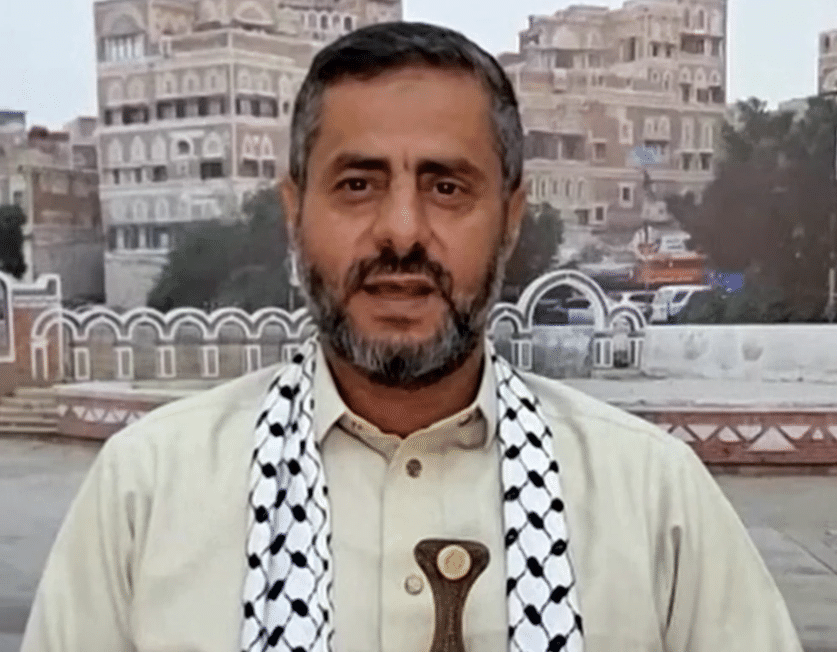
#### Interview of Mohammed Al-Bukhaiti, member of the Political Bureau of AnsarAllah in Yemen, on the France 24 television channel.
> Followed by a tribute to AnsarAllah by Prof. Norman Finkelstein
Source: France 24, October 10, 2026
Translation: resistanceaxis.substack.com
Note: The entire West stands behind Saudi Arabia as it attempts to make history begin in October 2026—just as it stood behind Israel’s attempt to make history begin on October 7, 2023. It sheds crocodile tears over Saudi airports, while it has ignored since 2015 the destruction, massacres and mass famine imposed on the whole of Yemen, at the cost of hundreds of thousands of deaths (nearly 400,000 killed between 2015 and 2021, according to this UN report). Glory to the heroic people of Yemen, who sacrificed everything for Gaza! May it swiftly free Western Asia of the usurping Saud entity, a necessary and sufficient condition for the elimination of the usurping Zionist entity!
The term “Houthis” is used to denigrate the Yemeni resistance and the legitimate authority in Sanaa, and “AnsarAllah” or “the legitimate government of Yemen” should be preferred to it.
In the first interview below, the remarks of Mohammed al-Bukhaiti between square brackets are covered by the journalist’s interruption, who is zealous in her effort to prevent AnsarAllah from speaking.
Journalist: We are now joined, dear viewers, from Sanaa, by Sayed Mohammed al-Bukhaiti, member of the political bureau of the Ansar Allah group. Welcome, Sayed Mohammed, to our program, as we follow what is happening in Saudi Arabia. Trump said he would decide quickly whether he would join Saudi Arabia in striking the Houthis: so said Trump. Do you expect, first of all, that Washington will join this war, or not, and what would that change in your operations?
Mohammed al-Bukhaiti: In the name of God, the Most Gracious, the Most Merciful. May God keep you all. If America becomes involved in the aggression against Yemen, it is certain that Yemen will respond with painful responses against America or against any country that becomes involved in the aggression against Yemen. Yemen has already fought two military rounds against America and came out of them victorious, and America was unable, previously, to break the blockade imposed by Yemen on the Zionist entity. We ultimately reached an agreement: Yemen and the American government reached a ceasefire agreement, and Yemen succeeded in isolating America from the Zionist entity, whereas America failed to isolate Yemen from its support for Gaza. And today, Yemeni missile and air capabilities have become more advanced and more numerous. That is why we warn America against becoming involved again in the aggression against Yemen, in any attempt to break the blockade imposed on the Saudi enemy.
Journalist: Even if, perhaps, the United States were to join this conflict, alongside other countries?
Mohammed al-Bukhaiti: [Burst of laughter] By God, even if the jinn and humankind of this world were to gather, we would fight them, and, by the permission of God, the Most Glorified and Most High, we shall emerge victorious. We shall emerge victorious. Why? Because Yemen is in a position of self-defense; Saudi Arabia is in the position of aggressor; Saudi Arabia is [the one that declared war on Yemen, it is the one that violated the ceasefire…]
Journalist: Sayed Mohammed, excuse me for interrupting you, but on this very point, you say that Saudi Arabia is besieging Yemen. But you, today and even before, have intensified your attacks on King Khalid International Airport, which is a civilian target. How do you respond to that?
Mohammed al-Bukhaiti: From the very beginning, we have been clear and direct, and we said that we would impose the equation of “blockade for blockade” and “escalation for escalation.” Our military operations against Saudi airports aim to make the world know that Yemen’s airports, its ports, its wedding halls, its condolence halls, its schools and its hospitals are also civilian facilities and that it is not permitted to target them under international law. Why would it be lawful for the Saudi entity [to target Yemeni civilian infrastructure, and unlawful for Yemen to respond in kind?]
Journalist: Sayed Mohammed, you are using the same method, that is, you say that perhaps Saudi Arabia is besieging you, striking civilian sites in Yemen, which causes civilian casualties in Yemen, and today there are wounded in Saudi Arabia, civilians of course.
Mohammed al-Bukhaiti: That is correct, but we warned the Saudi authorities not to continue operating their airports, and today we advise the Saudi authorities to close all their airports and to evacuate them of staff and travelers, and we also advise global airlines not to use Saudi airports. [another sentence is inaudible because of the journalist’s intervention]
Journalist: Well, you say that you advise all airlines not to serve Saudi airports. Sayed Mohammed, there is a central point here in this conflict: we know that in Saudi Arabia are Mecca the Venerated and Medina the Illuminated, and that the Hajj is at our doorstep. What are you waiting for? Not using Saudi civilian airports is perhaps an injustice toward those who will go, or who will perform, the Hajj in the Kingdom of Saudi Arabia. Is this a form of pressure on the Kingdom to make it sit at the negotiating table or to end its blockade, as you put it, of Yemen?
Mohammed al-Bukhaiti: As for pilgrims of the Hajj and the Umrah, and visitors to the Sacred House of God in Mecca the Venerated and Medina the Honored, there is an exception, and this is what the spokesman of the Yemeni armed forces made clear: the airports linked to Mecca the Venerated and Medina the Illuminated will not be targeted. That is the first point. On the other hand, the Saudi authorities can run flights to and from Saudi Arabia to Riyadh airport or others, but after obtaining the authorization of the government of Sanaa.
Journalist: Yes.
Mohammed al-Bukhaiti: Because we will authorize certain flights for humanitarian reasons. On the other hand, we are treating Saudi Arabia in kind today, but not in everything: we will not go so far as to target wedding halls, [condolence halls, Saudi hospitals, schools, etc. We will never stoop to such acts.]
Journalist: Well, Sayed Mohammed, let us stay with realities. The question today is that Saudi Arabia does not want to sit with you at the negotiating table – that is what the Kingdom says. Do you expect the matter to be settled militarily? The question today: what are the limits of your war against Saudi Arabia?
Mohammed al-Bukhaiti: We are not betting on sitting at the negotiating table with the Saudi enemy; we are betting on God, the Most Glorified and Most High, and on our military strength, because Bin Salman does not know, understands only the language of force. And it is also he who bears these losses. Why? Because it is he who first began the aggression against Yemen in 2015, it is he who violated the ceasefire agreement in 2026, and it is he who persists in wanting the continuation of the war and the continuation of the blockade. We say: we are for the end of the war and the end of the blockade and for the establishment of the comprehensive and lasting peace that guarantees the dignity and security of all the countries of the region, but he refuses, and consequently he bears the responsibility for all the losses.
Mohammed al-Bukhaiti: In the name of God, the Most Gracious, the Most Merciful. May God keep you all. The Yemeni deep strikes on Saudi territory, which target its oil facilities or its airports, fall within the framework of response in kind: “airport for airport,” “port for port,” “blockade for blockade.” Consequently, Yemen’s military operations will continue in the heart of the Saudi entity until it is compelled to submit to the just and honorable peace that guarantees the dignity and security of all the countries of the region. Those who persist in choosing war are the Saudi leaders. As for Yemen, our position is clear: we are for the end of the war and the end of the blockade on both sides.
Journalist: But the timing, which coincides with the halt of the war between Washington and Tehran, means that the position of the group (Ansar Allah) plays in favor of Saudi Arabia right now. A great wave of solidarity has supported the Kingdom, expressed its solidarity with it and condemned what the group is doing. This does not serve the Houthis.
Mohammed al-Bukhaiti: On the contrary, the continuation of Yemeni military operations in the heart of the Saudi entity, despite the obtaining of a ceasefire or truce between America and Iran, confirms the correctness of Yemen’s account of the facts, according to which our military operations target the Saudi enemy in order to end the aggression and the Saudi blockade, and to stop the plundering of Yemeni wealth by the Saudi enemy, which has caused great suffering to Yemen. And this suffering…
Journalist: But Sayed al-Bukhaiti, you consider the United States an enemy, you consider Israel an enemy; why are you now concentrating your strikes on Saudi Arabia? Because it supports an internationally recognized government in Yemen?
Mohammed al-Bukhaiti: Because Saudi Arabia is in the position of the aggressor: it is the one that proclaimed the aggression against Yemen in 2015, without justification, and it is also the one that violated the ceasefire agreement by targeting Sanaa airport in 2026 [to prevent an Iranian civilian aircraft from landing and breaking the air blockade], and it is also the one that persists in choosing war and refuses the choice of peace. It is therefore natural that our military operations should be directed against the Saudi enemy. And if America or other countries become involved in the aggression against Yemen alongside Saudi Arabia, or in an attempt on their part to lift the blockade imposed on the Saudi enemy, they will become a legitimate target for Yemen.
Journalist: Well, how will you deal with the international repercussions of these attacks that you are carrying out against the Kingdom?
Mohammed al-Bukhaiti: The Saudi leadership should have drawn lessons from the experiences of the past: first, it failed to achieve its objectives in Yemen. Add to that that the end of the war has become a common interest between Yemen and Saudi Arabia. Moreover, Yemen had already imposed a maritime blockade on the Zionist entity, and America intervened with a vast international coalition made up of 40 countries, including America, Britain and the Zionist entity, but they all failed to lift the blockade on the Zionist entity, which ultimately forced America to dismantle this international coalition in the aggression against Yemen and to reach an agreement between Yemen and the American government. The Saudi leadership should have drawn lessons from those experiences and not risked destroying its oil facilities, its airports and its ports. Add to that that Yemen’s operations come in response to that aggression.
Furthermore, as regards international condemnations, whether from the United Nations or from certain countries, we consider that these condemnations express their moral downfall, because they have not condemned any aggressive operation by Saudi Arabia against Yemen from the beginning of the aggression against Yemen until today, even though the Saudi air force has targeted condolence halls, wedding halls, hospitals and schools, and continues to do so to this day. That is why we say to the Saudi leadership: these condemnations will be of no use to you. And we say to them…
Journalist: Sayed al-Bukhaiti, do you think that this military pressure will lead the Kingdom of Saudi Arabia to stop the war and negotiate with the Houthis? And is there communication between the group (AnsarAllah) and the United States in the context of what is happening now?
Mohammed al-Bukhaiti: Of course: this pressure is the only option that will compel the Saudi leadership to accept the just and honorable peace that guarantees the dignity and security of all the countries of the region, because the Saudi leadership understands only the language of force. We tried, for 12 years, negotiations and the attempt to convince Saudi Arabia to get out of this quagmire into which it has led itself, without any need to destroy its infrastructure, but it did not respond; on the contrary, it targeted Sanaa airport and sought to tighten the blockade on Yemen. So, alas, the Saudi leadership understands only the language of force, and we deal with it in the language it understands.
Journalist: Is there communication between the Houthis and Washington and the American administration at this time?
Mohammed al-Bukhaiti: There is no direct communication between Yemen and the United States of America, neither now nor before, but there are indirect contacts through the Omani mediator, and our position is clear: our military operations target the Saudi enemy, and we have warned America, during these contacts, that its involvement in the aggression against Yemen would mean a direct military response from Yemen targeting America’s interests wherever our hands can reach them.
Journalist: Sayed al-Bukhaiti, in all objectivity, what is the Houthis’ strategy at present for managing the continuing clashes on the ground and the maintenance of control over the strategic area of Bab el-Mandeb, on the one hand, and the continuation of deep strikes on Saudi territory, on the other?
Mohammed al-Bukhaiti: Our strategy is to achieve comprehensive and lasting peace…
Journalist: By killing civilians?
Mohammed al-Bukhaiti: … which guarantees the dignity and security of all the countries of the region. That is our strategy. As regards maritime navigation, Yemen struggles and fights to protect freedom of maritime navigation for all, whether in the Bab el-Mandeb Strait or in the Red Sea, but it is Saudi Arabia that is attacking Yemen, which also calls for a response. Likewise, it is Saudi Arabia that is attacking Yemen and violating freedom of maritime navigation by obstructing this freedom to and from Yemen. Consequently, when we wage this war, it is to achieve peace and also to guarantee freedom, freedom of maritime navigation for all, because freedom of maritime navigation is a sacred right for all countries and all peoples. And the question now is: why does Saudi Arabia insist on continuing the war and the blockade, even though ending the war and ending the blockade by both parties has become a common interest? As for Saudi Arabia’s strategy, it wants the war and the blockade to continue on one side only, and deprives Yemen of the right to self-defense and deprives Yemen of imposing a blockade in return for its own blockade, and this is unacceptable. And if it were able, if Saudi Arabia were able to impose these unjust choices, one could have said: that is reasonable; but now, they are not able to, and consequently the continuation of the war is no longer in their interest.
Journalist: Thank you, Sayed Mohammed al-Bukhaiti, member of the political bureau of the Ansar Allah group, who spoke to us from Sanaa. Many thanks.
#### Norman Finkelstein: In Praise of the Houthis
From Norman Finkelstein’s new book, Gaza’s Gravediggers:
“The genocidal Israeli juggernaut proved unstoppable. But it wasn’t for a want of trying.
It behooves the chronicler to memorialize the noble few who, albeit in futility, stood on principle and put themselves at considerable risk to stop the killing machine. When Hezbollah opened a second front mainly targeting military installations in the north of Israel, and the Houthis blocked international shipping lanes in solidarity with the forlorn people of Gaza, the “enlightened” West reacted in shock and indignation: How dare they intrude, What business is it of theirs? But wasn’t it this enlightened opinion that not so long ago promulgated the doctrine of “R2P”—“Responsibility to Protect”? In essence, R2P denoted that, when established institutions fail to stop genocide and cognate crimes, then other entities must step in to fill the void. In the 1930s, when the enlightened West abandoned the Spanish Republic, international brigades of volunteers went there to fight the nascent forces of fascist barbarism. They covered themselves with glory. (Fully three thousand Americans joined the Abraham Lincoln Brigade, more than a third of them Jewish.) This time around, Fate appointed the Party of God and the Houthis. The Houthis possessed intimate knowledge of exalted Western values, on the one hand, and Gaza’s martyrdom, on the other. The US had enabled Saudi Arabia’s blockade of Yemen that left nearly one hundred thousand children dead and gone.
Rousseau famously observed that the most—indeed, only— truly civilizing impulse in human beings is not reason but the natural, inborn capacity for pity, and that the more society “progresses,” the more refined its rational faculty, the more its natural capacity for pity is stifled.
Who, in a decent world, would not choose one dagger-in-hand Houthi risking life and limb in defense of defenseless Gaza over ten thousand Harvard-educated, elegantly coiffed Antony Blinkens adroitly lubricating the gears of Israel’s murder machine?”