

YEMEN – The three provinces that Saudi Arabia took, and the war that never really ended
By Colin Maxwell
An examination of the territorial dispute, the resources, the strategic geography and the financial interests behind one of the Middle East’s longest-running confrontations.
There is a rather inconvenient piece of history missing from much of the Western commentary surrounding Yemen, Saudi Arabia and the increasingly dangerous confrontation engulfing the Arabian Peninsula.
Saudi Arabia and Yemen have been fighting over territory for almost a century, long before the Houthis, long before the Iranian Revolution, and long before Washington decided that Yemen was another convenient theatre in its endless Middle Eastern military adventures.
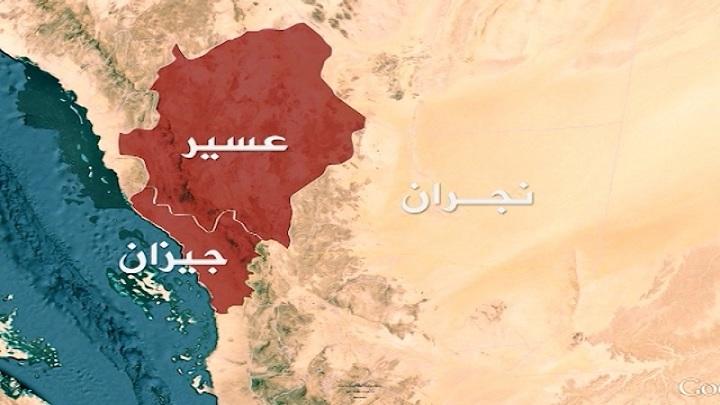
And at the centre of that history lie three territories – Asir, Jizan and Najran.
These are not insignificant patches of desert. They include fertile mountain country, important agricultural districts, mineral potential, strategic transport corridors and, in the case of Jizan, access to the Red Sea.
The historical complication is that their identities and boundaries have changed over time. They are administered by Saudi Arabia today, and the 2000 Treaty of Jeddah formally settled the modern interstate boundary. Historical Yemeni claims nevertheless remain important to understanding the dispute.
To appreciate why this matters, we need to go back to the collapse of the Ottoman Empire and the extraordinary territorial transformation of the Arabian Peninsula during the early twentieth century.
The scale of the territories
Present-day Saudi administrative regions, not the precise land transferred in 1934
| Asir | 81,000 km² |
| Najran | 130,000 km² |
| Jizan | 13,000 km² |
| Total | 224,000 … Saudi provincial figures, rounded. |
That combined area is approximately 83% of New Zealand’s land area – a useful comparison for readers Downunder.
But there is an important historical distinction. The 224,000 km² figure describes the three modern Saudi administrative regions. It does not establish that Saudi Arabia seized precisely that amount of Yemeni sovereign territory in 1934. The historical Asir region had its own political history, while today’s Najran province includes extensive desert territories far beyond the original contested borderlands.

The Forgotten War of 1934
When the Ottoman Empire disintegrated after the First World War, the Arabian Peninsula became the scene of a struggle between competing rulers, tribal confederations and emerging states.
In northern Yemen, Imam Yahya sought to consolidate the territories he regarded as belonging to his kingdom. To the north, Abdulaziz Ibn Saud was constructing the state that became Saudi Arabia in 1932.
Between them lay Asir, Jizan and Najran – territories with complicated histories of local autonomy, tribal allegiance and competing political claims.
The 1934 Saudi-Yemeni War ended in a Saudi victory. The Treaty of Taif, signed that May, confirmed Saudi control over the contested territories and established arrangements that were subject to twenty-year renewal.
For many Yemenis, the settlement represented territory surrendered under military pressure. For the Saudis, it confirmed the territorial consolidation of their new kingdom.
The resulting grievance persisted for decades.
Then came another important development.
In 1990, North and South Yemen united. Ten years later, in June 2000, the Yemeni and Saudi governments signed the Treaty of Jeddah, recognising a permanent international boundary.
Whatever the historical grievance, the modern border was formally accepted by both governments.
That does not erase the past. But it means claims that all three provinces remain legally disputed. Yemeni territory require considerable qualification.
Follow the Resources
And here the story becomes considerably more interesting.
Consider Najran.
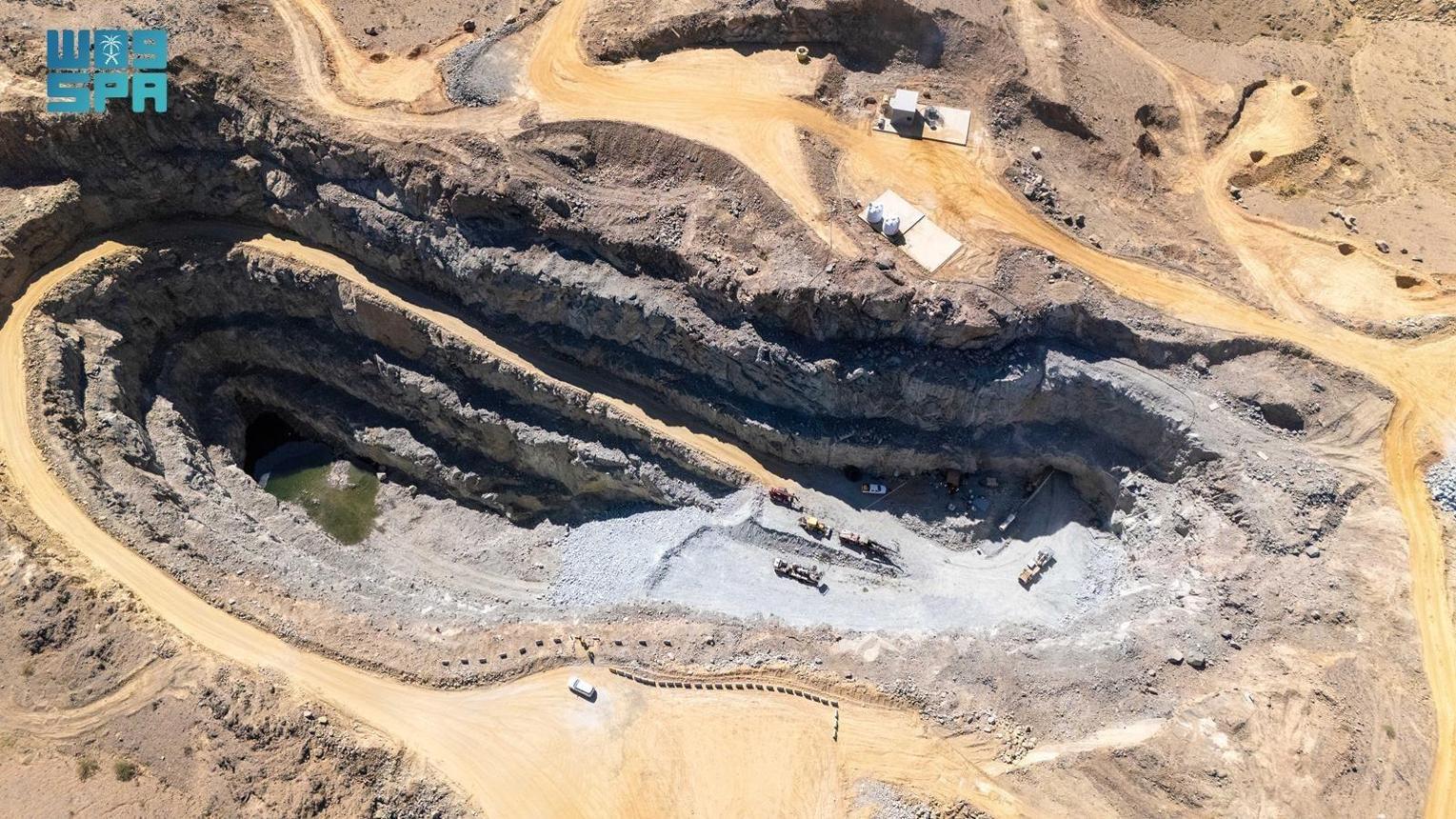
In June 2025, the Saudi Press Agency reported that the region possessed mineral wealth estimated at more than 145 billion Saudi riyals – approximately US$38.7 billion.
The resources identified include gold, silver, copper, zinc, lead, granite, marble and industrial minerals.
This is no speculative assertion that the whole region is sitting on an undiscovered ocean of oil. It is a published Saudi assessment of identified mineral potential – although mineral resources in the ground should never be confused with recoverable profits.
Najran is also an agricultural centre, with fertile valleys producing fruit and other crops.
Jizan provides another dimension altogether.
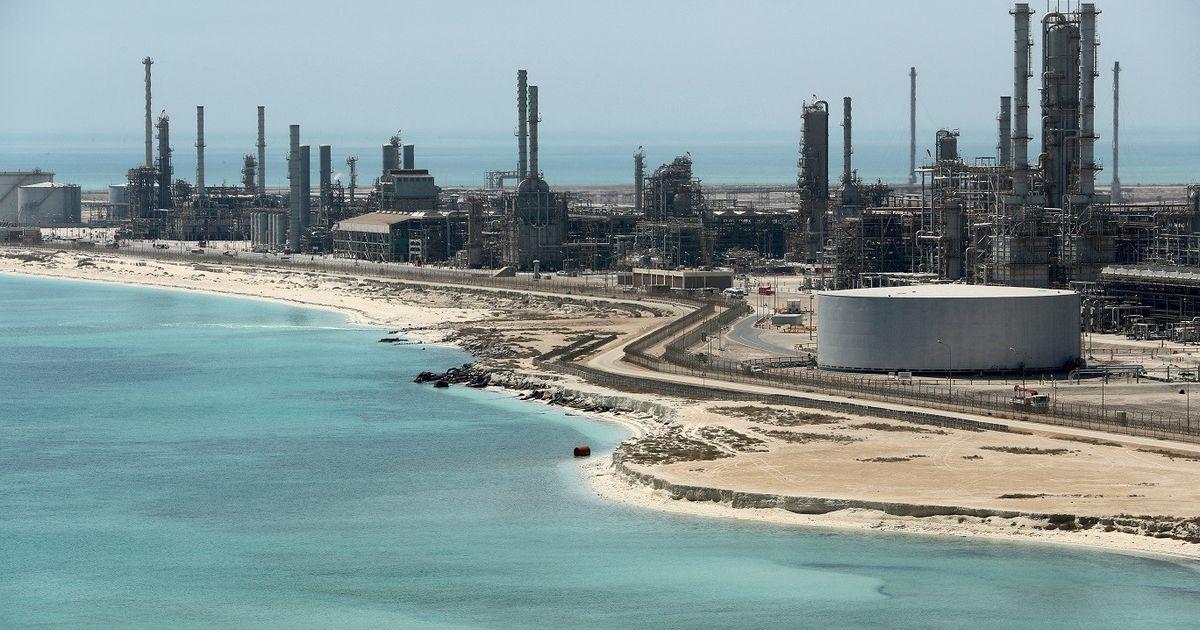
Its value lies in its Red Sea coastline, fisheries, agriculture and industrial infrastructure.
The region has developed a substantial refining and downstream industrial complex, including the Jazan refinery, designed for processing approximately 400,000 barrels of crude oil per day.
That refinery represents modern Saudi investment rather than evidence that the territory itself possesses equivalent petroleum reserves. Nevertheless, the economic significance of the location is unmistakable.
And then there is Asir.
With its mountain landscapes, comparatively generous rainfall, forests and productive agricultural areas, Asir is one of the most geographically distinctive regions of Saudi Arabia.
Its value cannot be measured simply by what might be extracted from the ground.
Water, fertile soil, food production, strategic elevation and control of transport routes are forms of national wealth every bit as real as the financial claims traded in international markets.
Saudi Arabia’s own geological inventory identifies seven mineralised belts in Asir, further illustrating its economic potential.
From a Border Dispute to a Regional Catastrophe
And now we arrive at the extraordinary irony of the modern conflict.
In 2015, Saudi Arabia led a military intervention in Yemen, ostensibly to restore the internationally recognised Yemeni government following the Houthi takeover of Sana’a.
The intervention became a devastating, prolonged war, with enormous civilian suffering, destruction of infrastructure, economic collapse and widespread hunger.
The Houthis, meanwhile, developed into a formidable military and political force with substantial Iranian assistance, although they retain their own domestic history and political objectives.
The Saudi leadership discovered that overwhelming financial resources and sophisticated imported weaponry did not necessarily translate into victory against a determined movement operating in extraordinarily difficult terrain.
And the United States, Britain and other Western governments became deeply involved through arms supplies, logistical assistance and diplomatic support.
The financial interests surrounding that military relationship deserve scrutiny. But arms-industry profits alone do not explain the war, and the historical border dispute is only one component of a much more complicated confrontation.
The Red Sea – Where Geography Becomes Power
t
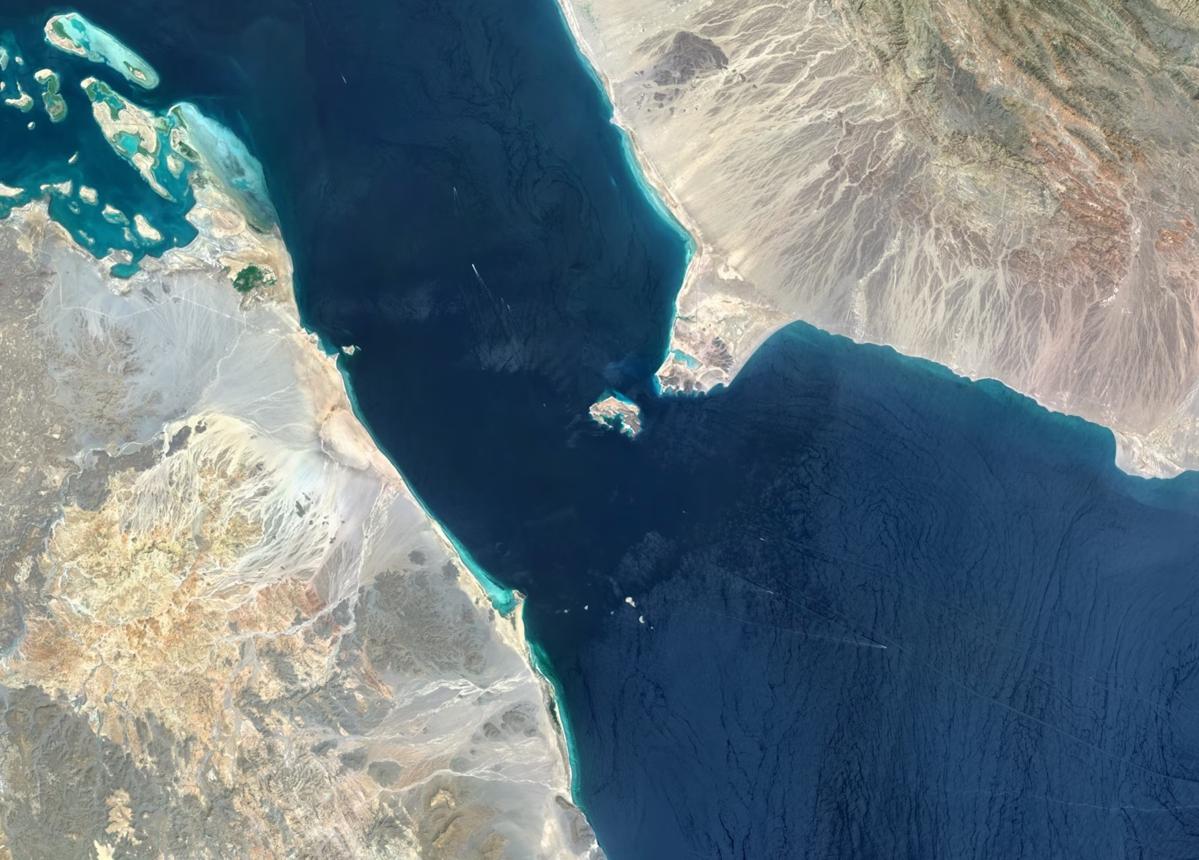
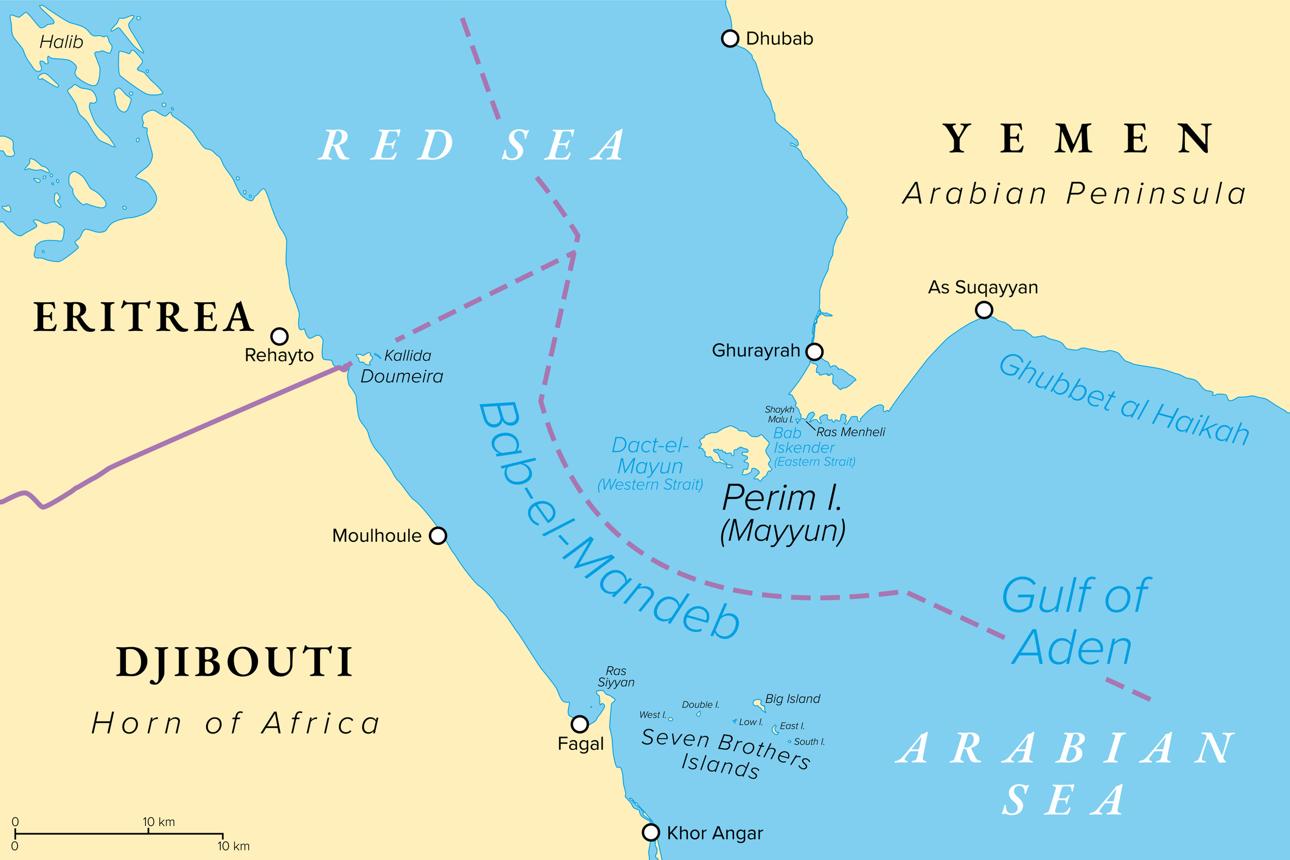
At the southern entrance to the Red Sea lies the Bab el-Mandeb Strait, one of the world’s strategically important maritime chokepoints.
Shipping passing through the Suez Canal must also navigate the Red Sea and Bab el-Mandeb to reach the Indian Ocean.
Yemen’s position gives whoever exercises effective control over its western coastline the ability to threaten shipping movements through this corridor.
This has become painfully apparent as Houthi attacks on commercial shipping have disrupted maritime trade, increased insurance costs and forced vessels to consider the much longer route around southern Africa.
But the distinction between possessing strategic geography and being entitled to attack civilian commerce is fundamental.
The tragedy is that a country with considerable agricultural, mineral, maritime and commercial potential has instead become a battlefield for regional and international power struggles.
Follow the Money – Again
And here we encounter the familiar machinery.
Saudi Arabia possesses enormous financial resources derived from petroleum exports. The United States and its allies possess vast military industries, financial networks and strategic interests across the Middle East.
Yemen possesses something quite different – geographical leverage, a strategically located coastline, a substantial population and resources capable of supporting far greater domestic productive activity than decades of warfare have permitted.
What might Yemen have become if the enormous sums consumed by warfare had instead been invested in electricity generation, water management, transport, agriculture, education and productive enterprise?
And what might the wider Arabian Peninsula have become if its governments had devoted a comparable effort to regional economic integration?
We are looking at a conflict in which the historical contest over land, the modern struggle for political influence, the control of shipping routes and the enormous business of warfare have become entangled.
There is no need to pretend that every event was orchestrated by a single financial mastermind to recognise that powerful institutions can benefit from the continuation of destructive arrangements.
The incentives deserve investigation, the beneficiaries deserve identification, and the populations paying the price deserve considerably more attention than they receive.
The Century-Old Lesson
Nearly a century after the Treaty of Taif, the Arabian Peninsula remains trapped in disputes whose roots reach back to the disintegration of empires, the emergence of modern borders and the struggle to control territory and resources.
Three regions associated with that historical struggle now form part of Saudi Arabia, with a combined modern administrative area of approximately 224,000 square kilometres.
Their economic significance is substantial, even allowing for the fact that their modern boundaries differ from the territories contested in 1934.
Yet the most extraordinary fact is that all this wealth, geography and human potential has done so little to prevent repeated catastrophe.
Yemen’s people have endured years of devastation while the surrounding region has spent staggering sums on weapons, security and military intervention.
And the wider world continues to treat the resulting instability as another geopolitical emergency requiring yet more military expenditure.
A century of history ought to have taught us something.
A civilisation capable of mobilising trillions for confrontation ought to be capable of mobilising its productive resources for cooperation.
Until we begin seriously examining who benefits from the existing arrangements, who finances them and who ultimately pays, the machinery will continue operating much as it always has.
And Yemen will remain another tragic demonstration of what happens when the enormous productive potential of humanity is subordinated to the pursuit of power.