

This Month in China – September 2026
Bringing you the latest innovation news from China
China vs US: Will AI EAT or FEED the world?
In 2011, one of Silicon Valley’s main investors, Marc Andreessen, made an industry-defining statement: “Software is eating the world.” His argument was that software companies would absorb industry after industry, from retail and media to transport and finance. Fifteen years later, AI is taking that idea to another level. AI is not only eating industries. It is beginning to shape humanity’s future.
The US is in a scaling race: bigger models, larger clusters, more chips, and the hope that the next leap towards superintelligence will secure America’s lead in AI, especially over China. China, by contrast, is increasingly in a diffusion race: building optimised models and making AI cheap, accessible and useful in factories, services, science and education. China wants to feed the world with abundant AI resources, enabling more people, companies and countries to participate in building an intelligent future. That is what I mean by EAT or FEED. The US wants to win the AI race it created. China wants to bring more creators into the AI game.
Will the Silicon Valley AI EAT the world by consuming ever more capital, data, electricity and industries in the race towards superintelligence? Or will China’s AI FEED it by turning intelligence into an affordable productive tool for more workers, companies and countries?
This does not mean that China is not pursuing frontier models and superintelligence, or that America is not deploying AI across the real economy and making it widely accessible. But the difference in focus and ambition matters. Shirley Ze Yucalls this a “smart Cold War”, in which the real contest is no longer only for the best model but for the global infrastructure, rules and users that make AI matter. Meanwhile, Chinese models have caught up remarkably fast. Stanford’s 2026 AI Index says the US-China model-performance gap has effectively closed. The two countries’ models have traded the lead since early 2025, and by March 2026, the leading American model was only 2.7% ahead.
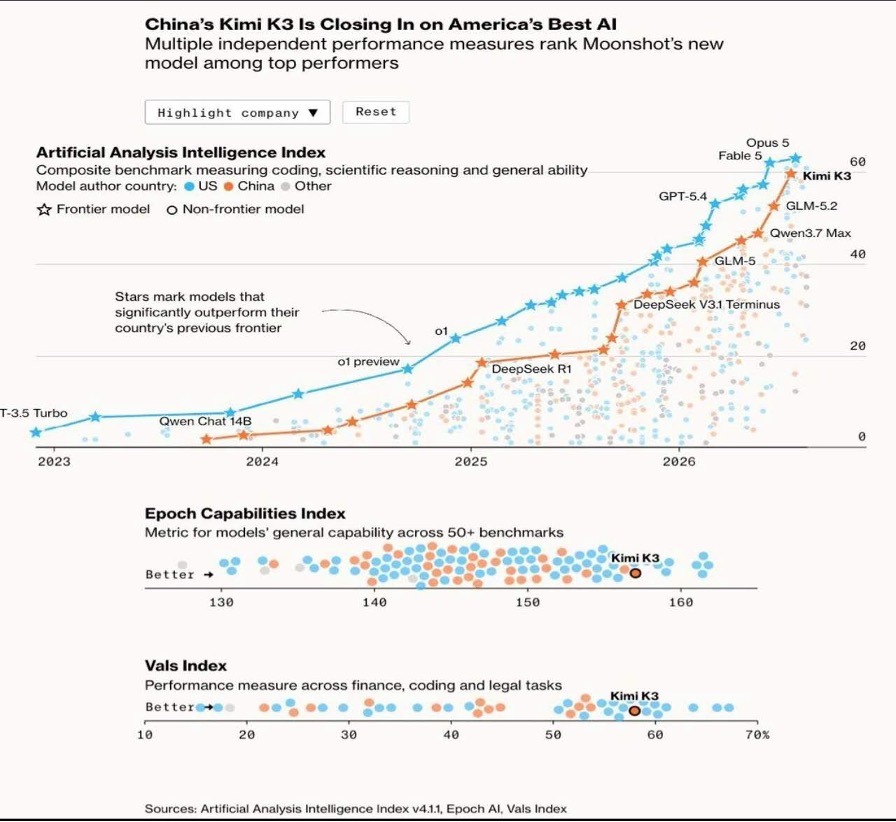
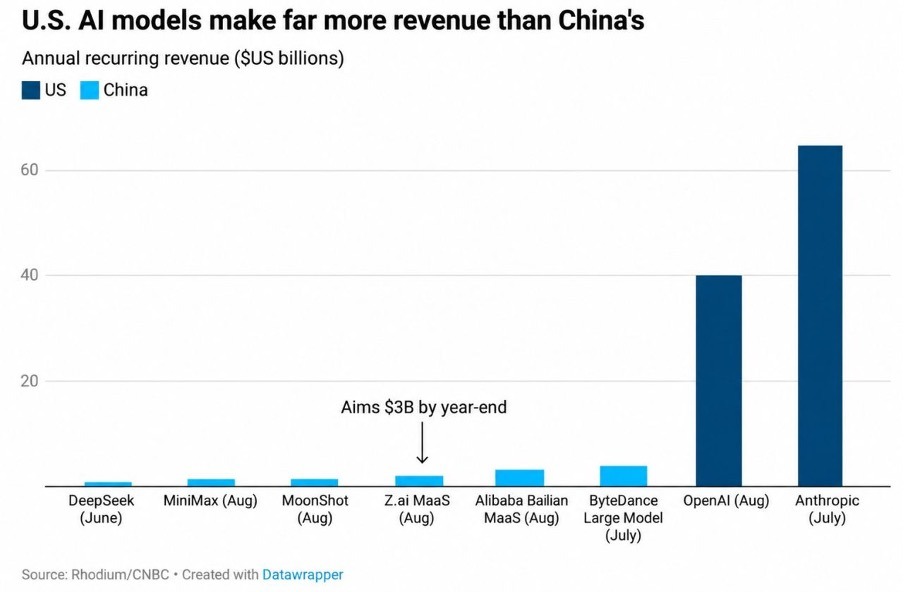
This does not, however, mean that China has overtaken America across AI. The US still leads in frontier labs, top-tier models, advanced GPUs, data-centre capacity, private investment and revenue.
But the race is no longer just about the best models. It is about the full stack around it: chips, energy, data centres, talent, applications, agents, industrial integration and global distribution.
1. No Model Can Eat the Whole Stack
The next AI race will not be won by the model that scores one point higher on a benchmark. It will be won by the system that delivers the most reliable, trusted and useful work at the lowest token cost and with the lowest security risk. The choice between closed US models and open-weight Chinese models will be about more than performance or price. It will be about who controls the model, where data is processed, which guardrails apply, and whose rules the system follows. For companies and governments, AI is becoming a question of sovereignty first and performance second, as model capability becomes increasingly commoditised.
That is why agentic AI matters. The goal is no longer simply a model that gives an answer. It is a model that can use tools, retrieve data, write software, manage workflows, help run a factory, support a sales team or build a marketing plan. Once AI becomes part of a real workflow, the question changes from how smart it is to how much useful work it can do for every dollar or euro spent and every watt consumed. “Tokens per watt” is becoming the deciding factor.
America starts with a formidable advantage. It hosts 5,427 data centres, more than ten times as many as any other country, according to Stanford. In 2024, the United States accounted for 45% of global data-centre electricity use, against China’s 25%. Its frontier labs have access to the leading chips, immense cloud platforms and enormous private capital on a scale that no other country can match. But that lead is costly. The International Energy Agency expects data-centre electricity demand to more than double by 2030 and warns that grid constraints could delay one fifth of planned projects worldwide. In the US, half the data centres under development are being built in existing large clusters, increasing the risk of local bottlenecks.
 Source: Henry Greene/ KraneShares CSI China Internet ETF
China’s challenge is different. It remains constrained in access to Nvidia’s most advanced chips, forcing engineers to get more from the hardware they can access. That constraint is helping push China into a different race: more efficient models and inference, smaller task-specific models, domestic computing clusters, and advanced chiplet packaging that can improve system-level performance without relying on the most advanced process nodes. It also encourages more energy-aware computing and a stronger focus on practical applications.
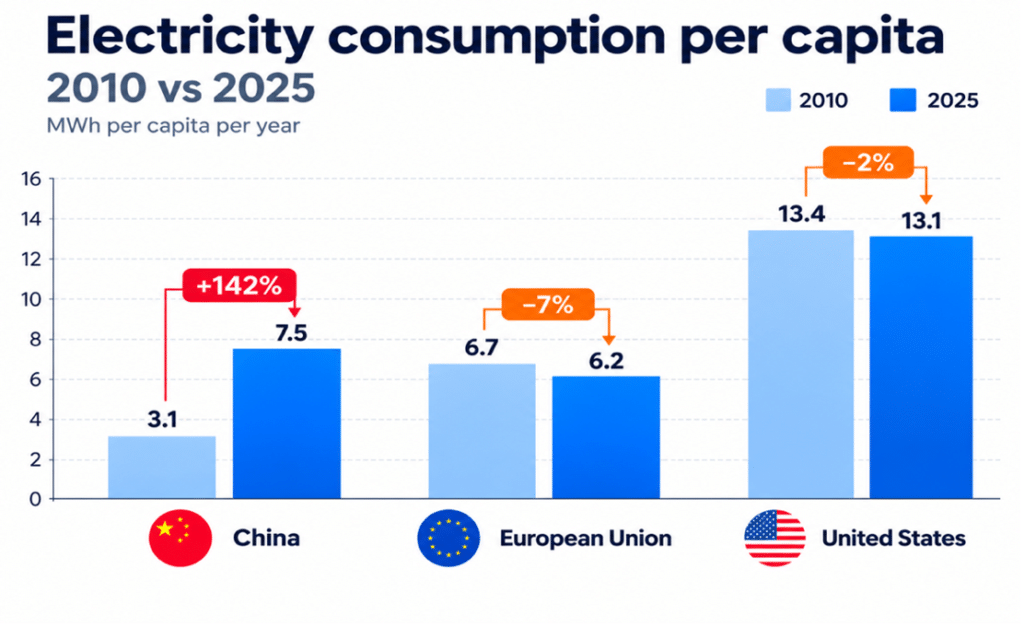 LLM-generated based on factual data
As the chart above shows, the US still consumes almost twice as much electricity per person as China. Yet the contrast is even greater inside the home. American households use several times more electricity per person than Chinese households, while China uses far more of its power for industry. As such, China’s per-capita electricity consumption has risen by 142% since 2010. That same industrial complex in China produces the solar panels, batteries and grid equipment needed to expand and transmit power. China already generates more than twice as much electricity as the US and, in 2025, added more than eight times as much new wind and solar power as the US added across all energy sources.
China is now turning this industrial-energy advantage into AI capacity by locating data centres close to renewable power in its remote regions and connecting them with clouds, city networks and at the edge. In the US, by contrast, the rush to build giant data centres is increasingly putting pressure on local grids, water supplies and communities, triggering fierce protests in some regions over electricity costs, land use, noise and environmental impact.
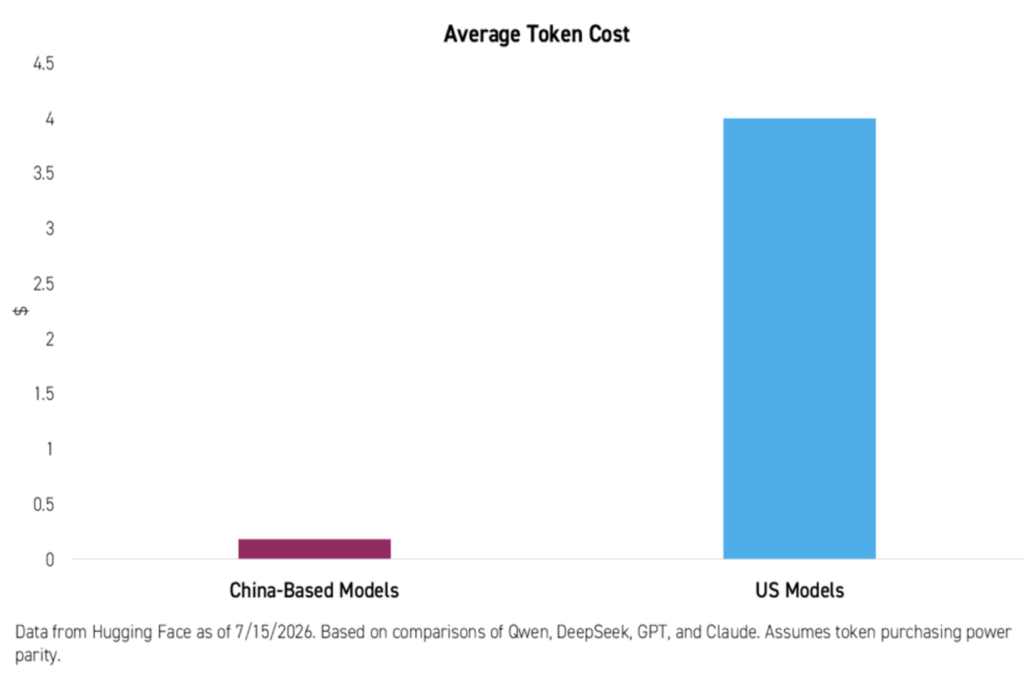
The commercial implications are already visible on AI developer platforms. On OpenRouter, Chinese models accounted for 57% to 67% of tokens used by companies in mid-September, up from just 6% to 13% in February. On Vercel, their share rose from 11% in January to 55% in August. The attraction is clear: performant, open-weight models that are affordable and increasingly strong at coding and agentic tasks. China is becoming the world’s factory of open-weight AI models.
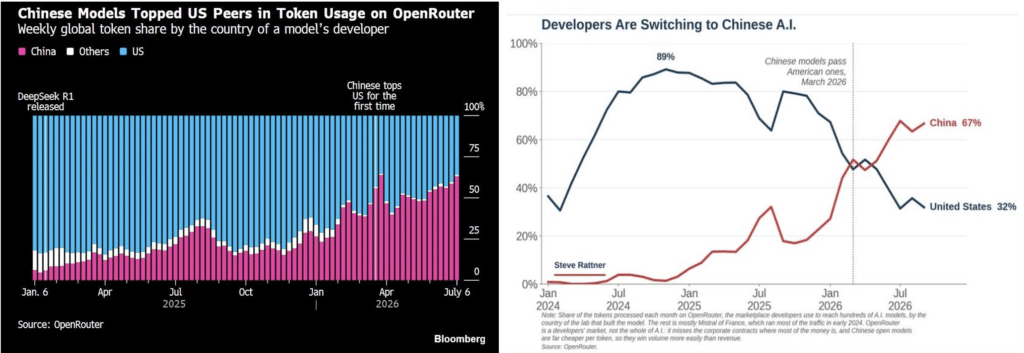
American frontier models still win some of the hardest tasks and attract more total spending. But for a growing range of industrial and commercial uses, models that are good enough, open-weight and far cheaper are becoming hard to refuse. The model itself is commoditising faster than expected. China’s deeper advantage may lie in building the full AI stack that makes those models useful at scale.
2. From Digital Extraction to Digital Influence
Andreessen’s phrase captured the US technology model perfectly: software ate the world. US companies came to control much of the world’s digital infrastructure, data, platforms, cloud services and now the frontier AI models. The winning companies became the platforms, capturing capital, data and attention from industries, consumers and countries to feed an ever larger machine. What began as genuine digital convenience increasingly resembled a form of neo-colonial digital extraction, feeding ever-hungrier investors.
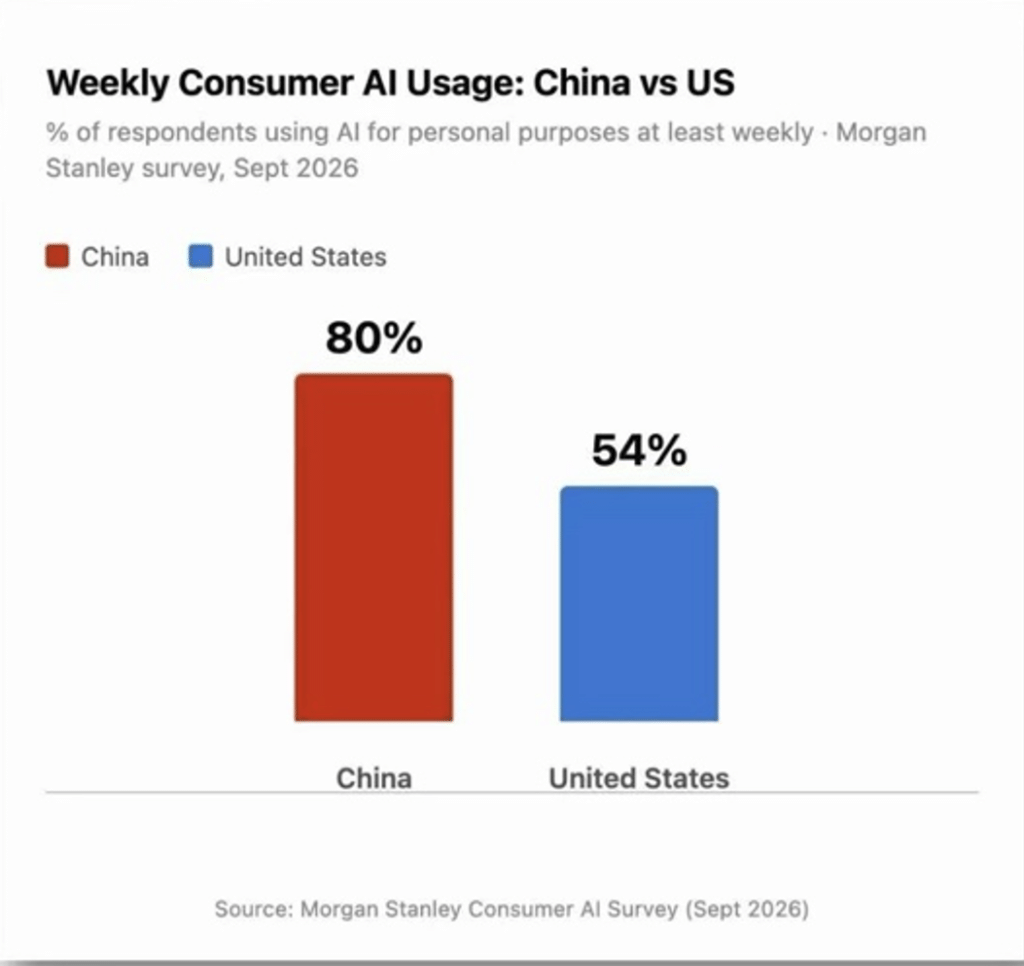
China developed a very different digital culture. Its top platforms became superapps: WeChat, Alipay and Meituan blend payments, messaging, transport, food delivery, commerce, bookings and public services into daily life. ByteDance’s Douyin, known internationally as TikTok, added a powerful layer of entertainment, shopping and local services. Of course, these are also powerful profit-seeking platforms. But their most visible contribution has been to use their digital reach to make the physical world more convenient, while giving millions of brands, retailers, service providers and hospitality businesses a direct route to customers. Its current AI strategy is extending that logic. According to Morgan Stanley, China is already beating the US in consumer AI adoption thanks to these superapps.
The key objective for China is not merely to create a smarter chatbot. It is to feed intelligence into the real economy: helping a factory reduce defects, a logistics network save time, cities and governments improve services, a hospital manage workflows, an energy grid balance variable renewable power, or a small company gain capabilities it could never build alone. That is why China’s 15th Five-Year Plan links AI to productivity, manufacturing, logistics, education, healthcare, agents, robotics, domestic computing clusters and open-source communities. The AI is not supposed to float above the physical economy. It is supposed to make the physical economy more productive.
China is now trying to carry this model abroad. At the 2026 World Artificial Intelligence Conference (WAIC) in Shanghai, Beijing described open development and openness as vital pathways to inclusive AI, linking the technology to agriculture, health, transport, education, science, industry and government services. The newly founded World Artificial Intelligence Cooperation Organization, or WAICO, gives that vision an institutional form. Xi Jinping announced 5,000 AI training and seminar opportunities over five years, cooperation centres with ASEAN, the African Union, BRICS and other regional groups, and an AI-enabled weather-warning service for 30 countries. Twenty-nine countries signed up as founding members, without a G7 economy or EU member state among them. Pax Silica is America’s competing effort to build a trusted AI stack with 24 signatories, plus Taiwan as a separate participant, from critical minerals and energy to chips, data centres and frontier models.
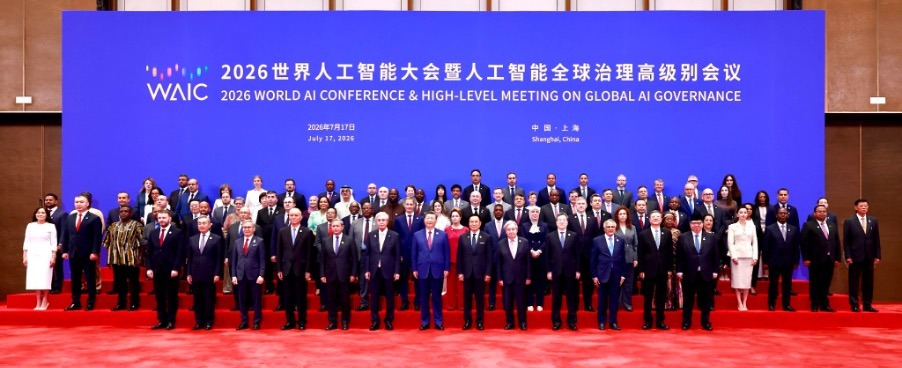 WAIC Shanghai, July 2026
This is China’s next global offer: not simply to sell a model, but to help countries develop, localise and deploy AI for their own needs. An affordable open-weight Chinese model can be adapted by a university in Jakarta, a start-up in Lagos, a farmer in Kazakhstan or a government agency in Brazil, rather than forcing them to rely permanently on an expensive American API. For America’s AI leaders, this could become a third AI Sputnik shock. The first was DeepSeek in January 2025, which showed that China could catch up in advanced models. The second was Kimi K3 in July 2026, which showed that Chinese open-weight models could compete at the frontier. The third may be the realisation that China is not only building models but also offering the world a cheaper and more adaptable way to deploy them. But the AI race may no longer be decided by the country that builds the smartest single model. It may be decided by the country whose models, tools and infrastructure everyone else runs on. That is how affordable AI becomes influential. The September Trump-Xi summit was therefore significant. Both governments agreed to resume an AI dialogue and set up a communication channel for AI-related incidents. No breakthroughs yet, but the current AI race is at least being managed.
3. The New AI Race: ASI or Diffussion?
America is now making an even bigger bet: that the next leap in model scale will justify its enormous and sustained investment in chips, data centres and frontier labs. It may be right. The US still has the deepest capital markets, the strongest frontier labs and a clear advantage in advanced chips. Another ChatGPT moment, or genuine breakthrough towards ASI, could reset the AI race overnight. Superintelligence, where AI moves far beyond human capability, would be more disruptive still. It is no coincidence that the Trump administration now calls AI “superintelligence”. The original race, in which the smartest closed model was expected to win the world, no longer looks achievable. So, America is instead betting on the very next, even bigger breakthrough.
But there is a real danger in building an economic model around an event that has not yet happened. This Silicon Valley religion to “make the impossible happen” has now also entered Washington. The bet is enormous. The five largest technology companies spent more than $400 billion on capital expenditure in 2025, driving a huge expansion of AI infrastructure, and the International Energy Agency expects that figure to rise another 75% in 2026. Trump has accelerated the push by fast-tracking permits and federal support for large AI data-centre projects. The question is whether these current AI revenues are sustainable and productivity gains can catch up with that infrastructure boom quickly enough to justify these investments. If performance gains become only incremental, open models cut prices faster, regulation and security risks slow down the transformation or adoption lags, the economics of the buildout will come under pressure, or even crash the stock market.
Alvin Wang Graylin makes a useful distinction. He argues that AI is not a zero-sum race towards one finish line called AGI. It is more like a stag hunt: America is chasing the elusive stag of AGI, while China is collecting the rabbits by spreading good-enough AI through industry and services. This is what I call the choice between EAT and FEED. The more important contest is how quickly countries diffuse AI into industry, raise productivity and improve human outcomes. In a world of many capable and efficient models, the biggest prize may not go to the company or country that wins the final benchmark. It may go to the economy that puts intelligence to work at scale.

Of course Beijing also wants better chips, stronger models, agents, robotics and scientific AI. But it is making the diffusion of AI through the physical economy a central national project. That is where China has a structural opportunity. It has the world’s largest manufacturing base and leads in industrial-robot installations. If it can combine that physical economy with increasingly capable, low-cost AI, it could build out a major lead in the application layer, even without inventing the first AGI. But putting AI into a factory, hospital or power grid is much harder than demonstrating a model. It requires clean data, trusted systems, skilled workers, redesigned processes and accountability when something goes wrong. In China the plan is clear, the execution is the journey. In the US the goal is clear, the trust is in the leap.
The United States could win this diffusion race too as its companies are exceptionally good at turning new technology into global platforms. But it still has to show that AI can create more real economic value than it consumes in chips, power stations and data centres.
The real question is whether AI can create more economic value than it consumes in chips, power stations and data centres. That is the question behind EAT or FEED. I believe the AI race is not simply Chinese AI versus American AI. It is whether millions of small dreams around the world, enabled by China’s open and diffusion-led strategy, can ultimately outweigh the big dreams of a handful of US tech giants, backed by vast capital and infrastructure. The winner will not necessarily be the first to build the hungriest machine. It will be the one that turns intelligence into a tool the rest of the world can actually use.
CHINESE INNOVATION: September, 2026
1. The rise of machines’ token use could work to advantage of Chinese models
2. Xiaomi to launch sales next year in Europe
3. China unveils sweeping higher education reform
4. China makes progress in matching 3-nm chips without ASML EUV tools
5. Deep-sea drilling expedition a major advance for China
6. China leads the reported pipeline for next-generation in-vivo CAR-T therapies
7. China’s miniaturized quantum magnetometer tracks an underground subway
8. China Artificial Intelligence updates September 2026
(Click the links in titles below to read a larger news article on each topic)
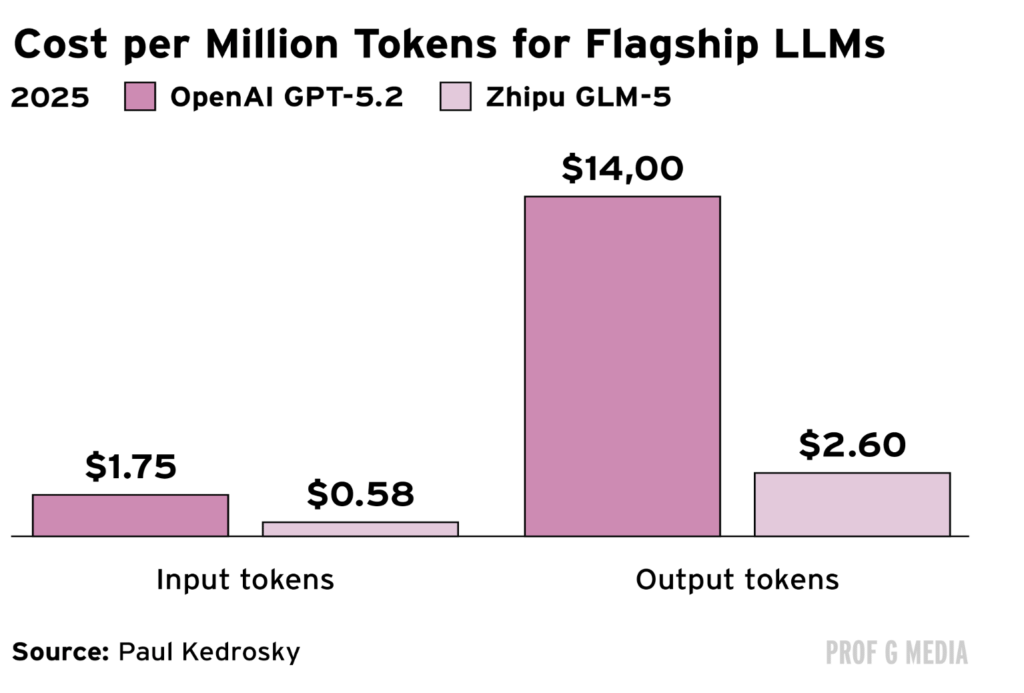
1. The rise of machine token use could work to the advantage of Chinese models
To continue on the content of the blog above, the global AI boom has crossed a new threshold: autonomous AI agents are reportedly consuming more than five times as many tokens as human users. Unlike traditional chatbots, which respond to individual prompts, agents operate independently across multi-step workflows. They can plan a task, search databases, call software tools, write code, check their own results and repeat the process. A single assignment can therefore trigger a cascade of model calls, creating rapidly growing demand for computing and inference.
That change alters the economics of the AI race. Analysts argue this could give lower-priced Chinese models a true competitive edge. As Chinese companies are producing open-weight and increasingly capable models that can be customised and deployed more cheaply, particularly for coding and agentic tasks, the question will no longer only be which model performs best, but how much useful work it can complete for each dollar, euro, yuan or watt.
This follows the argument in my preceding blog that the AI race is moving beyond the biggest model and toward the most useful full stack. If agents become the main users of AI, China’s advantage may lie in making intelligence affordable enough for factories, businesses, developers and public services to use continuously. A world of millions of machine-to-machine interactions could reward the country that makes capable intelligence available at scale. And to run machine-to-machine connections at high speed, China has another huge advantage: 6G and optical networks. The US has been building the best race car, China is building the F1 roads of AI.
 Source: James Kynge and Alice HanFu
2. Xiaomi to launch electric-car sales in Europe next year
Three years ago, at Mobile World Congress in Barcelona, I fell in love with Xiaomi’s SU7. It was going to be my next car as soon as it became available in Europe. Now that moment appears to be getting closer. Xiaomi will begin selling its electric cars in Europe in 2027. The company said it would enter several EU markets, including Germany, where it has signed agreements with eight dealer groups to build a sales and service network. They recently hired many European car experts to prepare for it.
The launch will face some obstacles because Xiaomi did not participate in the EU’s anti-subsidy investigation. Xiaomi could therefore face a 35.3 percent countervailing duty on cars exported to the EU. Xiaomi declined to comment on whether it was discussing a price undertaking with the European Commission that could spare it the levy. The company will need to overcome not just tariffs but also the practical challenge of building trust, service, and repair networks across Europe.
What makes Xiaomi different from other Chinese EV makers is that it is not entering Europe as an unknown brand. As one of the world’s largest smartphone manufacturers, it already has a large consumer-electronics fan base and an ecosystem linking its cars with smartphones, software, connected devices, and smart-home products. In China, Xiaomi has built something resembling an Apple-style relationship with consumers through its own brand, products, and innovation. The European launch will test whether that loyalty can transfer to European consumers. If it succeeds, Xiaomi could challenge the assumption that European buyers will always prefer German or French brands over Chinese ones when the price and quality are comparable.
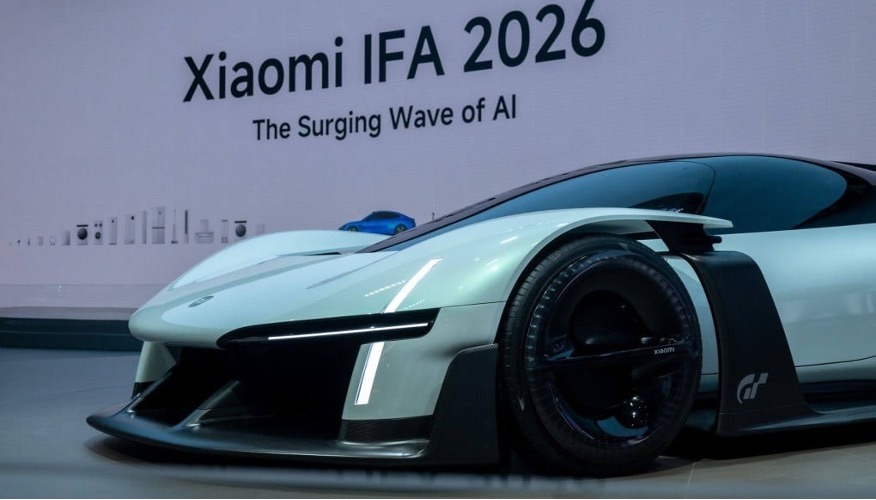 Photo: Xiaomi/dpa
3. China unveils a sweeping reform of higher education.
China has unveiled a redesign of its university system as demographic change, a tougher graduate job market and industrial upgrading reshape the country’s demand for skills. Guidelines issued by the Communist Party urged universities to adapt to changing trends in the school-age population, develop more distinct roles and explore new ways to train future innovators. Top research universities are expected to support national plans like the New Quality Productive Forces, while industry-specific institutions are being asked to serve the real economy more effectively.
The reform is not simply about expanding access to university. It is also about creating a more differentiated system in which institutions do not all pursue the same academic model. A separate article adds another dimension. Li Mingbo, deputy dean of the Guangzhou Institute of the Greater Bay Area, argued that China should build a more effective immigration policy for the best technical talent, including a more welcoming (read English) environment for international specialists.
Together, the stories show that technology competition in China, as elsewhere, is also a competition for talent. Beijing is trying to reshape the domestic production of engineers, researchers, and practical specialists while looking to attract more talent from abroad. The reform may help universities respond swiftly to the demand from sectors such as robotics, biotech, semiconductors, and advanced manufacturing, but changing institutional roles is easier than changing incentives, teaching quality, and graduate employment. I am usually very confident that China can engineer its way out of many difficult challenges. But in education and talent policy, I am not yet convinced. Producing more graduates is one thing; creating a flexible system that attracts, develops, and retains the right people in China is another.
 Photo: Xinhua
4. China makes progress toward sub-3-nanometre chips without advanced EUV
Chinese researchers have made early progress toward semiconductor processing below the 3-nanometre node while using older lithography technology. The work, associated with the Chinese Academy of Sciences’ Institute of Microelectronics, establishes a preliminary gate-all-around development path using deep ultraviolet (DUV) tools rather than the advanced extreme ultraviolet (EUV) machines supplied by ASML. Researchers completed early integration of stacked nanosheet-channel gate-all-around CMOS transistors, calling it an early-stage sub-3-nanometre path.
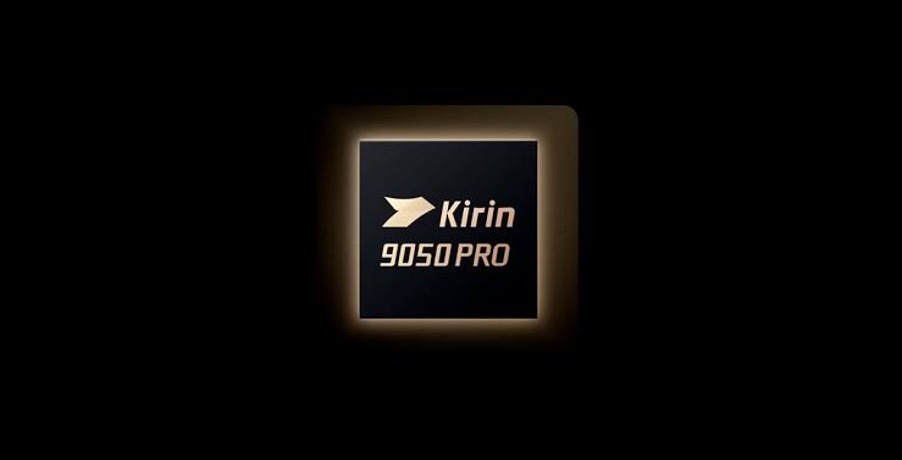
The development matters because ASML’s state-of-the-art EUV systems remain blocked from Chinese customers under export controls. The report does not describe a commercially mature 3-nanometre production line, and the gap between an early transistor demonstration and high-volume manufacturing remains substantial. In the meantime, Huawei’s latest Kirin 9050 Pro, associated with its Tau framework, was estimated to use technology equivalent to a 7-nanometre process. It outperformed Apple’s older 3-nanometre A17 Pro in Geekbench 6 multicore tests but remained about 30 percent behind Apple’s newer 2-nanometre A20 Pro.
Together, the developments point to an example of China’s parallel innovation strategy. Researchers are exploring new transistor structures and ways to use non-restricted DUV equipment, while Huawei combines process technology with a novel architecture and system-level design through its Tau approach. This does not prove that China has matched the complete manufacturing capability of TSMC or Apple. But export bans are pushing Chinese to search for alternatives across devices, processes, packaging and chip design. The results are clear. The question remaining is whether these advances can eventually be combined into reliable mass production.
 The Kirin 9050 Pro Chip, officially confirmed to feature in Huawei’s Mate 90 series
5. China’s deep-sea drilling expedition demonstrates a major research capability
China’s ocean-drilling vessel Mengxiang has completed its first scientific expedition in the South China Sea, marking a major advance in China’s deep-sea exploration capabilities. The 30-day expedition, organised by China Geological Survey, operated in waters up to 4,100 metres deep. It drilled and cored at two sites and recovered basalt samples from the basin, making China the third country, after the US and Japan, to obtain hard-rock samples from a deep-ocean basin using a drilling vessel.\
The expedition reached a maximum operating depth of 4,929.17 metres and penetrated 864.77 metres below the seafloor. A domestically developed rotary coring tool recovered a 4.27-metre basalt core. Remotely operated vehicles accumulated more than 358 hours of underwater work at around 4,000 metres, with the longest continuous operation lasting 103 hours.
The samples could help researchers test competing explanations for the South China Sea’s geological formation, including tectonic-plate movement and mantle plumes. The expedition also found sediment layers and deep deposits with significant organic matter, which may provide evidence about ancient climate and biological activity.
The team stressed that this voyage primarily tested drilling capability and that follow-up expeditions are needed. Its significance is therefore not that China has solved the geological history of the region, but that it has built the ability to collect its own evidence from an extremely difficult environment. For Beijing, it allows independent ocean-science capabilities and adds a new source of deep-sea data for the world.
 Photo: China Daily
6. China leads the reported pipeline for next-generation in-vivo CAR-T therapies
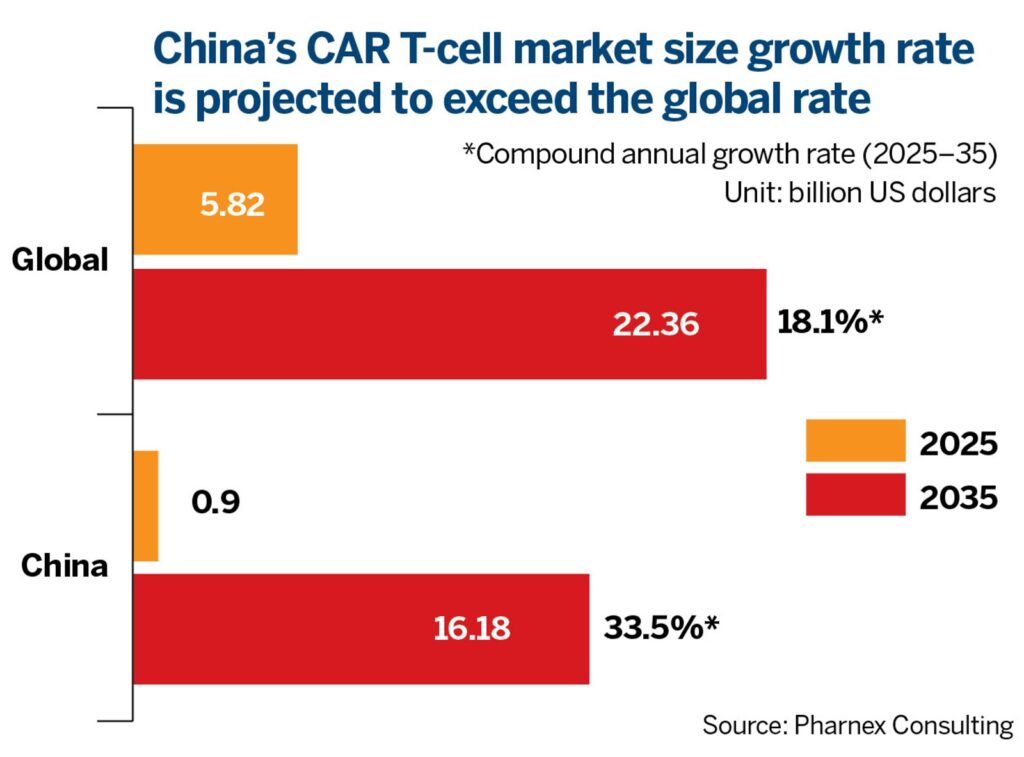
China has become a hotspot for developing and testing next-generation CAR-T therapies that could transform treatment of cancer and autoimmune diseases. These therapies aim to produce disease-fighting immune cells inside the body. That differs from conventional ex-vivo CAR-T treatment, in which a patient’s cells are collected, modified in a laboratory and returned to the body. The in-vivo approach could one day reduce the complexity and cost associated with today’s personalised cell therapy.
The report says that China’s large population, fast-track regulatory pathways and resources have helped it lead this area of development. It says that, of 140 in-vivo CAR-T drugs being tested in animals and people worldwide, 82 percent were being developed by groups in China. The report links this progress to collaboration between universities, hospitals and companies, as well as investigator-initiated trials that can move therapies into human testing quickly.
The report describes a development pipeline, not a completed medical revolution. It says the therapies still need to demonstrate durable benefit and establish long-term safety, including control of serious toxicities already associated with ex-vivo CAR-T treatment. Investigator-initiated trials can accelerate early clinical testing, but they are not equivalent to large pivotal trials supervised by a regulator. The importance is that China is building a system capable of moving advanced cell therapies from the lab quickly into early human studies. If the approach proves safe and effective, it could make personalised immune-cell treatment simpler and more accessible. For now, it is best viewed as a lead in clinical development and biotech infrastructure.
7. China’s miniaturized quantum magnetometer tracks an underground subway train
Chinese researchers have demonstrated a handheld quantum magnetometer in a real-world test by tracking the magnetic disturbance of a subway train beneath a city. Developed by researchers at the University of Science and Technology of China, the device is scarcely larger than a pencil and uses about 5 watts of power. It recorded the train braking as it entered a station, stopping and departing, while separating the moving signal from the Earth’s much larger background magnetic field.
The instrument is an atomic magnetometer based on rubidium-87 and optical-magnetic resonance. The study describes a sensing probe of about 7 cubic centimetres and complete system power consumption below 5 watts. It is designed to track rapidly changing magnetic fields and recover automatically if it loses resonance. The researchers also tested the system against a deliberately buried magnetic target. These experiments matter because quantum sensors often perform best in controlled laboratory conditions, while practical use requires compact size, low power consumption and resistance to changing interference.
The significance is the field demonstration of a small, low-power quantum sensor operating in a dynamic environment. The experiment showed that the device could detect and track the changing magnetic signature of an underground subway train. Such instruments could eventually support geomagnetic monitoring, underground infrastructure, navigation, mineral exploration and security applications. For China, the result shows progress in turning quantum sensing into usable instrumentation. More broadly, it illustrates that the practical quantum race may be decided not only by quantum computers, but also by sensors that work reliably outside the lab.
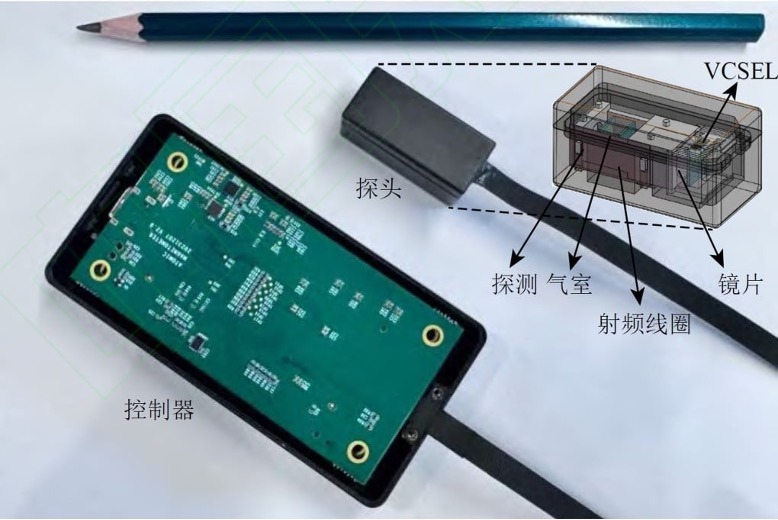 Photograph of the miniaturised magnetometer system. Photo: handout
8. China AI updates of September 2026
DeepSeek open-sources tools to help Huawei chips supplant Nvidia in AI
DeepSeek released six software modules that mirror its prior open-source tools for Nvidia’s AI chips, aiming to build a new “independent and controllable” software ecosystem for Chinese GPUs such as Huawei’s Ascend AI chips.
As China mulls how to make open-weight AI safer, a report proposes 6-stage process
Z.ai and Beijing-based safety consultancy Concordia AI released a report on open-weight AI risk management that they said offered “the first comprehensive, evidence-based foundation” for balancing the risks and benefits of open-weight systems.
Alibaba is using AI to revamp its mapping app – and take on Meituan
Alibaba’s navigation app offers everything from hyper-specific area guides – showing not only the most popular businesses in each neighbourhood, but also which venue is popular with certain types of people – to 3D maps of indoor spaces such as cinemas and shopping malls.
Alibaba to open new data centres in Europe next year as overseas push gains pace
Alibaba is set to launch data centres in Turkey, Finland and the Netherlands over the next 12 months, speeding up an overseas push as it seeks to win over enterprise customers through its “full stack AI capabilities” spanning chips, cloud infrastructure and multimodal models.
Alibaba teases 10-trillion-parameter model, debuts ‘China’s most powerful’ AI chip
Alibaba has introduced what it called China’s most powerful AI chip and teased plans to train its Qwen AI model with up to 10 trillion parameters to advance towards ASI – AI that matches or beats human intelligence.
Alibaba open-sources medical AI model that can detect cancer and nearly 150 conditions
Alibaba has open-sourced an AI model capable of identifying nearly 150 abdominal conditions – including cancers – by reading computed tomography (CT) scans. The model was trained using CT scans paired with clinical reports. In nearly 40,000 real-world examinations, it achieved an average area under the curve (AUC) of 0.913 across 146 clinical findings. An AUC of 1.0 represents perfect diagnostic accuracy.
Huawei’s Eric Xu Zhijun says the firm’s Ascend chips are ahead of Nvidia in China
Huawei expects a major domestic shift towards its AI computing infrastructure for model training in 2027, as its Ascend processors gain ground on Nvidia in China despite supply constraints.
China’s Z.ai raises revenue target 25% after US$5 billion cash injection
Z.ai has raised its year-end annual recurring revenue (ARR) outlook by 25 per cent to US$3 billion, as the firm indicated its fresh US$5 billion war chest had helped clear its computing capacity bottlenecks for the time being.
DeepSeek says new Flash AI model beats Kimi K3 on cyber, coding benchmarks
DeepSeek has released its V4.1 Flash model, claiming it outperforms its previous flagship while cutting inference costs and boosting speeds. It described V4.1 Flash as the smallest model in its new series, with native multimodal visual understanding.
China’s Moonshot and Z.ai bring AI model subscription race to Tmall’s retail shelves
By packaging tokens and coding plans like everyday retail goods, AI labs are opening a new front in their push for sustainable revenue. Alibaba’s Tmall launched an “AI Space Station”, a central marketplace where users can buy AI subscriptions, top up tokens and purchase packages from Alibaba Cloud, Z.ai, MiniMax and DeepSeek.
New reality for China’s entertainment sector as AI drama goes prime time
From low-quality “slop” such as soap operas starring humanlike cats and dating shows featuring anthropomorphic fruit, to increasingly slick productions realistic enough to pass for live action, artificial intelligence-generated video dramas have become almost inescapable on Chinese social media feeds.
Manus resumes solo operations after collapse of US$2 billion Meta deal
The AI start-up Manus announced that it had formally resumed independent operations, more than four months after Beijing blocked its US$2 billion acquisition by Meta Platforms.
Zhipu AI ramps up efforts for data privacy
Zhipu AI, or Z.ai in overseas markets, will introduce a “no data retention” option on its model-as-a-service platform, which marks one of the strictest data privacy arrangements offered by a major Chinese large language model provider.
Gartner: Half of global enterprises to adopt Chinese AI models by 2027
Half of the enterprises worldwide are expected to include Chinese large language and multimodal models in their AI portfolios by 2027, surging from 5 percent in 2025, the latest Gartner report showed.
Moonshot AI rolls out Kimi model for financial sector
Moonshot AI has launched a finance-focused version of its Kimi platform, seeking to push generative AI deeper into banking, securities research and investment workflows as financial institutions step up adoption of the technology.
China is narrowing AI gap with the US
According to a report from Bloomberg Intelligence, the AI performance gap between China and the us is only 3 percent, the lowest on record, following the recent release of DeepSeek’s V4.1 Flash model. The gap has fallen from about 9 percent in May and 15 percent earlier this year.
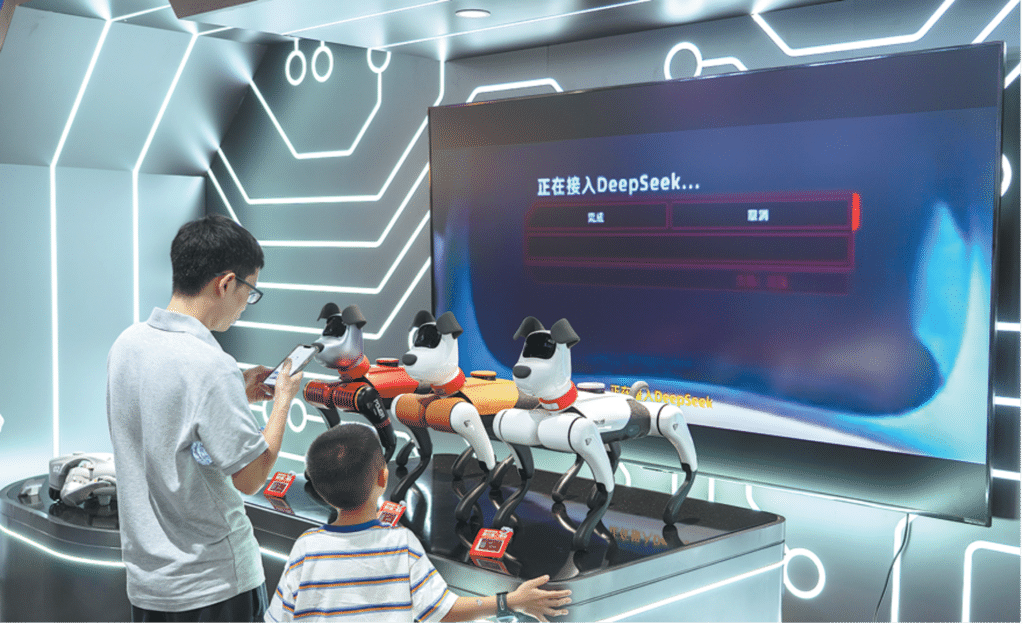 Robotic dogs integrated with the DeepSeek assistant attract shoppers at a store in Shenzhen, Guangdong province. CHINA DAILY
Thanks Thuren, for your wonderful format and presentation of this article. I know what it takes and you’ve just done a marvelous job here and spent enormous time for this beauty!