

The Economy at the End of the World: With Michael Hudson and Kathleen Tyson
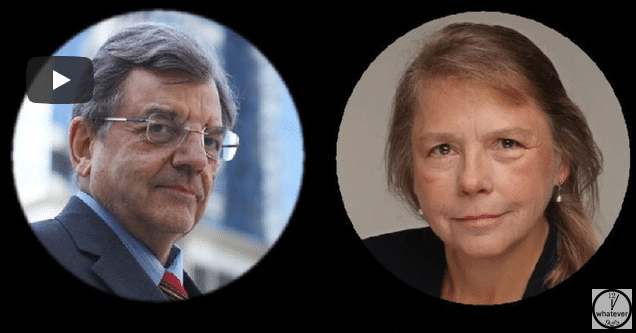
Speakers: Michael Hudson and Kathleen Tyson
Moderator: Nika Dubrovsky
(Calling Colin and our other economics commentators: Building Solutions – Gold for resolving current structural problems, optionality in using commodities to resolve what falls out of there – new models, new thinking, optionality.)
Youtube link: https://www.youtube.com/watch?v=jSvMtGaVPvc
NIKA DUBROVSKY
Hi, I’m Nika Dubrovsky, and I’m really happy to invite you to the series of talks, The Economy at the End of the World, at the David Graeber Institute. So today, Michael Hudson and Kathleen Tyson are going to talk about gold, and it’s specifically interesting for me because it’s my first time in my life in Hong Kong, which looks like it will become one of many hubs that will host this new international financial infrastructure. Kathleen Tyson is probably one of the best people to talk about how this new system is being rebuilt right now, how money clearing and settlements are moving from a unipolar to a multipolar world. And Michael Hudson is the best person to talk about how the gold system was built, having studied it for many, many years. Specifically in his book Superimperialism from 1972, he was showing how the dollar-oil system was never actually about only convenient international payment services, but how it was collecting hidden colonial tax from the rest of the world. So now if we are moving to the system that will be connected to gold, what would it look like? Would it be a better system? Would it provide the rest of the countries with more agency? And what would the world look like when it slowly shifts from a dollar-dominated system to the multipolar one? And now the floor is back to Michael.
MICHAEL HUDSON
Well, gold is no longer part of domestic monetary systems, because there’s not enough gold to go around. The modern monetary systems are all based on paper, not gold. And the only reason that there’s a resurgence in the role of gold internationally is to settle balance of payments deficits among countries. And the main balance of payments deficit for many years was that of the United States. And since the thirteenth century, by far the major balance of payments deficits of every country have been those of governments, to pay war debts or to go to war. That’s what basically forced the United States to go off even making the US paper dollar as good as gold any longer, once it went to war in Korea and then expanded its military Cold War spending throughout Southeast Asia and the rest of the world. War spending was the entire balance of payments deficit of the United States from the Korean War onward through the 1970s. So I want to say just a few words on how gold got phased out of domestic monetary systems so that we can isolate what its role is in the international economy, where it’s only now playing one of the many investments on which governments can spend all of their inflows of dollars and euros and foreign currencies that they’re getting now that they no longer are going to spend them simply by buying US Treasury debt.
So I want to say just a few words about the great monetary revolution that occurred at the end of the seventeenth century when it became apparent that there wasn’t enough silver and gold coinage to enable kings to pay their war debts to the international banking class that had been developing since the twelfth and the thirteenth centuries. You had the kings of France, Spain, and Austria defaulting, and the governments had to pay very high interest rates because buying government debt was very risky. Well, imagine the problems that Britain had after it had the anti-Catholic Glorious Revolution in 1688. The problem was, how was the government going to do what British kings do and go to war against France and other countries? Well, obviously, this was going to entail a huge government debt. The government of Britain had been financing itself by issuing tallies, wooden sticks that people could use in order to pay the taxes falling due and other debts.
But what happened was a really amazing innovation. The Bank of England was created in 1694. It raised 1.2 million pounds sterling in the form of British government debt and it turned and lent this to the government in exchange for the right to print paper money on this debt. Now, paper money didn’t really come into use until the early seventeenth century. It started in 1609 with the Bank of Amsterdam, which functioned very much like a savings bank, and had one hundred percent reserves, all in coinage, silver and gold. And it issued paper notes saying these represent claims against the coinage stocks that we have in our vaults. And people found it more convenient to use paper currency than actual coinage because it wasn’t clipped. It didn’t wear down. There wasn’t a great variety of foreign coins that were all valued by their silver content. The whole world was on silver really until the Napoleonic Wars ended in 1815, when Britain went on the gold standard, and then it was followed by Germany adopting the gold standard after it won the Franco-Prussian War in 1871 and insisted that France pay all of its reparations in gold. So we’re talking largely about silver bullion, but it was all considered part of coinage way back then.
Well, what happened was the Bank of England lent it to the government and had the right to create paper money. And so the debts that the Bank of England held were its founding capital. And so what was a government debt was an asset to the Bank of England. And it was able to issue notes against it and also use this capital to finance trade. And that’s what bankers did back in the seventeenth century. Most of the banking interests of the day made their money in trade financing, foreign exchange financing that had been originally exempt from all the anti-usury laws.
Well, interest rates fell because now the governments didn’t have to go and borrow from private creditors. They were able to borrow from the Bank of England, and later the Bank of France, and finally other central banks. And so today, central banks hold government debt and they create money, which they spend or largely finance in the other commercial banks throughout the banking system. And so the whole asset base of reserves for domestic banking is government debt. And it took a few centuries for that to become an acceptable idea. The banks were able to hold this debt at falling interest rates because they had central banks to finance their war spending and other spending. But the governments didn’t print the currency of other countries. That’s the problem. With any government, all the money you have in your pocket, the dollar bills or the sterling, whatever paper currency you have, that’s technically a government liability. And you can get reimbursed for it. If you have a hundred dollar bill, the government will give you five twenty dollar bills for instance.
But there was a point at which, until 1971, all American paper currency was backed 25 percent by gold. People still didn’t quite believe that governments could simply create debt money without any asset backing them at all. And that’s the problem. Well, Britain’s problem was that most of its war debts were owed to the Dutch, and that’s a different currency. And Britain couldn’t print Dutch currency. So silver became the means of settling their foreign debts. And most government debts, as I said, ever since have been the result of war financing. And the US dollar, beginning in 1934, was all convertible, the paper currency, into gold at I think a little over twenty-one dollars an ounce until Roosevelt stopped the Americans officially from holding monetary gold. He demonetized gold, but it still was held as the backing for the paper currency.
Well, fast forward to today. Donald Trump has declared war, economic war on the rest of the world, it seems. And now the United States and its satellites are confiscating the gold and the bank deposits of other countries declared enemies. The U.S. directed the European Union to confiscate three hundred billion dollars worth of Russia’s Euroclear deposits in Brussels, and America told the Bank of England to confiscate Venezuela’s gold. You see Trump just essentially acting as a pirate throughout the world. In 1971, the United States just stopped settling its spending of dollars in Southeast Asia and the Vietnam War, Laos, and all the rest of the world in gold.
Other countries said, well, what are we going to hold our monetary reserves in? Well, they were willing to trust the U.S. paper currency, the U.S. Treasury issuing bonds as if this was still as good as gold. Nobody anticipated that the United States economy would financialize and self-destruct in the way that it has. But that’s what the U.S. economy does. So now the question is, well, what really are we going to do with all of these Treasury bonds that we’re holding. And right after the United States demonetized gold, Texas’s Governor Connally said, well, it’s our dollar, but your problem, just use these dollars to pay each other. Well, other countries are no longer willing to do that because the dollar is no longer safe. Not only is the United States unable to really pay, give other countries any kind of asset if they want to redeem these dollars, but it’s unwilling to do this. It’s just going to say, well, you have the paper dollars, that’s it.
So, in the last few years, countries have, as they’ve continued to grow and build up their monetary reserves, looked for some of their assets. What are you going to do? Well, what kind of assets do they have? Well, one asset is Chinese currency, the RMB. China has helped them do this by setting up Hong Kong as a vehicle. Well, you can hold your money in Chinese currency. Other governments are holding each other’s currencies. They’re also holding gold because there’s not really that many opportunities for what they invest in. They might as well invest in tungsten or rare earths or any copper, especially raw materials. But one of the good things about gold is it doesn’t really have an alternative use except for luxuries. And if you put it on windows, it’s a good protection environmentally against heat. But gold is something that’s in limited supply and it’s a pure asset. It’s not a debt.
And we’re in a period now where the debts can’t be paid right across the board from the United States to the Global South countries, to all the countries that are facing the price increase for oil and diesel fuel that’s causing a crisis. So gold is just one kind of asset that people are looking for when they’re unable to find an alternative in an emergency. So I guess what the rest of our show should be about is what kind of a new international monetary organization is going to work to coordinate how countries are going to denominate and regulate the international savings that payment-surplus countries build up on payment-deficit countries. That’s the major problem internationally that’s being caused today, and gold can’t solve this problem. Now, Kathleen, over to you.
KATHLEEN TYSON
Right. Well, where to begin? 2026 is a curious year. It’s been eventful. But one of the events is an exodus of gold from the United States. Gold is now the single largest export from the United States. So it’s not true you can’t redeem dollars for gold. You can. And it seems that somebody is doing that, because a lot of gold is suddenly leaving, more than twice the amount of gold that left the United States last year. The number I have here is 260 metric tons, which is quite a big number. And some of that has come to London. The Central Bank of the Netherlands took its gold out of the United States and deposited some in its own domestic vault and some at the Bank of England, so that it’s handy, should they need liquidity, they can trade in the London Bullion Market Association market here in London.
And then there’s also been an increase of almost a thousand tons in Hong Kong and I don’t think that’s all gold being bought. My best guess is that Hong Kong opened something called the Hong Kong Precious Metals Clearing Corporation in July. And it’s a new market. It’s only an interbank market. So it’s only dealing in size, in 400-ounce bars—London Good Delivery, by the way. So it’s competing very directly with LBMA in London. And in fact, it’s got the same banks as LBMA. The five largest banks in LBMA are also banks in HKPMCC. I wish they had found something more euphonic. There’s no way to pronounce that as an acronym. So we’ve got JPMorgan, Citi, Standard Chartered, HSBC and UBS, all being the largest dealers in London and the largest dealers in Hong Kong. The problem with the Hong Kong market is that none of them held gold in Hong Kong in big numbers. Their primary markets were New York and London, and to a certain extent, Switzerland. So what I think we’re seeing now is a lot of gold movement, movement out of the United States, movement out of Switzerland, but movement into London. LBMA’s vaults are actually up 1,100 tons this year, and 1,000 tons to Hong Kong. So what we’re seeing is the markets shifting out of the United States, out of Switzerland, into London and Hong Kong as the primary interbank markets.
But anyway, there’s a lot of gold on the move. And of course, Hong Kong has designed the infrastructure to be attractive not just to banks, but also to central banks. They want to re-baseline central banks into gold reserves. They themselves have spent years doing it. But even as China has been acquiring gold—and it just bought a record, another twenty-three tons last month; for two years in a row it’s been buying, which is the longest streak of buying since it started buying—even with all the buying that China’s doing, gold is just eight percent of People’s Bank of China reserves. They’re still the largest holder of foreign exchange reserves. And the gold is just eight percent of that, which is pretty stunning when you think about how much gold they’ve been buying.
But China wants to encourage not just itself and its citizens to buy gold, but also other central banks. And that’s beginning to happen. So the Bank of Korea, South Korea, under a new governor, Shin Hyun-song, who spent his whole life in London and Basel. One of his early acts, getting his knees under the desk, is to buy gold for the first time since 2012, that’s a reminder he’s back in Asia. Then, weirdly—this one is stunning—Bundesbank, the German central bank, the Deutsche Bundesbank has not bought gold since 1968, but has now announced that it’s considering buying gold. Very, very brave. And then you have small countries that are setting new paths using gold. My favorite at the moment is Zimbabwe. Zimbabwe is synonymous with hyperinflation in most conversations. But in 2024, they rolled out a new currency called the ZiG. The currency used to be called ZIM, and now it’s called ZiG. And the ZiG is backed by a reserve that’s a mixed currency board, an asset board. So every ZiG that is issued must be backed either by foreign exchange or gold held in the reserve. And now, in just two years, Zimbabwe inflation is 2.6 percent, lower than the United States inflation. Now, that is a really impressive result. When they rolled it out, their inflation was at about 65 percent and it’s now 2.6 percent.
So that’s woken up a lot of central banks in Africa to reconsider their monetary policy. Because everybody there, having tiny countries with borders that are made up in London and Paris, has problems with inflation. You know, you’ve got fifty-nine currencies, well not fifty-nine because there’s a currency, a joint currency over in East Africa. But you’ve got a lot of currencies and all of them have been inflation prone. Because a lot of them are export-led economies that don’t have control of pricing, and they have to import food and mechanical equipment and other things that aren’t made in Africa. There are zero iron refineries in Africa. Big continent, zero iron refineries. Now, that’s just the model for Africa, where the West said, you know, you’ll develop if you just borrow more money and we take all your resources. So a lot of countries are now looking at Zimbabwe and thinking, oh, that’s an impressive result, that works here. Gold doesn’t have to be 100 percent reserve, as you said, the dollar was only 25 percent for decades. The ZiG has proven you can have a partial gold reserve and it still improves confidence in the currency and reduces inflation.
So I think what we’re seeing right now, it’s a lot of new thinking. Despite Nobel prizes in economics, a lot of the world is looking for new models, new thinking, optionality. And I think it’s great. I think one of the disasters of the last thirty years has been the tyranny of the BIS, FSB, IMF, saying there’s only one right method, and you must harmonize to our standards. Otherwise, we cast you into the outer darkness. I actually think the optionality is brilliant, because you get to see and measure what works and what doesn’t work and make better judgments over time. So I’m going to stop there. Throw it back to you.
MICHAEL HUDSON
Okay. The question is what to do about all this. Way back in 1975, I went to the White House to give an argument before the US Treasury, along with Herman Kahn, saying gold was the peaceful metal, because as long as gold had to be the way of settling balance of payments deficits, neither the United States nor any other country could afford to go to war anymore. And as I said in my opening remarks, the whole reason the paper money was developed was to enable governments to take on war debts and finance and make their payments in IOUs that central bankers would accept, and foreign international bankers would accept, because central banks had existed to make somehow government war debts solvent. But now we’re dealing with insolvent countries, and you certainly can’t go back to a gold-based currency, gold-based savings, for much of the world because there isn’t that much gold to go around and the price would go up. Also, any kind of a fixed asset is going to limit the ability of governments to go into debt. Today, you’re going to have a lot of global south countries, Europe, Asia, going into trade deficits and balance-of-payments debts because of the oil war. So there has to be some kind of alternative means of settlement. Do you have any thoughts on the kind of institution that could be created? Obviously not the IMF as we’ve discussed before. We don’t want an institution that imposes austerity. We want an institution that will enable economies to grow but somehow give them something that’s acceptable and isn’t a pure giveaway, like making loans to the US Treasury would be, when there is nothing you can do but use these as souvenirs to pay each other, if you can find a sucker willing to take all of that for some kind of real resources.
KATHLEEN TYSON
Real resources. I think that brings to mind the big deal this week, which is that Trump and Putin struck a deal for diesel. So let’s think of diesel as liquid gold. It’s the liquidity that central banks can’t print, and it runs every economy. It runs agriculture and fisheries. It runs transport. It runs militaries. Militaries are the biggest users of diesel on the planet, and jet fuel. Europe is still calling Putin Satan and cutting off. They announced 1,100 new sanctions on Russia this week in their, I don’t know, twentieth round. And there you have Trump turning the tables on them and doing a deal with Putin and offering to sell Europe Putin’s diesel at three times the cost that they were paying to Putin in 2021.
So I don’t think the world is short of commodities. But the thing is, we’ve been told for a hundred years that barter is impossible, that you must export your primary goods, you must sell them in US dollars in Western markets, and then you must import finished goods. And by doing that, of course, countries never develop. They never really get out of the debt trap. I think it was Ghana this week, they were asked to delay an incoming rule that required local processing of lithium. And it’s supposed to take effect in January because they want to sell processed lithium, not raw lithium. And they were asked to delay it, and then they finally decided this week, no, we’re not going to delay it. You’re going to have to process locally. So get busy, build the plants. And we’re seeing that in several places in Africa. Obviously, the Sahel states are now insisting on local processing of gold. Two refineries have opened up for producing local ingots. Local processing of uranium is in process. And obviously, more and more agriculture is localized as countries struggle for food security.
So I think China is making gold a commodity for global trade. They’re doing that through Hong Kong and through Shanghai, but principally Hong Kong. In this new interbank market, you can trade in renminbi, US dollar, euro, or Hong Kong dollar. So that gives you the optionality of four different currencies to buy gold in Hong Kong and vault it there, or export it. The vault for HKPMCC, they have to find an acronym. But anyway, their vault is 2,000 tons at the airport on the air side. So it’s secure on the air side, ready for shipment, no customs. And so, you know, they are using gold as the commodity for settling imbalances, but I think other countries are now exploring: I’ve got resources; if I don’t export them as primary resources, if I export them as secondary or processed resources, am I going to increase their value in the global system and my prosperity in the global system? So I think we’re seeing a lot of experimentation. I don’t think there’s just one right answer at the moment. And I don’t think it’s another institution. The reason I’m very wary of any institutional solution is it would create a single point of failure that would obviously be attacked.
MICHAEL HUDSON
I love your emphasis on diesel and oil as the new post-gold asset. Let’s look at what countries are really going to be taking the lead in creating an alternative to the dollar debt system that has been weaponized by the United States. Well, it’s going to be China on the one hand, because China has huge international reserves, as you’ve just pointed out, but it’s also going to be Russia and Iran. And these three members of the Shanghai Cooperation Organization, I think, are going to be much more likely to be leading these new monetary arrangements than anything that might come out of the BRICS countries that are just too heterogeneous.
Well, the advantage of Russia and Iran being part of this is they’re able to provide what the rest of the world is going to need. Let’s look at Iran. They can say, well, there’s been a lot of destruction here. We’re going to need a lot of imports to make up for the isolation that the United States has imposed on us ever since we overthrew the Shah back in 1979. We’re going to need a lot of equipment from you, pharmaceuticals, construction work. What can we pay? We can pay in oil. Same thing for Russia. So the payments, and this is indeed a kind of IOU that would be a kind of government debt because it’s a government obligation with other governments through their respective central banks to settle the balances they have ultimately in claims on the flow of oil, which Russia and Iran have. So just imagine here, Russia and Iran with their oil and China with its foreign exchange reserves, they are a critical mass. And this critical mass is large enough to provide a basis. You could think of it as a copper cathode crystal in electrolytic refining that’s going to keep growing and growing and growing as it attracts, in this case, other members to it.
Of course, the problem in creating any international organization is that it is going to be quite limited to begin with. And so I think the core are just these three countries that we’ve mentioned. But somehow these arrangements will be formalized. Unlike gold, the oil obligations from the oil producers to the oil consumers that are exchanging their investment services to Iran and Russia, this is not a kind of asset that private markets can invest in. They’re not going to make it into a cryptocurrency or an electronic currency. It’s not going to be a vehicle for speculation. It’s going to be limited to just exactly what we’re saying, unless you have some suggestions for how to institutionalize this.
KATHLEEN TYSON
No, I actually think it’s the strength of BRICS. I’m not as hard on BRICS as you are. Yes, it’s heterogeneous, but rather like ASEAN, there’s nothing compulsory. Everything is arranged bilaterally. So India refuses to do business with China. Fine. India still needed a port. It got Dubai Ports World from the UAE to build its new deep-water super container port. It had all that coastline and didn’t have a single super container port. Of course, India isn’t a great industrial power, but it should be. So the thing I admire about BRICS is again the optionality. There’s nothing compulsory. It’s not like the EU where they dictate from Brussels and they insist you implement every little comma, otherwise they punish you and take away your money. BRICS admits that they’re heterogeneous and they let the countries in BRICS trade bilaterally with each other. And South Africa needed its electricity grid upgraded. And obviously, it’s a hellhole of corruption and failure. But China said, fine, we’ll do it. And within a year, the brownouts ended.
So China has proven that it has the capacity to enter into complex countries with systemic problems and still deliver the goods. It did much the same in Argentina. Argentina is, of course, a serial basket case and defaulter. They needed a new 5G telephone network. Everybody needs broadband. So Huawei went into Argentina and built them a nationwide 5G broadband network. The problem was payment. Argentina was fresh out of reserves, and had already gone bust again. But guess what? They’ve got beef. Chinese eat a lot of beef. And Huawei’s founder had a son in the food import business. So Huawei got paid in Argentinian beef.
There are other options than just saying, “pay me in dollars” or even “pay me in gold”. Countries have different problems, different solutions. And I actually think the strength of BRICS is in the optionality and in looking for the solutions that fit between two parties. Huawei, Argentina, or Dubai Ports World, India. It doesn’t have to be just nations taking actions either. There’s a lot of actors in the world who are non-state actors that can come in and get things done. So I think we’re going to see more of that. And obviously successful models will tend to get replicated. You can’t say exactly what BRICS is because it keeps changing year to year depending on who’s hosting it. But I do read the joint statement of every BRICS. And there are institutions growing in the background, you know, the committees and subcommittees that are trying to actually reach collaborative frameworks for progress on everything from food standards to space exploration. And there is a lot actually getting done that we just don’t see at the actual summits.
MICHAEL HUDSON
Well, you’ve described a conglomeration of barter deals for all this. And of course, this is how the world was working back in the 1960s and 1970s, especially the 60s, when the Soviet Union, what were they going to do? America was isolating it then, as it is Russia now. They were doing barter deals in order to get Canadian grain or other things. And even Japan, for instance, was making an arrangement with Canada to take a payment in Canadian copper so that Japan would invest in Canada. Already it was taking copper in payment for all this. So I think what we’re seeing now is a spontaneous reinvention of the wheel of barter deals.
But let’s take India. That’s the perfect example. The big trade of India now is with Russia for oil. So Russia was providing oil to India and at a discount. India was very ruthless in forcing Russia to sell oil at, I think, something like over 25 dollars below the normal world nominal price, and it was paying in rupees. So Russia accumulated Indian currency and the rupee’s value was plunging. So that’s not a deal. You just can’t accept another country’s foreign currency unless it’s a country running a very strong trade and payment surplus like Canada. So how will Russia and India arrange their trade?
KATHLEEN TYSON
Right. Well, that was a problem. The rupee is under attack. It is devaluing at speed. What Russia and India agreed was that India would build ships for Russia. Now, Russia is perfectly capable of building its own ships, but it would find ships useful. So India is building some ships. I don’t know whether they’ll be as good as Russian ships, but it’s building some ships, which at least allows some exit for Russia from India, from the rupee trap. But also, Russia isn’t offering a discount anymore. It has lots of buyers for its oil and its gas and its distillates. There’s no shortage of buyers right now because everybody’s desperate with the Persian Gulf offline.
And unfortunately, Sana’a and Riyadh were both taking serious hits today. And the Yemenis advised anybody working at an Aramco plant anywhere in Saudi Arabia to vacate. So the situation is actually getting worse day by day, quite radically. So Russia is not short of buyers anymore. India has lost its preferred client status, if it ever held it. And India will have to find a way to take control of the rupee and improve its stability. Now, this is going to be, I think—you picked India—India is one of the hardest hit at the moment by just about everything, because not only were they hard hit by the Gulf disruption, they’re also hard hit by AI or SI, whatever it is. Let’s call it artificial intelligence just for fun, because we’re used to it. And because it makes Trump unhappy.
AI is going to be very disruptive for the Indian business model of services and IT. It has the largest IT segment in the world. And it’s very, very dependent on the US, Europe, Britain contracting and outsourcing to India. It’s also very, very dependent on remittances from Indians working abroad. Now, Trump has directly attacked the H-1B system and said that they are going to stop the major outsourcers to India, like Microsoft, from sponsoring green cards. So India is going to be going through a rough few years. It’s not just about the rupee or just about energy trade. There’s also the AI disruption hitting, which is going to be a big problem for their IT sector. And nobody knows exactly how that plays out because that’s an evolving issue. Trump’s action on the H-1B issue, green card sponsorship was, what, two weeks ago. And I don’t think anybody saw it coming.
So there’s a lot of scrambling on all sides at the moment with uncertainty. And a lot of countries are beginning, even faithful vassal states, beginning to complain that the United States is no longer reliable. So, yeah, I feel sorry for India. I think they’re one of the hardest hit from just a cascade of what’s happening at the moment.
MICHAEL HUDSON
Well, Kathleen, the problem is not simply that the US is unreliable. What you’ve just pointed out in India, the whole point is that the United States is trying to act as a wrecker of any kind of arrangement that does not center on the dollar and the dollar’s ability to just spend dollars into the economy, and never have to pay anything for it, just writing IOUs and saying, well, spend it among yourselves. The US is going to try to create chaos wherever it can.
And for India, the problem is it’s trying to play both worlds at once. It’s trying to link itself most closely with the US economy, where so many of its immigrants are playing a major role in America’s IT sector and Indian immigrants have the highest income of any ethnic group in the United States because so many hold more than one job. Well, the Indians also link with Israelis, so it’s really into the U.S.-Israeli axis. Well, you can imagine what’s going to happen when Iran and other countries are able to begin to export their oil to the whole world that needs it, now that the Saudi and the Persian Gulf oil exports outside of Iran are interrupted for anywhere from seven to ten years, what’s going to happen? As long as India and other countries—you can include Turkey in this—try to play both sides at once, both the US side and the non-US side, they’re going to be treated not at the top by Iran and Russia that are trying to use their oil and their economic relationships with the global south countries and countries that are supporting their foreign policy, not the US policy that’s declared them an enemy.
KATHLEEN TYSON
I think we’re going to see a lot of change and a lot of reconsideration of what works and what doesn’t work. It’s one reason why I really like data. I really like measuring outcomes. I know it’s not popular because it shows, you know, which system is working and which one is failing, but I really like measurable outcomes. And I think that’s one way we move forward, is by being more rigorous about standardized measures of what’s happening so that countries can learn more quickly from each other.
A lot of people don’t understand how China works because they’ll say it’s a dictatorship. One guy is telling 1.4 billion people what to do. China is actually the most distributed large economy, where 86 percent of government spending happens at the municipal and provincial level. And really, it’s only national security, military, and a few other things that are centralized in Beijing. And at the municipal and provincial level, yes, of course, you’re given the directive from the party: this is the five-year plan, here are your objectives. But you’re also given a certain amount of latitude, given local conditions, for how you deliver against the objectives. And that’s where measuring comes in, because China measures everything. And it very quickly identifies outperformance. It very quickly identifies underperformance. And then Beijing will actually nudge to say, perhaps you need to study what they’re doing over here where they’re outperforming. Or if you’d like, we will transfer one of their teams that’s outperforming to you so that you can begin to outperform. They actually intervene very much to balance the system nationwide for improved performance, because with any system you’re going to get leaders and laggards. And the Chinese system as they’ve developed it over—is it fifteen five-year plans? Yeah, fifteen—is to identify the leaders and the laggards and use the leaders to bring up the process in the laggards.
And so I think if we could do that at a global level so that countries could very quickly learn from each other, you know, okay, we now have—Burkina Faso has its own gold refinery and they’re producing their own gold ingots. Is this contributing to outperformance in Burkina Faso? If it is, should other gold producers in Africa have refineries? As I said, my goodness, Africa just got its first oil refinery, just one. They have one oil refinery, a second one under construction. Can we have some more oil refineries? Can we have at least one iron mill, iron refinery, so that Africa can make its own steel? You know, these things, if we actually delivered them—and I don’t think, you know, you can ask AI how to deliver these days—but if you could actually localize the things that are needed for local success and then measure outcomes and then compare like for like, you know, peer groups, I think we could actually make progress much, much, much faster than we have with centralized IMF World Bank systems that just say there’s only one way to do it and we’re gonna tell you how.
MICHAEL HUDSON
Well, this is really the key that you’re just opening up now. The largest oil refinery is in Nigeria. And for almost a century, Nigeria was, through Lagos, exporting all of its crude oil. And all the profits were basically made by Exxon and other big U.S. oil companies. They made the money on refineries. You’ll notice that for a hundred years, the U.S. oil industry was very careful never to make refineries in the same countries where the oil was being produced. So you could always force these countries: sell the raw materials, we’re going to make all the markup, all the profits, all the monopoly rents on the refinery capacity. That’s why Venezuela’s oil was refined in another country. And you can go right down the line for Nigeria and all the other countries. And that was all explained to me by Exxon, by Standard Oil of New Jersey back when I was working with the oil industry in the 60s. And then for the first time, Nigeria says, well, now we can get the value added from refining. Just like you’re pointing out, if Africa can make its own steel, it will get the value added from turning the raw material into something positive. And that’s exactly the argument behind America’s protectionist takeoff in the nineteenth century. You don’t want to be a raw materials producer. You want to take the value-added, the industrial manufacturers.
The other point that I want to pick up on is what you said—and given our time constraint, this is almost for another show. Yes, China does indeed… Most government spending is at the state and local level. And that’s because China, the Communist Party said, just as you’ve described, well, let a hundred flowers bloom. Let’s look at the statistics. Let’s see what villages and cities and towns have the most productive development plans for this. One problem is: how are cities and towns, urban units, going to get the money to implement these plans? They raise the money by leasing their land to real estate developers. And the result was that the real estate developers, as we’ve discussed, borrowed money from the banks to construct buildings. And these buildings in the Chinese statistics all had a cost of construction and therefore a value—the labor and the cost necessary to produce them—but they didn’t have a market price. So we’re now seeing the whole problem with all of these means of local financing by leasing the land rent and letting it be capitalized into the housing and office space prices. That’s a wonderful fiscal problem that maybe in some future discussion we can talk about. What are the alternatives here?
KATHLEEN TYSON
Well, real estate developers have been responsible for a lot of problems in local government in the world. New York and Florida leap to mind, California. It’s not unique to China. What is unique to China is that they were able to deflate the bubble in real estate without disrupting the real economy otherwise. So they isolated the real estate. They sent in insolvency practitioners. They sent in valuation agents and teams to decide which projects were salvageable and which projects just got blasted to the ground. And they’ve actually unwound it. Real estate prices are now beginning to edge up. It’s still small, but it looks like they might have bottomed out. And in the meantime, of course, they have over 90 percent homeownership, 80 percent with no mortgage. I mean, you know, Xi was very clear: homes are for living, not for speculation. And now the Chinese own their own homes. So, you know, yes, they had a bubble, but they managed the bubble deflating. They kept the economy growing at between 5 and 7 percent and they got everybody housed. And now they’re focused on actually improving the quality of housing, giving more optionality in housing. So I think actually I focus on the success story there because it’s unique. Nobody else has ever deflated a real estate bubble without a crash.
MICHAEL HUDSON
Well, China was able to do this because it doesn’t have an independent FIRE sector—finance, insurance, real estate—like the United States. Money and credit and banking is a public utility there. That’s what makes China’s industrial economy so successful and the Western economies so debt-ridden and unsuccessful where the FIRE sector basically dominates the whole economy. And you have someone like Barack Obama in the role of bailing it out, not President Xi.
KATHLEEN TYSON
But I think there is a private FIRE sector in China. There is.
MICHAEL HUDSON
Yes, but it doesn’t dominate. It’s not the dominant.
KATHLEEN TYSON
The difference is—in the UK or the US, the banks run the government. The banks tell the government what it’s going to be allowed to do, where China just does not allow that. They say, “You have a business, run your business. We have the government, we run the government.” And they make sure to enforce that separation. And it’s very—every now and then there’s a reminder, you know, like Jack Ma. Jack Ma got a little bit above himself, wanted to introduce usury into Alibaba and basically rape and pillage his own customers and his own business networks. And he was given a reprimand. The flotation of Alibaba, the IPO, was pulled. The government took a seat on the board, took a sweetheart share, and Jack Ma went back to teaching. There’s a lesson for you.
MICHAEL HUDSON
This is the key to be discussed in discussions to come.
KATHLEEN TYSON
Yes. But there is a FIRE sector there. BlackRock is in China. Citi’s in China. So, you know, there is a FIRE sector, but it’s just not allowed to dictate the government.
MICHAEL HUDSON
Yes, that’s my point.
KATHLEEN TYSON
I was thinking, going back to what you were talking about—the huge debt that Britain ran up in the early 1700s. It’s how William Penn got five American states. Because, good Quaker boy, he was able to lend as a banker to the government during the war, get the government to run up a humongous debt that was really unpayable. And so he negotiated with the government for what’s now about, I don’t know, a third of American GDP. And there we get Pennsylvania. So, you know, obviously the Rothschilds have cut their deals with indebted governments over the years as well. Balfour Declaration, for one. So, you know, the difference in China is the bankers don’t dictate to the government. The government dictates to the banks. And as you say, you know, four of the largest ten banks in the world are Chinese now. All four are state-owned entities.
MICHAEL HUDSON
Right. That’s probably a good point to end, as we’ve done an hour.
KATHLEEN TYSON
Yeah. Okay. It’s been fun, as ever.
MICHAEL HUDSON
Thank you, Kathleen.
KATHLEEN TYSON
Thank you, Michael.
Wonderful discussion, thank you. It’s worth noting that each time China was mentioned, it was positive. And positive in a big way. It’s was not just a case of “Oh yes, isn’t China doing well” — the China positives were concrete, hard-hitting, and substantial. It’s becoming clearer with each passing… Read more »