

Mohsen Rezaei: Trump and Netanyahu are Pushing Toward a Third World War
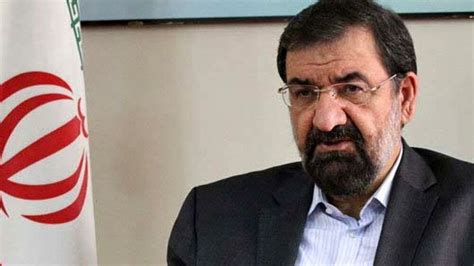
Al Jazeera interview with Mohsen Rezaei, Secretary of Iran’s Supreme National Security Council, military adviser to the Supreme Leader, and former Commander-in-Chief of the Islamic Revolutionary Guard Corps, on 20 September 2026.
- Iran is ready for a decisive war
- The Gulf countries are legitimate targets
- Yemen, Bab al-Mandab and the specter of a third world war
- The Islamabad memorandum of understanding
- What will Iran’s response be to the economic and financial blockade?
- Iran’s conditions for ending the war
- Iran’s nuclear file
- Toward an American ground offensive and a new war between Iran and Israel?
Journalist: Peace be upon you, dear viewers, for a new edition from the Iranian capital, Tehran, to examine the latest developments and the current nature of the tension between Tehran and the United States of America. In this interview, we welcome the Secretary of the Iranian Supreme National Security Council, Major General Mohsen Rezaei. General, welcome to Al Jazeera.
Rezaei: Thank you, welcome to you.
Iran is ready for a decisive war
Journalist: General, let’s begin with the latest news: the threats issued by American President Donald Trump, in which he threatened to be on the verge of making a decision against Iran, perhaps a decision for war. Your comment on this threat, and what would Iran’s response be to any military action?
Rezaei: In the name of God, the All-Clement, the All-Merciful. Mr. Trump began this stupid war against Iran, and he thought he would finish off Iran within a few days, as he did with Venezuela; he did not know that he was facing a very ancient people, a very vast country, a people of extremely strong faith, and above all a revolutionary people. He greatly underestimated Iran, and his calculations were mistaken.
Today, no one considers America’s war against Iran to be a rational war or a logical war; everyone describes it as a stupid war, and I want to add to it also the word “ignorant.” The American measures, whether on the military, economic or political level, were not based on any precise assessment nor on any rigorous calculations, and were carried out entirely at the instigation of Israel and the person of Netanyahu. Netanyahu dragged Trump into a swamp, and he himself is now cornered; and that is why disagreements have arisen between the two.
And Trump, just as he started a stupid war, will not get out of it now either, because of that same stupidity. It was, and remains, in America’s interest to accept Iran’s conditions and get out of the war, because the longer America persists and flounders, the worse its situation becomes. For example, it recently presented an economic plan entitled “economic expulsion” against Iran, and the American Treasury Secretary and his deputies went to Oman, the Emirates, Qatar, Turkey and various other countries, asking them to sever their financial relations with Iran and to no longer allow Iranian planes to land at their airports. What does this indicate? It indicates that Trump has fallen into a state of impotence: he who began with bombing, having achieved no result, moved on to imposing a naval blockade, achieved no result either, and is now turning toward imposing an economic blockade from land.
These measures Trump is taking perfectly demonstrate his impotence and disarray. If he were powerful, he should have finished off Iran on the first day, or finished it during the forty-day war, or when he imposed the naval blockade, he should have finished off Iran. That is why Trump’s latest threats are, too, doomed to failure, and we will defeat him.
Journalist: What would your reaction be if American President Donald Trump actually carried out his threats and undertook a military action: he says it would be a military action, perhaps a large-scale action, which could perhaps even go as far as shaking the regime in Iran?
Rezaei: You see, we have fully prepared ourselves to wage a decisive war, and the weaknesses of the American army are now entirely known to us. As for the aerial bombing they want to carry out, this time we are far more prepared than before; our preparedness today is better than it was during the forty-day war. We recently tested an anti-ship missile, that is to say, we fired a missile that exploded near an aircraft carrier there, and split into 80 explosive warheads, and our aim was for several of these small bombs to inevitably strike the aircraft carrier. We tested this, we conducted the trial, and the trial was a success. Consequently, if the war resumes, American ships, unless they leave the Indian Ocean, will be attacked at whatever point in the Indian Ocean they may be. We have arrived at these means, and we have developed the speed of our individual supersonic missiles, bringing them from Mach 6 [7,400 km/h] to Mach 10 [12,350 km/h], and we have developed electronic warfare systems, as well as our air defenses, and we have still other measures which we will employ at the appropriate time. That is why we are fully prepared, and if America starts the war, we will confront America with greater force, with more numerous and more painful blows.
The Gulf countries are legitimate targets
Journalist: Among the fears expressed, particularly by Iran’s neighboring countries, during an American-Iranian war, is an attack against these countries: an attack on Kuwait, or an attack on Qatar, or the Emirates, or Bahrain, or the Sultanate of Oman, or the Kingdom of Saudi Arabia, or Jordan. Is this Iranian strategy of targeting the countries of the region still in force, as these countries say, or is there a change in Iranian military strategy?
Rezaei: Listen, what must we do to defend ourselves? Could it be that there exist places from which planes take off and come to bomb our cities, and that we do not target those bases? Neither from the Islamic point of view, nor from the rational point of view, nor from any other point of view, can we say that those bases should not be targeted. Yes, there is a solution: that the Arab countries entirely forbid America, and tell it: you have no right to take off from our countries to bomb Iran. When an Arab country, a brother country, a Muslim country, allows America to take off from its bases to come and bomb the cities of Iran, the people of Iran, the leader of Iran, the schools of Iran, the secondary schools of Iran, and the sports fields of Iran, and our citizens are martyred, and Iranian Muslims are martyred, by means of planes taking off from Arab countries — should that base not be targeted? Of course it should. We have never attacked Arab cities, nor centers belonging to the Arab countries themselves, up to now: every attack we have carried out targeted the bases from which the planes that come to bomb us take off. No, we are serious about defending ourselves; this time, if war begins, we will strike with greater force all the American air bases from which those planes take off. Yes, we will strike them with more power, and there is only one solution: that our friendly countries in the region forbid those planes and stop their sorties.
Journalist: Are you not afraid of the effect this war, after the attacks on these countries, will have on the relationship between Iran and the countries of the region? And is there an Iranian vision for the post-war period, as to what the relationship with the countries of the region will be?
Rezaei: Our strategy of cooperation with friendly and neighboring countries is absolutely clear. Within this very agreement between Iran and Oman, we addressed an invitation to Iraq and five other countries — that is to say, eight countries, together with us and Oman — and it was planned that, when Mr. Araghchi would go with Oman’s Foreign Minister to sign the agreement establishing a new route through the Strait of Hormuz, we also invited the other countries bordering the Persian Gulf to participate in this ceremony; but they did not come. Then, the following day, those countries went to Germany and held a meeting with the Israelis and the American Central Command, CENTCOM. What does this mean? We say that we want to be friends, but the Arab countries go to Germany and hold a meeting with CENTCOM and the Israelis. This is precisely a mistake being made for the third time. The first time this mistake occurred was at the moment when we had made the Revolution [in 1979], when the noble Quran was heard for the first time via Iranian radio, when the Islamic Republic was established in place of the monarchical regime, and when the Shah, who was with Israel against the Arabs, was overthrown. And instead of the Arab countries welcoming the Islamic Republic, they went and stood behind Saddam Hussein and supported him with billions of dollars, and he attacked Iran. Well, the war lasted eight years. What did we do? After eight years, after eight years, Mr. Hashemi Rafsanjani went to Pakistan and renewed, with [Saudi] King Abdullah, the friendship agreement, and relations remained good for a long period afterward. Then an incident occurred at the Saudi embassy [stormed in Iran in 2016, following the execution of Sheikh Nimr al-Nimr], and that incident was entirely suspicious, and suddenly Saudi Arabia severed its relations with us; and once again, our brother Mr. Shamkhani, who was then Secretary of the Supreme National Security Council, concluded a strategic agreement with Saudi Arabia, in China [in 2023].
We remain, to this day, committed to our strategic agreement. We have always sought friendship. That is why we recommend to the Arab countries… because America and Trump will leave — everyone in the world knows that the American economy is in fact on a trajectory of collapse; within the next ten years, America will no longer be as it is today. But we, and the Arab countries, will remain. It is we who must set the region right; we must anchor security in the Persian Gulf, we must establish a charter of economic cooperation and be friends together in the region. We are one family, the family of the Persian Gulf; we are eight countries, and we must care about reconstruction and economic development, cooperate and share in our investments with one another, and even have a unified currency and a unified common market. These actions on the part of the Arab countries are clearly the fruit of Israeli and American influence. I am optimistic about the future. Why? Because it is the peoples who determine what the relationship between Iran and the countries of the region should be. Have the peoples present in Saudi Arabia, Kuwait, Bahrain and Oman now become hostile to Iran, or are they happy to see Iran confronting America and Israel? And every young Muslim in the Arab countries stands alongside Iran in facing Israel. Israel attacked Lebanon, attacked southern Lebanon and southern Syria, brought Gaza to this deplorable state, and attacked the West Bank. And a few years ago, it attacked Qatar! Qatar, an official state, a member of the United Nations, and one of the well-known and important countries of the region. Israel attacked Qatar. My question to the Arab officials is this: if Iran had not resisted, and they had managed to force Iran to capitulate, would Israel not today have attacked Saudi Arabia? Would Israel not today have advanced as far as Damascus? Would Israel not have attacked Iraq? We have offered martyrs here, and we defend the Arab countries. If we had not dragged America’s and Israel’s nose through the mud, here in Iran, and if they had felt victorious in Iran, there would have been no one in the region capable of standing up to them; Israel would have attacked all the Arab countries, and America would have supported it. We resisted; yes, we defended our country, but our defense also benefited the Arab countries. And we, we expect first of all that the Arab countries adopt firmer positions with regard to these crimes that America has committed against Iran, and with regard to this aggression that Israel is currently waging against Lebanon, Gaza and Syria. Yes, we seriously demand of America that it press for Israel to withdraw from southern Lebanon, withdraw from southern Syria, and stop attacking Gaza and the West Bank, and we consider this a source of pride for us; and even in the negotiations we conducted with America, we said that the war had to be stopped on all these fronts.
Yemen, Bab al-Mandab and the specter of a third world war
Journalist: But General, there is still a kind of Arab fear, now, for example, with what is happening in Yemen: there is a form of accusation leveled against Iran, according to which Iran would be an intruder in what is currently happening in Yemen, through its support for AnsarAllah, the Houthis, and through the fact that it provides them with full support. This causes concern within the Arab countries. How do you read this, and how do you interpret it? What guarantees can Iran offer these countries to escape this state of worry and fear regarding Iranian policies in the region?
Rezaei: We truly want to end the war between Saudi Arabia and Yemen, and we want to end the war between Afghanistan and Pakistan, and we have also declared that, as a friendly and brotherly country, we are ready to help end these wars. But note that Yemen has been besieged for ten years, it is an economic blockade, and ultimately the issue should have been resolved and settled through negotiations between them. And so far, it is not excluded that the Yemenis are unwilling to sit down with Saudi Arabia and resolve the issue between them; but we do not intervene. Let them sit down themselves, whether in Sanaa or in Riyadh, let them sit together, let them talk and reach an agreement among themselves, and if they also ask us for help, we are entirely ready to help achieve peace between Yemen and Saudi Arabia. The condition is that both parties sit together and talk; and so far, we have been told that Saudi Arabia is not ready to sit and talk with the Yemenis. Well, when Saudi Arabia is not ready to sit and talk with the Yemenis and keeps them under blockade, incidents occur: what does that have to do with Iranian interference? Is Saudi Arabia itself not in contact with certain groups in Yemen? Does it not supply them with weapons? Is that not considered interference? Would our cooperation with AnsarAllah be interference, while what Saudi Arabia does is not considered interference? We want to end this issue, but it is Saudi Arabia that does not want it to end. There now exists in Yemen a stable government, which has demonstrated its capacity and competence in managing Yemen. In truth, Sayed Abdul-Malek Badr al-Din is a cultured man and leader, and he has demonstrated that he is capable of establishing security, he has demonstrated that he can form a government, he has demonstrated that he can form a council. A revolutionary government has formed in Yemen. Let Saudi Arabia turn to it, let the two states be friends and brothers, let them work together, and whatever we can do, we are at their service.
Journalist: But General, some say that the opening of the Yemeni file, and the fact of reopening the Yemeni file and the Yemeni conflict at this precise moment, aims to have an effect on the Bab al-Mandab strait, to add to the Strait of Hormuz, in order to influence the global energy market, and that this would therefore be part of Iranian policy and Iran’s military strategy. How do you interpret this? Does this truly reflect Iran’s reality, that it would go so far as to instrumentalize Bab al-Mandab, knowing that many officials had threatened that other straits would be added, to influence the global energy market?
Rezaei: Listen, America must stop the war now. If the Muslims surrounding the Strait of Gibraltar close the Strait of Gibraltar tomorrow, will they say that it was Iran that closed it? Or if something happens tomorrow in the Suez Canal, because of the prolongation of the war? Why is the war being prolonged? This issue does not concern this region alone. Look now at the Ukraine question: a drone went from the Russian side toward Lithuania, and then NATO said that Russia had threatened us. Mr. Trump and Netanyahu are lighting the fuse of the Third World War by prolonging wars and through the follies they are committing. Now the question of Ukraine and Russia has worsened, and the relationship between Europe and America has become worse, and the countries of the region themselves are now living in a state of tension. And it is said that when the participants left the NATO meeting held in Turkey, everyone said that nothing but war had been discussed at that meeting: that is to say, the global atmosphere is indeed heading toward a state of international insecurity and toward a world war. Who is doing this? Mr. Trump and Netanyahu are the ones doing this. And now, the Yemeni forces have gone to Bab al-Mandab, taken control of it and positioned themselves there; so they say this was done at Iran’s instigation. And tomorrow, if the same thing happens at Gibraltar, they will again say it was at Iran’s instigation. What instigation have we made? It is they themselves who are pushing peoples to revolt and revolution against them, and in my opinion, it is Mr. Trump and this malevolent Israeli entity who are behind all these matters.
The Islamabad memorandum of understanding
Journalist: Doctor, there is also a fundamental question now: you spoke of ending the war. What is Iran’s conception for stopping the war with the United States of America? Is it a return to the memorandum of understanding, or entering into other negotiations? And in the case of entering into other negotiations, what would Iran’s conditions be for these negotiations?
Rezaei: You see, after the Americans withdrew from the Islamabad memorandum of understanding, this became for us, in a way, the irrefutable proof, and it is up to us to introduce our policy, our strategy and our manner of waging war with America into new patterns. That is why we made changes in the war, as well as in the negotiations. And likewise in the matter of the economic blockade. For more than a month and a few days now, we have begun implementing these changes. You have seen that, in the matter of the Strait of Hormuz, we seized for the first time an American [drone] submarine, and this submarine we seized is now one of the most sophisticated American submarines, capable of descending to a depth of 6,000 meters in the oceans, and possessing extremely complex technology; we have now begun to reverse-engineer it, and we are extracting entirely the material engineering, the electronic systems and all these matters, and we are benefiting from it. And we were pursuing another submarine near the coast of Oman in order to seize it; it was fleeing, and we were therefore compelled to target it. And we tested our missile on the American aircraft carrier. On the other hand, we have delineated a broader zone in the Persian Gulf for offending vessels. And on the negotiation front too, it is the same; and as regards the negotiations, we said that the person does not respect his signature. That is to say, Mr. Trump came and signed, while Mr. Macron, President of France, was at his side, and Mr. Rubio, the Secretary of State, was also present, and he signed, and our President of the Republic signed as well; then, after two or three weeks, he went back on his signature and withdrew from the agreement he had signed. That is why we had to change our approach to negotiations, and that is why we now said that America must first execute our conditions, and only then will negotiations follow, that’s all. And we will have no other word for the Americans, in reality, than the execution of our conditions. That is why we also changed our strategy on the matter of negotiations.
Journalist: Doctor, if you allow, here, before we go to the conditions, just on one point: the American side says that it was Iran that violated the memorandum of understanding by targeting one of the ships in the Strait of Hormuz, and that it is therefore Iran that is responsible for the failure of the memorandum of understanding. What is your comment on that?
Rezaei: They are lying. Mr. Trump has become known throughout the world for his dishonesty; everything he tweets is a lie. It was they who attacked Bandar Abbas first: they attacked Bandar Abbas airport with a drone, and afterward we, for our part, targeted the ship that was sailing on a route other than the agreed route. And now, suppose that a disagreement such as this had arisen during the meetings that Dr. Qalibaf held with J.D. Vance, Mr. Trump’s Vice President; they formed a committee to resolve disputes, and it was planned that reference would be made to the Emir of Qatar and the Prime Minister of Pakistan if a dispute arose. But Trump, before resorting to the Emir of the State of Qatar or the Prime Minister of Pakistan and saying that Iran had done such a thing, withdrew from the memorandum of understanding.
What will Iran’s response be to the economic and financial blockade?
And they recently began this economic blockade, and within the framework of the economic blockade, they sent teams to different countries to impose a financial blockade on Iran. And I say now to all the Arab countries and to all the neighboring countries: if the Americans want to hinder our commercial relations and our financial relations, we will do two things. The first: we will certainly attack American companies, such as the American drilling companies present in great numbers around us, or American commercial companies, or American business companies — we will target them. And we say: an attack on the American economy in exchange for the American attack on the Iranian economy, attack for attack. And on the other hand, we also say to the neighboring countries: do not cooperate with America, for we will respond in kind, that is to say, if a country neighboring us cooperates with the Americans in the economic blockade against Iran, for example in matters and financial affairs concerning us, then we will punish its ships in the Strait of Hormuz, and we will impose restrictions on the movement of its traffic and on some of its activities, or we will respond in kind as regards economic cooperation.
That is why our recommendation is that our friends should know that relations of brotherhood and friendship are the most important deterrent factor, and not American missiles, and not American bases. Have American missiles and bases been a deterrent factor for the countries of the region? Have they brought them security, or have they become a threat to them? And if the Arab countries had preserved their friendship and brotherhood with us, they would not have suffered all these losses; America is plundering their money and has destabilized the security of their countries, and despite this, our friends in the region still say: let us meet with the Americans in Germany. The cost would be very low if relations of brotherhood and friendship were established between the countries of the region, for brotherhood will cost no one anything; on the contrary, it carries very great gains. Why should we resort to a declining power? America will no longer be in the region in ten years; why should we go and do these things with a country that is on the path to withdrawal?
Senior advisor to Iran’s Leader and former acting president, Muhammad Mokhber, declared on September 25:
“Either flying in the region is permitted for everyone, or for no one. If Iran is unable to operate flights and receive airport services,
no country in the region will have this possibility either.”
Iran’s conditions for ending the war
Journalist: General, let us return to the discussion of negotiations with the United States of America. We spoke about the conditions; you were speaking about Iran’s conditions for negotiations with the United States of America. What are these conditions that you are now setting for a return to the negotiating table with the United States of America?
Rezaei: The respectable government of Qatar, as well as the respectable government of Pakistan, are currently holding continuous consultations with us, and there are ongoing contacts and meetings. We have informed them of our conditions, and the Americans themselves also know our conditions; but we have communicated them to them, and we are waiting for the Americans to accept the conditions and commit to them, that is, to execute them.
Journalist: What are these conditions?
Rezaei: We have announced to America that one of our conditions is the release of our frozen assets; and second, that they declare the end of the war on all fronts, from Lebanon to all other fronts, and that they end the war. Likewise, that they not intervene in Iran’s internal affairs, and that they not cooperate with the opponents of our revolution, and that they stop any kind of aggression against Iranian territory, even by means of drones, that they not continue their aggressions, and that they lift the naval blockade. These are the conditions that we have mentioned repeatedly, and which have been officially communicated to them through the two states of Qatar and Pakistan.
Iran’s nuclear file
Journalist: General, there is now a new element being raised regarding Iran, which is the matter of bringing Iran’s file before the Security Council — the nuclear file — as well as an American threat to target Pickaxe Mountain [an underground nuclear complex reportedly housing highly enriched uranium]. First, what is your comment on bringing Iran’s file before the Security Council, and what would be the Iranian reaction if Pickaxe Mountain were to be targeted, as well as the adoption of resolutions at the Security Council? What is Iran’s nuclear position during the coming stages? Will we witness a change in nuclear doctrine? Will we witness Iran’s withdrawal from the Treaty on the Non-Proliferation of Nuclear Weapons, the NPT?
Rezaei: You see, the measures that America and Israel have taken against us would have allowed us to withdraw from the Treaty on the Non-Proliferation of Nuclear Weapons, in accordance with the provisions of the Treaty itself, because we were subjected to a threat: we were threatened, but we have not withdrawn from the Treaty up to now. They struck our facilities and our nuclear sites, and despite this, we did not withdraw from the Treaty on the Non-Proliferation of Nuclear Weapons. Over the past ten years, the largest inspection operations took place in Iran, that is to say, the inspectors of the International Atomic Energy Agency visited Iran more than all other countries, and Iran always answered the questions they asked; and despite all this cooperation, Iran was bombed, and the Iranian nuclear sites were bombed, but the International Atomic Energy Agency did not condemn America. We have suffered a very grave injustice in the nuclear file, and despite this, we did not withdraw from the Treaty on the Non-Proliferation of Nuclear Weapons; but the Americans are pushing the situation in a direction that is currently making us study the matter. We are now examining whether we will withdraw from the Treaty on the Non-Proliferation of Nuclear Weapons or not; this file is now open in the Islamic Consultative Assembly [Majles], as well as in other bodies, and it is being examined whether Iran will remain in the Treaty on the Non-Proliferation of Nuclear Weapons or withdraw from it.
Journalist: There is another matter being raised, which is the question of changing Iranian nuclear doctrine by moving toward the nuclear bomb. Is this being considered among Iranians now, in this direction, in light of the current threats, or will Iran remain in its position of not moving toward nuclear armament?
Rezaei: We remain always committed to the fatwa of our martyred Imam [Khamenei, which prohibits the production, possession or use of nuclear weapons], and our position has not changed up to now; but we do not know what will happen in the future; the future is unclear. Do the Americans want to continue this war? Do they want to attack our nuclear facilities again? We have not made a decision on this so far, and up to this moment, the fatwa of the martyred Imam remains in force.
Toward an American ground offensive and a new war between Iran and Israel?
Journalist: As a final question, General: do you expect a swift end to the war, or could this war between Tehran and the United States of America be prolonged, along with Israel’s presence in this war? Do you expect any Israeli move toward Tehran?
Rezaei: All the effort and all the thinking of Netanyahu and Trump are currently focused on success in the elections. What is not on the agenda right now is the American people. Why? Because Trump wants to win the elections, even if the American people must suffer the greatest losses. And as you see now, the price of gasoline has almost reached the level of the 40-day war, that is to say, if the price of gasoline rises a few more cents, it will reach the level it was at during the 40-day war. And on the other hand, the price of oil has not dropped below 100 dollars, and it remains at this level, and the American people are already paying very exorbitant costs. For whom, for what? So that Trump can win the elections. As for Netanyahu, he has taken the Palestinian people, and the Jews and Christians on the land of Palestine, hostage, and attacked the Lebanese people, and attacked Mount Ali al-Taher, which had already been evacuated beforehand; before that, those tunnels had already been evacuated, there was no one left in them, and all the equipment had been removed from them. The Israelis blew up empty tunnels in Lebanon for a propaganda operation and a propagandistic staging aimed at winning the elections; they took photos and videos and said: look how strong a man Netanyahu is. All of this is a propaganda operation, and all of this is tied to the elections.
As for our action, it is an action founded on principles; we fight by our faith. You saw recently that at least 400,000 to 500,000 people, children of the people, marched in a parade in Tehran. These are the fedayeen of Iran. And around 30 million people have registered their names in this campaign [of military preparation in defense of the homeland]. Iran’s defensive capacity rests on the people: the people are the foundation, because the Iranian people are an ancient people, whose history goes back thousands of years. It is true that the Islamic Republic is recently founded, but the Iranian people are not a recently formed people; the Iranian people have a history spanning thousands of years. Will this people, then, surrender to America? We will never, ever surrender, and we will defend ourselves. That is why these actions that America is carrying ou… Yes, they may include a staged attack or a propagandistic attack, but they do not enter the field of a genuine war; and if they are sincere, let their soldiers come and enter Iran. Why do they not enter with ground forces? It is always the ground forces that have the final say in wars. Why do the airborne divisions not enter? Why do the American ground forces not enter Iran? Why do they only bomb from the sky, and then leave?
Journalist: To complete this question: do you expect this war to be prolonged, or will it end soon?
Rezaei: This war is currently ongoing, and of course we seek for it to end quickly; but the Americans have fallen into a great impasse, and if reasonable people were to take power in America — and this is a very strong probability, because the coming governments will not act like Trump; American history shows that this type of action is vigorously opposed by subsequent American governments. That is why we ask the dear Islamic countries not to join Trump in his actions. The coming American administrations will not be like the Trump administration. It is incumbent, at the very least, on the Islamic countries to undertake strategic action for the future of the countries of the region.
Journalist: General Mohsen Rezaei, Secretary of the Iranian National Security Council, thank you for being with us in this interview on Al Jazeera. Dear viewers, this interview took place from the Iranian capital, Tehran, with the Secretary of the Iranian National Security Council, General Mohsen Rezaei. So, until we meet again, may God keep you.