

FM Lavrov : UNGA – Sep 26, 2026
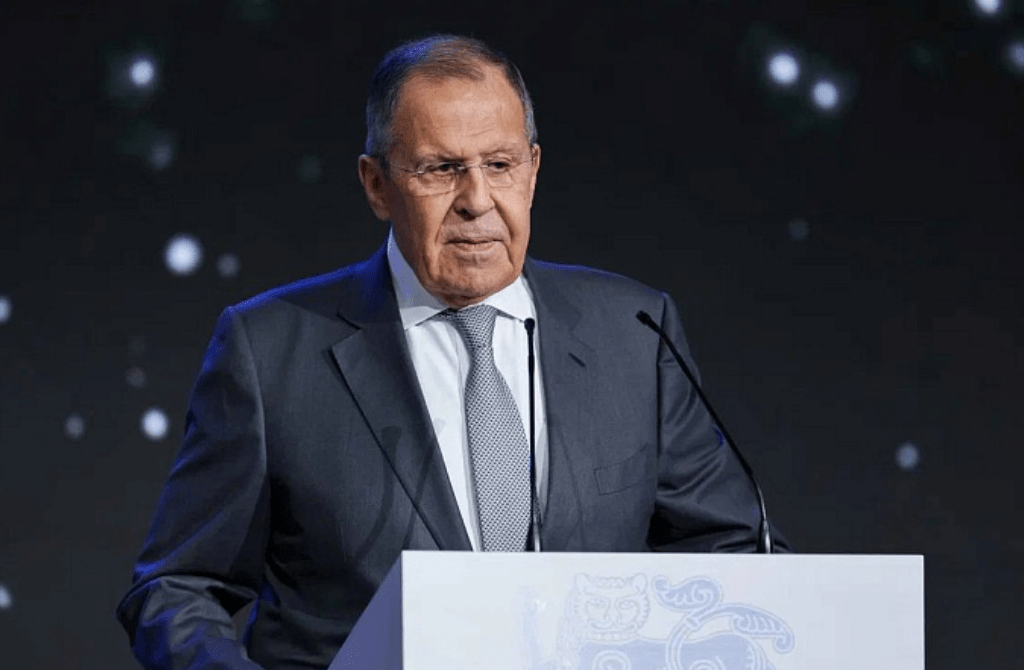
Foreign Minister Sergey Lavrov’s statement at the General Debate of the 81st Session of the UN General Assembly, New York, September 26, 2026
Mr President,
Excellencies,
Ladies and gentlemen,
In recent days, we have heard repeatedly – from this rostrum and in the corridors of the General Assembly – that tectonic shifts are underway in global politics, and that a more just, multipolar world order is emerging before our very eyes. Countries of the Global South and East are asserting themselves as sovereign centres of growth and are assuming responsibility for ensuring security in their respective regions. They demonstrate a commitment to international law, a rejection of external pressure, and an interest in the prosperity of all states – not merely the chosen few. This constructive philosophy also underpins Russian foreign policy; it is shared by our many like-minded partners and forms the foundation of cooperation within the CIS, the SCO, BRICS, and other associations of the Global Majority.
However, this is not to everyone’s liking. The Western minority, which has dominated for five centuries by exploiting the resources of others, persists in its attempts to retain its privileges and impose its “rules” on everyone else. The West increasingly resorts to the use of brute force, acts unpredictably and recklessly, and jeopardises the lives and well-being of millions – if not billions – of people on our shared planet. As Russian President Vladimir Putin has put it, the dictatorship of a single hegemon “…is getting out of control and is simply dangerous for others.”
Earlier this year, in violation of all norms, including moral ones, a US invasion of Venezuela culminated in the capture of President Nicolás Maduro and his wife, and their detention without trial in an American prison – even though international law explicitly mandates respect for the immunity and inviolability of high-ranking state officials. We insist on the immediate release of the Venezuelan leader and his spouse and demand that such outrages not be repeated in the future.
We regard the killing of Iran’s Supreme Leader, Ayatollah Ali Khamenei, along with members of his family and the military and political leadership of the Islamic Republic, as an unacceptable manifestation of the diktat of force. It is especially alarming that the US-Israeli aggression, which began last June, targeted not only Iran’s civilian infrastructure but also peaceful nuclear facilities protected by IAEA safeguards. This has caused irreparable damage to the Agency’s credibility and to the entire nuclear non-proliferation system.
Armed confrontations continue to recur in the Gulf region and the Strait of Hormuz, despite the obvious damage inflicted on global shipping and trade. We believe that establishing trust between the Gulf’s littoral states – the Arab nations and Iran – is a necessary condition for resolving the crisis. Our Concept for Collective Security in the Gulf is aimed at establishing a stable regional architecture. Russia, together with other responsible nations, stands ready to make a constructive contribution to stabilising this strategically vital region.
We are convinced that the time has also come to resolve the Middle East’s central issue: securing statehood for the Palestinian people in accordance with numerous UN resolutions. Almost a year ago, the Security Council endorsed a US-championed “peace plan” for Gaza – yet peace has not been achieved. Senior citizens, women, and children continue to lose their lives, and the humanitarian situation remains critical. The West Bank, for its part, is sliding further into crisis, as Israel expands settlement activity. If this trend continues, establishing a Palestinian state will become impossible – there simply will be no room left for it. Yet, in that scenario, Israel’s own security would also be under constant threat – a fact experts fully acknowledge.
The UN, and all of us as member states, must take urgent and unconventional steps to reverse these trends in the Middle East and beyond. This applies not only to Palestine, but also to Lebanon, Syria, Yemen, Iraq, Sudan, Somalia, South Sudan, and other African nations where conflicts continue to rage.
Urgent measures are likewise needed to address the dire humanitarian situation in Cuba, which faces unprecedented pressure from its northern neighbour. We reaffirm our solidarity with the Cuban people and government. We strongly urge the lifting of the naval blockade against the “Island of Freedom,” the removal of all trade restrictions, and the country’s removal from the long-discredited list of state sponsors of terrorism.
These are merely the most glaring examples that demand the international community’s priority attention. But we cannot confine ourselves to them. The West’s power politics and double standards are destabilising the situation everywhere. In the Balkans, the European Union flagrantly disregards Security Council Resolution 1244 and pressures Serbia to accept the loss of Kosovo and to turn its back on its own history and the memory of its ancestors. Belgrade is being forced, in effect, to impose sanctions against Russia – offered in return the prospect of European integration, which everyone now recognises as illusory. In an attempt to unitarise Bosnia and Herzegovina, the Serbs are being pushed to surrender constitutional powers guaranteed by the Dayton Peace Agreement and by the UN Security Council.
In the same spirit of disregard for international law, the reckless actions of the external sponsors of the Kiev regime pose a serious threat to international peace and security. For the sake of the utopian goal of containing Russia, the West has destroyed the European security system with its own hands and nurtured the Russophobic regime in Kiev. Now, realising the futility of their efforts, Europe is doing everything to prevent a peaceful settlement and to derail negotiations – a process many are interested in, including the Trump administration. The West continues the endless flow of weapons into Ukraine and helps the regime target drones and missiles at civilians and civilian infrastructure. In the West, they dream of inflicting a “strategic defeat” on Russia. But those dreams, as has happened many times before, will lead the warmongers themselves to a strategic dead end.
Colleagues,
A year ago, we marked the 80th anniversary of the Victory over German Nazism and Japanese militarism. Next week, on October 1, we will mark the 80th anniversary of the conclusion of the International Military Tribunal in Nuremberg. The historic verdict of the Court of Peoples – as the Nuremberg Tribunal is known – condemned Nazi criminals harshly and unequivocally, and outlawed and placed beyond the pale of morality the misanthropic ideology of Nazism.
Yet 80 years on, not everyone has learned the lessons of Nuremberg. Judging by the statements of their representatives, the ruling elites of many EU countries are clearly afflicted by the virus of racial superiority and are nurturing extremist, Russophobic ideas. They condone the leaders of the Ukrainian regime in Kiev as they honour inveterate war criminals and Nazi collaborators – individuals whose arms are up to their elbows covered in the blood of Russians, Jews, Belarusians, Ukrainians and people of other nationalities. Almost the entire West votes here in this hall, year after year, against the Russia-sponsored resolution condemning the glorification of Nazism. Germany, Japan, and all NATO countries – many of them guilty of crimes against humanity during World War II – vote against it. This does not surprise us.
But I would like to stress: the outcomes of World War II formed the foundation of the post-war world order and they are enshrined in the UN Charter. By ratifying this document, the former Axis states admitted their historical responsibility for the countless calamities caused to the world by Nazi ideology and practices. By bashfully turning a blind eye to the increasingly evident manifestations of Ukrainian Nazism, one imperils the very foundations of the UN-centric world order.
While downplaying Nazi Germany’s responsibility for the genocide of the Soviet people and feeling no shame about Germany’s role as a primary sponsor of the Nazi regime in Kiev, Chancellor Merz declares that Germany must “once again” become the biggest military power in Europe. Do they realise in Berlin what “once again” means and where it can lead? Did the outcome of World War II teach you nothing?
The Ukrainian regime is openly overriding such cornerstones of the UN Charter as respecting human rights and freedoms for all with no discrimination as to race, gender, language or religion. There is no other country in the world but Ukraine where the law prohibits a language. The Russian language is banned in Ukraine. Using the Russian language is punishable, up to and including imprisonment. But the European Union, taking pride in its “European values,” seems to have sewn its mouth shut, with not a word of condemnation. All they say is Ukraine is helping to defend these very European values. Inadvertently, one starts to think that both Nazism and the outrageous violations of the freedom of speech, information and faith by the Ukrainian regime actually form the core of these very “European values.”
Having launched the special military operation in 2022 to defend the people of Donbass and Novorossiya from extermination by the Kiev regime, Russia continues to fight for their security and rights in full compliance with the letter and spirit of the UN Charter. We will carry through our fight for the truth and justice: the goals of the special military operation will be achieved; threats to Russia’s security will be eliminated and peaceful life restored. It will happen despite any circumstances, including the inability of the current UN leaders to take the only right stance with regard to Ukraine, which is the defence of the principles of the UN Charter – not selectively but in their entirety, completeness and interconnectedness.
We expect that the new Secretary-General, who is to be elected by the end of the year, will rigorously adhere to their mandate and the principles of impartiality and neutrality stipulated by the Charter; that they will represent the entire international community rather than serve the interests of certain states; that they will not undermine the intergovernmental nature of the UN system or erode the prerogatives of the UN Security Council and its permanent members.
Our principled approach is that a reform of the Security Council cannot provide any extra seats to the Western countries – especially Germany and Japan – that have taken the path of militarisation and revanchism. We advocate solely for the expansion of representation by Asia, Africa and Latin America and support the candidacies of Brazil and India for permanent seats while – and I want to stress this – the interests of the African continent shall be met with due account for the Ezulwini Consensus and the Sirte Declaration.
Ladies and gentlemen,
By pursuing its responsible foreign policy, Russia seeks to improve the international climate, in unity with our allies and strategic partners, including BRICS, the SCO, the EAEU, the CIS and the CSTO. We propose a uniting agenda, specific ideas and projects.
International information security is a matter currently moving to the forefront. It is evident that the UN, rather than non-transparent and private mechanisms, must play the central role in this issue. Last October in Hanoi, the UN Convention against Cybercrime, developed at Russia’s initiative, was opened for signature. We welcome the launch of the global mechanism under the aegis of the UN for its implementation – the first permanent format in this area.
The UN is vested with special responsibility due to the rapid development of AI technology. It is hard to dispute the fact that generally recognised rules of AI application can only be developed on an equal basis, with all countries involved. We consider the launch of the Global Dialogue on AI Governance and the Independent International Scientific Panel on Artificial Intelligence as steps in the right direction. China’s initiative to create the World Artificial Intelligence Cooperation Organisation, backed by Russia, is another project of similar purpose.
In the 1950s, the Soviet Union helped African, Asian and Latin American countries to break free from the shackles of colonial dependence. Further democratisation of international affairs is impossible without eradicating the neo-colonial practices that persist to this day. The adoption of a General Assembly resolution declaring December 14 the International Day Against Colonialism in All Its Forms and Manifestations was a landmark event in this regard. We will be glad to see supporters of the struggle against modern neo-colonial practices from all states at the 1st For the Freedom of Nations International Inter-Party Movement World Assembly that is taking place in Russia within a few months.
Colleagues,
It is only possible to secure a lasting peace by ending the dangerous rivalry between the largest global players. We can only achieve this by strictly adhering to the UN Charter and the principle of equal and indivisible security. Let me remind you that this principle means refraining from ensuring the security of one state at the expense of others; that it is unacceptable for any country or a group of countries or an organisation to claim dominance in security. This mainly applies to NATO, which seeks to spread its destructive influence far beyond the geography of its domain, including Southeast and Northeast Asia.
The values of broad equal cooperation are the bedrock of the initiatives to build a Greater Eurasian Partnership and the security architecture across Eurasia, proposed by Russian President Vladimir Putin. Yesterday here, in New York, Russia, Belarus and other like-minded states adopted a statement on the beginning of the work on the Eurasian Charter of Diversity and Multipolarity in the 21st Century. We call for everybody who is willing to become part of the new pancontinental architecture of peace and development to contribute to the success of this important project that will complement and harmonise the existing mechanisms in the spirit of the geopolitical realities of the emerging multipolar world.
Thank you.
[9/29/26 11:01 AM] Russian MFA 🇷🇺: [ Video ]
🎙 Russian Foreign Minister Sergey Lavrov’s remarks to the media following the 23rd meeting of the Valdai International Discussion Club (Moscow Region, September 29, 2026)
❓ Question: German FM Johann Wadephul himself said that he attended the meeting solely to avoid being, so to speak, “left out” of the negotiations and leaving the US with a monopoly on the process. So what is Germany seeking – genuine negotiations or some semblance of them? What could move our relations with Berlin forward at this stage?
💬 Sergey Lavrov: I commented on this in detail at my news conference in New York. It is difficult for me to judge what Germany is seeking.
I think one obvious explanation is simply a desire “not to miss the train” – the one They believe “has already picked up speed”. I do not know whether that is the case. If they mean the Ukrainian crisis, it is difficult for me to judge.
The Ukrainian crisis is intertwined with a vast number of problems across Europe: the militarisation of the EU, the repeated “mantras” that NATO will expand and admit the Ukrainian regime, that Russia is an eternal enemy, and that “we will be at war in three years”.
If these “mantras” are being repeated, and the aim, as Wadephul himself stated, is simply to repeat them behind closed doors, without the press, supposedly to make Russia understand that this is indeed how things stand, then this is a futile and, I would even say, harmful exercise.
It is deeply regrettable that such figures from the EU and NATO are effectively taking on the role of “spokesmen” for this European scheme.
❓ Question: A few days ago, the Russian Foreign Ministry announced further contacts with the US on removing irritants in bilateral relations. Could you tell us whether these contacts have taken place, which specific irritants are currently on the agenda and, in particular, whether there are realistic prospects for the return of diplomatic property?
💬 Sergey Lavrov: The contacts have not yet taken place.
US Secretary of State Marco Rubio and I agreed that they would take place soon. Our experts need to agree on the specific dates and venue.
The discussions will focus on the functioning of our respective diplomatic missions – Russia’s in the US and America’s in Russia. There are many issues, including, of course, diplomatic property.
We have heard no encouraging comments on this issue from the Americans under the Donald Trump administration.
❓ Question: You said that reality would compel the US to think in terms of multilateralism. Yet, for now, we see key players in Eurasia and the Middle East – the US, Iran, Israel and the Gulf monarchies – stuck in a zero-sum mindset. Do you see any prospects at all for creating a new security system in these regions? Is Russia prepared to act as a guarantor of a balance of interests if everyone else continues to pursue an “all-or-nothing” approach?
💬 Sergey Lavrov: I said that reality would compel them.
But life is only just beginning. Be patient. President Putin and I have repeatedly set out all our proposals on how to build relations in the international arena. We stand for honest dialogue on an equal footing and for taking each other’s interests into account.
What we are seeing in US policy today is, of course, an effort to advance its own interests unilaterally.
However, the US has to engage with countries such as Russia and China. These contacts involve discussions of steps that would serve the interests of both sides. 👉 That is precisely what I meant when I said that “reality would compel them”.
❓ Question: Poland plans to manufacture Patriot missiles on its territory. At what point would European countries’ involvement in the Ukrainian conflict require Russia to respond with direct military action?
💬 Sergey Lavrov: We have our military doctrine that addresses this, which President Vladimir Putin has cited on numerous occasions. ☝️ I urge you to study the relevant sections of this fundamental document carefully.
Read in full
[9/30/26 12:02 AM] Russian MFA 🇷🇺: [ 4 media ]
🗓 On September 30, 2022, following referendums, the Donetsk and Lugansk People’s Republics and the Zaporozhye and Kherson regions officially became part of the Russian Federation.
✍️ Looking back at #HowItHappened (Signing of the treaties on the accession of the DPR, LPR, Zaporozhye and Kherson regions to Russia)
In the referendums held on September 23-27, 2022, residents of the four regions made a historic decision that determined their future. International observers from Italy, Germany, Venezuela, Latvia and other countries (133 in total) who monitored the voting recognised the results as legitimate.
In 2014, the Kiev regime unleashed full-scale hostilities against the civilian population of Donbass, while neo-Nazis and radicals intimidated and attacked people in Zaporozhye and other regions as well. For eight long years, people endured relentless shelling, terrorist attacks and persecution.
Despite shelling and numerous provocations by the Kiev regime, people went to the polls and expressed their will.
🗳 Four years ago, the people voted in favour of joining Russia:
• DPR – 99.23%, with a turnout of 97.5%;
• LPR – 98.42%, with a turnout of 92.6%;
• Zaporozhye Region – 93.11%, with a turnout of 85.4%;
• Kherson Region – 87.05%, with a turnout of 76.9%.
Behind these figures are the lives of millions of people and their hopes for safety, for the freedom to speak their native language, to honour their ancestors – true heroes of the Great Patriotic War (instead of Hitler’s henchmen) – to preserve their culture and raise their children without fearing for their lives.
❗️ Russia’s position remains unchanged: the people of Donbass and Novorossiya exercised their legitimate right to self-determination, enshrined in the UN Charter, the 1966 International Covenants on Human Rights and the 1975 CSCE Helsinki Final Act.
💬 Russia’s Foreign Minister Sergey Lavrov’s address at the General Debate of #UNGA81 (New York, September 26, 2026):
Having launched the special military operation in 2022 to protect the people of Donbass and Novorossiya from extermination by the Kiev regime, Russia continues to fight for their security and rights in full accordance with the letter and spirit of the UN Charter.
Our struggle for truth and justice will be carried through to the end: the objectives of the special military operation will be achieved, threats to Russia’s security will be eliminated, and peaceful life will be restored.
And we will do this #TOGETHER.
Related Posts
-
FM Lavrov : Remarks at third BRICS Foreign Minister’s Council
May 17, 2026 -
Foreign Minister Sergey Lavrov’s interview with RT India, Moscow, May 13, 2026
May 13, 2026 -

FM Sergey Lavrov’s interview: Al Arabiya television channel, Moscow, February 18, 2026
February 18, 2026 -
UNSC: Colour Revolution in Iran: Tehran denounces terrorist acts and foreign interference
January 18, 2026