

SCO coming up ….
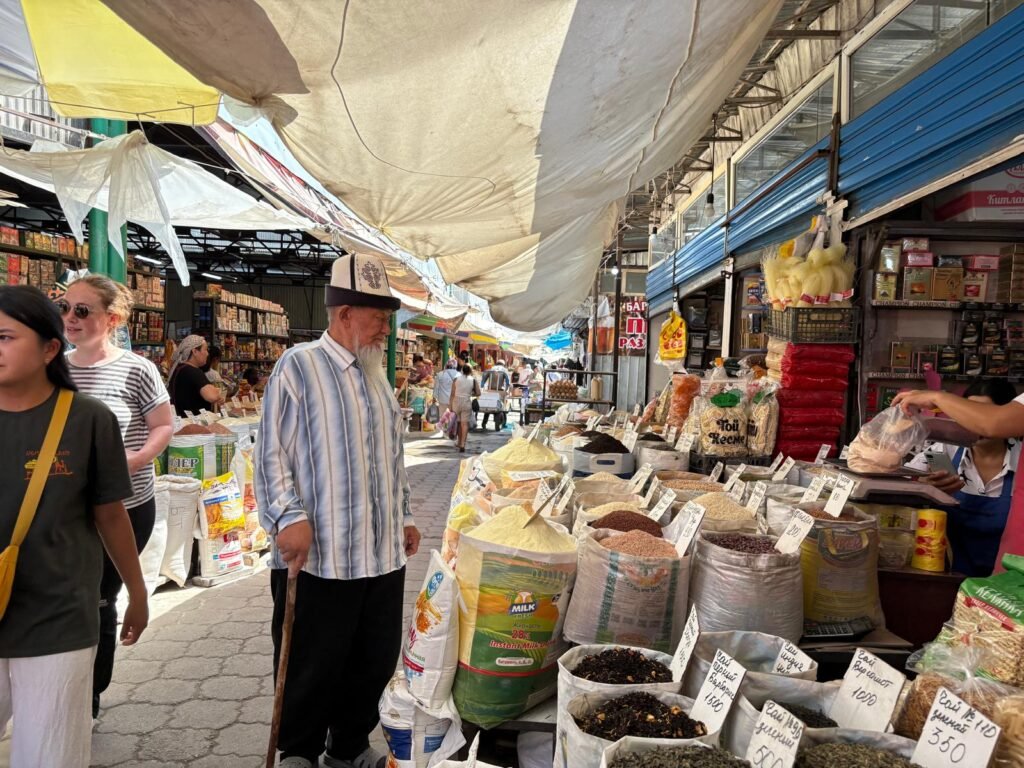
What, Where, When, Who and How summary
From August 31 to September 1, Bishkek. Kyrgyz Republic, the Council of Heads of State of the Shanghai Cooperation Organisation. The event coincides with the 25th anniversary of the SCO. The attending leaders will review the current status of the organisation, discuss prospects for its further development and modernisation, and exchange views on pressing international and regional issues. A big thing is a regional development Bank for SCO and overall platform coordination.
Coordinated positions will traditionally be enshrined in a final political declaration. In addition, a number of documents in various areas of cooperation are expected to be signed. These documents were prepared during the SCO Foreign Minister’s meeting in July.
Prime Minister Narendra Modi, Chinese President Xi Jinping and Russian President Vladimir Putin are set to attend the summit
Following the main meeting, a SCO Plus-format meeting will be held, where the SCO members will be joined by the invited leaders of observer and dialogue partner states, as well as the heads of international and regional organisations and guests of the Kyrgyz presidency. The discussion will focus on the SCO member states’ contribution to the establishment of a multipolar world order with the UN playing a central role.
SCO History
The SCO was established in 2001 by China, Russia, Kazakhstan, Kyrgyzstan, Tajikistan and Uzbekistan, building on the earlier Shanghai Five framework. India and Pakistan joined in 2017, followed by Iran in 2023 and Belarus in 2024. The organisation now covers a large part of Eurasia and has increasingly broadened its agenda from security cooperation to economic, energy, transport, technology and humanitarian issues.
A huge issue is what is is Modi going to say? We already have articles such as this: Is the Shanghai Cooperation Organisation the future of multilateralism? India may be the test. Posing thoughts that the fact that India is part of SCO may indicate that major powers are learning to cooperate without alignment.
That may be fine, but values get into it as well.
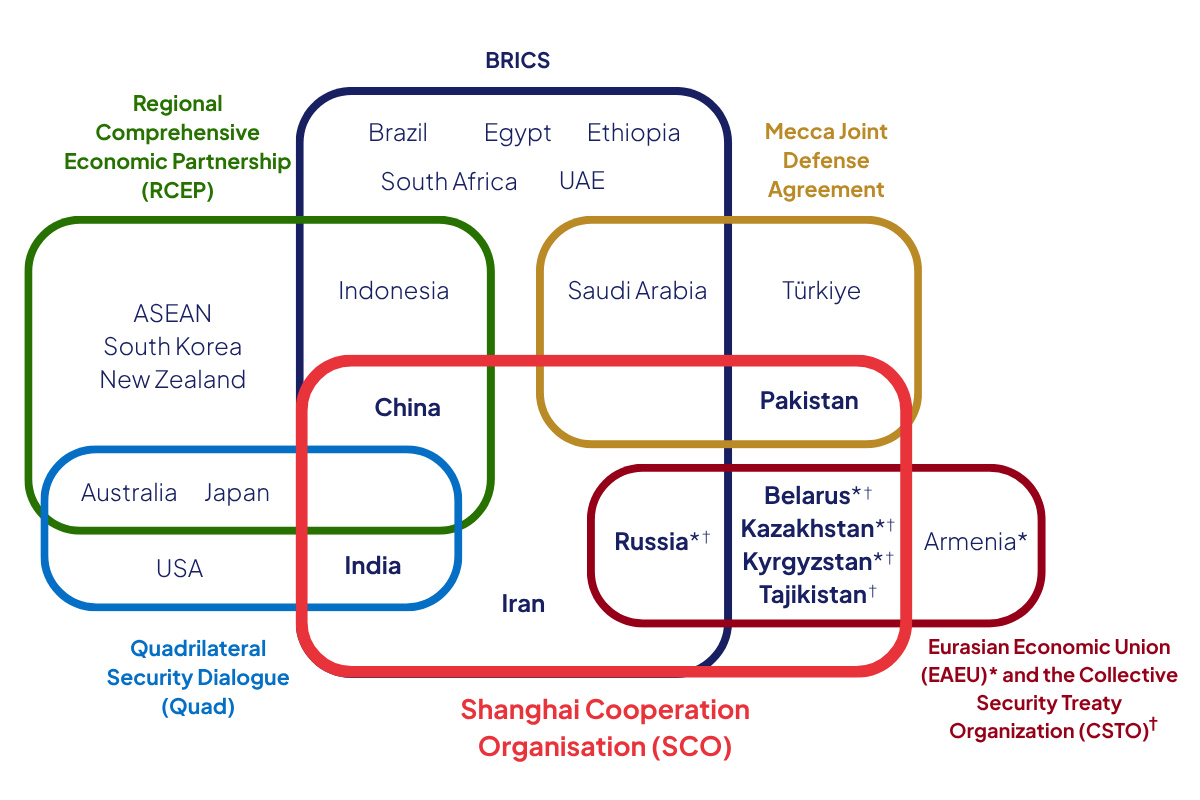
The Shanghai Cooperation Organisation (SCO) countries account for 42% of the world’s population and 36% of world GDP, measured at purchasing power parity. Comparable metrics for the G7 are 10% and 28%. Yet the G7 meeting in France in June attracted global attention while the SCO meeting will likely attract very little.
India’s membership brings that question into particularly sharp focus. The SCO is dominated by countries often portrayed in the West as the axis of evil: Belarus, China, Iran, Russia plus several Central Asian states regarded as being under the thumb of China, Russia or both. India’s continued participation therefore tells us something about what the SCO is – and what this kind of multilateralism might become.
Is it a vacuous talking shop, or a serious attempt at cooperation across deep political divides?
The SCO as a multilateral forum
There are two observers, Afghanistan and Mongolia, and 15 dialogue partners including the main Middle Eastern powers: Egypt, Saudi Arabia, Türkiye and the UAE.
Originally founded to help manage tensions and border disputes among former Soviet states, the SCO’s activities have expanded to include an economic dimension fostering connectivity, trade and investment, which reflects China’s interest in promoting the Belt and Road Initiative. Not a great deal, concretely, has been achieved so far, although the 2026 Heads meeting will advance plans to establish a Development Bank.
Another prominent area of cooperation is counterterrorism. The SCO has a joint body located in Tashkent, the Regional Anti-Terrorist Structure (RATS), which orchestrates intelligence sharing, training and institution building. And the SCO has agreed to a Chinese formulation of the ‘three evils’ – ‘terrorism, separatism and extremism’ – although some members hold each other partly responsible, as with India and Pakistan, and may disagree as to what these ‘evils’ mean in practice.
There are some obvious differences in interests and worldviews amongst the SCO’s members. A fundamental question, then, is whether these contradictions weaken the organisation by limiting practical action, or strengthen it by allowing rival powers to manage their differences within a common forum. India’s membership is perhaps the clearest test.
About Bishkek, that used to be called Pishpek in Soviet Times. – some wonderful photos and I would love it to go to that Osh Bazaar