

News on China – 29 August 2026


China and Jordan Unite for Palestine; Xi Proposes Four Principles for a Political Solution Amid Israel’s Genocide in Gaza
During Jordanian King Abdullah II’s state visit to China from August 18 to 24, Beijing and Amman reaffirmed support for an independent Palestinian state. President Xi Jinping proposed four principles to advance a political solution: pursuing a two-state solution, upholding “Palestinians governing Palestine,” protecting civilians and ensuring humanitarian aid, and defending international law and justice. A joint statement called the two-state solution “the only way” to achieve just and lasting peace, supporting a Palestinian state within the 1967 borders, with East Jerusalem as its capital and full UN membership. China and Jordan also reaffirmed their strategic partnership and expanded cooperation in trade, the digital economy, artificial intelligence, green energy, education, technology, culture and tourism.
Read More:
China and India Reach Eight-Point Border Consensus, Adding Two Hotlines and Delimitation Push
China and India reached an eight-point consensus during the 25th round of Special Representatives’ talks in Beijing on August 25, the third since an October 2024 understanding eased the Ladakh standoff. Wang Yi and India’s National Security Advisor Ajit Doval reaffirmed their commitment to maintaining peace and pursuing a fair, reasonable and mutually acceptable settlement based on the 2005 agreement. Two working groups will finalize their terms of reference before pursuing an “Early and Substantial Harvest” on boundary delimitation and border management. The sides agreed to improve understanding of the Line of Actual Control, add two military meeting points and two hotlines, reopen three border trade markets, and expand cooperation on transboundary rivers. The next round will take place in India in 2027.
Read More:

Cross-Border Corruption Bill Would Codify Sky Net and Fox Hunt, Set Duties for Overseas Firms
Reviewed on 25 August by the Standing Committee of the National People’s Congress, the text runs to six chapters and 47 articles setting out principles, scope, operational mechanisms and institutional responsibilities; Huo Zhengxin of the China University of Political Science and Law, who took part in drafting, said it provides for extradition, mutual legal assistance and repatriation in line with the UN Convention against Corruption (UNCAC) and places integrity and compliance duties on state-owned and private firms alike.
Read More:
From Xiamen’s 12 Measures to Fuzhou’s 17-City Network, Cities Lead Cross-Strait Exchanges
Presented at a regular Beijing briefing, the latest round of cross-Strait initiatives is municipal in origin and people-facing in content: Xiamen is establishing a distribution hub for agricultural and fishery products from Taiwan, China, an audiovisual platform and digital-content training for young people; Fuzhou (Fujian’s capital) has extended its Strait Youth Development-Oriented City programme, launched in 2025 and now spanning 17 mainland cities; and a Shanghai gathering from 24 to 28 August drew about 1,000 participants.
Read More:
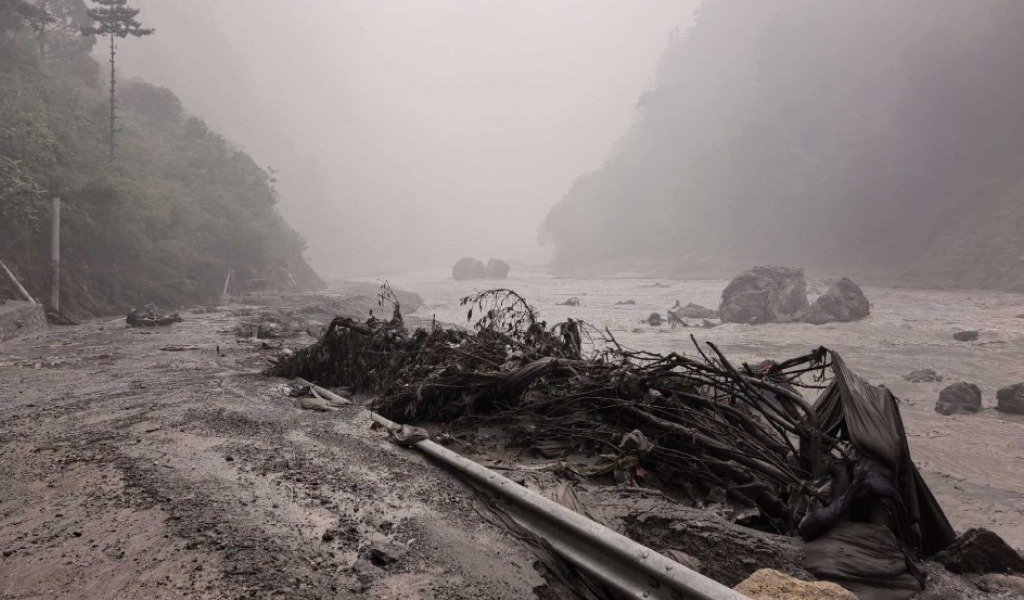
Entrusted by Xi, Premier Li Qiang Directs Xizang Mudslide Rescue Under Level-II Emergency
After a glacier collapse in Nepal buried Gyirong Port on the China-Nepal border on Wednesday, leaving three people dead and 558 missing, including 260 foreign nationals, the central government activated its second-highest disaster and geological emergency responses, allocated 220 million yuan (US $33 million) and dispatched hundreds of rescuers with 30,000 relief items, while the premier, acting on President Xi Jinping’s instructions, travelled to the site on Thursday to direct all-out operations.
Read More:

High-Tech Industries Account for 41.6% of Foreign Capital as Overall Inflows Fall 6.2%
In the first seven months of 2026, actual investment in research, development and design services rose 72.1 percent and in services commercialising sci-tech achievements 62.2 percent, lifting high-technology inflows 32.7 percent to 182.31 billion yuan (US $27.13 billion) and their share of the national total 12.2 percentage points, while 37,711 new foreign-invested enterprises were established, up 4.4 percent, under an encouraged-industries catalogue steering foreign capital into advanced manufacturing since 1 February.
Read More:
Chips, Robots and 6G Anchor 2026-30 Growth Agenda, Backed by ‘Little Giant’ SME Drive
Industry Vice-Minister Xin Guobin told a State Council Information Office press conference on 26 August that integrated circuits, aerospace, biomedicine, the low-altitude economy, new energy storage and intelligent robots will be developed into emerging pillar industries, with a tiered cultivation system for specialised small and medium-sized enterprises (SMEs) and a second phase of the national SME development fund extending the drive for technological self-reliance into industrial-chain resilience, employment and livelihoods.
Read More:

Officials Face Lifelong Liability for Ecological Damage and Failure to Advance Carbon Goals
Replacing a framework first issued in 2015, the revised document extends punishment to senior figures at public institutions, development zones and state-owned enterprises, tightening a system under which 3,371 people were held accountable in central environmental inspections (May 2020–June 2022), while requiring that enforcement be precise and evidence-based, neither dampening officials’ enthusiasm for work nor undermining the credibility of the Party and the government.
Read More:
Airborne Wind Turbine Generates Power at 4,000 Metres in Northwest China Flight Test
Developed by Beijing start-up Sawes Energy Technology with Tsinghua University and the Chinese Academy of Sciences’ Aerospace Information Research Institute, the helium-filled craft (roughly the length of a Boeing 747) carries lightweight turbines into steadier high-altitude winds and returns the electricity down a tether; it can be moved quickly between sites, making it suited to deserts, highlands, islands and disaster zones beyond the reach of a power grid, though no output figure was disclosed.
Read More:

Beijing’s Humanoid Robot Games Move 21 of 51 Events into Real Factories and Hotels
Fully autonomous operation carried a scoring coefficient of 1 against 0.5 for remote control, while task tolerances were drawn from paid work – a microwave timer turned to five minutes, with deviations beyond one minute costing points, and 30 minutes for robot teams to move luggage, replenish guest-room supplies and make beds – so that performance on the field itself, in the organisers’ words, provides evidence of commercial viability.
Read More:
Chang’e 7 Lunar South Pole Launch Postponed Beyond Its Planned Window on Reliability Grounds
Bound for permanently shadowed terrain near the rim of Shackleton crater with a lander, rover and hopping probe, the water-ice mission was halted days before lift-off at Wenchang under the principles of ‘prudence, reliability and absolute safety’, with no cause disclosed; the wider programme is geared to a crewed landing before 2030 and a joint research station with Russia by 2035, while the United States, India and Russia are pursuing the same south-polar region.
Read More:

Chinese Archaeologists to Excavate Peru’s 5,000-Year-Old Caral in First South American Project
Two societies that rose on opposite rims of the Pacific will now be compared on the ground, under an agreement covering field surveys, excavations, heritage conservation and specialist training, signed by the Institute of Archaeology of the Chinese Academy of Social Sciences with Peru’s Culture Ministry and the National University of San Marcos, at sites of a civilisation that flourished around 3000 BC to 1800 BC (the oldest known in the Americas).
Read More:
Decade of Fieldwork Yields World’s Largest Language Archive, Now a Strategic AI-Era Resource
Opened on 24 August inside the Hunan Museum in Changsha, a new exhibition hall draws on a national documentation programme launched in 2015 that has surveyed more than 1,800 sites and assembled a repository of over 120 languages and dialects, with an alliance of universities and research institutions formed the same day to promote language technologies in education, research and cultural preservation, meaning the corpus is now being positioned as data infrastructure rather than salvage recording.
Read More:
About News on China
News on China (NoC) is a weekly editorial newsletter offering analysis of key developments in and about China from a Global South perspective. Produced by an international editorial team, NoC aims to offer readers insights on China often missing from mainstream coverage. The newsletter is published every Saturday in English, Portuguese, Spanish, and Japanese. For enquiries, comments, or suggestions, please contact [email protected].
NoC is jointly published by Tricontinental: Institute for Social Research, Global South Academic Forum (GSAF) and Brasil de Fato (BdF).


