

Why US can’t bypass Iran’s Strait of Hormuz chokehold
From Mehr News
TEHRAN, Jul. 20 (MNA) – Washington’s attempts to neutralize the Strait of Hormuz have backfired. Rising tensions only raise insurance costs and shipping risk, proving that military might cannot undo geography or Iran’s asymmetric deterrence.
The American magazine The National Interest, in a report examining the strategic importance of the Strait of Hormuz, has emphasized that Iran’s geographic superiority has confronted U.S. plans to bypass this vital chokepoint with serious challenges. The report states that alternative pipelines in Saudi Arabia and the UAE lack sufficient capacity to transport the enormous volume of oil passing through Hormuz, and U.S. military efforts—including increased naval presence, strikes on Iranian positions, and the implementation of a ship escort plan—have also failed to alter the equation in this region. According to this assessment, Iran’s geographic position on the northern shore of the Strait of Hormuz remains the most decisive factor in the balance of power in this waterway.
The Strait of Hormuz is not merely a sea route between the Persian Gulf and the Gulf of Oman; it is considered the world’s most critical energy artery. Nearly one-fifth of the world’s daily oil consumption and a significant portion of liquefied natural gas pass through this waterway, and the slightest disruption there immediately affects global energy markets. This very importance has prompted the United States and some regional countries over the past two decades to seek to reduce the world’s dependence on this chokepoint; however, almost all of these efforts have encountered structural limitations.
The first strategy was to create alternative routes for oil transportation. Saudi Arabia, by developing the East-West pipeline, and the UAE, by constructing the Habshan-Fujairah pipeline, sought to export part of their oil without passing through the Strait of Hormuz. Despite heavy investments, these pipelines cover only a limited portion of the producer countries’ export capacity. Even if they operate at maximum capacity, the bulk of the region’s oil and gas must still pass through the Strait of Hormuz. This means that the idea of removing Hormuz from the world’s energy equation is more a political objective than an operational plan, one that does not align with economic realities.
Another issue is that alternative pipelines are only usable by some producer countries. Countries such as Iraq, Kuwait, Qatar, and a large part of the UAE’s exports remain dependent on the maritime route through the Strait of Hormuz. Therefore, even if some producers manage to export part of their oil through other routes, the global market will still be affected by any development in the Strait of Hormuz. This dependence has cemented the waterway’s position as the world’s most important energy chokepoint.
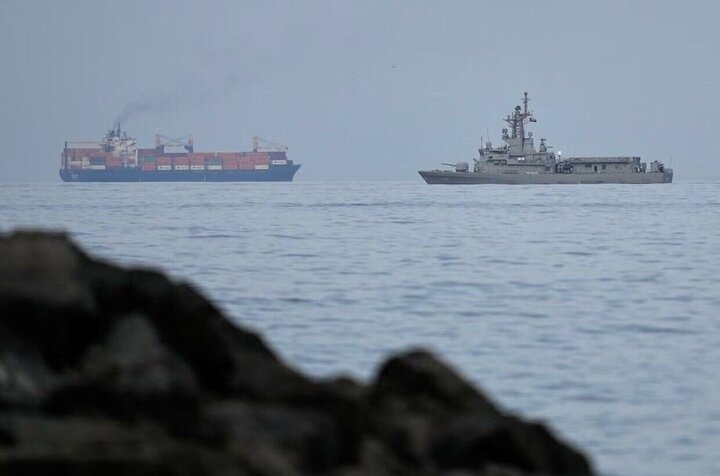
Alongside economic options, the United States has repeatedly attempted to shift the balance in its favor through a massive military presence. Deploying aircraft carriers, destroyers, defense systems, and increasing naval patrols have been part of this strategy. However, experience has shown that military presence alone cannot alter geographic realities. The Strait of Hormuz is an area whose northern coast is under Iran’s control, and its strategic islands provide intelligence and operational dominance over the shipping lane. This very characteristic has made any military operation to fully control this waterway face numerous complexities.
In fact, Iran’s superiority in the Strait of Hormuz is based less on the number of vessels and more on a combination of geography and asymmetric deterrence capability. Coastal anti-ship missiles, reconnaissance and combat drones, fast attack craft, naval mines, and surveillance systems form a network that drastically raises the cost of any military operation against Iran. Under such circumstances, even the world’s most powerful navy cannot speak with confidence of full control over this waterway.
After failing to change this balance, the United States proposed a plan to escort commercial vessels. The goal was to guarantee the safe passage of oil tankers by accompanying them with warships, thereby reducing the concerns of global markets. However, this plan also encountered numerous problems. Many countries were unwilling to participate in a costly naval coalition, and some others worried that a massive military presence would itself become a factor escalating tensions.
On the other hand, economic security is not ensured solely by the presence of warships. Insurance companies make decisions based on the level of risk in the region, not merely on the number of military vessels deployed there. Whenever the likelihood of conflict rises, the insurance costs for tankers and commercial ships increase, which in turn raises energy transportation costs. Therefore, even if the sea route is militarily open, it may remain economically costly and unviable.
Another important point is that controlling the Strait of Hormuz does not necessarily mean completely closing it. In deterrence equations, sometimes an increased risk of danger has a greater impact than its actual occurrence. If ships, shipping companies, or insurers perceive that the threat level has risen, their economic behavior changes, and this alone can have wide-ranging effects on the global energy market. For this reason, in many cases, raising the cost of transit through the strait creates strategic effects comparable to its complete closure.
From a geopolitical perspective, the Strait of Hormuz is not merely an energy corridor but a part of the balance of power in West Asia. Any change in the status of this waterway directly affects the energy security of Asia, Europe, and even the U.S. economy. For this reason, no power can remain indifferent to developments there. However, this global dependence has also caused military solutions to gradually give way to political ones, because any large-scale conflict in this region would incur costs far exceeding any potential benefits.
The experience of past years has also shown that military pressure, extensive sanctions, and the increased presence of foreign forces have not been able to alter the Strait of Hormuz equation. On the contrary, whenever tensions have risen, the importance of this waterway has become more evident than before, and global markets have faced sharp energy price fluctuations. This reality indicates that lasting security in the Strait of Hormuz is achieved not through confrontation but through stability and de-escalation.
Finally, what has become clearer than ever today is the failure of strategies aimed at eliminating the geopolitical role of the Strait of Hormuz or neutralizing Iran’s position. Neither alternative pipelines have been able to eliminate the world’s dependence on this waterway, nor has the U.S. military presence succeeded in shifting the balance, nor has the ship escort plan managed to create the desired economic security. Under these circumstances, the Strait of Hormuz will remain the world’s most important energy chokepoint, and any planning for the future of energy security must inevitably accept this geopolitical reality. The experience of recent years has shown that ignoring Iran’s role in this equation has not only failed to reduce tensions but has also led many costly Western plans to a dead end. Hence, any realistic strategy for the region’s future must, above all, be based on an understanding of geographic realities, the balance of power, and the decisive role of the Strait of Hormuz in the global economy.
MNA