

‼️Michael Hudson & Radhika Desai : Iran Defeated The US Empire. What Happens Next?
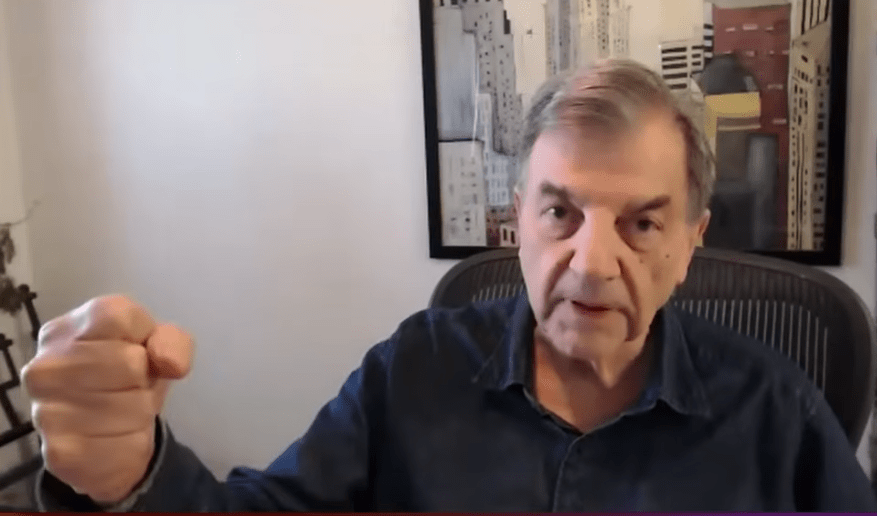
This is a must listen and must read. Michael and Radhika sketches the expectations forward in terms that non-economists can clearly understand.
Radhika Desai:
Hello and welcome to the 74th Geopolitical Economy Hour. The conversation that illuminates the fast-changing political economy and geopolitical economy of our times from a socialist and anti-imperialist point of view. The point of view, that is, of the world’s majority. I’m Radhika Desai and you’re watching Radhika Desai, Geopolitical Economist. Please like, subscribe, and share this video. Subscribe to the YouTube channel, and if you can, please donate. You can do this through our Patreon or by becoming a paid subscriber on our Substack or a member here on YouTube. Your support helps us to produce high-quality content for this channel and to keep it free.
Paid members and subscribers on Patreon, YouTube, and Substack will also be able to participate in an exclusive question and answer session with me later this month on the 27th of June. We will invite you to pose any geopolitical economic question that has been dogging you. Our range, as you know, is wide from de-dollarization to trade, from American capitalism to Chinese socialism and beyond. We will hold such paid subscribers’ question and answer sessions regularly at the end of each month. These special events will be my way of expressing gratitude to those viewers who not only watch my content but also materially support and help me and my team to produce independent socialist and anti-imperialist material. More information will follow closer to the 27th of June.
Now on to the subject of the day: What else is there to talk about this week than Trump’s announcement of the agreement that is supposed to end the Iran war? On the one hand, it seems firmer than before with an MOU signed electronically in the last few hours and Iran reporting that its ships were sailing past the US naval blockade. On the other hand, it’s only an MOU. The text has not been released and it’s not at all clear that the United States is going to be able to keep its part of the bargain if it involves, as it likely does, the cessation of Israel’s bombardment of Lebanon, reparations, and an end to Iran’s nuclear program. There also are many other obstacles to peace. So, the current lull may well be all it may have achieved, a 60-day extension of the so-called ceasefire. And so, with me to discuss all this is, of course, our regular guest, Professor Michael Hudson. Welcome, Michael.
Michael Hudson:
Thanks, Radhika. It’s a great time to have our discussion in view of how quickly the whole world is being transformed by Iran’s achievement. It’s Tuesday morning now. Stock markets up, oil prices down, everybody’s happy.
Radhika Desai:
Well, exactly. But how long can this happiness last? This is the open question. Because even if this agreement sticks, which is highly unlikely, the harms the Iran war has already done are probably irrevocable on a lot of different fronts. And it is on these harms that I think we should be focusing. We can divide them into a number of different categories. There are harms to the world economy. There are harms to the US economy. There are harms to the US financial system and the dollar system which rests on the US financial system. There are harms to Trump’s base and the Republicans’ midterm election prospects. There are harms to the US ability to project its power in the West Asian region. Harms to the US’s international position and many, many other categories. Michael, please start us off with reflections on any of these harms that are uppermost in your mind.
Michael Hudson:
Well, Radhika, you sound very pessimistic, almost like Schadenfreude when it comes to the United States. Now, I share your views concerning the disastrous and negative impacts that Trump’s reckless war in Iran has created. And even if the memorandum of understanding is signed, the physical oil trade is not going to be able to start for a few months. And that means that oil prices are going to go way up as a result. And I think we’ve discussed before, I believe that the effects of this war are going to be a world depression on the scale of the 1930s. And that’s going to cause many industries to have to stop producing because they can’t make a profit at the high oil prices that are here. They’re not going to be able to avoid laying off their labor force. There will be unemployment. They’re not going to be able to pay the debts that they’d expected to pay out of the normal course of their business.
So, there’s going to be a financial backlash and a political backlash, but I’d rather begin by saying, look at all the positive aspects of all this. And you’re right to point out the fact that this disruption is going to cause all of the things we’ve spoken about, but this can have a positive outcome. It’s going to set in motion discussions about how to end the whole US-centered order so that the United States foreign policy never again will be able to control other countries by causing the kind of chaos that they’re causing now by imposing sanctions, because other countries are going to protect themselves by creating a decoupling from the US economy. After all, that’s what we’ve been speaking about for the last two years. All that’s going to have a positive outcome.
And every major war always has transformed political relations just as they’ve transformed financial relations. And I think, you know, I’d like to talk about the transformations at work just for a minute. And I think most of the harms that you’ve mentioned relate to the United States, and I don’t see the United States participating in this creation of a new kind of world order. It’s going to do what it can to fight against it. So you’re right, the financial system is already so highly leveraged that it’s going to be probably the major victim of all of this world depression, just as it was a major victim in 1929 after the collapse of the World War I settlements that led to the Great Depression.
Yes, there’s going to be the whole presence of the US in West Asia is going to be ended to me. Yes, everything that you’ve said that’s negative for the US is a positive from the point of view of the rest of the world. In fact, this US inability to defeat Iran has so shocked the United States and also shocked the rest of the world as the fact that it’s really just a paper tiger all along. It doesn’t have the military power ever to invade another country again. Imagine, nobody had expected it to lose to Iran except the Iranians who’d been preparing this for 20 years, and that’s made them an enormously strong power and it’s shown the whole world that it doesn’t have to be this way. They don’t have to let the United States have military bases in their regions. Now having a military base is an invitation to be bombed by the rest of the world trying to protect itself from the United States trying to do to other countries what it’s been doing to Iran all of this time.
Radhika Desai:
Yeah. I mean, let me first of all just clarify one, well no, let me actually first of all pick up on something very interesting that you said, because it ties in with so much of the work that I’ve been doing. You said that the Iran war has revealed that US power was a paper tiger all along. And that’s exactly the argument that I’ve been making since 2013 when my book, Geopolitical Economy, was published in which I argue that, as I used to say when I went around on my various book launches, you may have heard people argue that the United States is hegemonic. You may have heard other people argue that the United States was once hegemonic but it’s now declining. But I bet you you’ve never heard anyone argue that the United States was never hegemonic. And this is the argument of my book. And so, I think absolutely, I completely agree with you that this Iran war will have everybody talking about exactly how US power was always exaggerated, etc. So that’s the first point.
Secondly, I mean, I think that in terms of tone, I completely agree on the one hand that all the points that you are making, that the harms are to US power and so on, but for the whole world, from the point of view of the whole world, there is much that is positive in this. Although there’s a very interesting twist because the IMF and the World Bank, which recently downgraded the growth prospects of the world, are still showing the US economy as growing. That is to say, whereas the rest of the world economy will take shocks, etc. Now, in part, this is of course because the United States is relatively self-sufficient in oil, but that does not mean that this will not have many other harms. And of course, you and I know, and we’ve talked about the fact that the way in which the GDP of the United States is calculated significantly overestimates US GDP anyway. So in that sense, I completely agree with you, and I also agree with you, by the way, that the United States is not going to participate in the construction of the new order. You want to say something? Go ahead.
Michael Hudson: No, I just want you to talk a little slowly.
Radhika Desai:
A little slowly. Okay. So I completely agree that the United States is not going to participate in the construction of this new order, but the rest of the world certainly has been taking notes. And I think that the biggest effect of this will be to underline that the United States is really not in a position to ensure the stability of the world economy. In fact, it is now the source of all the chaos and uncertainty which is being inflicted upon the world.
The erratic behavior of the Trump administration, not just in the case of the Iran war, but going back over a year, to all those tariffs that were unleashed and then stopped, and all the back and forth on tariffs and so on, and every other type of unpredictable action that the United States has undertaken. We are now seeing the G7 meeting, and in that, I’m sure Trump will start a new drama around constructing a peace around Ukraine. He’s been having meetings with Zelenskyy and that will probably impose or inflict more uncertainty on the world. So, I think the uncertainty that has been injected into the world economy is one of the biggest harms and it is going to disrupt a lot.
But of course, the birth of anything new is difficult, and so these are the birth pangs, I would say, of a new world order which will definitely be a very post-United States world order. Maybe I’ll just say one other thing before I hand it back to you. You pointed out that there will certainly be various harms to the world economy, but one of the things that we are yet to fully understand, and I think we’ll understand this probably in the fall near harvest season and so on, is that there’s going to be a huge agricultural crisis. Because compared to the oil crisis of the 1970s, which was certainly a very serious shock to the world economy, in the intervening 50 odd years, the world’s agriculture has become far more dependent on oil and oil-based products. It has become more energy-intensive. It’s become reliant on fertilizers that come out of petrochemicals and so on. And all of this means that world agriculture and world food security will be in very deep crisis. And hopefully, there will be lessons learned about food self-sufficiency that come out of it, lessons learned about better agricultural practices that come out of it that are not so reliant on energy and so on. But I just wanted to get that one in. But yeah, please go ahead.
Michael Hudson:
Well, you’re right. The important thing is that this is all about oil. And again, as we’ve been discussing, we can tie it all together now. For the last hundred years, the United States foreign policy has been based on the strategy that it can control the whole world’s oil trade. And by sanctioning Russia in 2022, by closing off Iran after 1979, by seizing Venezuela’s oil, by conquering Iraq, Syria, destroying Libya, the United States was able to close off all other sources of oil that it didn’t control. And the national security strategy of last year spilled it out. Oil is the way that we can control the world.
It didn’t quite put it in these words, but I think you and I have discussed. The US said, “Well, we can turn off the oil to any country that doesn’t follow our policy, that doesn’t accept the same sanctions against Russia and ultimately China and Iran that we’ve been promoting. So, if we can control oil, we can control other countries’ energy, agriculture, chemical industry, everything with it. And we can threaten to cause chaos in other countries.” And as again the national security strategy said, we can’t do what we did after World War II when we had all the power. We had all the industrial power because there wasn’t any fighting to destroy American industry as there was in Europe. We had the financial power. We had three-quarters of the world’s monetary gold in 1945 and increased that to 80% by the time the Korean War broke out. America had the leading technology, and it was able to dictate all of the terms of peace.
Well, everything changed after 1950. It did not win the Korean War. It did not win the Afghan war. It didn’t win the Iraq war or the Syrian war or Libyan war. All it could do was destroy the countries that it went to war with. And that’s what it tried to do in Iran. And while our main talk today is about what is going to happen, I think we have to say what didn’t happen that was expected as recently as last weekend. You had the war hawks in the United States hope to impose crushing reparations on Iran that would devastate it just as Germany was devastated after World War I. And you had Treasury Secretary Scott Bessent explain on June 11th, just a week ago. I want to read what he said:
“The Iranian regime will lose the zero-sum game it is playing. Any damage it inflicts on our allies in the Gulf,” and Israel obviously, “will be paid out with funds extracted from Iranian accounts. Any tolls paid to Persian Gulf strait authority will be offset by funds extracted from their accounts. Every attack Iran launches will only deepen the economic and financial consequences it faces.”
And Trump said what he was going to do: “We are going to seize Iran’s oil. Half of all of the proceeds—we’re going to do to Iran what we did in Venezuela.” That was Trump’s plan. All of the proceeds of the oil that America seized would be paid into a US account. Trump said half of the money in this account will be paid to the United States and the other to the victims of Iran’s attacks. Obviously, that meant Israel primarily with maybe a little bit left over for Saudi Arabia and the Emirates. And again, over the weekend, he said he wants 20% of OPEC’s oil export proceeds to be payment to the US to act as a peacekeeper protecting the Near East. All of this was nakedly expressed for the whole world, saying, “This is the future that we have planned for you. What are you going to do about it?” What can you do to protect yourself, as if there’s nothing you can do? I can’t imagine in history when there’s been such a black and white conflict of interpretations about what happened.
So, I agree with you that I don’t see how the memorandum terms are going to be able to sustain, but it doesn’t matter. The United States has not won in Iran and cannot win any more than it failed to win in Korea, Afghanistan, etc. The military and apparently even the investment community knows that there’s no way that the United States can mount a new attack. The war is over. That’s the important thing. And now that it’s over, the ball is in the court of the global majority. What are they going to do with it?
Radhika Desai:
Okay, so I completely agree with you and the war is over in one very clear sense. Essentially after waiting for weeks, maybe even a month or two for some kind of face-saving off-ramp that Trump wanted, this memorandum or this agreement, whatever it is, from what we can tell without having read it, is really Trump’s admission that he is going to have to take defeat and try to put lipstick on it and make it look like victory because that’s what he has to do. This is really Trump’s acceptance of defeat and that, I agree with you, is a positive thing.
But let me comment on a couple of other things that you were saying, and they’re really quite interesting. So, one of them is that Scott Bessent, whose statement you read out, I think is a very interesting statement because what does it tell you? It tells you that the United States thinks that just controlling the world’s financial system is as good as controlling the world’s economy, but it isn’t. Or rather, controlling the dollar financial system is as good as controlling the world economy, but it isn’t. Let me give you just two examples to illustrate this with two things.
Number one, the Venezuela model is always very much in the air. The idea seems to be that the United States has acquired control over Venezuela’s oil. No, it hasn’t. It has acquired control over what Venezuela earns from the piddly 1 million barrels a day that it is currently able to produce because the United States controls the financial pipelines. Fine, you know, you own the financial plumbing, you can stop it. But you may own the financial plumbing, but that does not include the production that puts the incomes into the plumbing in the first place, which you can then skim off. So, the United States is not able to expand the oil production in Venezuela. None of the oil majors want to go to Venezuela to invest in there, etc. Indeed, they told Trump in no uncertain terms in that amazing televised meeting he had with them that Venezuela is uninvestable. Unless the United States shows its capability to actually control the territory and the population, which it cannot, US oil majors will not invest there. Do you think that US oil majors will be allowed to go into Iran now after what happened with Mossad and so on? I mean, the population will be up in arms, there will be no oil major that’s going to go in there. So, these are just two very interesting illustrations that the delusion of the United States about its ability to control what happens in the world just by controlling the world financial system—without control over production, there is no point in controlling the financial system.
Secondly, of course, the world is creating a new financial architecture as we speak. Just two days ago, Iran announced the expansion of the mBridge system, which by the way includes Saudi Arabia and the UAE, the two closest allies of the US in the West Asian region. So that’s one set of things I wanted to say.
I have another set of things I want to say which also concern oil. I think that of course you are quite right that the United States has sought in the past to control over the world’s oil. However, every time the United States has exerted this control, the world has found a way around it to diminish this control. So, for example, think about the 1970s and the US refusal to allow OPEC oil surpluses to be recycled through some IMF-organized facility, as West European countries and Japan were asking for, and ensuring that they would be deposited in American financial institutions in dollar deposits and so on. We know that story. So that was part of it, but what was the result of that big increase in the price of oil and US control? The world learned to produce highly efficient cars. All those six and eight-cylinder American gas guzzlers went out with the 1970s and in came all the fuel-efficient cars.
So, the US is not in control over the financial system. Plus, people highly misunderstand, and I think you and I, Michael, talked about this a couple of shows ago, people misunderstand the role of oil in the dollar system. It’s not that the oil trade is denominated in dollars, although it helps, but it’s not because today international financial transactions are so far in excess of any trade taking place that it is insignificant. What matters is the price of oil, because as the price of oil rises, it puts pressure on the dollar. It creates inflation. It undermines the value of the dollar because all commodity prices move in the opposite direction to the dollar. So, oil prices rise, the value of the dollar declines. Similarly with gold and many other commodities. So this is the key issue, and if the price of oil is high, as it seems to promise to remain to be for reasons that you mentioned—which is even if the war stops tomorrow, and we are not certain that it will, bringing the flow of oil back to its pre-war levels is going to take months if not years. So, the high oil prices will continue, but this is the exact particular way in which oil prices play a role, and of course, that is connected with the stability of the financial system, but I’ll come back to that later.
Michael Hudson:
I think that’s the most productive discussion we can have because the financial system has been left out of the whole discussion. Let’s look back at what happened after World War II when, as I said, the United States controlled most of the monetary gold and it was in a position to dictate what kind of a world economy and above all what kind of financial system the world was going to have. As we’ve discussed, there was a debate between Keynes and the Americans as to what this would be. Keynes wanted to protect the debtors, thinking of England primarily, while the United States wanted a creditor system and it wanted a hard money system based on gold because it had the gold. That’s what the victors of wars usually wanted. Any war that’s resulted in reparations to the victor has given it a lot of gold, and of course, it wants to promote the gold standard.
And that worked until 1950 started the new trend of America’s foreign military spending that was responsible for the entire US balance of payments deficit after 1950, as we’ve discussed. Well, by 1971, this spending, first in Korea then in all the rest of the world, culminating in the Vietnam war, forced the US off gold in 1971. And at the time, everyone thought, “Oh, this is a disaster for the plans that the United States had ruled the world financially through its control of gold.” Well, it turned out that once countries no longer were adding to their monetary reserves by gold, what did they do? All they had was to keep their savings in the form of loans to the US government by buying US Treasury securities.
So ever since 1971 to today, the United States has had this free lunch, its exorbitant privilege of spending money and running up debts. All these dollars that it spends on military and also for takeovers of foreign industry end up in local banks, which turn it over to the central banks that recycle it to the United States. All of that’s now ended. The United States has begun confiscating other countries’ money and its allies have confiscated money. Russia’s 300 billion dollars seized by the Europeans, America’s confiscation of Venezuela’s gold supply by telling the Bank of England simply to turn it over to a political candidate backed by the United States, and recently the United States’ confiscation of Iran’s attempt to avoid the US stealing its dollars—200 billion dollars of its US and foreign deposits—by trying to buy stablecoins, and the US confiscated its stablecoins.
So, this has ended the whole free lunch that the United States economy had ever since 1971 to run up a foreign debt that it had no intention of ever repaying or no ability to repay. Now what are foreign countries going to do? How will they ever take payments as they move out of US Treasury securities, and what will they move into? Well, ironically, one of the things they’re moving into is the few things that governments for hundreds of years have been able to agree upon. Gold will be one measure of this store of value. The balance will be either holding each other’s currencies or what you and I have spoken about: the creation of some new kind of international fund or bank that will coordinate the settlement of balance of payments surpluses and deficits among the global majority countries. This is what has to be worked out.
There have been discussions of a BRICS bank. I don’t think it’ll be a BRICS bank because the BRICS are not a unified political unit so far and able to create such a bank. It’ll be some kind of international banking arrangement as an alternative to the International Monetary Fund with a completely different operating philosophy that the United States will not be a member of and will not have veto power in like the IMF, but it will be dominated by China, Russia, and Iran because they’re the great powers. So, the question is what kind of arrangements are they going to have? That’s been unspoken because I think they’re having to, in a way, reinvent the wheel, and you and I have discussed that. But there is so little understanding of not only the character of money but the character of international monetary credits and debts that it’s almost become unthinkable because it’s not the kind of subject that’s talked about in economics curricula.
Radhika Desai:
Well, a couple of reactions to that, maybe three. I would say number one, and again, Michael, you and I have discussed this and agreed on this, the idea of the US exorbitant privilege has always been exaggerated. The United States is not free to print as much money as it likes for reasons that Robert Triffin talked about ages ago, and that pressure—that is to say, the bigger the US deficits, the greater the pressure on the US dollar—continues to operate. You’ll remember that in the run-up to the 2020 election, the big bestseller was Stephanie Kelton’s The Deficit Myth, which said basically there was no limit to how much money could be printed and that it would not cause inflation, and so on. In reality, as you know, when Biden brought in his Inflation Reduction Act, which was his big industrial strategy, etc., he had to raise taxes. He would have loved not to raise taxes, but he had to raise taxes because there is no exorbitant privilege. The US Treasury market is already in trouble. It is being supported by the Federal Reserve to a massive extent. So, one should be careful.
The second is that the US treasury standard—actually, US Treasuries are not the main thing that support the US dollar. It is the US financial system. In fact, I think we should coin a new expression. We should talk not about the US Treasury standard, we should talk about the dollar-denominated bubble standard, because that’s what is bringing money into the US financial system, counteracting the downward pressure that US deficits place on the US dollar. The question then becomes, how long will this money keep flowing in? Right now, it’s flowing in because of the huge AI bubble that has been inflating. But we are now seeing new developments. People are raising very serious questions about the viability of this project of creating artificial general intelligence. Practically everybody is saying that this market is in bubble territory. The earnings of the companies that are going to make these billions and even trillions of dollars of investment are hugely in doubt. So, all of these uncertainties are around, and it’s not at all certain that money will keep flowing into the US market.
The second really interesting thing about this is that a lot of this money was coming from the Gulf countries and a lot of this money is also coming from Western Europe. Now the United States’ relationship with both of these parts of the world is in question, and of course, both Western Europe and the Gulf countries will now have new uses for their money. They are not going to leave it idle or engage in speculation in the American financial system. So, all of these are going to create new pressures for the dollar system.
But one final point I’ll end on a positive note. You know as far as the construction of alternatives is concerned, one has to remember one very important thing: the overwhelming bulk of the money sloshing around the world, the overwhelming bulk of the international transactions that are taking place, have nothing to do with trade or investment. They are vastly in excess. If trade and investment is this much, the financial excess is way—most of this financial excess is not necessary for the smooth functioning of the world economy. In fact, it’s actually harmful to it. So, if we were constructing payment systems simply to finance trade and productive investment, I think the arrangements that will have to be made will be far more modest in comparison with the financial infrastructure that supports what I call the bubble standard.
Michael Hudson:
Well, you talk about the financial system, but I think I want to focus on something that is left out of account by most people because it’s so technical. It’s the Federal Reserve and the balance sheet. Bessant has been complaining with a really brilliant essay in the magazine International Economy that the Federal Reserve has simply been financing all of the increase in government debt resulting from Trump’s tax cuts. The Federal Reserve has been monetizing all of this deficit by essentially buying huge amounts of bonds from the banks to provide the banks with enough money to carry the Ponzi scheme of debt leveraging that the United States has turned into.
And we were going to talk originally today about the new Federal Reserve head, Warsh, and Warsh is in complete agreement with Bessant saying we’ve got to wind down the Federal Reserve balance sheet that is essentially just printed US debt. Not like the greenbacks in the Civil War. When the government printed money in the Civil War, it spent it into the economy into real goods and services to fight the war. But now when the Federal Reserve creates money, it’s not for spending into the economy. It’s to lend to banks. And they don’t spend money into the economy of production and consumption. They spend it on financial securities and loans against real estate, stocks, and bonds.
Well, now that Trump’s appointees to the Treasury and the Fed say we’ve got to stop the Federal Reserve’s financing of US debt, we’ve got to go back to hard money, well, what’s that going to do? All of these bonds that now the Federal Reserve is essentially not buying back, all of this is going to raise interest rates. It’ll be very hard for people to get a mortgage loan. Interest rates are going to remain very high. There are going to be a lot of debt defaults, especially by private equity companies.
The whole US economy is so highly debt leveraged that the result of this Iran war is going to be just the opposite of what happened in World War II. In World War II, Americans and other countries all emerged from the war with abundant savings because consumers didn’t have much to buy during the war. What could they do? They bought savings bonds or they saved the money because there weren’t many consumer goods around. Same thing with corporations. Everything was really for the war. Well, the United States emerged with money and the whole global south, from India to South America, had accumulated huge reserves from what they had sold to the allies during the war.
But this time that’s not the case. You have the global south debt-strapped, the United States economy debt-strapped, the European economy debt-strapped. And to undertake a war at a time when the economy was already at the breaking point was just madness. And this means that this time around, instead of there being a post-war recovery after there’s no more fighting in Iran, you’re going to have the post-war depression that we’ve been talking about. Everything that has happened as a result of past wars is now being reversed by all of this. And there’s no historical perspective that the media or the government or it seems anyone else is really talking about to say what makes this war so different from all other wars.
Radhika Desai:
Well, I think that of course there are many huge differences between the Second World War and this current war. I mean first of all simply the level of mobilization is completely absent. I mean what made the American economy and many other economies boom during the Second World War was all the need to supply Europe with the weapons and the war material that it needed. The level of mobilization here is not at all the same.
I mean there are others, you know, I recently did a short video on why we are not in World War II because we are not in a world war. World Wars happened in imperialist times when a small number of imperial powers, if they went to war with one another, they would drag the whole world into it. Today most of the world is not participating in this war. They are suffering from its economic consequences but they are not participating in this war.
You mentioned Warsh. You know, I wonder—and let’s make sure to talk about Warsh in a later show. Maybe, you know, we’ll know after we have a better idea of what he does, but from my own reading, my understanding is that he’s quite capable of supporting either an easy money policy or a tight money policy. So, you know, he’s a bit of a two-faced guy basically. So, yes, he’s been making a lot of noises about reducing the size of the US Federal Reserve balance sheet, but I have no doubt that he will find lots of reasons eventually not to undertake this. The reason is very simple.
Since the US economy—sorry, the US dollar—in order to retain its world role relies on so much money coming into the dollar system, and all that money comes into the dollar system primarily because the dollar systematically generates these bubbles. So, we have this what I call the bubble standard. So, this bubble standard creates a very difficult dilemma for the US because, you know, until a few years ago, until about 21-22, the previous couple of decades had been decades of relatively—I say relatively—low inflation. Now we are no longer there. We’re no longer in a period of low inflation.
Now the Federal Reserve—I mean there are many ways of dealing with inflation, many many good ways of dealing with inflation, but the Federal Reserve will permit itself only one way of dealing with inflation, and that’s a very bad way of dealing with inflation , namely tightening monetary policy, increasing interest rates, restricting money supply, etc., which, as you know, the economist Robert Solow called “burning your house down to roast a pig”. You know, there are more efficient and controlled ways of roasting a pig.
So, and this is what Paul Volcker did back in the late 1970s and early 1980s. That tightening of monetary policy induced a prolonged recession on the United States. Eventually, it restored the value of the dollar but it was at great expense, at the great cost of a recession. Today, however, the chairpeople of the Federal Reserve can no longer afford to do that because if they raise interest rates much higher than they already are, this could trigger a huge collapse of financial markets—the bubble-driven financial markets that have rested on easy monetary policy for such a long time. And by the way, they will do so at a time when all these companies, you know, SpaceX and others, are going to demand a lot more liquidity because of their IPOs and all of that.
So, to make a long story short, the Federal Reserve is basically caught on the horns of a dilemma. If it tries to deal with inflation by increasing interest rates, it will prick the bubble that will collapse the dollar system. If it does not do that, the dollar system will slowly decline anyway because inflation will continuously erode the value of the dollar. And the Federal Reserve being seen not to act to do anything about it will only reinforce doubts about the dollar’s credibility.
Michael Hudson:
I’m so glad you raised the craziness of the idea of raising interest rates to stop the price inflation that’s being caused by rising oil prices. We’ve been speaking so much trying to understand economic reality that we haven’t been discussing the unreality that is guiding the central bankers throughout the world. And it’s the junk economics of an anti-labor ideology. The automatic knee-jerk reaction of prices going up is it must be labor’s fault because whatever is wrong with the economy is always labor’s fault —that we’re not exploiting it sufficiently and wages are going up, reducing the value of our claims on labor, and we want our claims to rise relative to labor, not for labor’s rising wages that make it not have to go so deeply into debt.
And Paul Volcker made this very clear when he raised interest rates to 20% way back that brought down the Carter administration in the end of 1980. He carried around him this list of wages in the construction industry. He said when inflation goes up it’s always because there’s too much employment. The job of the Federal Reserve on paper was to promote full employment, but it’s really to promote unemployment. What used to be called the reserve army of the unemployed—we need to keep enough unemployment to keep prices down.
So, this is such a knee-jerk reaction saying, “Well, prices are going up because of oil. How do we prevent prices from rising? Let’s raise interest rates and cause unemployment”. Well, the problem is, as we’ve just been discussing, there’s going to be mass unemployment in the United States and all over the world as a result of the high energy prices leading to the closing down of industry, bankruptcies of companies, farmers, consumers that are over-indebted. What are you going to base your policy on—reality or your ideology? Ideology wins every time. The class war wins every time because look at who’s appointing the heads of the Federal Reserve: people whose job is to do what the job of central banks is, to support the commercial banking system, the finance system, not the economy at large.
If it was the economy at large, of course they’d want to spend money into the economy into industry into consumption, to subsidize the consumers to make them able to pay the higher electric rates, the gas rates, to enable truckers to afford the higher cost of diesel and right down the line. That’s not what they’re doing. They’re pumping money into the economy to keep all of these debt-leveraged private capital companies afloat. And one hopes that one of the upshots of this coming financial clash will be that people finally re-look at what is the character of monetary policy and how do we really want central banks to be controlling the money supply on behalf of the commercial banking system, or do we want money and credit to be a public utility—which is what has made China so amazingly efficient in not having an independent financial class to make money financially, but to make money by tangible capital investment in production and infrastructure.
Radhika Desai:
This is so true. I mean, let me again say two slightly different things but in response to the very good remarks that you made, Michael. So, the first is that the politics of monetary policy have long been controversial. In one sense, I see this entire mania about Bitcoin and cryptocurrencies as expressing a very widespread popular questioning of monetary policy. So, there’s definitely that has been going on. Although, of course, crypto is the wrong route to take out of that dilemma, nevertheless, the mania, the enthusiasm around crypto is in large part because of people realizing that there is a politics to monetary policy and it is weighted against the interests of ordinary people.
Secondly, I think that now we are entering a new phase. I think that people are beginning to understand that crypto is not the way out and therefore there will be a more open and I think more direct questioning of the politics of monetary policy. And that this is happening is to me underlined by the fact that recently there was an article in the Financial Times which says that this is the end of central bank independence. We are looking at the end of central bank independence.
So, if you decode—I mean, central bank independence sounds very nice, you know, we should have independent central banks. No, what independent central banks really mean is central banks that are in the pockets of big financial interests. If you want central banks that are in the pockets of the people, so to speak, or that work in the interests of ordinary people, they have to be controlled by democratically elected governments that are actually accountable to ordinary people. So, I think that this article lamenting the end of independence of central banks is also essentially saying that the myth of central bank independence can no longer be sustained.
That in itself is a good thing. Central banks were never independent. Central banks always had a politics around them. So, it’s time we recognized them and oriented the politics to the interest of ordinary people. And I think this discussion should take place.
But let me make another very different type of remark, but it is very closely related to what you’re saying because you’re right. Throughout the neoliberal era, which began roughly 1980. Paul Volcker and his unemployment-generating monetary policies were the opening act of all this. And just two years previously, Congress had passed this act which gave the Federal Reserve its dual mandate—that is, it should work for price stability as well as for high levels of employment. But no sooner was this act passed than Paul Volcker demonstrated that he didn’t care a wit about it by imposing on the US economy the highest levels of unemployment that had been seen since the Great Depression.
So, you got that. Anyway, I think that this anti-people policy is now being exposed for what it is, and I think that people are reacting. And Trump on the one hand, though he got elected by appealing to these very people who were disillusioned by existing policy, has in office pursued the exact same interests as all his predecessors, namely the interests of a narrow corporate elite. And it is in order to undo the damage that this was causing for his popular approval ratings that he has been launching these wars. But now these wars are boomeranging. Trump’s main objective, which was to somehow have a victory which would restore his approval ratings, has entirely eluded him.
Coming back to the costs of the Iran war, another big cost the Iran war is going to impose is on Trump and his Republican party with a view to the midterm elections. It’s not surprising that they have extended the ceasefire another two months, and who knows, probably they will keep doing that at least until the November midterms. But I think this is going to be another really important turning point for the United States. What will the future financial system look like?
Michael Hudson:
That sounds logical to me. That seems to be what is in store, and all we can do is hope that we can play a role in the discussion that’s going to come out of this for an alternative. And I suspect that the next show we do is going to be on what will this monetary policy of countries be? Obviously, as you say, they want to avoid being tied to the dollar, but cryptocurrency isn’t the way out. Stablecoins are invested in US Treasury securities. That just means we’re opening the market for the world’s criminal class—for the drug dealers, for the criminals and arms merchants all to hide their money from governments to buy secret holdings of keeping their money safe in government bonds.
Well, Iran tried to use these crypto coins by saying, “All right, we’re going to have to play the same game that criminals do to keep our savings free from US oversight and so that we can take payments for our oil in stablecoins”. Well, the US government turned out to be able to grab crypto. The only crypto that the US permits are for the number one class that Trump is supporting: the world’s drug dealers. He’s very careful to give pardons to all of the leading drug magnates. They’re our guys; we call that private enterprise. When you make a billion dollars, it’s not a crime anymore; it’s a financial success, and you join the club. And essentially, that’s who Trump had organized for.
Ever since the Vietnam War, the United States created the whole network of offshore banking centers to get the criminal capital. And as I’ve said before, I was a witness to this and read the State Department documents where they said we want to be the new Switzerland. The highest-paying industry is crime. They’re also the most liquid industry because they don’t want to invest in something visible like real estate that governments can grab. They want secret money. Let’s finance our wars by making America the new Switzerland, the new haven for the world’s criminal class. And these are the class that Trump’s “get out of jail free” card and pardons have been addressed to.
Radhika Desai:
Michael, you made such a good point. Let me mention very briefly because we should be concluding our conversation, but let me mention very briefly that I read an article—a very interesting one in the London Review of Books—reviewing two different books that were all pointing to the same reality. Here we all are increasingly using digital payment systems. So, you know, most of us hardly ever carry any cash; the cash economy is going out. However, central banks are printing more cash than ever. So where is it? And they’re printing it in high-denomination notes. So, the implication was that there is a lot of cash being held by these criminal agents.
Anyway, I think definitely I agree with you that unless something happens that requires us to pay attention to that, we should do our next show on Warsh, on the Federal Reserve, and generally on the kinds of monetary policies that are currently being followed but which are wrong and that should be followed in the interests of ordinary people and in the interest of productive activity, sustainability, etc. So, definitely we should do that.
Michael Hudson:
I just want to make an exclamation point to that. Trump’s creation of a $250 note—let’s make it easier for all of these foreigners in other countries that want to keep their money in the mattress where the government can’t find it. With $100 bills, you can imagine a suitcase full of $100 bills. Now you only need a suitcase about one-third the size to have a million dollars in the same amount of currency.
Exactly. I want to say one funny thing about that. Trump did not involve the Treasury or the Bureau of Engraving in any of this. So, my suspicion is he wants to supply these $250 bills just the way they are without any of the safeguards of the special paper, the special coding, and someone with a Xerox machine or photocopier is going to go out and begin printing these, putting them into ATMs, and oh, it’ll be a bonanza. Anybody can make a $250 bill.
Radhika Desai:
I love that. I must look that up; I didn’t know that. Anyway, Michael, thanks for—thanks indeed, exactly. Gangster capitalism of the best kind.
So, thanks, Michael, and thanks to everyone for listening. I hope you liked this show. If you did, please like, subscribe to the channel, share widely, donate if you can. And until next time, this is Radhika Desai and Michael Hudson saying goodbye.
Michael Hudson:
Yeah, and also myself at Michael-hudson.com and my Patreon account that I have and a Substack account.
Radhika Desai:
Wonderful. Thanks, Michael, and see you next time.