

Former intelligence officer: Russia could be at war for decades
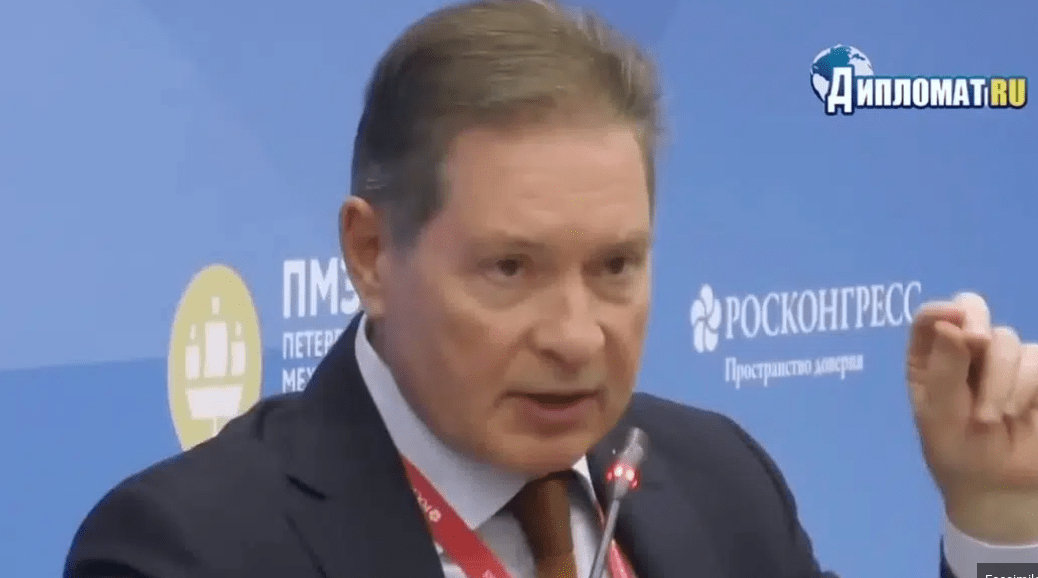
The Ex-Spy at Spief – Andrey Bezrukov
Andrey Bezrukov is a retired colonel of Russia’s Foreign Intelligence Service who previously worked as a spy for the Soviet Union. Beginning in the 1980s, he lived abroad under the name Donald Heathfield. Soviet intelligence recruited him alongside Elena Vavilova (Tracey Foley), whom he had married in Russia before their deployment to North America. In Canada, they staged a chance meeting, married again under their alias identities, and later moved to the United States. They had two sons.
In 2010, Bezrukov, Vavilova, and eight other “illegals” were arrested by the FBI. They were subsequently deported to Russia together with their children. Bezrukov and Vavilova’s sons later recovered their Canadian citizenship. Their family’s story inspired two television shows: the U.S. series “The Americans” and the Russian series “The Russians.”
—
To put this in perspective: “We are ready to fight Russia tonight,” said the head of the German Air Force:
NATO will strike at Kaliningrad, the Kola Peninsula, St. Petersburg, and the Black Sea in the event of a conflict with Russia.
“The commander of the German Air Force told The Telegraph that the country is ready to ‘fight tonight’ and defend every inch of NATO territory. In the event of a conflict with Russia, strikes will be carried out on the Kola Peninsula, Kaliningrad, St. Petersburg, and the Black Sea. He stressed that in NATO ‘there are no different security zones’ – an attack on Estonia would trigger the same response as an attack on London.
Germany is increasing its stockpiles of Patriot, Iris-T, and Arrow 3 air defense systems, aiming to become the ‘strongest army in Europe’. Neumann warned not to underestimate Russian aviation, noting its high adaptability, and rejected the idea of ‘European autonomy’ in defense, calling for strengthening the transatlantic bond. In the event of war, the German Air Force will be redeployed to the eastern front. He also stated that Germany is ready to defend British skies with air defense if London requests assistance.”
—
Our expectation could be that the same forecast as done by Andrey Bezrukov for Russia, could be applicable to Iran as well as the slow surrounding of China.
—
https://nordictimes.com/world/russia-war-decades-bezrukov/
Russia should expect to remain in a state of war in the coming years and possibly for several decades. That was the message from former intelligence officer Andrey Bezrukov at the St. Petersburg International Economic Forum, where the future of the country’s war economy was discussed.
Bezrukov, a former colonel in Russia’s Foreign Intelligence Service, the SVR, and now a professor at MGIMO, appeared at the economic forum in St. Petersburg with a message that Russia must adapt both its economy and society to a prolonged conflict.
— We must recognize that we will be at war in the coming years, perhaps for a couple of decades, he said.
He added that the war may be “very hot” or more gradual, and that even if the active phase moves to other regions, Russia will have “two generations” effectively living under wartime conditions.
In his speech, Bezrukov described the war as the “new normal”. He said modern warfare is no longer primarily about territorial conquest, but about attrition, sabotage, attacks on infrastructure and attempts to paralyze decision-making.
He portrayed the West’s strategy as a gradual escalation intended to avoid a direct nuclear conflict while wearing Russia down through mounting pressure.
— The West’s strategy is very simple: to avoid a nuclear clash with us, which they would lose. So they need to boil the frog slowly and raise the temperature step by step, Bezrukov said.
He argued that the escalation will not stop because the West sees Russia as an existential threat.
— We see this today. And they will not stop, because they have nowhere to retreat. We are an existential threat to them, he said.
Bezrukov also placed the current conflict in a broader historical phase. He described the world as moving up the first of two major “hills” in a world war, with a larger confrontation ahead that he said could shape the rules of the new world order.
— We are now on the first hill of a world war. There will be two hills, as during the First and Second World Wars. The rules of the game will be born after the next clash. It will most likely happen in Asia, Bezrukov said.
He also referred to developments around Iran as a sign that the position of the formerly dominant power is weakening.
Bezrukov pointed in particular to threats against critical infrastructure, drone attacks and the possibility that Russia’s adversaries could try to disable the country’s nuclear deterrent without crossing the formal nuclear threshold. He spoke of space-based systems that could prevent missiles from launching, but also of sabotage from within.
— The enemy’s main task is to avoid the nuclear threshold and knock out our nuclear forces, he said.
He also raised biological threats, arguing that technological development makes such risks harder to control. Laboratories around Russia have, according to him, been working on the weapons of the future, while individual actors with modern equipment can become more dangerous than before.
His conclusion was that the state must be rebuilt to handle both development and defense. The economy, infrastructure and society’s relationship with the military must, in his view, be adapted to a situation in which confrontation with the West is not regarded as temporary.
“Stop being good”
One of the sharper parts of the speech was Bezrukov’s call for Russia to stop being restrained toward its enemies. He said many Russian “red lines” have remained on paper and therefore do not create sufficient deterrence.
— We must stop being good. We are too nice to our enemies. They do not fear us because many red lines remain on paper, he said.
As an example, he pointed to Western Europe’s vulnerability over energy supplies and claimed that an exploding gas tanker could have an effect comparable to a small nuclear explosion. The statement formed part of his broader argument that Russia must create clearer deterrence and show that attacks against the country carry tangible consequences.