

The New Security Equation: From Hormuz to Beirut
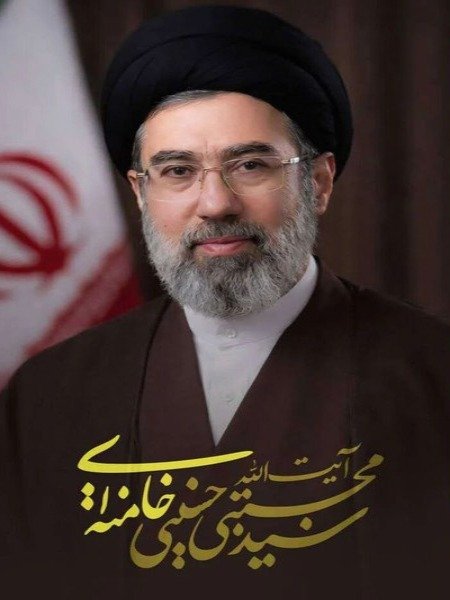
Editorial No. 346 (June 2026) published by the Iranian Supreme Leader’s website.
Here are key points – the full Editorial follows below.
- ‘The White House is unable to engage in a large-scale conflict and war with Iran. Although the US has not yet agreed to make concessions to Iran, it does not have the possibility of pursuing its goals through war. This is the strategic impasse that the White House realised from the second week of the war. It is unclear how the US will get out of this predicament. It is no longer clear to Iran what the US will do with the project it has started”.
- “Iran will not return to the pre-war era; neither regarding Hormuz, nor regarding American military presence in the region, nor regarding the equation of resistance groups”.
- “Iran’s relationship with the resistance factions, including Hezbollah, will no longer be the same as before the war. This relationship will be a function of the reality created after the war … The Lebanese Islamic Resistance will become part of Iran’s security equation … and will be strengthened”.
- “The courageous war and resistance of Iran and all resistance groups against the Zionist-American enemy has now greatly opened Iran’s hand to not only redefine its post-war security equations in the region, but also strengthen its relationship with the noble and zealous resistance movements. The regional order of West Asia after the war will be the regional order of the resistance bloc”.
The New Security Equation: From Hormuz to Beirut
Editorial No. 346, (June 2026) Voice of Iran, published by the Supreme Leader’s website, Khamenei.ir (translated from Farsi)
Trump welcomes silence in negotiations while, in the field, in the face of Iran’s threat against the Zionist regime’s aggression, he is pushing Tel Aviv officials to limit the circle of aggression in Lebanon. [Trump’s] rhetoric, his dreams and his practical action in restraining the Zionists show the reality of his logic. While in media broadcasts, he threatens Iran to suspend the exchange of messages and resume the war, in practice, he surrenders to Iran’s real threat, abandoning dialogue and continuing the path through war and military force. Rhetoric in words and compromise in action!
The recent action of the US President is also significant in another way. That the White House is currently and until further notice unable to engage in a large-scale conflict and war with Iran, as it fought with the Iranians in the recent 40-day war. While this statement shows the contradiction between words and actions among American officials, it also contains another implicit meaning. Although the United States has not yet agreed to make concessions to Iran, it does not have the possibility of pursuing its goals through war. This is the strategic impasse that the White House realized from the second week of the war. Although the war dealt serious blows to Iran, on the other hand, it also opened the hand of the Islamic Republic of Iran to move towards other winning cards, such as controlling the Strait of Hormuz, so that at the end of the war it will have a higher hand than at the beginning.
Now, one side of this conflict is that another winning card has been added to [Iran’s] cards, and the other side is the United States, which has burned its most important card. On the one hand, it is unwilling to make concessions, and on the other hand, it is not possible to continue its military campaign. It is unclear how the United States will get out of this predicament. It is no longer clear to Iran what the United States will do with the project it has started. It had predicted that the matter would be resolved in less than a week, but none of the components of the plan went according to its plan and prediction. Not only did it not go ahead, but it also strengthened the other side’s hand compared to before the war. For this reason, unlike the Americans, the Iranians know very well what they are doing and what they should do with the reality that has been created after the war; a reality that has resulted from the power of resistance in the field.
Iran will not return to the pre-war era; neither regarding Hormuz, nor regarding American military presence in the region, nor regarding the equation of resistance groups. The war and Iran’s epic resistance in it have created a strategic advantage for Iran so that it can pursue its regional system in security, economy, and geopolitics. In this regard, the Islamic Republic’s relationship with the resistance factions, including the proud Hezbollah, will no longer be the same as before the war. This relationship will be a function of the reality created after the war. For this reason, the Lebanese Islamic Resistance will become part of Iran’s security equation, and Iran has leverage for this issue. The Islamic Republic of Iran’s relationship with the Lebanese Resistance will not be the same as before the war and will be strengthened; because Hezbollah’s brave entry into the recent conflict guaranteed not only part of Iran’s security equation, but also the security equation of all societies in the region that are not willing to bow down to America and Israel.
Analysis of the situation in such a system, defending Iran is the same as defending the Lebanese Islamic Resistance, and defending the Lebanese Islamic Resistance is the same as defending Iran. Hezbollah is not a non-Iranian resistance group, but rather the essence and nature of a part of Iran’s national interests. For this reason, the tool of pressure on the Strait of Hormuz and the tool of loosening and tightening the exchange of messages with the American side, just as it is used for Iran’s national interests, can also be used to defend the proud resistance of Lebanon. Iran [as it was] before the war will not return; on the same basis, Iran’s interaction, relationship, and relations with the resistance factions will not return to the pre-war level.
The courageous war and resistance of Iran and all resistance groups against the Zionist-American enemy has now greatly opened Iran’s hand to not only redefine its post-war security equations in the region, but also strengthen its relationship with the noble and zealous resistance movements. The regional order of West Asia after the war will be the regional order of the resistance bloc.
It has always been the case that the finest word from Iran came from Khamenei. So pleased to see that this is still the case. The resistance comes out of its separate closets, and flows together to become a regional power. O West, what have you done? This is bigger… Read more »
Hallo Grieved, you said it, thank you and welcome back
Yes indeed, and welcome back Grieved.