

Peter Koenig : Africa – the World’s Future?
Peter Koenig
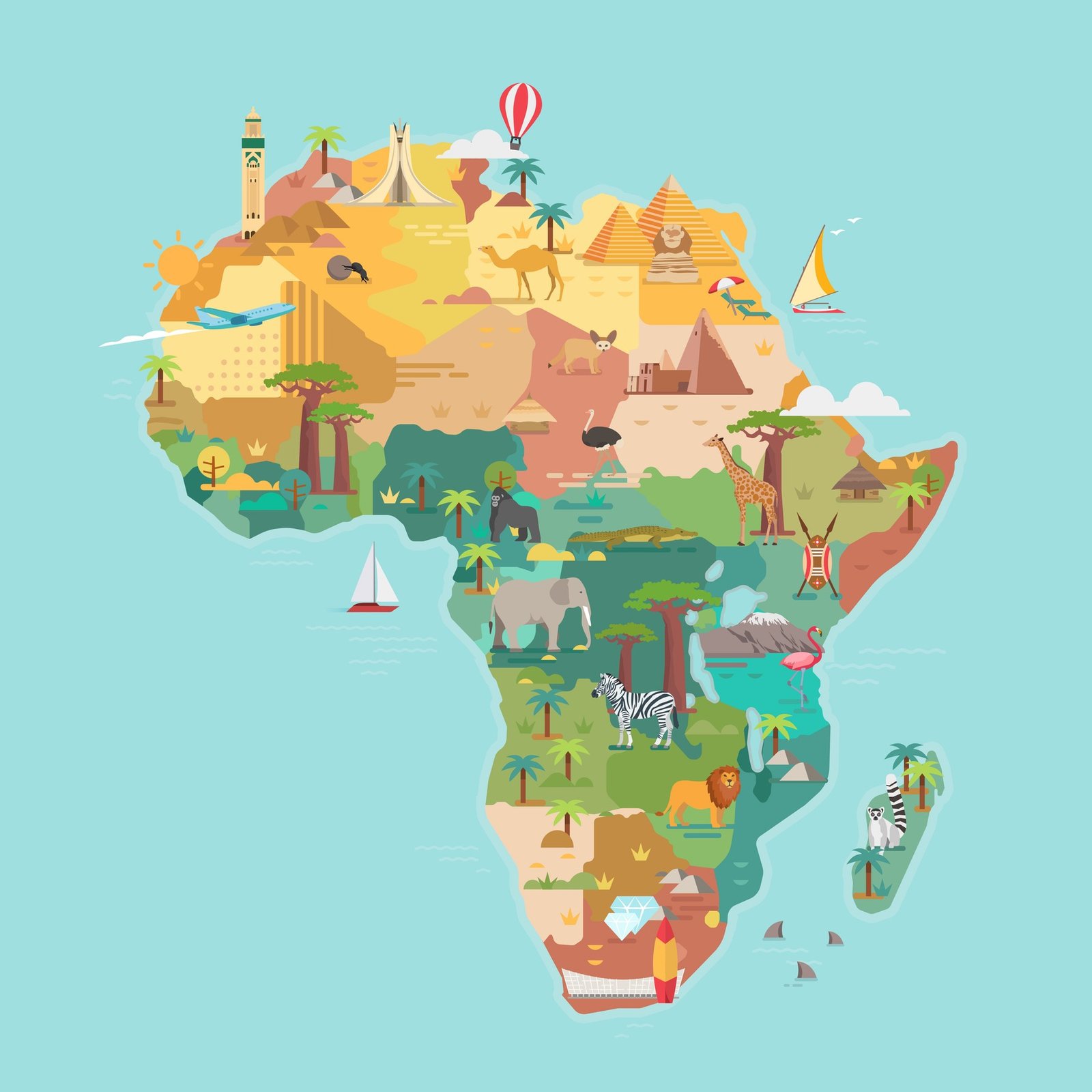
There is little doubt today, that Africa will be the world’s future. The Continent holds currently an estimated 60% of all non-renewable natural resources. By 2050 a quarter of Mother Earth’s population is projected to live in Africa, about 2.5 billion, out of a total projected world population of close to 10 billion.
Today, Africa is closer than ever to begin a serious and permanent unification movement. It is not happening overnight, but it has already begun. The former West- and Central African French Colonies, and by any interpretation remaining economic colonies of France as of this day, have started years ago to send French military troop home, and to work on liberating themselves from the French enslavement through their imposed currency of the Franc CFA.
CFA stands for Communauté Financière Africaine (African Financial Community) in West Africa and Coopération Financière en Afrique Centrale (Financial Cooperation in Central Africa) in Central Africa. It refers to the CFA franc, a joint currency used by 14 African former French colonial nations – which is to this day controlled and monitored by the Banque de France, the French Central Bank.
New “French” African leaders are vouching to distance their countries from the French hegemon. Among them is Burkina Faso’s Captain Ibrahim Traoré, who has served as the transitional head of state since taking power in September 2022; in Mali, General Assimi Goïta is the current president, a military officer, who first took power following a coup in 2020 and has served as the leader of the transitional government; in Niger, Army General Abdourahamane Tchiani, who took power as the head of a military junta after a coup in July 2023, and was officially sworn in as the country’s president for a five-year transitional period.
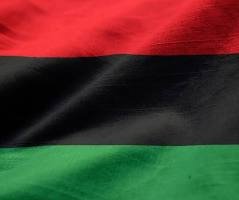
Comes to mind Captain Thomas Sankara, also from Burkina Faso (then Upper Volta), who took over in a military coup; a brilliant personality, often called the Ché Guevara of Africa, whose agenda was visionary and Pan-African (see Pan-African flag) – clearly a threat to the West African French colonizers. He was assassinated in 1987 at the orders of then French President François Mitterrand.
Pan-African (or Panafrican) refers to a global movement and ideology that aims to unite all people of African descent and promote solidarity among African nations. It is rooted in the belief that people of African heritage share a common history and a unified destiny.
Not to forget Muammar Gadafi – who had a serious plan to free Africa with the Gold Dinar from the financial hegemony of the West. He was assassinated on 20 October 2011, by French NATO troops, ordered by the very French President Sarkozy, whom Gaddafi financially supported earlier to win the May 2007 French presidential elections.
We all remember, how on 20 October 2011, when Gaddafi was atrociously lynched, then US Secretary of State under Obama, Hillary Clinton, cheered with a horrifying laugh, among a group of her associates, “We came, we saw, he died”.
These are just a few examples, in a trend that marks West and Central Africa, but also Africa as an entire Continent is constantly besieged by the west, so the Great Africa, may not be truly free. This may change, as China and Russia created the extended BRICS with now also associated BRICS members – and eventually what is called the Global South.
Of the current 11 extended BRICS members, three are African (South Africa, Egypt, Ethiopia), the were joined in 2025 by three African partner or associated nations (Algeria, Nigeria and Uganda). They enjoy the same free-trade benefits as well as the advantage of trading in local currencies, or currencies of their choice, but not the sanction-prone US-dollar.
—–
Despite these above mentioned murderous, as well as geopolitical attempts to stop Africa’s pursuit of freedom, true independence and especially financial and economic sovereignty, Africa is destined to grow. And grow she will.
“By 2050, one in four human beings on this planet will be African,” said the President of Tanzania, Ms. Samia Suluhu Hassan at the recent St. Petersburg International Economic Forum (SPIEF). She added in her opening remarks. “Africa will be the only continent still adding workers to the global labor force on a large scale. Africa will host nine of the world’s 20 fastest-growing economies.” See also this https://www.rt.com/news/641096-africa-quarter-world-population-2050/?utm_source=Newsletter&utm_medium=Email&utm_campaign=Email .
Compare this rapid and planned population growth of Africa with that of Europe. According to UN data, fertility rates across Europe averaged about 1.4 births per woman in 2023, well below the replacement level of 2.1. The same applies to Russia (also 1.4); and in the US it is 1.6 (2025 statistics), also well below the replacement rate.
President Hassan also pointed to the potential of the African Continental Free Trade Area, saying that once fully implemented, it would become the world’s largest market by population. The agreement, signed in 2018, seeks to create a continent-wide free trade zone by easing the movement of goods, services, and investment across all 55 African Union member states.
The African Continental Free Trade Area (AfCFTA) was adopted in March 2018, officially entered into force in May 2019, and commenced trading on January 1, 2021. Created by the African Union, it unites 54 member states into the world’s largest free-trade zone by number of countries, representing a market of 1.4 billion people and a US$ 3.4 trillion GDP.
Africa is projected to become a unified component of the so-called Global South, which already today comprises some 85% of the world population and accounted in 2025 for roughly 42% of the world’s GDP in nominal terms, and just over 54% when adjusted for Purchasing Power Parity (PPP), the economic indicator that really counts, as it measures what the population can buy with the money it earns.
The GDP is a purely linear coefficient applied universally to every country, even though economies are widely different. It is measuring stick that essentially compares apples, with bananas and pears and plums…
Today developing economies (largely the Global South) account for more than 70% of current global economic growth, and their share of output is projected to continue expanding over the coming decades.
By 2050, emerging markets and developing economies (Global South) are projected to account for approximately 60% to 65% of global GDP. In Purchasing Power Parity (PPP) terms, this share could reach a slightly higher proportion, approx. 70% of world total.
Of the Global South in 2050, the E7 (Emerging 7), comprising China, India, Brazil, Mexico, Russia, Indonesia, and Turkey, may account for about 50% of the world’s output. The African Continent about 10%.
——–
The world is increasingly becoming aware, that happiness is not “money”, as those elites and wannabe elites would like us believe – that the ever-stronger emerging Messiah is Money.
There are countries which have already converted their GDP to a more human, social and also spiritual GDH (Gross Domestic Happiness). Two that come to mind are Bhutan and Vanuatu. But others, even in Europe, explore more humane ways of measuring a nations prosperity, not just in terms of money-riches, but also spiritual contentment and wellbeing.
Indicators accounting for GDH, may vary from one country and culture to others, and include social harmony, education, health services, peaceful relations between authorities and people, unity within society, within neighborhoods, and among people, violence vs. non-violence – and more. Many of these indices depend on frequent self-assessment.
Africa today is perhaps the world’s least monetized Continent. About two thirds of rural Africa is estimated to function outside monetary systems, instead with some kind of barters, and “neighborly favors” and goodwill.
Africa may propel ahead in a system where monetary values are being replaced by values of happiness, of unity, of societal contentment. Independently of pure economic accounting, the well-feeling of unity and harmony may be expected to produce “happiness outputs” for healthy consumption, while protecting the environment, spiraling back to societal well-being.
In the sense of Tanzania President Samia Suluhu Hassan’s words, Africa is destined to grow, but by 2050, the world may have awakened to understand that there is wellbeing growth outside the realm of monetary hegemony or fiefdom.
——-
Peter Koenig is a geopolitical analyst, regular author for Global Research, and a former Economist at the World Bank and the World Health Organization (WHO), where he worked for over 30 years around the world. He is the author of Implosion – An Economic Thriller about War, Environmental Destruction and Corporate Greed; and co-author of Cynthia McKinney’s book “When China Sneezes: From the Coronavirus Lockdown to the Global Politico-Economic Crisis” (Clarity Press – November 1, 2020).
Peter is a Research Associate of the Centre for Research on Globalization (CRG). He is also a non-resident Senior Fellow of the Chongyang Institute of Renmin University, Beijing.
Africa – the World’s Future?
Peter Koenig
8 June 2026
“GlobalSouth / Sovereignista”
There is little doubt today, that Africa will be the world’s future. The Continent holds currently an estimated 60% of all non-renewable natural resources. By 2050 a quarter of Mother Earth’s population is projected to live in Africa, about 2.5 billion, out of a total projected world population of close to 10 billion.
Today, Africa is closer than ever to begin a serious and permanent unification movement. It is not happening overnight, but it has already begun. The former West- and Central African French Colonies, and by any interpretation remaining economic colonies of France as of this day, have started years ago to send French military troop home, and to work on liberating themselves from the French enslavement through their imposed currency of the Franc CFA.
CFA stands for Communauté Financière Africaine (African Financial Community) in West Africa and Coopération Financière en Afrique Centrale (Financial Cooperation in Central Africa) in Central Africa. It refers to the CFA franc, a joint currency used by 14 African former French colonial nations – which is to this day controlled and monitored by the Banque de France, the French Central Bank.
New “French” African leaders are vouching to distance their countries from the French hegemon. Among them is Burkina Faso’s Captain Ibrahim Traoré, who has served as the transitional head of state since taking power in September 2022; in Mali, General Assimi Goïta is the current president, a military officer, who first took power following a coup in 2020 and has served as the leader of the transitional government; in Niger, Army General Abdourahamane Tchiani, who took power as the head of a military junta after a coup in July 2023, and was officially sworn in as the country’s president for a five-year transitional period.
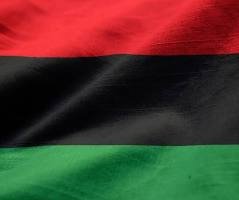
Comes to mind Captain Thomas Sankara, also from Burkina Faso (then Upper Volta), who took over in a military coup; a brilliant personality, often called the Ché Guevara of Africa, whose agenda was visionary and Pan-African (see Pan-African flag) – clearly a threat to the West African French colonizers. He was assassinated in 1987 at the orders of then French President François Mitterrand.
Pan-African (or Panafrican) refers to a global movement and ideology that aims to unite all people of African descent and promote solidarity among African nations. It is rooted in the belief that people of African heritage share a common history and a unified destiny.
Not to forget Muammar Gadafi – who had a serious plan to free Africa with the Gold Dinar from the financial hegemony of the West. He was assassinated on 20 October 2011, by French NATO troops, ordered by the very French President Sarkozy, whom Gaddafi financially supported earlier to win the May 2007 French presidential elections.
We all remember, how on 20 October 2011, when Gaddafi was atrociously lynched, then US Secretary of State under Obama, Hillary Clinton, cheered with a horrifying laugh, among a group of her associates, “We came, we saw, he died”.
These are just a few examples, in a trend that marks West and Central Africa, but also Africa as an entire Continent is constantly besieged by the west, so the Great Africa, may not be truly free. This may change, as China and Russia created the extended BRICS with now also associated BRICS members – and eventually what is called the Global South.
Of the current 11 extended BRICS members, three are African (South Africa, Egypt, Ethiopia), the were joined in 2025 by three African partner or associated nations (Algeria, Nigeria and Uganda). They enjoy the same free-trade benefits as well as the advantage of trading in local currencies, or currencies of their choice, but not the sanction-prone US-dollar.
—–
Despite these above mentioned murderous, as well as geopolitical attempts to stop Africa’s pursuit of freedom, true independence and especially financial and economic sovereignty, Africa is destined to grow. And grow she will.
“By 2050, one in four human beings on this planet will be African,” said the President of Tanzania, Ms. Samia Suluhu Hassan at the recent St. Petersburg International Economic Forum (SPIEF). She added in her opening remarks. “Africa will be the only continent still adding workers to the global labor force on a large scale. Africa will host nine of the world’s 20 fastest-growing economies.” See also this https://www.rt.com/news/641096-africa-quarter-world-population-2050/?utm_source=Newsletter&utm_medium=Email&utm_campaign=Email .
Compare this rapid and planned population growth of Africa with that of Europe. According to UN data, fertility rates across Europe averaged about 1.4 births per woman in 2023, well below the replacement level of 2.1. The same applies to Russia (also 1.4); and in the US it is 1.6 (2025 statistics), also well below the replacement rate.
President Hassan also pointed to the potential of the African Continental Free Trade Area, saying that once fully implemented, it would become the world’s largest market by population. The agreement, signed in 2018, seeks to create a continent-wide free trade zone by easing the movement of goods, services, and investment across all 55 African Union member states.
The African Continental Free Trade Area (AfCFTA) was adopted in March 2018, officially entered into force in May 2019, and commenced trading on January 1, 2021. Created by the African Union, it unites 54 member states into the world’s largest free-trade zone by number of countries, representing a market of 1.4 billion people and a US$ 3.4 trillion GDP.
Africa is projected to become a unified component of the so-called Global South, which already today comprises some 85% of the world population and accounted in 2025 for roughly 42% of the world’s GDP in nominal terms, and just over 54% when adjusted for Purchasing Power Parity (PPP), the economic indicator that really counts, as it measures what the population can buy with the money it earns.
The GDP is a purely linear coefficient applied universally to every country, even though economies are widely different. It is measuring stick that essentially compares apples, with bananas and pears and plums…
Today developing economies (largely the Global South) account for more than 70% of current global economic growth, and their share of output is projected to continue expanding over the coming decades.
By 2050, emerging markets and developing economies (Global South) are projected to account for approximately 60% to 65% of global GDP. In Purchasing Power Parity (PPP) terms, this share could reach a slightly higher proportion, approx. 70% of world total.
Of the Global South in 2050, the E7 (Emerging 7), comprising China, India, Brazil, Mexico, Russia, Indonesia, and Turkey, may account for about 50% of the world’s output. The African Continent about 10%.
——–
The world is increasingly becoming aware, that happiness is not “money”, as those elites and wannabe elites would like us believe – that the ever-stronger emerging Messiah is Money.
There are countries which have already converted their GDP to a more human, social and also spiritual GDH (Gross Domestic Happiness). Two that come to mind are Bhutan and Vanuatu. But others, even in Europe, explore more humane ways of measuring a nations prosperity, not just in terms of money-riches, but also spiritual contentment and wellbeing.
Indicators accounting for GDH, may vary from one country and culture to others, and include social harmony, education, health services, peaceful relations between authorities and people, unity within society, within neighborhoods, and among people, violence vs. non-violence – and more. Many of these indices depend on frequent self-assessment.
Africa today is perhaps the world’s least monetized Continent. About two thirds of rural Africa is estimated to function outside monetary systems, instead with some kind of barters, and “neighborly favors” and goodwill.
Africa may propel ahead in a system where monetary values are being replaced by values of happiness, of unity, of societal contentment. Independently of pure economic accounting, the well-feeling of unity and harmony may be expected to produce “happiness outputs” for healthy consumption, while protecting the environment, spiraling back to societal well-being.
In the sense of Tanzania President Samia Suluhu Hassan’s words, Africa is destined to grow, but by 2050, the world may have awakened to understand that there is wellbeing growth outside the realm of monetary hegemony or fiefdom.
——-
Peter Koenig is a geopolitical analyst, regular author for Global Research, and a former Economist at the World Bank and the World Health Organization (WHO), where he worked for over 30 years around the world. He is the author of Implosion – An Economic Thriller about War, Environmental Destruction and Corporate Greed; and co-author of Cynthia McKinney’s book “When China Sneezes: From the Coronavirus Lockdown to the Global Politico-Economic Crisis” (Clarity Press – November 1, 2020).
Peter is a Research Associate of the Centre for Research on Globalization (CRG). He is also a non-resident Senior Fellow of the Chongyang Institute of Renmin University, Beijing.
Africa – the World’s Future?
Peter Koenig
8 June 2026
“GlobalSouth / Sovereignista”
There is little doubt today, that Africa will be the world’s future. The Continent holds currently an estimated 60% of all non-renewable natural resources. By 2050 a quarter of Mother Earth’s population is projected to live in Africa, about 2.5 billion, out of a total projected world population of close to 10 billion.
Today, Africa is closer than ever to begin a serious and permanent unification movement. It is not happening overnight, but it has already begun. The former West- and Central African French Colonies, and by any interpretation remaining economic colonies of France as of this day, have started years ago to send French military troop home, and to work on liberating themselves from the French enslavement through their imposed currency of the Franc CFA.
CFA stands for Communauté Financière Africaine (African Financial Community) in West Africa and Coopération Financière en Afrique Centrale (Financial Cooperation in Central Africa) in Central Africa. It refers to the CFA franc, a joint currency used by 14 African former French colonial nations – which is to this day controlled and monitored by the Banque de France, the French Central Bank.
New “French” African leaders are vouching to distance their countries from the French hegemon. Among them is Burkina Faso’s Captain Ibrahim Traoré, who has served as the transitional head of state since taking power in September 2022; in Mali, General Assimi Goïta is the current president, a military officer, who first took power following a coup in 2020 and has served as the leader of the transitional government; in Niger, Army General Abdourahamane Tchiani, who took power as the head of a military junta after a coup in July 2023, and was officially sworn in as the country’s president for a five-year transitional period.
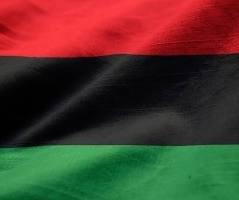
Comes to mind Captain Thomas Sankara, also from Burkina Faso (then Upper Volta), who took over in a military coup; a brilliant personality, often called the Ché Guevara of Africa, whose agenda was visionary and Pan-African (see Pan-African flag) – clearly a threat to the West African French colonizers. He was assassinated in 1987 at the orders of then French President François Mitterrand.
Pan-African (or Panafrican) refers to a global movement and ideology that aims to unite all people of African descent and promote solidarity among African nations. It is rooted in the belief that people of African heritage share a common history and a unified destiny.
Not to forget Muammar Gadafi – who had a serious plan to free Africa with the Gold Dinar from the financial hegemony of the West. He was assassinated on 20 October 2011, by French NATO troops, ordered by the very French President Sarkozy, whom Gaddafi financially supported earlier to win the May 2007 French presidential elections.
We all remember, how on 20 October 2011, when Gaddafi was atrociously lynched, then US Secretary of State under Obama, Hillary Clinton, cheered with a horrifying laugh, among a group of her associates, “We came, we saw, he died”.
These are just a few examples, in a trend that marks West and Central Africa, but also Africa as an entire Continent is constantly besieged by the west, so the Great Africa, may not be truly free. This may change, as China and Russia created the extended BRICS with now also associated BRICS members – and eventually what is called the Global South.
Of the current 11 extended BRICS members, three are African (South Africa, Egypt, Ethiopia), the were joined in 2025 by three African partner or associated nations (Algeria, Nigeria and Uganda). They enjoy the same free-trade benefits as well as the advantage of trading in local currencies, or currencies of their choice, but not the sanction-prone US-dollar.
—–
Despite these above mentioned murderous, as well as geopolitical attempts to stop Africa’s pursuit of freedom, true independence and especially financial and economic sovereignty, Africa is destined to grow. And grow she will.
“By 2050, one in four human beings on this planet will be African,” said the President of Tanzania, Ms. Samia Suluhu Hassan at the recent St. Petersburg International Economic Forum (SPIEF). She added in her opening remarks. “Africa will be the only continent still adding workers to the global labor force on a large scale. Africa will host nine of the world’s 20 fastest-growing economies.” See also this https://www.rt.com/news/641096-africa-quarter-world-population-2050/?utm_source=Newsletter&utm_medium=Email&utm_campaign=Email .
Compare this rapid and planned population growth of Africa with that of Europe. According to UN data, fertility rates across Europe averaged about 1.4 births per woman in 2023, well below the replacement level of 2.1. The same applies to Russia (also 1.4); and in the US it is 1.6 (2025 statistics), also well below the replacement rate.
President Hassan also pointed to the potential of the African Continental Free Trade Area, saying that once fully implemented, it would become the world’s largest market by population. The agreement, signed in 2018, seeks to create a continent-wide free trade zone by easing the movement of goods, services, and investment across all 55 African Union member states.
The African Continental Free Trade Area (AfCFTA) was adopted in March 2018, officially entered into force in May 2019, and commenced trading on January 1, 2021. Created by the African Union, it unites 54 member states into the world’s largest free-trade zone by number of countries, representing a market of 1.4 billion people and a US$ 3.4 trillion GDP.
Africa is projected to become a unified component of the so-called Global South, which already today comprises some 85% of the world population and accounted in 2025 for roughly 42% of the world’s GDP in nominal terms, and just over 54% when adjusted for Purchasing Power Parity (PPP), the economic indicator that really counts, as it measures what the population can buy with the money it earns.
The GDP is a purely linear coefficient applied universally to every country, even though economies are widely different. It is measuring stick that essentially compares apples, with bananas and pears and plums…
Today developing economies (largely the Global South) account for more than 70% of current global economic growth, and their share of output is projected to continue expanding over the coming decades.
By 2050, emerging markets and developing economies (Global South) are projected to account for approximately 60% to 65% of global GDP. In Purchasing Power Parity (PPP) terms, this share could reach a slightly higher proportion, approx. 70% of world total.
Of the Global South in 2050, the E7 (Emerging 7), comprising China, India, Brazil, Mexico, Russia, Indonesia, and Turkey, may account for about 50% of the world’s output. The African Continent about 10%.
——–
The world is increasingly becoming aware, that happiness is not “money”, as those elites and wannabe elites would like us believe – that the ever-stronger emerging Messiah is Money.
There are countries which have already converted their GDP to a more human, social and also spiritual GDH (Gross Domestic Happiness). Two that come to mind are Bhutan and Vanuatu. But others, even in Europe, explore more humane ways of measuring a nations prosperity, not just in terms of money-riches, but also spiritual contentment and wellbeing.
Indicators accounting for GDH, may vary from one country and culture to others, and include social harmony, education, health services, peaceful relations between authorities and people, unity within society, within neighborhoods, and among people, violence vs. non-violence – and more. Many of these indices depend on frequent self-assessment.
Africa today is perhaps the world’s least monetized Continent. About two thirds of rural Africa is estimated to function outside monetary systems, instead with some kind of barters, and “neighborly favors” and goodwill.
Africa may propel ahead in a system where monetary values are being replaced by values of happiness, of unity, of societal contentment. Independently of pure economic accounting, the well-feeling of unity and harmony may be expected to produce “happiness outputs” for healthy consumption, while protecting the environment, spiraling back to societal well-being.
In the sense of Tanzania President Samia Suluhu Hassan’s words, Africa is destined to grow, but by 2050, the world may have awakened to understand that there is wellbeing growth outside the realm of monetary hegemony or fiefdom.
——-
Peter Koenig is a geopolitical analyst, regular author for Global Research, and a former Economist at the World Bank and the World Health Organization (WHO), where he worked for over 30 years around the world. He is the author of Implosion – An Economic Thriller about War, Environmental Destruction and Corporate Greed; and co-author of Cynthia McKinney’s book “When China Sneezes: From the Coronavirus Lockdown to the Global Politico-Economic Crisis” (Clarity Press – November 1, 2020).
Peter is a Research Associate of the Centre for Research on Globalization (CRG). He is also a non-resident Senior Fellow of the Chongyang Institute of Renmin University, Beijing.