

War on Iran – 8
Previous Thread: https://sovereignista.com/2026/05/04/war-on-iran-7/
My continuing appreciation to Jangjo for the regular updates – Blessings!
Jun 11
Reports and footage from Iran is now pouring out. These have been taken from PressTV Channel and footage can be seen there – These are only a few as I saw something like 54 strike reports from Iran:: https://t.me/presstv/193592
Mohsen Rezaei, advisor to the Leader of the Islamic Revolution: The unhinged US president imagines that bombs can get him out of the quagmire he himself created. But Iranian missiles will sink him even deeper into it. Washington must choose between accepting Iran’s terms and losing the last shred of its credibility in the world.
IRGC Aerospace Force Commander Brigadier General Majid Mousavi:
🔺 Do you think you can make the sacred Strait of Hormuz unsafe? We will turn the entire region into hell for you.
🔺 This is the response to US aggression in the region, by the will of God.
Explosions continue in Bahrain, with Arab sources reporting ineffective air defense attempts against Iranian missiles and drones.
Moment an Iranian missile passed through multiple air defense interceptors in Jordan.
Massive explosions reported at Jordan’s Al-Azraq and Al-Salti bases, which host US forces.
Air raid sirens and heavy explosions were reported in Kuwait and Bahrain, as US bases came under Iranian missile and drone strikes.
Heavy explosions heard at the US Fifth Fleet base in Bahrain.
Plumes of smoke rise over Manama as new explosions were reported in Bahrain.
Air raid sirens sound in northern occupied Palestine following Hezbollah missile strikes.
Shahed-136 drones were spotted in the skies over Kuwait en route to US military bases.
IRGC:
🔺 Early this morning, 12 ballistic missiles targeted facilities housing US F-35, F-15, and F-16 fighter jets, as well as key military installations at Al-Azraq air base and its control center, with reports of significant damage and destruction of aircraft and infrastructure.
🔺 The operation is set to continue as long as US hostile actions persist.
Columns of smoke rise from Jordan’s Muwaffaq Al-Salti Air Base after it was struck by a barrage of Iranian ballistic missiles.
By Press TV Strategic Analysis Desk
Trump’s renewed threats of a “harsh attack” against Iran expose a desperate, failing algorithm of coercion, as Tehran, unmoved by psychological warfare and manufactured deadlines, holds firm in the war of endurance, ready for every scenario.
Watch: Iranian missiles evade US Patriot defenses and strike a US F-35 airbase in Jordan.
Jun 10
Reports of explosions and strikes but it is all confusing. ‘The attack on Iran has begun’ – Barak Ravid, Axios (Axios is not reliable)
U.S. CENTCOM confirms launching ‘self-defense strikes’ against Iran – it looks like multiple targtets.
Iran’s Khatam Al-Anbiyaa Central Command to issue a statement soon.
Clashes between Iranian forces & US forces at sea — Mehr, and So far, the Americans have attacked 7 coastal points in southern Iran — Mehr
But nothing is hitting anything. I think it is a pretend strike from the US. Strikes on Dashti heights (Bushehr) and Sirk – but so far no footage.
President Trump, talking to Fox News, claims he called directly with an Iranian official and they ‘asked him to stop’, so he said he will ‘stop the bombing soon’ All Iran officials deny this.
President Trump: ‘If they don’t make a deal, we’ll bomb the shit out of them again tomorrow’
CENTCOM: ‘The Strait of Hormuz is open’
IRAN says they’ve closed the Strait.
Iran’s central military command (Khatam al-Anbiya)
Says the Strait of Hormoz is now closed to all vessels because of regional insecurity and US attacks in Hormozgan.
It warns that any ship passing through will be targeted, and denies US claims that ships have passed through the strait.
Let’s stop this until there is certainty about something.
🔹🔹🔹🔹
Nima explained the story and asked a few very good questions:
Jun 9
🔹🔹🔹🔹
Iran announced early Wednesday that it had launched an attack targeting 21 US-linked sites across the region, including the US Fifth Fleet in Bahrain, stressing that the operation was in response to recent American aggression against Iran.
The targets also included a US F-35 fighter jet base in al-Azraq in Jordan, as well as a command and control center at the same facility. Iranian Fars news agency reported that Tehran used Kheibar Shekan missiles in strikes targeting F-35 hangars in Jordan.
The Islamic Republic added that it had destroyed four high-value targets using long-range solid-fuel missiles and said a US MQ-9 drone was shot down during aerial engagements over Jam in Iran’s southern Bushehr province.
At the same time, Iran’s Tasnim News Agency reported that Iranian air defenses shot down an American MQ-9 drone over the city of Jam in Bushehr province in southern Iran.
🔹🔹🔹🔹
No Peace / No War
This provocation cycle must not be allowed to normalize.
The US announced that Iran took down a helicopter (but both pilots are alive and well) and will retaliate. Iran has denied that its forces shot down a US Apache helicopter after the US Central Command claimed that it was carrying out airstrikes targeting Iran after the Islamic Republic reportedly shot down one of its aircraft.
So the US retaliated and now Iran is retaliating. What exactly is being shot up I don’t know yet.
Timeline of Trump’s War on Iran
🔹 Jan 18: “Iranian patriots, help is coming. We are moving in.”
🔹 Feb 28: “We are launching the decisive operation. It will be very fast.”
🔹 Mar 2: “We will win easily.”
🔹 Mar 3: “We have won the war.”
🔹 Mar 7: “We defeated Iran.”
🔹 Mar 9: “Strike Iran. The war is almost over—clean and decisive.”
🔹 Mar 12: “We have won, but not completely yet.”
🔹 Mar 13: “We won the war again.”
🔹 Mar 14: “We need help to open the strait.”
🔹 Mar 15: “If you don’t help, I will remember it.”
🔹 Mar 16: “We actually don’t need help—I was testing loyalty. If NATO doesn’t help, consequences will follow.”
🔹 Mar 17: “We don’t need NATO help and don’t want it. No Congress approval needed to exit NATO.”
🔹 Mar 18: “Allies must cooperate to open the Strait of Hormuz.”
🔹 Mar 19: “U.S. allies must step up and help open the strait.”
🔹 Mar 20: “NATO is cowardly. We may phase this out.”
🔹 Mar 21: “We don’t use the strait. Others need it, not us.”
🔹 Mar 22: “Final warning. Iran has 48 hours. Iran is finished.”
🔹 Mar 23: “One more week, then we bomb power plants.”
🔹 Mar 24: “The war is nearing its end.”
🔹 Mar 25: “We are negotiating with Iran.”
🔹 Mar 26: “Iran is begging for peace. They gave us a gift. We delay strikes on power plants.”
🔹 Mar 27: “The Ayatollah and I will jointly manage the Strait of Hormuz.”
🔹 Mar 27: “Open Hormuz in 10 days!”
🔹 Mar 28: “Regime change has occurred in Iran.”
🔹 Mar 29: “Negotiations with Iran are going extremely well.”
🔹 Mar 30: “We are prepared to destroy Iran’s oil and energy infrastructure and occupy Kharg Island.”
🔹 Mar 31: “We are ready to end the war without opening the strait.”
🔹 Apr 1: “War ends in 3 days. We will bomb them for 2–3 weeks back into the Stone Age.”
🔹 Apr 2: “We destroyed three major bridges. Why haven’t they called us yet?”
🔹 Apr 3: “Open Hormuz in 48 hrs!”
🔹 Apr 4: “Open Hormuz by Tuesday!”
🔹 Apr 5: “Open Hormuz in 48 hrs!”
🔹 Apr 5: “Open the f**king strait!”
🔹 Apr 6: “Open Hormuz by Wednesday!”
🔹 Apr 7: Deadline.
🔹 June 8: “I will declare victory in two weeks.”
Jun 8
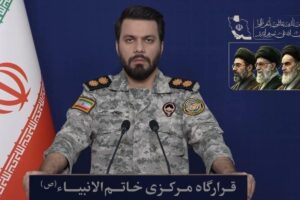 Iran announces halt to operations against Israel, warns of stronger response if attacks on Lebanon continue
Iran Armed Forces’ Khatam al-Anbiya Central Headquarters:
“Following the aggressions and acts of hostility carried out by the brutal Zionist regime in south Lebanon and the Dahiye area, which were carried out with the support of criminal America, the powerful armed forces of the Islamic Republic of Iran delivered a painful response to this regime in support of the oppressed people of Lebanon.”
It is a response from which the illegitimate Zionist regime and its supporters should have learned a lesson.
Accordingly, the cessation of armed forces operations is hereby announced. However, it is emphasized that should the aggressions and hostile acts continue, including in south Lebanon, much more severe and crushing measures than before will follow.”
—
Israel bombs across Iran with cruise missiles and warplanes from Tehran to Tabriz, Karaj, Najafabad, and Isfahan.
Iran immediately did what it said it would do and retaliated. The US says they were not involved (that is if you want to believe that their refuelling tankers are a sign of no involvement.) Once again, the U.S. forced Iraq to shut down its air defense systems. Otherwise, Zionist fighter jets would not be able to operate so freely.
Yemen entered. The Bab El Mandab Strait is now closed with a naval blockade in the Red Sea. Yemen was responsible for Jaffa strikes. Houthis: the era of unanswered aggression is over. Ansar Allah officials issued strong messages of support for Iran, Lebanon, Palestine and the wider Resistance Front as the regional war enters a new phase.
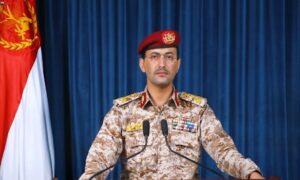
One front. One cause. One response.
Yemeni Armed Forces spokesman Yahya Saree:
🔴 Sensitive Israeli enemy targets in occupied Jaffa were precisely struck.
🔴 We now announce a complete ban on enemy navigation in the Red Sea.”
🔴 Our operations will escalate in line with the resistance — and will continue as long as aggression & siege persist.
Later it was clarified: “We will only prevent Zionist ships from passing through the Bab al-Mandab Strait.” I saw a lone statistic which I cannot confirm but of the vessels stuck in the Strait of Hormuz a large percentage has Israeli shareholding or ownership.
IRGC announces start of “Operation Nasr” against Tel Nof and Nevatim bases
IRGC has announced the beginning of Operation Nasr (“Victory”) against strategic Israeli air bases.
– “With trust in Almighty God, moments ago the brave warriors of the IRGC Aerospace Force began Operation Nasr—dedicated to the martyrs of the 12-day war—targeting key facilities at the Nevatim and Tel Nof air bases,” the statement read.
– The operation comes in response to the Zionist regime’s missile aggression against several radar sites across Iran. The IRGC confirmed that all combat units are on full alert, with extensive action plans prepared for all fronts.
– “Speed of response and an expanded target bank are key elements of this phase.”
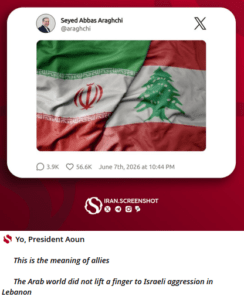
Iran’s Foreign Ministry spokesman Bagaei:
🔴 In our region, no one believes any Tel Aviv action happens without US coordination.
🔴 The US has already cited support for Israel as the reason for attacking Iran. CENTCOM confirms coordination with the Zionist regime.
🔴America bears responsibility for escalation & aggression—including strikes on southern Iran and Lebanon.
🔴We are exchanging messages with the US in an atmosphere of deep mistrust. We cannot separate Zionist regime policies from America.
🔴 Iran will continue defensive measures wherever national security requires—and will not allow Israel to expand its actions while the world merely issues statements.
I am not following actual strikes. Israel has clammed down again on information, but there is plenty of video evidence of Iranian strikes on ‘sensitive installations’.
This to my knowledge is the first time that Iran, Yemen, Iraq (supportive) and Lebanon are acting in full concert. There are comments from Iran that the Israeli strikes did not cause much harm and lacked ‘enthusiasm’. It was form only. There is a reason why this is called Operation Victory. One Cause, One Front, One Response.
Jun 7
It looks like 20 or so missiles hit Northern Occupied Territories, Haifa and one US/Israeli drone was downed in Iraq. It is reported there was some Boom Boom Tel Aviv as well, but this is difficult to confirm. Various Iranian drones were also launched. Missiles and drones came from various Iranian bases and from Hezbollah as well. Many impacts are being reported but it is not clear yet what has been targeted. Iran attacked US-backed Peshmerga & Kurdish seperatists positioned in Sulaymaniyah, Iraq.
Iran is hardening for retaliation .. Air spaces closed with NOTAMS, Iran, Iraq and probably other areas as well. Iran has fighters with manpads placed in sensitive areas throughout Iran’s rural villages and mountain ridges in the West. Mehrabad Airport and Imam Khomeini airport in Tehran are being evacuated and aircraft moved.
US and even one British refueling aircraft are airborne and .-.. well, they are airborne.
Trump (watch the oil price and get the salt handy)
President Trump: ‘I was going to sign an agreement probably on Monday, Tuesday or Wednesday, but now this is happening’
‘Israel didn’t tell us they were about to bomb Beirut. I’m not happy about it.’
‘I will tell Netanyahu not to attack Iran’
‘We are very close to a great deal with Iran. It is going to be a great deal. I don’t want it to blow up just because of what is happening right now.
I am going to call Bibi right now and tell him not to retaliate. Each of them had their fun. Israel had its strike and Iran had its strike. We don’t need another one.’
‘What I would suggest to Iran: You’ve shot your missiles, that’s enough. Get back to the table and make a deal’
‘Things are going very well’
Netanyahu informed Trump of Israel’s intent to launch a ‘massive attack’ on Iran, and Trump emphasized the U.S. would not participate – Yedioth Ahronoth
President Trump urged Netanyahu to wait ‘a few days’ to see if a deal can be reached with Iran – Ynet
IDF Statement: ‘Chief of Staff Eyal Zamir
The Iranian regime made a mistake by firing into our territory.
We will continue our attacks in Lebanon despite the equation Iran is trying to impose.
We are preparing for the possibility of further fire towards Israel.’
The Israeli regime army: “The IDF will strike the enemy with force as soon as the green light is given”
Iran’s Supreme Leader Mojtaba Khamenei:
The shaky Zionist regime’s breath has run out.
Last statement in from iran:
Iran’s ALREADY locked in its targets if Israel responds — Tasnim
Missiles READY to be launched
Next round will be ‘MORE MASSIVE’
Tehran says it’s prepared to ‘start WIDESPREAD BATTLE’
Tehran’s Revolution Square tonight at the moment of announcing the news of Iran’s missile attack
The israelis in the Northern Occupied Territories are in shelters, Israeli schools are closed. US embassy and consulate closed with warnings to US staff.
The Iranians are out on the streets everywhere, celebrating every drone and every missile.
Last Zionist Statement: The Zionist entity halts all humanitarian aid to Gaza until further notice. Strikes on Gaza have increased.
Here are the numbers while I have them:
Daily statistical report on the number of martyrs and injured due to the “israeli” aggression on the Gaza Strip
10 martyrs and 36 injuries have arrived at Gaza Strip hospitals in the past 24 hours.
A number of victims are still under the rubble and on the roads, as ambulance and civil defense crews are unable to reach them until now.
Since the ceasefire (October 11, 2025): Total martyrs: 961, Total injuries: 3,020, Total retrievals: 782
The toll of the “israeli” aggression has risen to 72,971 martyrs and 173,0128 injuries since October 7, 2023.
Jun 7
Iran is retaliating against Israel. Let’s wait for the missiles to stop falling before commenting. Wave five now arriving.
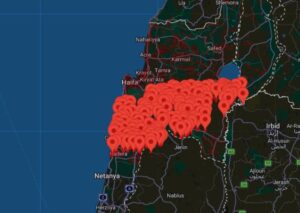
Iran’s IRGC:
🔺 In response to the extensive crime of the usurping Zionist regime in southern Lebanon and the mass killing and displacement of the oppressed people of the Tyre and Nabatieh regions, as well as other areas including the Dahieh of Beirut, the Ramat David Air Base — the origin of these aggressions — was targeted by ballistic missiles of the IRGC Aerospace Force.
🔺 Our acceptance of the ceasefire on April 8 was conditional on a halt to hostilities on all fronts; but as always, the US and the Zionist regime did not adhere to their commitment — they continued both their aggressions and crimes in Lebanon, and violated the ceasefire by repeatedly attacking the waters and Iranian vessels in the Strait of Hormuz, the Sea of Oman, and the Indian Ocean.
🔺 Tonight’s operation was a warning. If aggressions are repeated, the responses will be more extensive and will encompass all US-Zionist targets in the region.
🔹🔹🔹🔹
Renewed bombing of Dahiyeh, Beirut under Netanyahu’s and Katz’s orders.
Jun 6
IRGC Public Relations: The US Ali Al Salem Air Base in Kuwait and the US Navy’s Fifth Fleet in Bahrain were targeted by Iranian missiles.
🔹 At 1:30 AM, four violating tankers guided by the US military attempted to make an illegal passage through the Strait of Hormuz without coordination; one was targeted and the others retreated after warnings.
🔹 Following this incident, at 2:30 AM, US drones struck telecommunications towers in Qeshm and Sirik.
(Self-defense they call it these days – there are not enough words in the dictionary to describe what we are seeing and experiencing.).
🔹In response, the IRGC Aerospace Force launched ballistic missile strikes against the US Ali Al Salem Air Base and the US Fifth Fleet facilities.
🔹 We warn the aggressor and child-killing enemy that further aggression will trigger a broader response. You will bear responsibility for the consequences of the complete closure of the Strait of Hormuz to the export of your oil and gas.
Jun 4
Another ceasefire (is this now number 4?) announced. I don’t think Hezbollah will care. Somehow I don’t think Iran will care either. And then, the current Lebanese chihuahua government is giving away Lebanon south of the Litani.
As a result of negotiations led by the United States, both Israel and Lebanon have agreed to implement a ceasefire, provided that this ceasefire is conditional on a complete halt to fire by Hezbollah and the withdrawal of all its elements from the area south of the Litani River.
Lebanon and Israel, under the guidance of the United States, have agreed to expedite the establishment of “pilot zones” in which the Lebanese Armed Forces will have exclusive control over the territory, with no presence of any non-state armed groups.
The future of the relationship between Israel and Lebanon must be determined exclusively by the two sovereign governments, and we reject any attempt by any country or non-governmental entity to hold Lebanon’s future hostage or to influence it.
Lebanon and Israel have no hostile intentions toward each other and have committed to continuing direct negotiations to build trust, address all outstanding issues, and work toward a comprehensive agreement between the two countries.
Jun 3
Here is the provocation: Israel’s Ambassador to the US confirms Hezbollah rocket fire violates agreements and warrants strike on Beirut
🔴 “Israel agreed to refrain from attacking Hezbollah headquarters in Beirut on the condition that Hezbollah cease attacks on Israeli cities and communities. This morning’s attack is yet another blatant violation of those agreements.”
This is of course a lie. Hezbollah wanted a full end to the war. If there is no end, they will continue. If Beirut is stuck, Iran will not sit idle.
🔹🔹🔹🔹
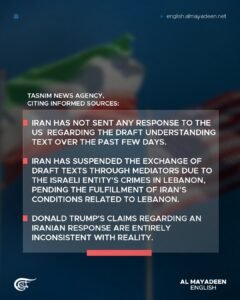
No war / No peace continues with a twist in the tail. The US is normalizing these little ‘self-defense’ attacks.
Bear in mind that there is no peace agreement in Lebanon, neither in Gaza. Lebanon (Hezbollah) said NO to a partial concoction and continued resistance. Commentators did not really integrate this and we get some skewed reporting. Gaza is continually being genocided little by little.
🔹🔹🔹🔹
Take a look at Spain, at South Africa, at Brazil, at Turkiye, Hong Kong, China, Mexico – and compare with public statements.
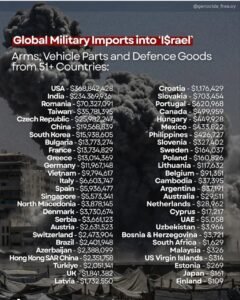
Jun 2
Various reports:
🔹Iran says it struck US military targets after American attacks near Strait of Hormuz
The Islamic Revolutionary Guard Corps said it launched missile and drone strikes against a US air base and the HQ of the Fifth Fleet in retaliation for American attacks on an Iranian tanker and an IRGC telecommunications site. It also said it targeted a vessel it identified as US-affiliated and warned that further security incidents in the Strait of Hormuz would carry consequences for American forces.
Iran is targeting US bases in Kuwait, Bahrain and Iraq following US attacks on Qeshm Island. Iran seems to have recognized that deterrence can only be established by forcing the US regime – the mafia co-opted by Greater Israel – to recognize every terrorist action has a cost. The US 5th fleet was targeted again.
🔹CENTCOM reports everything was intercepted, while I look at the footage and see the impact of missiles hitting the ground. They also claim the ceasefire is continuing.
CENTCOM claims ‘self‑defense strikes’ on Qeshm
CENTCOM says it shot down Iranian drones and missiles aimed at Kuwait and Bahrain, and conducted self‑defense strikes on an Iranian ground control station on Qeshm Island. No US personnel harmed, they claim.
📹 The last week’s attack on Ali Salem Airbase in Kuwait – which CENTCOM also claimed to have thwarted – actually injured 5 US soldiers and destroyed at least one MQ‑9 Reaper drone. The “thwarted” attack still caused casualties and losses.
I guess Schryver saw the hits as well. His comment is quite brutal. “Iran launched several ballistic missiles toward regional neighbors; however, all failed to hit their intended targets.” What did they hit?”
According to IRGC Public Relations, the escalation followed a US strike on an Iranian oil tanker near the Strait of Hormuz, which damaged the vessel’s engine room. In response, the IRGC Navy said it struck a vessel, which it said was linked to US-Israeli interests.
The IRGC further stated that after the US targeted a telecommunications tower south of Qeshm Island, its forces responded by striking a regional airbase, a helicopter squadron, and the US Fifth Fleet headquarters.
It warned that if aggression continues, the response will be “different and heavier,” emphasizing that it had acted accordingly in this round of escalation.
The statement also stressed that any disruption to security in the Strait of Hormuz would carry a “heavy price” for US forces.
🔹American oil tanker Panaya was targeted
Part of the IRGC’s public relations statement:
Late last night, the US aggressor army hit an Iranian oil tanker near the Strait of Hormuz with an aerial projectile, which damaged the engine room of the oil tanker.
In response to this aggression and violation of the Strait of Hormuz regulations, a floating vessel belonging to the Zionist American enemy named Panaya was targeted by IRGC Navy missiles.
Jun 1
The situation has changed materially. Check Jangjo’s update in the comments and Daily Chronicles.
🔹🔹🔹🔹
The situation still is No War / No Peace. It is being stretched out so that ol’bloody’Netanyahu can decimate Lebanon as much as is possible, before he is forced to stop. And he will be forced to stop. France (of all places) has called for an emergency security council meeting fwiw.
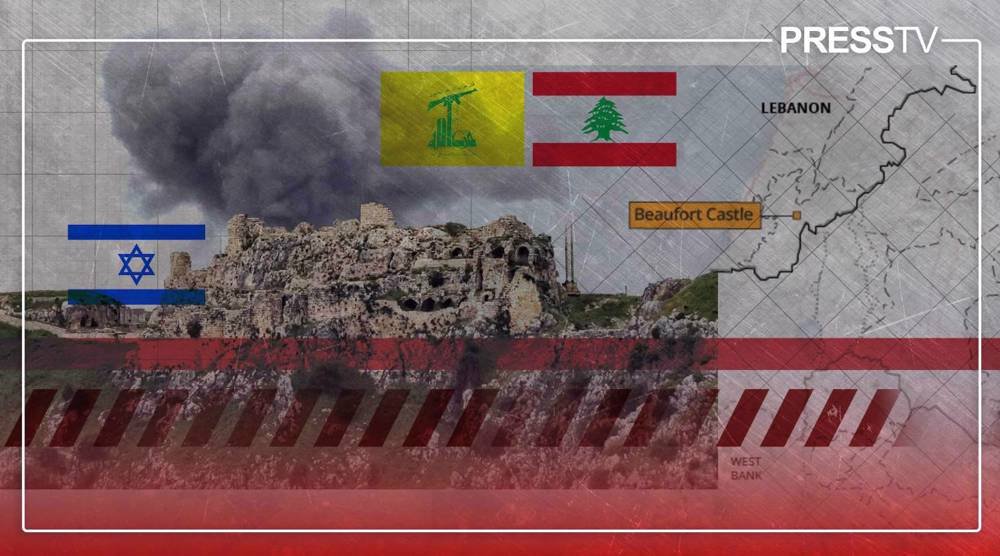
 So we will continue reporting until this war is over The focus is on Lebanon where Hezbollah with its new drones is causing havoc for the IDF. Here is a PressTV commentary on the IDF eventually and at last grabbing Beaufort Castle. They did this before in a previous war, and could not hold it. This Castle is empty and besides value as high ground, has no value and now is an issue of propaganda.
5 kms of failure: How South Lebanon’s Beaufort Castle laid bare Israeli military weaknesses
By Ali Hammoud
Israeli military’s arrival at the perimeter of Beaufort Castle, sitting atop a strategic hill near Nabatieh city in South Lebanon, has been presented as a landmark achievement.
Yet measured in raw distance, the operation amounts to an advance of just five kilometers – from the border settlement of Metula to the ancient fortress perched above the Litani River.
Five kilometers. A stretch of ground that took over three months of direct ground combat, preceded by fifteen months of continuous aerial bombardment, to secure. That simple geographic fact transforms a supposed triumph into an uncomfortable mirror, reflecting the profound weaknesses of an over-technologized and risk-averse army now struggling to overcome them.
The scale of the forces thrown at this narrow axis exposes a deep institutional anxiety. To move a mere five kilometers, the Israeli command did not deploy a single brigade or even a division. It assembled a stacked task force that reads like a roll-call of its most prized formations.
The 98th “Fire” Division, Israel’s premier paratrooper and commando formation, was deployed alongside the 36th Armored Division, normally reserved for major conventional breakthroughs.
The Golani Brigade and Givati Brigade, the backbone of Israeli infantry, were committed in full. The 7th Armored Brigade, the country’s oldest and most storied tank unit, also rolled in.
The “Fire” Brigade layered on precision artillery and drone networks, while the multi-dimensional Unit 888 – a boutique hybrid force experimenting with networked robotics and AI-driven targeting – was given a live-fire audition.
Overhead, combat drones and loitering munitions saturated the sky. On the ground, unmanned robots were pushed forward to avoid risking soldiers against anticipated counter-fire.
This was not a scalpel operation. It was the entire toolbox emptied onto a single, five-kilometer-deep strip of south Lebanon.
And still the advance stalled.
The initial frontal push along the Yohmar-Beaufort axis – prepped with hundreds of airstrikes and relentless artillery barrages – bogged down badly. Israeli occupation forces were forced to abandon direct mechanized assault in favor of painstaking dismounted infiltrations by special infantry units slipping through the eastern river valleys.
That the most technologically drenched army on earth had to resort to quiet, boots-on-the-ground infiltration to cover a distance a civilian could jog in under thirty minutes is not a testament to tactical flexibility. It is a confession that supremacy in the air, in cyber, and in intelligence did not translate into usable control of the ground.
What makes this disproportion between effort and outcome even more damning is what was absent from the battlefield.
Before Israeli troops ever crossed the border, the Lebanese Armed Forces had spent weeks confiscating weapons caches and systematically destroying military infrastructure and equipment belonging to Hezbollah in the very sector around Beaufort.
Israeli occupation forces did not walk into a fully wired, prepared defensive system. They entered a zone where a significant portion of the resistance movement’s underground networks, weapons stores, and fortifications had already been degraded by a third party.
The environment was, by any reasonable military assessment, pre-softened.
Yet the Israeli advance still required the full weight of multiple elite divisions to push forward at a crawl. This raises a devastating question: if a pre-degraded five-kilometer stretch demanded this magnitude of firepower and took these many months, what exactly is the sustainability of the entire ground offensive?
The answer points directly to the Israeli military’s core weakness. Its doctrine has become trapped in a contradiction it cannot resolve.
Overwhelming technological dependence – sensors, drones, satellites, precision-guided munitions, robotic scouts – has not produced decisive battlefield speed or shock. Instead, it has bred a profound risk aversion.
Commanders use technology not primarily to destroy the enemy with economy and surprise, but to sanitize the battlefield and insulate troops from direct contact.
The result is a military that consumes stunning quantities of expensive munitions to inch forward, terrified of the human cost that any real encounter might bring.
It is an army that has trained itself to see the ground as something to be burned before it is walked on. That mindset turns even a trivial tactical advance into a vast, slow-moving logistical and psychological operation.
Beaufort Castle, for all its symbolic weight, stands as an indictment of that paradigm.
A force structure that requires two divisions, the nation’s most decorated brigades, and an endless airborne armada to secure five kilometers of terrain – after a rival army had already degraded the defenses – is not a force demonstrating power. It is a force revealing its limits.
Technology, it turns out, cannot substitute for the willingness to close with the enemy. And a five-kilometer crawl is still a crawl, no matter how many flags are raised at the end of it.
Ali Hammoud is a Lebanese writer and researcher.
@ Amarynth, There is no specific, detailed account of US losses during Iran retaliatory attacks for obvious reasons, all we can have is an approximation. Dates need to be confronted, as posting date and graphics dates differ in some posts. The account you provided above, is not far off. —————————————————————————… Read more »
https://t.me/Slavyangrad/166356 🇮🇷🇺🇸 Iran is preparing to defend Kharg Island, — CNN ▪️Iran has been preparing for several months for a US invasion operation on Kharg Island. ▪️The IRGC has placed anti-personnel and anti-tank mines on the island, including on the coastline, where American troops could potentially land. ▪️Air defense systems… Read more »
From someone who grew up there.
“The time for mincing words, selling fantasies and allowing for duality is so fucking long over. We need to unapologetically, unequivocally demand this horrific anti-human endeavor be terminated.”
https://alonmizrahi.substack.com/p/normalize-voicing-the-demand-to-end
https://t.me/presstv/193707 Bombings will not get ‘unhinged US president out of quagmire’: Iranian generals The spokesman for Iran’s Ministry of Defense and Armed Forces says the country’s military is fully prepared to confront threats from the United States and Israel and will not retreat in the face of pressure from aggressors.… Read more »
As stated below, trump’s ratings are in a downward spiral proportional to the skyrocketing inflation. ——————————— https://t.me/newrulesgeo/2234 Brutal Inflation Haunts Trump Inflation has skyrocketed to 4.2%, marking the highest level since 2023, according to the latest Consumer Price Index (CPI) release. This surge is heavily driven by energy costs, with… Read more »
Try multiplying that 4.2% by 3, Jangjo, and you will be much closer to the mark.
Those are New Rules Geo figures, I just copied the post. In reality, people all over the world, not just in the US, are agonizing over the skyrocketing prices of anything, after gas and diesel. The head clown stated no concern about inflation, hyperinflation, economic depression, financial crash…he’s secure, and… Read more »
TACO THURSDAY. To put his latest retreat in context, read the two articles below, and my short summary before them. Concisely, we can put it in one word: AFFORDABILITY. Buffon trump ran out of time, cannot afford the prolongation of the conflict, let alone risk the expansion of it. The… Read more »
https://t.me/newrulesgeo/2233 🚨🇺🇸🇮🇷 U.S. CAN’T AFFORD ANOTHER ALL-OUT AIR WAR WITH IRAN Trump has threatened Iran that it had taken too long to negotiate a peace deal & the Iranians will pay the price. But Trump can’t sustain another operation against Iran like Epic Fury. The recent war left the United… Read more »
https://t.me/presstv/193690 ✍ Analysis – US ‘limited war’ strategy against Iran deepens its strategic quagmire as Tehran’s deterrence grows Fresh US strikes aim to force Tehran, through limited military pressure, into an agreement that is favorable to Washington, but Iran’s asymmetric responses and growing deterrence are trapping Washington in a costly,… Read more »
https://t.me/presstv/193675 Iran’s powerful retaliatory operations bewilder US president, says senior legislator Chairman of the National Security and Foreign Policy Commission of Iran’s Parliament says the powerful retaliatory missile and drone operations carried out by Iranian Armed Forces in the course of the US-Israeli wars of aggression against the Islamic Republic… Read more »
Circus ring master neo-Caligula’s plan was to have Iran sign a MoU before the World Cup kicks off today. Iran unfolded a strategy of escalation dominance across the spectrum, kinetically and diplomatically. Any time trump concocted a “cheaper gas” announcement “the agreement is around the corner,” Iran would raise the… Read more »
Thanks Jangjo – I do get into things and right at the moment, I’m into a thing. I appreciate your updates.
Can you figure what Iran actually shot at? I believe there are some warplanes that are now flattened and some bases that are no more.
You’re very welcome.
Getting into things is your job.
With gusto.
Will work on it during my next break.
https://t.me/presstv/193655 Analysis – Trump’s renewed threats against Iran reek of desperation as his political clock rapidly runs out Trump’s renewed threats of a “harsh attack” against Iran expose a desperate, failing algorithm of coercion, as Tehran, unmoved by psychological warfare and manufactured deadlines, holds firm in the war of endurance,… Read more »
https://t.me/presstv/193644
The Strait of Hormuz has been closed until further notice, according to the Persian Gulf Waterway Management Authority (PGSA). The authority said the decision was taken amid escalating tensions involving the United States and following a statement issued by Iran’s armed forces last night.
@PressTV
https://t.me/enemywatch/56872 | Iranian Military Source: Iran carried out a complex intelligence and operational plan for the attacks launched at dawn today on some US military bases in Jordan and Bahrain. The attacks reportedly caused severe damage to expensive equipment belonging to US forces, although US officials have not yet disclosed… Read more »
https://t.me/enemywatch/56866 | Khatm al-Anbiya HQ: The armed forces will respond decisively to any threat against the country Message of Major General Abdollahi on the occasion of the first anniversary of the second imposed war: On the eve of the first 23rd of Khordad, the anniversary of the beginning of the… Read more »
https://t.me/enemywatch/56861 | IRGC Public Relations Department of the Islamic Revolutionary Guard Corps (IRGC): To the faithful and heroic Iranian nation, which has demonstrated over more than one hundred days of steadfastness on the fronts of confrontation a new level of awareness and resistance; Achievements accomplished by the fighters of Islam… Read more »
https://t.me/enemywatch/56826 🇮🇷 | U.S. Aggression Against Iran: 11 June 2026: In the past four hours, after the Qatari mediator departed Tehran after discussions aimed at finalizing a ceasefire-related agreement. According to Iranian officials, several disputes remain unresolved due to American amendments to the proposed agreement. At the same time, Trump… Read more »
THIS IS AN INTERESTING DEVELOPMENT…PAKISTAN IS ENTERING THE REGIONAL EQUATION AGAINST ISRAHELL, IT SEEMS…
https://t.me/presstv/193479
▶️ Pakistan, Lebanon pledge expanded defense cooperation amid Israeli aggression
Nasir Kazmi reports from Islamabad
@PressTV
Maybe there was a chopper, maybe not, but “The US announced that Iran took down a helicopter (but both pilots are alive and well) and will retaliate.” doesn’t sound like a shoot-down, it sounds like, at most, a mechanical difficulty and splash.
1898: Remember the Maine and the Hell with Spain.
2026: Remember the chopper and into the hopper.
The landlady does not have “thumbs up” icons, so I got you one.
https://t.me/presstv/193422 🔸 Statement by the Ministry of Foreign Affairs regarding the aggressive actions of the United States against Iran 🔹 In the early minutes of Wednesday, June 10, 2026, under the pretext of the crash of a US terrorist army Apache helicopter over the Strait of Hormuz on Monday night,… Read more »
It seems that the pussy-ass US military is using small baits like helis and empty oil tankers to identify Iran’s missile-launching and communications positions and destroy them. They’re definitely trying to slowly remove Iran’s capacities and go for a large attack when they’re convinced that the defenses are degraded. Iran’s… Read more »
https://t.me/presstv/193409 Islamic Revolution Guard Corps (IRGC): The war-mongering US regime, under baseless pretexts, targeted several locations in Jask, Sirik, and Qeshm in the early hours of Wednesday morning. A telecommunication mast in Sirik was damaged, and two water reservoirs were destroyed. In response to this hostile act by the enemy,… Read more »
Iran would have stated openly if they had downed the chopper. No reason to hide it. The US created a false flag to justify what can easily turn into the second phase of the Persian Gulf/Strait of Hormuz war. The Lebanon file was to be a provocation concocted by israhell,… Read more »
Hopefully Wahhabist Arabia and Qatar are not involved. This would be bad for the rest of Asia, esp. with Russian production degraded. How about Nuclear Armed Terrorist Organization production facilities or forces in Europe? Bunkers of so called elites, the scum of curdled milk that rose to top centuries ago?… Read more »
A FALSE FLAG: US IMPOSING DETERRENCE ON IRAN’S DETERRENCE OVER ISRAHELL RE: LEBANON… https://t.me/enemywatch/56755 | Around four hours ago, following what American officials described as Iran’s involvement in the downing of an Apache helicopter over the Strait of Hormuz, America launched a series of limited strikes against targets in southern… Read more »
These so-called “journalists” are a disgrace to Iran. They are so unprepared for the report on the attack on israhell, is ridiculous. They cannot find any of the targets that were hit on the map, they are amateurs, and make Iran look like a country of idiots, which it is… Read more »
IRAN’S NEW REGIONAL POWER EQUATION…YET ANOTHER MUST READ… https://t.me/presstv/193338 Analysis – ‘Unified Resistance Front’: Iran recasts region’s balance of power and security paradigm with Operation Nasr Iran’s “Operation Nasr” against Israel unveiled the “Unified Resistance Front” doctrine, under which any aggression against one member – Iran, Lebanon, Yemen, Iraq, or… Read more »
Same kill box.
different form, different location.
Forwarded from AHH 6-08 why the hyper-sensitivity to the aggression on the Dahiyeh neighorhood of southern Beirut for Iran and the Axis of Resistance? You would think they would overlook it, as Zion is being irretrievably attrited throughout Lebanon, and continuous war since Oct 2023, no?? Here, Prof Marandi spells it out in… Read more »
Thank you for copying this here. We have seen bits and pieces of the rejection of the Shia by other Lebanese, didn’t know this was an orchestrated ethnic cleansing campaign. Even through the poor translation it is possible to realize the diabolic dimension of the extermination drive against the Lebanese… Read more »
https://t.me/presstv/193250
A statue of Handala was unveiled in Ireland as a gesture of solidarity with Palestine.
@PressTV
Putin needs to take some remedial classes on War 101 from the Iranians. Another MUST READ after the post below. https://t.me/presstv/193241 IRGC Quds commander: From Hormuz to Bab el-Mandeb, new resistance security belt will choke Israeli aggression Brigadier General Esmail Qaani, the commander of the Islamic Revolution Guards Corps (IRGC)… Read more »
A MUST READ…A REDEFINITION OF IRAN’S REGIONAL STRATEGY VIS-À-VIS THE AXIS OF RESISTANCE… https://t.me/presstv/193187 Analysis – Iran’s strikes on Zionist entity in defense of Lebanon and the recalibration of regional deterrence Iran’s missile strikes on occupied territories shattered the enemy’s assumption of a sub-threshold response, proving that any future aggression… Read more »
Follow this thread up, it traces the IOF/Iran narratives during the latest confrontation… https://t.me/enemywatch/56681 — Not because of IOF and US urging, Iran sees this as the completion of its objectives in Operation Nasr. The objectives were related to a SLAP on the Zionist entity and aimed at teaching it… Read more »
https://t.me/presstv/193148
Pro-Palestinian hackers vow ‘most devastating’ cyberattacks on ‘enemies, those welcoming terrorists’
A pro-Palestinian hacking group has threatened large-scale cyberattacks against the critical and military infrastructure of the enemies of the Palestinian cause and the countries allying themselves with them.
https://t.me/presstv/193149
IRGC hits Haifa industrial sites after Mahshahr petrochemical plant attacked
The Islamic Revolution Guards Corps (IRGC) has targeted industrial sites deep inside the Israeli-occupied territories with a barrage of ballistic missiles in direct retaliation for the Tel Aviv regime’s strikes on Iran’s petrochemical industry.
@PressTV
https://t.me/presstv/193150
Iran’s Acting Minister of Defense Seyyed Majid Ibn Reza:
🔹The child-killing Zionist regime is now closer than ever to decline and collapse;
🔹Until the aggressor is punished, Iran will not retreat one moment from defending its national interests and security
@PressTV
https://t.me/presstv/193151
WATCH: Iran has warned that this time the war could become EXTRA-REGIONAL!
❓ If Washington ignores Iran’s warning again, will it be able to pay the price?
@PressTV
https://t.me/presstv/193153 🔺Spokesperson of the Khatam al-Anbiya Central Headquarters: 🔹We acted as we had promised. The powerful armed forces of Islamic Republic of Iran, including the IRGC and army of Iran, have proven that they operate with the highest levels of defensive and offensive readiness, executing what is ordered with speed… Read more »
https://t.me/presstv/193087
At this point, we can call Iran the International Court of Justice
Iran is showing the international bodies HOW IT’S ACTUALLY DONE!
The way to do it is not through condemnations, but through RETALIATION!
– Press TV’s Maryam Azarchehr
@PressTV
https://t.me/enemywatch/56571 | Tonight, Iran has opened a new phase of deterrence: openly supporting the Resistance Front militarily in order to defend it. There were barriers and considerations that Iran had traditionally sought to avoid in providing such support, beyond supplying the resistance with what it considered necessary. Iran, as the… Read more »
https://t.me/enemywatch/56562 🟦 | The spokesperson for the Commander of the Khatam al-Anbiya Headquarters: Despite previous warnings issued by the Islamic Republic of Iran, the Zionist entity targeted the southern suburbs of Beirut after escalating its attacks in southern Lebanon and crossing all red lines. Iran had previously warned that it… Read more »
https://t.me/enemywatch/56563 🇮🇷 | Iran’s Foreign Ministry: ‘Following the repeated violations of the ceasefire and the aggressive actions of the Zionist regime against Lebanon and the Islamic Republic of Iran, including through complicity with the terrorist army of the United States in the attacks of the past two weeks on Iranian… Read more »
Mexico is trying to appease the Great Gringo Satan and its phony “War on Drugs.”
Good luck with that!
Mexican government bows to Washington despite resisting US prosecution of politicians for cartel links
https://www.wsws.org/en/articles/2026/05/29/ktkj-m29.html