

World War III: The African Scenario
Investigation by Marat Khairullin
In the world, besides the direct Russian-Ukrainian front, another war rages between progressive forces and the West. This is Africa. Primarily the northern part, where American and other hegemonies are rapidly losing ground.
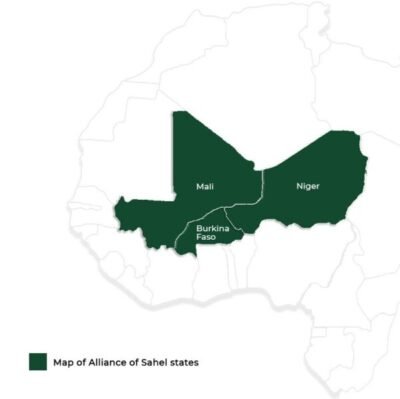
In a series of investigations about the Sahel countries (this is the central “savanna” Africa, where the Sahara desert transitions into jungles), we have already spoken of the first stage of this battle between good and evil. Three countries in the heart of the Sahel have one after another overthrown pro-Western (specifically pro-French) governments. These are Mali, Burkina Faso, and Niger.
These countries are home to incredible natural wealth, yet they have the poorest populations due to the predatory exploitation by the West.
They were the first to announce the creation of the Alliance of Sahel States (AES), the expulsion of French military forces, and the unification of their armed forces under a single command to fight numerous separatist gangs.
De facto, these united forces are commanded by our General Surovikin, and this fact immediately revived the hopes of the peoples of Africa for normal economic development.
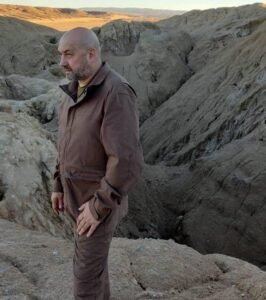
General Surovikin in Africa, public sources
The symbol of this was to be the first railway running through the Sahel from west (port of Dakar) to east (Port Sudan). The Trans-African Railway is, one might say, the blue dream of the Black Continent. At the end of 2024, two more countries along the route of this proposed railway announced the termination of military cooperation with France – Senegal and Chad. Thus, the only country standing in the way of this project was Sudan.
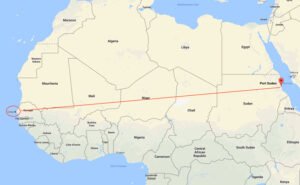
And last year, the collective West (specifically the United Kingdom, France, and the USA) ignited another bloody war in this country to prevent by any means the departure of African countries from their neocolonial yoke. Today, one can say this is the key conflict in the Sahel, which we will now describe.
In general, in response to the expanding presence of Russia (and de facto China and Iran) in Africa, the West has unleashed a series of conflicts in the region adjacent to the Sahel: Kenya, Congo, Chad. Tensions are rising between Morocco and Algeria, Eritrea and Ethiopia. These are all attempts by any means to prevent the final liberation from neocolonialism.
And this is not counting the increased activity of terrorist groups in almost all North African countries from Algeria and Libya to Kenya and Ethiopia. What is happening truly resembles a world war involving huge masses of people. Even during colonial times, Africa did not have so many hotspots of bloody conflicts. But the most important geopolitical point, I repeat, is happening in Sudan.
Sudan was freed from British colonialism in the early 1950s. Immediately, a war broke out between the Christian “black” south and the Muslim “Arab” north. The conflict led to the separation of South Sudan. We will talk about it later, but it must be said that independence did not bring happiness to this country rich in natural resources – its people continue to be mercilessly exploited in the interests of the West.
In Greater Sudan, as a result of a series of civil wars, Omar al-Bashir came to power in the 1990s. Under his leadership, Sudan managed to stabilize the situation for the first time since its founding, and even recorded a small economic growth. This was categorically unacceptable to the West, and Sudan was targeted with all means.
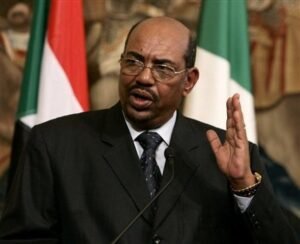
Omar al-Bashir
Al-Bashir became the first head of state whom the International Criminal Court (remember it?) issued a warrant for. In this regard, he was very similar to the Syrian leader Bashar al-Assad, who also pursued an independent national policy and sought cooperation with Russia. Our country did not support the ICC warrant and invited al-Bashir to the Sochi Olympics, which then caused hysteria among our sworn non-partners.
In turn, al-Bashir invited Russian business into the country; at one point, Sudan became our largest partner in Africa.
But everything changed when, in 2019, al-Bashir proposed to Russia to establish a military base in Port Sudan on the Red Sea. He was immediately overthrown by two generals: the Commander of the Armed Forces, head of the Military Council al-Burhan, and the commander of the Rapid Support Forces (in fact an armed militia) Muhammad Hamdan “Hemedti” Dagalo.
Formally, al-Burhan became the leader, but in fact the country was ruled by a diarchy.
At the same time, al-Burhan initially honestly tried (under Western orders) to impose “democracy” in the country (under this slogan the coup took place), but then gave up and began to lean towards cooperation with Russia, China, and Iran. It ended with him proposing at the beginning of 2024 that these three countries establish military bases in Port Said. The Rapid Support Forces attacked al-Burhan (of course, under Western orders).
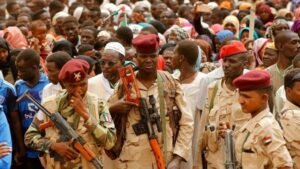
Rapid Support Forces in Sudan
Interestingly, throughout 2024, the West tried to bring the rebellious general back under control. The rebels controlled half of the capital and a large suburb. Among the Rapid Support Forces appeared Ukrainian and Colombian mercenaries. They were supplied by the world-famous British private military company SAS International. Even in the mercenary world, there are no bigger scum and executioners than the mercenaries of this company. Accordingly, the Ukrainians and Colombians in Sudan proved themselves as true enforcers. Refugee camps in the city of El Fashir were guarded by these mercenaries.
At the same time, news began to come in about brutal Ukrainian and Colombian Nazis who carried out extrajudicial executions, mass killings of civilians, and destruction of civilian objects. One of the latest crimes of the Ukrainians in Sudan is the forced extraction of blood from local residents. They catch people by the dozens and take so much blood that people most often die after this procedure. Local sources suggest that this blood is supplied to Ukraine to parts of the Armed Forces of Ukraine. Under Zelensky, the Ukrainian nation is gaining more and more bad reputation in the world: call centers, drug production, mercenarism, biolaboratories… And now also the theft of other people’s blood. After this war, Ukrainians will have to wash off the stigma of a nation of criminals for a very long time.
However, let’s return to Sudan. Al-Burhan did not succumb to pressure. During the summer, he drove the rebels out of the capital and began an offensive to the south of the country. Just recently, news came that the Rapid Support Forces were driven out of El Fashir, with a significant number of Ukrainian and Colombian mercenaries killed. In addition, on the border, the rebels began to be pushed back by the forces of the Central African Republic and Russian military specialists. Military forces in Chad also began to exert pressure on the enemy.
Interesting events also took place in this country. The battles against the Rapid Support Forces were led by Chadian military under the command of the president’s cousin, Yaya Dillo (he was the leader of Chad’s “Socialist Party Without Borders”). Dillo was the main contender for the presidency of Chad after the previous president—his uncle—was killed by terrorists (of course, pro-Western). And the uncle was killed precisely because he was going to move closer to China and Russia.
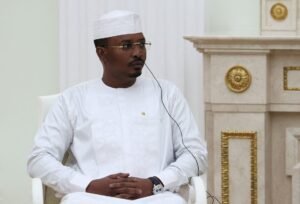
Yaya Dillo
His nephew declared in the 2024 elections that the main political goal would be liberation from neocolonialism and rapprochement with Russia. He was also killed later. The elections were won by more moderate forces—the son of the former president, Mahamat ibn Idriss Déby Itno (known as “Kaka” in Chad). But he also did not last; in the fall of 2024, he went to a meeting with Putin, and after that, he broke off military cooperation with France. Immediately after, an attempt at a coup d’état was made in Chad.
The presidential palace was burned down by traitors from Chad’s security service, but the president held firm and, in January 2025, finally expelled the French from the country.
In other words, despite attempts at coups in key Sahel countries—Chad and Sudan—the progressive forces oriented primarily towards the axis of good—Russia, Iran, China—are winning. The struggle is far from over, but a clear trend has already emerged—Africa has made its choice. And as soon as Russia strengthened, Africa began to fight for its freedom with doubled strength, relying largely on our country. However, Sudan and Chad are only one of many conflicts on the African continent. We will speak of others next time.
Russia is engaged in a direct conflict with the West in Ukraine. At the same time, it manages to conduct proxy wars on the African continent. And not just conduct them, but win. In some cases, moral support alone is enough for victory. As in the case of Sudan.
seemingly unrelated but the world is complicated, trade & resources, & whomsoever benefits, remains a factor constant in global strife & chaos. there are 2 competing deep water ports in west africa: 1) lekki port, in nigeria; chinese, fully operational, equipped with super post-Panamax cranes, multipurpose; dry/liquid, vessels upwards of… Read more »