

Syria the Unfinished War
The Unfinished War and Its Long-Term Divisions: Syria’s Shifting Frontlines and the Limits of Diplomacy
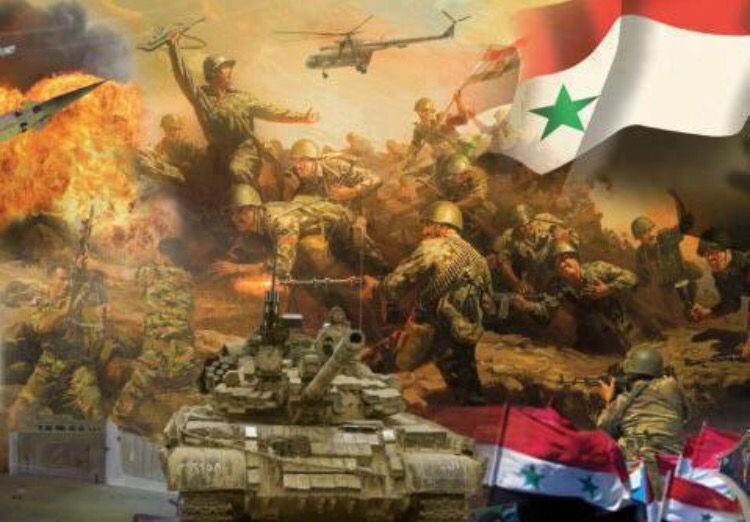
The situation in Syria cannot be understood through the lens of a single event. Instead, it reflects a complex interplay of factors, motivations, and the interests of various states—some of which coordinate directly, while others act independently, relying on a geopolitical context that already favours their aims. The recent developments, including the occupation of the Idlib countryside, the city of Aleppo and its rural areas, and the advance of attacking forces—ideologically driven and adopting a more open approach towards local populations—towards the city of Hama, may not be aimed at toppling the Syrian state for the moment. The Syrian government has committed significant resources in and around Hama to halt this offensive. However, the broader objective appears to be the establishment of a new contact and demarcation line, bolstering Turkey’s negotiating position by leveraging a stronger foothold.
The aim seems to be to compel all concerned parties to make significant concessions at the negotiating table, reshaping the parameters of war and peace, and altering the current state of deadlock. By doing so, the offensive seeks to influence the broader strategic equilibrium in the region.
The recent movement of armed groups in Syria could not have occurred without substantial financial backing, cultural and military training, and advanced equipment—resources far beyond the reach of these groups without the support of wealthy nations aligned with their goals.
These groups’ ability to wage war is contingent upon clear Turkish support, evidenced by Turkey’s role in providing cover for their actions. This support is apparent in Istanbul’s reception of delegations representing these groups, as well as Turkey’s invitation for them to sit at the negotiating table under the framework of the Astana Agreement, seeking a resolution in light of the evolving developments.
The shifting dynamics, however, reflect the tacit approval of the United States, which prioritises its own and Israel’s strategic interests.
In all planned wars, some strategies unfold according to meticulously prepared details, while others must adapt dynamically to the course of the attack and the opportunities it presents. If the front collapses further, it is anticipated that forces will push forward to seize advanced positions.
The occupation of Aleppo aligns with the core objectives of the offensive launched against the Syrian Arab Army, though it did not account for the unexpectedly rapid collapse of the front line. This swift and chaotic retreat evokes comparisons to the Iraqi army’s unprecedented collapse in June 2014, characterised by a disorganised and arbitrary withdrawal from Mosul to Baghdad.
The capture of Tal Rifaat and the areas of Sheikh Maqsoud and Bustan al-Basha in Aleppo—previously held by Kurdish armed forces—reveals the lack of support for these proxy forces from the US forces they protect and [help] occupy in northeastern Syria. This development underscores the emergence of a new reality dictated by the fragmentation of Syria that requires a new distribution of forces.
However, it remains difficult for Damascus to quickly adjust to this altered situation and engage in serious negotiations from a position of such comparative weakness. First, it must come to terms with the present circumstances. In response to the offensive, Damascus and its allies have rushed to establish a primary defensive line in the city of Hama and an advanced defensive line at Jabal Zain al-Abidin, located within the Hama Governorate. Additional fortifications have been set up to defend the city itself, which has a population of approximately one million.
Hama Governorate spans about 8,900 square kilometers and is strategically significant, bordering the Idlib and Aleppo countryside to the north, Raqqa and Deir ez-Zor to the east, Tartus and Latakia to the west, and Homs to the south. Its positioning makes it a critical area for both defence and control in the broader conflict.
The attacking forces do not need to advance into Hama city, as their control of Aleppo, Idlib, and the surrounding countryside is sufficient to impose a new reality on the ground. This positioning sends a clear message to all parties involved: neither side is capable of achieving a decisive victory, especially after President Bashar al-Assad refused to offer any further concessions.
Syria remains burdened by the crippling impact of international sanctions, particularly those imposed under the [US] Caesar Act of 2019, which have severely restricted the country’s economic recovery. Compounding this, Syria’s vital resources—its food, oil, and gas reserves in the northeast—are under the control of US-backed forces, while transit customs facilities and borders revenues in the northwest are dominated by Turkey-aligned factions. These factors have left the Syrian state in a weakened condition, unable to facilitate the return of millions of displaced citizens in Lebanon, Jordan and Turkey or restore any semblance of normalcy.
Moreover, the ongoing lack of trust between Turkey and its allies, and Russia-Iran and its allies, has strained previous agreements. The de-escalation zones established in Astana have been repeatedly violated, exacerbated by Turkey’s failure to fulfil commitments such as reopening the M5 international highway between Aleppo and Damascus and the M4 between Aleppo and Latakia. This breach has further undermined efforts to stabilise the region and left a fragile, fragmented status quo in place.
Today, Turkey has escalated its involvement in Syria by advancing its forces into the countrysides of Aleppo and Idlib, re-establishing its influence through loyal forces in both the city and the countryside of Aleppo. Additionally, pro-Turkish forces have pushed into the Hama countryside, nearing defensive positions close to the city itself.
The military developments in Aleppo cannot simply be dismissed as an effort to disrupt Iran’s supply of weapons to Hezbollah. Such a perspective is misguided, as Tehran has consistently supplied its ally in Lebanon with weapons throughout the Syrian war, even during moments of extreme vulnerability—such as when the Al-Nusra Front (the predecessor of HTS) reached the outskirts of Damascus in 2011. This supply chain would only be severed if the entire Syrian state, including President Assad’s regime, were to collapse, and an unfriendly Syrian president leads the country.
Simultaneously, it is worth noting that Israel and the United States take satisfaction from the possibility that the advancing forces could block the Khanaser road, a critical route for supply trucks heading to Lebanon. If this road were obstructed, it would force Iran to use longer, more vulnerable routes, potentially increasing the likelihood of ISIS attacks and Israeli strikes targeting shipments en route to Hezbollah. Such a development aligns with Israeli efforts to relatively intercept and disrupt arms transfers to its regional adversaries whenever they are detected.
Turkey’s current actions must also be viewed in light of its pressing need to address the presence of millions of displaced Syrians within its borders. These refugees have become a political liability for President Recep Tayyip Erdogan, especially as his opponents have increasingly used their presence as a point of attack. However, Erdogan cannot simply return them to Syria without providing viable alternatives, nor can Turkey concentrate them exclusively in Idlib, an area already ill-equipped to handle such large numbers due to its limited infrastructure and services.
For Ankara, maintaining control through its affiliated militias in northern Syria provides not only a geopolitical advantage but also a mechanism for managing displaced Syrians without directly disrupting Turkey’s domestic stability. The occupation of more than 7,700 square kilometers by Turkish-backed militias allows for the potential resettlement of millions of Syrians while simultaneously reinforcing Turkey’s influence in the region against Russia and Iran.
This evolving situation creates a complex dynamic where Turkish actions both align with and conflict with the interests of other key players. For instance:
- Hezbollah in Lebanon retains the capability to secure its supply routes and protect Damascus. Any disruption of these routes would threaten Hezbollah’s strategic position, a scenario that Iran and its allies cannot afford.
- Iran faces significant challenges as it navigates shifting geopolitical realities, particularly under the unpredictable policies of then-President Donald Trump. Tehran cannot afford to abandon its Syrian ally, as doing so would severely undermine its influence in both Syria and Lebanon and compromise its critical supply routes to Hezbollah. At the same time, Iran’s economic constraints pose additional limitations. With its economy under strain and far from robust, Tehran lacks the financial resources to sustain its involvement in Middle Eastern conflicts indefinitely. This precarious balance between maintaining regional influence and addressing domestic economic pressures underscores the complexity of Iran’s strategic calculations.
- Russia, on the other hand, is deeply concerned about the potential loss of its foothold in the region. The naval base in Tartus and the airbase in Hmeimim represent Russia’s only significant access to the warm waters of the Mediterranean. A retreat from these positions would severely undermine Moscow’s strategic presence in the Middle East.
Although Syria’s allies—namely Iran, Russia, and Hezbollah—are unlikely to abandon Damascus, their immediate priorities may not include reclaiming Aleppo and its countryside. Instead, their efforts will likely focus on defending critical areas such as Damascus, Homs, and Hama, while waiting for a more suitable political solution.
This shifting power dynamic may push President Bashar al-Assad toward more pragmatic engagement with Turkey. Erdogan has demonstrated that he holds significant leverage, strengthening his negotiating position and forcing Assad to consider greater openness in discussions. This newfound Turkish advantage could reshape the regional balance, compelling all parties to reconsider their strategies and the long-term trajectory of the conflict.
This conflict is fundamentally different from its earlier phases:
- It is not comparable to 2011, when the revolution ignited with its first sparks, driven by widespread unrest and aspirations for political change.
- Nor is it similar to 2015, prior to Russia’s intervention, when Iran and its allies focused on safeguarding key cities and were willing to relinquish control of the countryside to maintain their strategic priorities.
- It also differs from 2019, when lines of contact were established between the warring parties. This period was neither a truce nor an outright war but rather a state of uneasy equilibrium dictated by the military realities on the ground—a status quo enforced by force rather than diplomacy.
Today’s conflict reflects an evolution of the Syrian war, shaped by shifting alliances, new frontlines, and altered objectives that go beyond the dynamics of previous stages.
The occupation of Aleppo might have been avoided had President Bashar al-Assad engaged in serious and direct negotiations with his Turkish counterpart. In this context, competing interests have converged and may allow Damascus’ allies to propose a new reality to Assad. This reality avoids a return to outright war, the associated loss of thousands of lives on both sides, and the massive financial and logistical demands of extended conflict. However, no substantive negotiations are likely to begin until the two sides clash militarily on the ground and establish new lines of contact, which will dictate the parameters of talks. These lines will determine the balance of power, influence the shape of negotiations, and define the mutual conditions set by each party.
This suggests that the echoes of war have yet to fade in the Levant, even as an initial step has been taken to convene a new meeting of Astana participants in Doha, Qatar, a key player in the region, this week. Rather than moving towards resolution, the region appears destined for prolonged division, barring any unexpected developments or significant breakthroughs. The prevailing trajectory indicates that a lasting settlement remains a distant prospect, as military confrontations continue to mould the political and territorial landscape.
Related Posts
-
Dr. Fadi Lama: ‘How sovereign states Iran, Russia, China BROKE THE BACK of western power’
October 8, 2026 -
Mohsen Rezaei, Secretary of the Supreme National Security Council, Iran
September 16, 2026 -
Iran, Israel, Islam, Judaism – a Chinese history
March 8, 2026 -

Return of the British East India Company
January 12, 2026 -

Outlaw US Empire’s Hegemonic Spasms
January 9, 2026 -

Oily dreams flowing into a Venezuelan dark pit
January 8, 2026 -
Venezuela: Imperial Revenge
January 6, 2026 -
The Zionist grip on Russia
December 22, 2025 -
FM Lavrov answers media questions at a joint news conference following talks with FM Abbas Araghchi, Iran
December 18, 2025 -
The end of ‘Russia lost Syria’ and ‘deceived us all’ …
December 18, 2025
If Russia+Syria+Iran don’t reclaim Aleppo, it’d be a severe blow to the Resistance. 1.It shows that the Resistance isn’t as powerful as they previously claimed 2. Resistance supporters in the region will have a decisive blow to their morale. 3. Russia’s prestige as a reliable ally that could provide military… Read more »
Turkey’s (real, unofficial) economy should be recovering nicely these days. Like Zion, funding is not an issue anymore; both have the full power of the supranational Anglo-Zionist printing press behind them. In fact, this was among the calculations, and the justifications, for their betrayal. Like Egypt, and most of Africa… Read more »