

Iran, a Sovereign Civilizational State versus “Persia” the Westerners’ Notion of Iran
By Amarynth, in conversation with Iranians
Speaking on Al Mayadeen’s In Flux, Zhang Weiwei, Professor of International Relations at Fudan University and Director of the China Institute, described China as a “civilization state.”
He said China was formed by the unification of hundreds of states and has a long history of political unity, dating back to 221 BC. For most of the past 2,000 years, he added, China has remained a unified country.
Zhang argued that Western perceptions of China are largely shaped by a political misunderstanding rooted in the Western theory of the nation-state.
“China is a civilizational state”, Zhang said, contrasting the Western emphasis on elections with China’s system of “selection plus election.”
Don’t confuse the description of a civilizational state with the word civilization and from this essay, you will see why we call China, Russia and Iran civiliational states. Let’s just immediately drop the romance.
Iran is not ‘Persia’.
“Persia” is the English translation of Persis, the ancient Greek word for “Pars” – a province in Iran. “Pars” is the name of the ancient native homeland of the heartland of the Achaemenid and Sasanian Empires… (Alexander the Great, after defeating the Achaemenid Empire, rendered the name “Pars” into Greek: “Persis“. In English that was translated into “Persia”.)
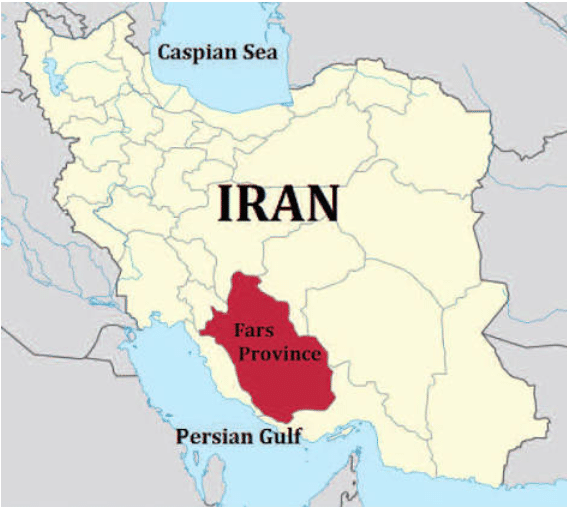
“Pars” was a historical region in south-western Iran, roughly corresponding with today is known as “Fârs”, which is quite a small province in southern central Iran – as you can see from the red section on the featured map.
“Persian” is the English word for the language Fârsi… and it is also an adjective for the culture related to this language; moreover it is the adjective for the people of ancient Persia, as understood by Alexander the Great.
From WIKIPEDIA: In the Western world, “Persian” was largely understood as a demonym for all Iranians rather than as an ethnonym for the Persian people, but this understanding shifted in the 20th century.
The Persians are descended from ancient Iranian peoples who migrated to Persis (also called “Persia proper” and corresponding with Iran’s Fars Province) by the 9th century BC. Historically, Iran was commonly referred to as “Persia” in the Western world. Likewise, the modern-day ethnonym “Persian” was typically used as a demonym for all Iranian nationals, regardless of whether or not they were ethnic Persians. This terminology prevailed until 1935, when, the Shah of Iran, Reza Shah Pahlavi officially requested that foreign delegates begin using the endonym “Iran” in formal correspondence. Subsequently, “Iran” and “Iranian” were standardised as the terms referring to the country and its citizens, respectively.
Additionally, “Persia” is NOT “Parthia”, a historical region located in northeastern Greater Iran.
The name “IRAN” has existed for millennia. It traces back to ancient roots like to the Avestan Airyanem Vaejah, meaning the spiritual homeland of the Aryan peoples – ca. 1500 BC. In ca. 224 AD, the land mass was known as Ērān … Then it morphed into IRAN.
From WIKIPEDIA: “The name “Iran” is the New Persian continuation of the old genitive plural aryānām (Proto-Iranian, meaning “of the Aryans”), first attested in the Avesta as airyānąm (the text of which is composed in Avestan, an old Iranian language spoken in northeastern Greater Iran, or in what are now Afghanistan, Uzbekistan, Turkmenistan and Tajikistan).”
Anyone who refers to Iran as ‘Persia’ or to Iranians as ‘Persians’ must know that this is a designation readily used by colonialists and orientalists to make “Iran” sound exotic and perhaps even cute (Fars is in fact a small province). It shows no regard for the nation of Iran and the historical land of Greater Iran… and it especially shows no regard for all the Iranians of all the other provinces.
(Some Westoxified Iranians may parrot the designation “Persia” because, as far as they’re concerned, “whatever the West says must be right”.)
Many Iranians have last names of indicating their places of birth – often an “i” is added at the end to designate connection. Examples: Marandi is from Marand (a city in the Central District of Marand County, East Azerbaijan province); Khomeini was from Khomeyn (Khomeyn is a city in the Central District of Khomeyn County, Markazi province); Khamenei was/is from Khameneh (a town in East Azerbaijan province in northwestern Iran); Bagheri Kani is from the village of Kan in Tehran County; Larijani was from Larijan (a district in the Mazandaran province)… Mohsen Rezaei (pronounced Moh-sen Rezâ-i !) was born in the Masjed Soleyman county of the Khuzestan province, in which there is the village of Rezâabad (incidentally, Rezaei was born to a religious Lur family belonging to the Bakhtiari tribe).
AND… NONE of the above people are “Persians”!!
Reality is not always exotic, cool and groovy. As Brian Berletic says, we have to stay with facts. Iran is a nation of many different peoples of various ethnic origins! And it has been that way ever since Cyrus the Great. Calling Iran “Persia”, especially in this day and age, is almost arguing for separatism or the balkanization of Iran.
A contribution from a primal Iranian which I preserved exactly as written.
The two great dynasties, the Achaemenids (705 – 330 BC) and the Sassanids (224 – 651 AD), originated in the regions of southern Iran, roughly corresponding to the present-day province of Fars. Although the Achaemenids and Sassanids referred to themselves as Iranians and to their empire as Iran/Iranzamin/Iranshahr. Greek and, later, Roman historians and chroniclers were also aware of this and referred to the empire as “Ariana” (Herodotus, Strabo and others) as well as “Persia”. Perhaps this was because the people with whom they (the Greek elites) had direct dealings were the elites of the aforementioned dynasties, who were the “Persians” (people from the region of Pars). It was easier for the Greeks, as the term “Persis”/”Persia” allowed them to visualise something (real) due to its geographical proximity.
Much later, the Europeans adopted this name, and with the advent of colonialism, the terms “Persia” and “Persian” were imbued with a colonial and “orientalist” connotation. The colonialists interpreted it further after they discovered, in this rebranding, the potential for their favourite mental pastime, namely the principle of “divide and rule”. As the words “Persia” and “Persian” refer to the province of Fârs, it is possible to drive a wedge between the inhabitants of Fârs and other people in the country, dividing them and, if necessary, pitting them against one another.
Afghanistan is the successful outcome of this method.
For the Arabs, the situation was exactly the same as for the Greeks, as they were primarily dealing with the Sassanids (i.e. Persians). They simply changed the first syllable: “Pârs” and “Pârsi” became “Fârs” and “Fârsi”, which reverted to “Iran” following the conquest and Islamisation of large parts of Iran.
On 27 December 1934, the Iranian Parliament decided that the natural and official name of the country is Iran; consequently, the country is to be referred to internationally as “Iran” and its inhabitants as “Irâni” (Iranians).
It is interesting to note that, according to tradition, the Iranian Parliament only ratified this law after the Iranian state had asked the Afghan state whether the Afghans had any objections, as they could (and were/are entitled to) lay claim to the name “Iran” for themselves on historical and cultural grounds. However, the Afghan King Mohammad Zahir Shah gave his consent and waived Afghanistan’s claim. For the chauvinistic ruling Pashtuns (Afghans), this was a welcome opportunity to definitively separate themselves, their state and thus millions of “Iranians” from Iran, and to sever their historical ties, which had persisted until then. This is how colonialism works.
As we are still living in the age of colonialism, or at the very least in an age characterised by colonialist thinking and worldviews, many people around the world still use colonialist terminology, names and designations. Anti-colonialists, let’s call Iran by its name, which is Iran.
Related Posts
-
Mohsen Rezaei, Secretary of the Supreme National Security Council, Iran
September 16, 2026 -
Iran, Israel, Islam, Judaism – a Chinese history
March 8, 2026 -

Outlaw US Empire’s Hegemonic Spasms
January 9, 2026 -

Oily dreams flowing into a Venezuelan dark pit
January 8, 2026 -
FM Lavrov answers media questions at a joint news conference following talks with FM Abbas Araghchi, Iran
December 18, 2025 -
The Imaginary Peace President
November 28, 2025 -
It took 40 years to replace Al Qaeda with Al Qaeda
November 12, 2025 -

On the Silk Road to Isfahan
October 11, 2025 -
Apocalypse in Gulf is now or never
October 8, 2025 -
A Capsule of Round One Heroics
October 6, 2025
Thank you, dear Amarynth, for making this clear to others! We are so fed up with hearing the name “Persia” and “Persian” tossed about like some exotic spice!