

Mohsen Rezaei, Secretary of the Supreme National Security Council, Iran
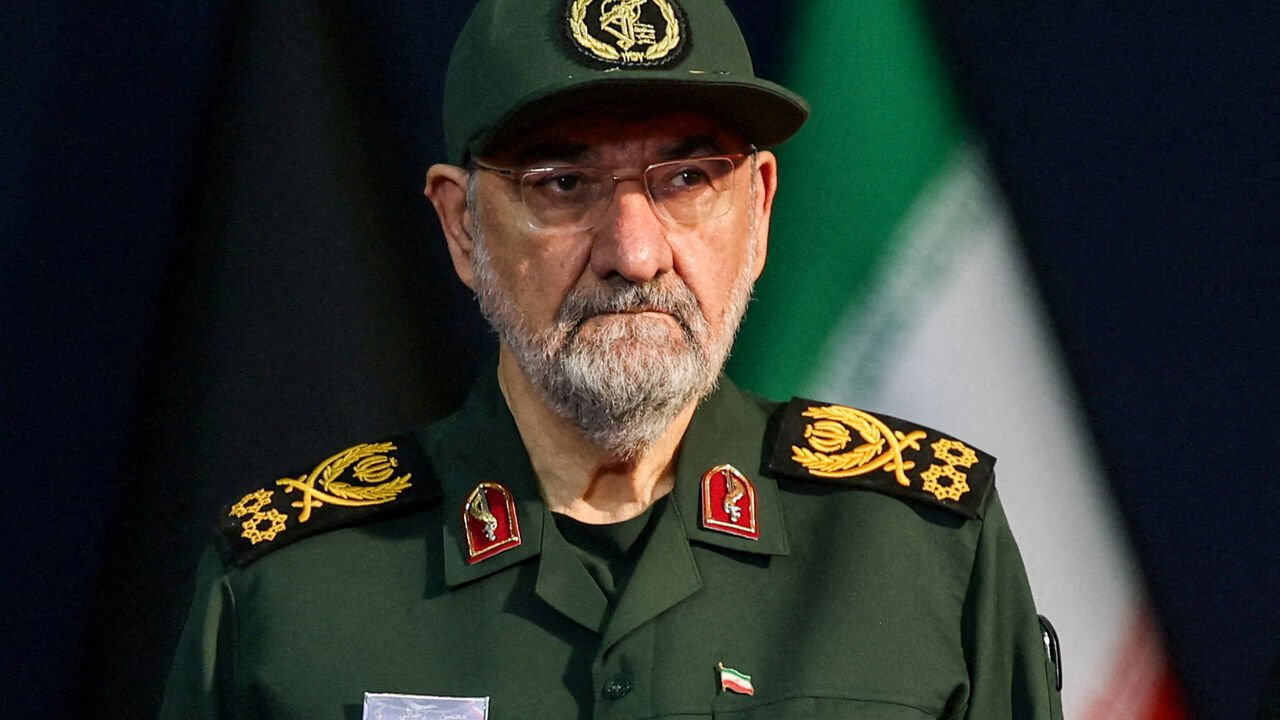
Mohsen Rezaei: ‘We have the capability to sink an American aircraft carrier, Hezbollah will decimate Israel’
Full interview with Mohsen Rezaei, Secretary of the Supreme National Security Council, military advisor to the Supreme Leader and former Commander-in-Chief of the Revolutionary Guards, with Iranian national television, on 15 Shahrivar 1405 (September 6, 2026), on the latest regional developments, the situation in the Strait of Hormuz, and the adoption of new strategies to counter possible moves.
Source: khabarpu.com
Translation: resistanceaxis.substack.com
- Iran imposes new restrictions in the Strait of Hormuz
- The threat to sink American aircraft carriers
- The conditions for negotiation with the United States
- Hezbollah, Iran’s strategic ally, will decimate Israel
- Netanyahu’s threats and the unity of the Iranian people
- Economic jihad can make Iran a major power
INTERVIEWER: In this program, we will speak with Dr. Mohsen Rezaei, honorable Secretary of the Supreme National Security Council, where he represents the venerated Leader of the Revolution. We will discuss his role within the Supreme National Security Council, the situation on the ground, the field of diplomacy, the situation in the Strait of Hormuz, and of course forecasts on upcoming events. Doctor, I greet you.
REZAEI: Thank you very much for once again providing me this opportunity. I am at your service to conduct this interview. Be well.
Iran imposes new restrictions in the Strait of Hormuz
INTERVIEWER: Thank you very much. So that we may conduct this interview in a very concrete and rapid manner, if you agree, let us begin with the subject of the Strait of Hormuz, to find out what the current situation is. You see, the Americans and the American president’s advisors claim, in numerous interviews, that the strait is open and that passage through it is proceeding normally. Is this the case?
REZAEI: In the name of God, the All-Merciful, the Most Merciful. You see, after Mr. Trump withdrew from the Islamabad memorandum of understanding, we made, broadly speaking, an assessment of about a year of upheavals and confroislamadntations, and we reached the conclusion that we had to adopt new strategies, new approaches, both in terms of war, of negotiations, and of economic warfare. Consequently, America’s withdrawal from the Islamabad memorandum of understanding placed us on an entirely new path.
The first change that has taken place concerns the question of the Strait of Hormuz. The Strait of Hormuz is completely closed. It is a great lie to say otherwise. Why? Because before the closure of the Strait of Hormuz, before these recent wars, more than a hundred ships a day transited through here. More than a hundred million tons of goods left this region every day. Billions of dollars transited through the Strait of Hormuz.
Well, today the Strait of Hormuz sees only about 7 to 8 ships transit per day, most of which carry medical products and basic necessities that we ourselves import. Because, as you know, this naval blockade that the Americans have put in place does not have the right to interfere with the entry of basic necessities and medical products.
Yes, sometimes the Americans come through sea passages connected to the coast of Oman. There is a passage there, there is a corridor. They have enlisted some of their intermediaries. They spend considerable sums. They try to turn off all these [geolocation] devices at night. They get 5 or 6 ships through. Generally, those get intercepted. Of course, we have not yet decided to strike them, because they are tankers, carrying petroleum materials. And if the entire Strait of Hormuz and the Persian Gulf were to become polluted, that would create a problem for ourselves. But none of them leaves unscathed. They all end up suffering damage. Damage is inflicted on them. But that does not mean that the Strait of Hormuz is open.
The hundreds of ships, the millions of tons of goods, where are they? First, we ourselves, on those 7 to 8—or 5, 6 ships—that belong to us, we import basic necessities. We import medical products. So this is a great lie.
We are in the process of changing the situation. So, from now on, in the days and weeks to come, God willing, we will announce an expanded no-go zone outside the Strait of Hormuz, which will begin from the line of the American naval blockade, up to this same area of the Strait of Hormuz, and from there, it will extend into the Persian Gulf.
What will this zone be? We will declare this zone a no-go zone. That is to say, any ship that enters this zone with the intention of transiting the Strait of Hormuz, and that is detected, we will place on the sanctions list. Now, what does “sanctions list” mean? We have, across the entire world, a single point where we can impose sanctions on many countries, and that is precisely this area of the Persian Gulf.
That is to say, if we now observe that ships, whether on the western side of the Strait of Hormuz, or on the eastern side of the strait, are moving, without having yet entered the Strait of Hormuz, but preparing to come and stop somewhere before transiting, we will order it to stop where it is. If it violates this instruction, we have the name of the ship, we have the owner of the ship, the one who chartered the ship—we put that on the sanctions list, we announce it to them, they will have insurance problems, their insurance costs will rise enormously, and moreover they will know that if they transit through here again, or if they come back here, they will fall into our hands. Many of these ships—about 80-90% of these ships—do not make just a single passage and then leave for good; generally, when they enter or when they exit, they generally come back, because a huge portion of world trade, particularly of oil and gas, is located here. Consequently, the Strait of Hormuz will become, in this region, a checkpoint for ships sanctioned by Iran.
INTERVIEWER: Sanctioned—does this mean that even with a full (American) escort, the ship will no longer have the possibility of moving afterward?
REZAEI: If they do as they please, well, why not? It may be, for example, that they come to give explanations or put forward arguments; it may be, for example, that out of 10-15 ships, they exclude some of them, but 90% will remain on the list. So, what is the difference compared to the current situation? Currently too, if a ship says it wants to transit, what is the difference with being on the sanctions list? That is to say, outside the perimeter of the Strait of Hormuz, from the line of the American blockade, up to the place where they go to fetch the merchandise to come and transit. Thus, we are extending this domain and this field, really: in fact, we are creating a new zone, complementary to the Strait of Hormuz, where it may be that we will not attack, that we will not fire a missile, but we will place any ship found there without authorization on the sanctions list. We say “sanctions list,” we put it on the sanctions list. “Sanctions list” means that we are the sole point where we can really and effectively sanction many countries, and that is there, in the Strait of Hormuz; consequently, any violation, any act that we consider criminal, we can put on our own sanctions list, and if one day they want to transit through the Strait of Hormuz, we will seize them here. Here we can act, why would we not do so? Compared to the past, we are making changes, both from the standpoint of toughening—we are strengthening our measures—and from the standpoint of creating a no-go, sanctioned zone outside the Strait of Hormuz, to the west of the region.
Many of those who work in logistics and maritime transport say that the effect of these measures is greater than that of Iranian missiles, and that they have observed and noted that Iran, without even firing a missile, simply by putting a ship or a company on its own sanctions list, prevents those who might one day want to transit the Strait of Hormuz from being able to do so, or else we must add conditions for them. This is the new prohibition that we are in the process of adding to the Strait of Hormuz, and it will have a duration.
INTERVIEWER: This no-go zone—does this mean it is in place until a certain point in time?
REZAEI: Yes, this no-go zone will last as long as the American naval blockade lasts, as well as the pressures or the failures that the Americans commit. That is the first change. So, regarding the Strait of Hormuz, contrary to what Trump says—that it is open—it is completely closed; and on the other hand, we are seeking to place heavier pressure on America, so that it recognizes the right of the Iranian people. That is the first change I mentioned: since America withdrew from the Islamabad memorandum of understanding, we have been in the process of entirely modifying our behavior. The first change, we have initiated it in the Strait of Hormuz: this week, our pressure has considerably increased against those who might want to transgress our rules in the Strait of Hormuz; and our project we are currently developing, is to define the traffic system in the Persian Gulf and the Sea of Oman within the new no-go zone.
INTERVIEWER: And because of all the events that might occur, could a famine occur as some claim?
REZAEI: Well, that is a great lie. Why? Because our government has been thinking about this for a long time already, and we currently have sufficient reserves of medical products and basic necessities. Second, they say, for example, that Iran cannot sell its oil: how could Iran not be able to sell its oil? We, in this same period when the blockade was lifted during the negotiations, from the very first week, we sold eighty million barrels of oil; every day we sell a million, a million and a half barrels, as if Iranian oil production and trade were at their usual level. Did we sell more than a million barrels a day before? Does the money reach us? The money reaches us, we have no problem on that front. So, what they say—that Iranian oil would be cut off—I don’t know where they get what they say, that does not exist. We, throughout this entire period, within the space of barely a week, from the very start of the signed agreement, we were producing eighty million barrels of oil per week; we could not not produce them; we had bought ships, we had stored the oil in them. Since the blockade was lifted, these ships have gone out. Where are they? They are at the point of sale. This is a matter of debate: if the oil were being sold and the money were also reaching us, that should adjust the price of the currency and the dollar somewhat within the country—exchange rate fluctuations should not occur; I consider that a large part of this affair is part of the psychological warfare that Mr. Trump has set up. I am explaining this now: so, our reserves of goods are in place, and so is the oil, which we continue to sell as planned; we are experiencing no incident in this regard.
The threat to sink American aircraft carriers
We are in the process of changing the way we break the blockade, and this, of course, is also linked to the change in our behavior when it comes to war. This example I want to give also relates to this: with the breaking of the blockade, we were able, for the first time since the twelve-day war until now—thirty-eight hours ago—to test our first anti-carrier missile above an American aircraft carrier. A genuine hell broke loose.
INTERVIEWER: A ballistic missile?
REZAEI: A special missile. Now the aircraft carriers have fled. The incident is of such magnitude that Central Command (CENTCOM) was unable to deny it: it acknowledged this fact. And they reacted savagely: they came and attacked two of our ships, one of which was empty and the other carrying oil; they came to attack them. We announced that we would retaliate: see, this is our power; so, it would be better for you to pull yourself together, Mr. Trump, and come and grant the rights of our people. Because, Mr. Trump, we know that thousands of Americans are aboard an aircraft carrier; for them to believe our threat, we carried out this launch. So, what does this mean? It means that the naval blockade is vulnerable. This first test that we carried out shows both that our warfare is transforming, and also shows that we can no longer tolerate the blockade.
On the other hand, another change that has taken place over time is that both our government and our merchants are now seriously mobilized to ask ourselves: why have we made Iranian trade dependent solely on the sea? Around Iran, there are fifteen neighboring countries: that is to say, Iran is among the exceptional countries in the world that have the most neighbors and the most connections to the east, west, north, south, etc. For this reason, corridors, roads, are forming rapidly, so that we can broadly expand our exports through routes other than the south, and advance precisely in this direction. So, on the question of the economic blockade too, we are moving our affairs forward, and in the days and weeks to come, our position will certainly be better, God willing.
The conditions for negotiation with the United States
INTERVIEWER: Your Excellency has always emphasized the necessary changes that must occur in the field of diplomacy. How is our situation in diplomacy? Is diplomacy currently at a standstill?
REZAEI: We have also changed diplomacy. The great problem we had in the negotiations over the Islamabad memorandum of understanding was the guarantee. We had placed our trust in the intermediaries for Iran, but in practice, it turned out that they could not provide a guarantee: that is to say, our trust toward our friends in Pakistan, or in Qatar, or in Oman; well, indeed, those came as intermediaries, because one of the functions of a mediator is that, if someone breaches the agreement, they are stopped. Now, Mr. Trump was repeatedly violating the agreement, but no one came to stop him. Then, he withdrew from the memorandum of understanding. There was even a dispute-resolution committee: if Trump had a complaint, he was to refer it to the Prime Minister of Pakistan and the Emir of Qatar, because these two people chaired the dispute-resolution committee. It was therefore clear that we had a problem in diplomacy: the guarantee did not exist, not even at a minimum level. We are now pursuing diplomacy while having a guarantee: that is to say, first, we have set a condition according to which the Americans must prove to us that they can be trusted; as long as this first condition is not met, we do not enter into the second phase. So, one of the guarantees is imposing the establishment of trust.
INTERVIEWER: Now, concretely, regarding the establishment of trust, do we really have the right not to trust America? Why do we have this right?
REZAEI: Because, ever since the Americans came to replace the British in Iran’s foreign policy—that is to say, after the [1953] coups against Mr. Mossadegh and the oil nationalization movement, which they destroyed—at that moment, the Americans came to settle into Iran’s foreign policy. From that moment until today, the Americans have never honored their commitments; they have always been against our people. Even the Shah, who had taken refuge in America under pressure from the Revolution, they forced him to leave their country [for Egypt]; if that Shah had returned to the United States, you would have seen, two or three months later, what fate they would have reserved for him, even though he was their own creature. Why? Because they have a policy, with regard to Iran and the Iranian people, that wants Iran and the Iranian people to be entirely in their hands, and this is a kind of servitude: whatever they say, nothing else should be done. Nothing else but that: this is what they have always wanted. After the Revolution, they became even worse. After the Revolution, they carried out a coup, they waged a war against us [via Saddam Hussein]. We have the right to distrust America. We have negotiated, we have diplomacy, but we have the right to conduct our own diplomacy.
Now, the Americans themselves also say that Iran cannot be trusted. But they are lying. We are, in terms of trustworthiness in the world, among the very first. Why? Because up to now we have attacked no country; no other country’s political border has been called into question by us; we have honored all our international commitments. Who withdrew from the JCPOA [Iran’s nuclear deal]? America withdrew. Who broke the Islamabad memorandum of understanding, a mere document that they themselves had signed? So why do the Americans say they don’t trust Iran? Because what they mean by “trust” is making Iran capitulate: they call a submissive Iran “trustworthy.” They want a servant Iran. They equate trust with servility, that is to say, if Iran serves them as a servant, they will say that it is a trustworthy country. What they actually want is for every material, political, and geopolitical objective they pursue to be realized in Iran, without anyone opposing it; if there is opposition, they say that this country is not trustworthy. Given this track record and this experience we have had with the Americans, are we really optimistic that the Americans will take confidence-building measures? No. Therefore, as long as they have not taken confidence-building measures, we will not enter into the following steps. One of the first matters we are changing in diplomacy is this: let them begin and act by taking concrete confidence-building measures.
INTERVIEWER: Is this the same precondition that existed before, or not?
REZAEI: There are four or five preconditions; it may be that two of them have changed, that is to say, it may be that certain points have been added, but my model, what I want to say, is that the debate centers on this: trust. The question of trust has entered our diplomacy. The second topic is the guarantee. Now, if we have extended trust, we again need a guarantee. This guarantee is, first, the Strait of Hormuz: if we reopen the Strait of Hormuz and they start violating the agreement again, well, we will close it again. We only commit to keeping the Strait of Hormuz open if they do not carry out sabotage, do not threaten us, do not attack Iran. Consequently, the Strait of Hormuz itself now remains more seriously under our management. It is for this reason that we came, in order to concretely fix this guarantee, to sit down with Oman, over two or three months of extended meetings with our Omani brothers. There was a lot of back and forth, but in the end we finalized the agreement. We have now defined, on our own waters and on the shared border waters with Oman, a corridor for entering and exiting the Persian Gulf, and our management of this entry and exit is now in place, whether for entry or exit; of course, the Omanis are also involved for the exit from the strait, but we are involved for both entry and exit. The map for this has now been determined, it has been agreed upon; all that remains is to sign it these days.
Consequently, the days to come will be the days when this new international corridor, in which Iran has a management role, will be put in place. This will be a guarantee. Now, with these guarantees, diplomacy will genuinely resume in the days and weeks to come; so diplomacy will resume as well. So much for the change in diplomacy.
Now, the third topic: the change in warfare. We have also changed the way we wage war. And our first change manifested itself in this recent American attack, where Mr. Trump came out to announce: “I will wage a ten-day war, very hard and very heavy, against Iran.” Well, why did this ten-day war end in a single day? Why did it end in a single day? He himself had announced the war and said: “I will launch the heaviest attacks.”
The reason is that he did not know that we had identified certain targets, but that we were not striking them. He thought we had no knowledge of them. That is why we struck, for the first time, two or three bases where American officers were located; we fired precisely, exactly. Moreover, one of them had no air defense. We struck very hard at the base in question, the barracks of the American Marines in Jordan, known as Camp Titan. And then Erbil, an American base in Erbil that they believed was secret. There too, we struck firmly. That is why Mr. Trump’s ten-day war became a one-day war. That was the first test of this new turn.
On the ground level, we also came to test this anti-carrier missile, right above an aircraft carrier, exactly above it. Those aboard, terrified, fled. So you see: we have also changed on the level of the blockade, and this will continue. That is to say, our changes will continue. We have changed both in diplomacy and in warfare. Here is why.
The reason is that the Americans, contrary to the commitment and the signature they had given—according to which the war would end, that America would recognize Iran’s sovereignty, and that it would in no way cooperate with the enemies of the Revolution, etc., that was the first condition they had signed—never stopped violating their commitments. When this happened for the umpteenth time, we have now changed our approach in this regard. It is not that we do not want to have diplomacy. Are we warmongers? It is America that is warmongering. We seek the end of wars, not only in Iran, but throughout the entire region. We say: why should there be war in Lebanon? Why should there be war in Gaza? Why should Syria be attacked? Why should Iraq be threatened? Why other countries? We are a single family, called Western Asia [the Middle East]; any country that is threatened brings the entire regional trade into fluctuation. Any country that suffers aggression sees insecurity spread throughout the entire region. Consequently, it is the other camp that is warmongering. It is for this reason that we have planned both on the level of diplomacy, on the level of breaking the blockade, and on the level of war. Our government is mobilized. Our ministers are mobilized. Our armed forces are mobilized. And our beloved people are in the streets, in the squares. Consequently, we will continue on this path and we will keep moving forward.
INTERVIEWER: With these changes that Your Excellency has mentioned, do you think one can predict a reaction from Trump, from the Americans, toward our country?
REZAEI: You see, they had already planned this. That is to say, after withdrawing from the Islamabad memorandum, they had already planned what would come next. First, they came to wage a 17-day war during the month of Muharram, which they began at the same time as the funeral of the venerated Leader of the Revolution [Ali Khamenei]. That lasted 17 days. We responded; they came back to wage a ten-day war, but we nipped it in the bud, the ten-day war was nipped in the bud. Now they are coming back, with, this time, the advice of Netanyahu, who had gone to Washington to speak with Trump, suggesting resorting once again to unrest, demonstrations, etc. in Iran, and with the vast propaganda they are currently conducting, claiming for example that Iran no longer has resources, that Iran is subject to an economic blockade, etc. All of this is because they saw that they had failed in the war, that they had failed in the naval blockade, that they had failed at the international level, even though they managed to get resolutions against Iran adopted at the UN Security Council so that other countries would join them in the war against Iran, but they too failed. Consequently, they are now seeking to concoct a combination that might possibly reproduce coups similar to those of 19 Dey [the failed “color revolution” in early January 2026], whereas those events of 19 Dey had no other support than those who triggered the twelve-day war, while we have the support of the people, and we were victorious in the forty-day war; they want to carry out other coup attempts in Iran, but this attempt too will be in vain, this attempt too will lead to nothing but a desperate, doomed-to-fail effort. Of course, raising our people’s awareness is very important in this regard: accepting the economic pressures due to inflation, etc. Our people’s government must, God willing, control the situation so that no pretext falls into the hands of the Americans. But they, they came, with this psychological warfare propaganda, to try to create an internal capacity, so that an attack could occur from within against the regime, in the form of a coup or otherwise, while also attacking it head-on; but, thanks be to God, we will remain calm in the face of both these threats, God willing.
Hezbollah, Iran’s strategic ally, will decimate Israel
Another topic related to Lebanon, which was also among the priorities of the Islamic Republic of Iran in the Islamabad memorandum of understanding: the events currently unfolding in the heights of Ali Taher (southern Lebanon), where the situation appears to have stabilized between the Zionist regime and Hezbollah. Now, after this consolidation of Iranian strategy founded on unity and firmness—and after the strike that the Islamic Republic of Iran carried out, for the first time, against Israel in response to the Zionist regime’s aggression against Hezbollah—it seems that this same regime is now seeking to disrupt this strategy of unity between Hezbollah and the Islamic Republic of Iran.
INTERVIEWER: Will Iran let the Zionist regime do this? Will we have a reaction to this action?
REZAEI: First, in all the wars of the world, it is an accepted rule that, in no war, does victory always follow victory, nor defeat follow defeat. Wars have ups and downs. Look at the wars of the early days of Islam. The Battle of Badr is a great victory, but the Battle of Uhud is a bitter defeat; the Prophet of God, who was under divine protection, suffered a defeat, but he triumphs again. Then, at Tabuk [Mohsen Rezaei is referring to the first expedition against the Byzantines, the Battle of Mu’tah], they suffer defeat again.
But across the entirety of these battles, what happened? Islam ended up dominating the whole of Asia [the entire Middle East]. Let us look at these past twenty years. We must not limit ourselves to looking only at the current situation, whereas during these past twenty years, the upper hand has always been Hezbollah’s, and Israel has suffered heavy defeats. In 1982, Israel went to Beirut and even took it. There was no Hezbollah at the time. Hezbollah was only born after the fall of Beirut. It formed itself. That is to say, pious young men of Hezbollah rose up, and Iran also provided them with training and support. This is how Hezbollah was born. And then, in the year 2000, they liberated the whole of Lebanon. Who liberated it? Hezbollah. Hezbollah, that is to say Lebanon, was the first country to succeed in defeating Israel. Neither Egypt managed it, nor Jordan, nor Syria. The first Arab country that succeeded in taking back all of its lands from Israel is Lebanon. This is recorded in history.
And then, likewise. Then came another blow: for example the 33-day war, when Israel attacked again. In the 33-day war, Israel wanted once again to reach Beirut. Once again, Hezbollah violently repelled Israel. Very well. Now, Israel, for reasons we will explain later, managed to seize a location. This does not mean that Hezbollah is finished, or that Lebanon is finished. War has ups and downs. In fact, the only war where, up to now, of course, where one side has always been victorious and one side always defeated, is our fight against the Americans. In the twelve-day war, in the forty-day war, in the seventeen-day war, we were victorious. America was defeated. But the wars of the world do not unfold in such a way that, in all operations or at all stages, it is always victory or always defeat.
I am certain that Lebanon will once again raise its head. And this time, it will no longer act as it did in the past. This time, that political nobility they showed toward Tel Aviv and Haifa, located 30-40 kilometers away—they could have, had they fired hundreds of missiles, left nothing of Haifa and Tel Aviv. This time, this great anger that has formed in the hearts of the Lebanese, if this anger is unleashed, will leave nothing left of Israel. Consequently, this question of Lebanon, in my view, falls within the vicissitudes of war. Wars have ups and downs. But Lebanon is not even, from a geographic standpoint, comparable to Gaza. Because Lebanon has strategic depth, it is open to the world on three sides. The people of Gaza, may God protect them, have been and are encircled on all four sides. Thus, from now on, reaching Gaza is difficult, but for nearly three years, they have been resisting. There is not even a corridor for access and exit in Gaza. But the Lebanese can go from north to south, they can go from west to east, and they can move from east to west. Lebanon is not encircled. That is why Lebanon will remain in place, and, God willing, they will find their own organization and inflict harsh and painful blows on Israel. God willing.
Netanyahu’s threats and the unity of the Iranian people
INTERVIEWER: Recently, Netanyahu raised a point. You see, after the forty-day war, which was more an exchange of fire and clashes between Iran and the American bases in the countries of the region, he declared that Iran, during this period, targeted the Arab countries, and that because of his awareness of the military capabilities of the Zionist regime, he fears that it might launch an attack against us. Do you have a response for the prime minister of the Zionist regime?
REZAEI: First, I would say this: the Americans carried out an attack on the wedding ceremony of our sisters and brothers; they turned that wedding celebration into bloodshed. We reserve the right to respond. Let the Americans know that we reserve the right to respond. Second, Israel, Netanyahu, are violently seeking to gather votes. They are starting up this electoral propaganda. “I am doing this against Iran, I am doing that.” He is seeking, by every means, to obtain, if he can, a new term as Prime Minister of Israel, following the Israeli elections. Consequently, we are paying attention. In response to what he says, our program is also in place, in its place. And in particular, regarding this interview, if you will allow me, I would like to address the latest message of the venerated Leader of the Revolution—you see, during the days of Islamic Unity (the week commemorating the birth of the Prophet), addressed to the people, in which he raised three important dualities.
INTERVIEWER: I would like Your Excellency to elaborate on this message, and to see what these important dualities are that he raised.
REZAEI: Yes. It seems to me that this is a very appropriate expression. The important dualities, that is to say the dualities that have no reality. They resemble a mirage. And some, by fabricating mirages, seek to create a rift within the Iranian people. And one of the means the Americans are envisaging today to escape their isolation is to completely break this unity and this cohesion of the people. Fragment the people. Divide the people. Well, none of those who are attached to the Revolution, attached to the Islamic Republic, nor even attached to Iran, should engage in this fabrication of dualities.
Of course, there is a reality: the nature of Iran’s political-social life inherently carries a tendency toward the fabrication of dualities. Look back since the Constitution [the Constitutional Movement of 1905-1911]. In general, there is always competition among a series of different values within society, and the enemy comes to build on these rivalries. Why did the Constitutional movement fail that day? Because of discord. Why did the oil nationalization unfold the way it did? Because of the dispute that had formed between Mr. Mossadegh and Mr. Kashani [1951-1953]? But during the Islamic Revolution, despite the fact that, throughout all these years, attempts were made time and again to shake the Revolution through discord and division, this did not happen. Why? Because something happened. A change occurred compared to the Constitution and this oil nationalization: a reference point emerged in the meantime, and all those who look to this reference point keep their differences under control. This does not degenerate into confrontation. And this reference point comes once again to bind this society together. This reference point is Velayat-e Faqih [the guardianship of the jurist], namely the role of the Supreme Leader. In the time of Imam Khomeini too, very serious disputes formed. But the Imam completely calmed this stormy sea once again. These great waves subsided, and unity was preserved. Of course, some were hurt in the process. Some withdrew. That was their own choice. In the time of the martyred Imam [Khamenei, as President of the Republic, before becoming Supreme Leader] too, it was the same. Of those four or five governments that the martyred Imam led, there was no government in which these dualities did not form. But the Constitution affair did not happen again. The oil nationalization affair did not happen again. Well, so, we have found a reference point. Unity, with this reference point, becomes unity.
But if we want to achieve unity with ourselves, achieve unity around our own objectives and our own interpretations, that is not called unity. Because, for us to truly have unity, the first condition is to look toward the Leader. We currently have this third Leader [Sayed Mojtaba Khamenei], whom we now serve. My political experience tells me this: any type of disagreement outside the framework of the Leader has never had any other result than the loss of the individuals themselves and harm done to the people and to Iran. So here is a reference point; we must adjust ourselves to this reference point.
The second reference point is this: those who speak of unity and those who speak of firmness and dignity must draw closer together. What does that mean? It means that there is a group of young revolutionaries, genuine revolutionaries. They think that dignity is being trampled on, they begin to criticize [the reformist government of Pezeshkian], and this can then turn into insult and disrespect. On the other side, instead of accepting these criticisms and not opposing these sharp reactions, those on the other side come to position themselves against them. The enemy, meanwhile, who has infiltrated all groups, has influence in all groups, each time comes to create a confrontation between these two camps. The best recipe is tolerance, that is to say, that our politicians tolerate one another. For example, why would one say, under the current circumstances, that the Strait of Hormuz is a strait of war, that the strait should not be at war? The Strait of Hormuz is now the strait of Iran’s dignity. It is the strait that forces America to accept these rights of the Iranian people. That is to say, you see, that sometimes these sharp and biting remarks create a dispute on the other side, and then those there seize upon it. One says one thing on this side, and this gives rise to instrumentalization on the other.
The people are charting their own path. The armed forces stand firm. Diplomacy is being pursued with seriousness. Are Iranian officials in favor of war? Is the President of the Republic, or the Head of the Judiciary, or the Speaker of Parliament, or the Leader of the Revolution, or the armed forces—are they in favor of war? They say: “Sir, our two-hundred-year experience of Iranian history has shown that wherever we have yielded on our rights, the enemy has advanced further.” That is to say, it also took other rights from us. Very well, from the very beginning of the Revolution, we reached this conclusion, in this direction: first, let us preserve our unity. Let us preserve our dignity. Let us march behind the Leader of the Revolution. Let us also speak our legitimate word, our legitimate claim. And of course, without power and without economic progress, we will not be able to make our legitimate claim prevail. Both power is necessary, and economic progress is also necessary.
Economic jihad can make Iran a major power
That is why I consider it necessary to recommend, once again—I said this in the previous interview—it is true, we are currently under economic sanctions. There are hostile economic pressures. But this can be an opportunity for renewal and transformation in the Iranian economy. As, for example, we are currently, within the Secretariat of the Supreme National Security Council, drafting an economic security document, with the participation of 18 large companies, each employing more than five thousand people, whom I have brought together. They are sharing their concerns with us. This economic security document will be able both to attract the capital of Iranians abroad, when they see that economic security genuinely exists, and to give greater dynamism to entrepreneurs themselves, who will see a better future; this applies, starting from this, all the way to our own ministries, which must strive to draw people toward work. For example, I gave this example at the previous meeting: we can even produce within households, as Taiwan [reference to the model of home-based cottage factories, a central phenomenon in its economic takeoff of the 1960s-80s] and Singapore do. I had heard, among the responses they had given, objections along the lines of: “How is that possible, producing in an apartment?” It’s not possible in an apartment, they said, there’s no room for that. But in Taiwan, in Singapore, in Malaysia, people, at home, produce electronic components, of computers, of televisions; every morning, a truck comes to the front of the houses, the residents hand these components over to the truck, and the truck takes them to the factories that carry out final assembly. What’s the problem? China works this way too: I gave the example of small businesses. So, we really can create great economic dynamism, both in government, in society, and among craftsmen, and thereby achieve economic progress.
I have always reflected on this: how is it that Japan and Germany—Iran too—during the Second World War, were truly destroyed? Germany was cut in two; Japan received the atomic bomb; in Iran, there was a famine: for several years, Iran was in this state. But what happened afterward? After the Second World War, Germany and Japan managed to become world economic powers. These countries, which had been destroyed to such an extent. Why? Because there existed a will there, a will that did not exist among Iranian statesmen. What was this will? This will was that Germany and Japan had attacked the world, had wanted to seize the world by cannon, tank, and airplane, and they had failed. They said to themselves, after this failure: “We will conquer the world through the economy.”
The moment has come, in Iran, for a genuine economic jihad to take place, for us to fill numerous regional markets, world markets, with Iranian products. Was this not the case in the Safavid era? In the Safavid era, the products of Isfahan, Yazd, and Tabriz were the leading brand of the European countries. Iran truly has the capacity, in response to these economic pressures, to wage a great economic jihad, and we can precisely build our economy under these difficult conditions, just as Japan and Germany managed, after all that destruction, within the span of about three decades, to become the world’s second and third economies.
We ask all our dear people to pray for the fighters and the armed forces, for your children, with their whole being and without counting the cost, are putting their lives on the line: they are defending, at this very moment, the entirety of Iranian territory, all of Iran’s dignity, all of Iran’s standing in the world. God willing, pray for them. Peace be upon you.
INTERVIEWER: Thank you very much, and I warmly thank the dear viewers who have accompanied us up to this hour in this interview. Good evening to you, and may God keep you.
Related Posts
-
Iran, Israel, Islam, Judaism – a Chinese history
March 8, 2026 -

Outlaw US Empire’s Hegemonic Spasms
January 9, 2026 -
Oily dreams flowing into a Venezuelan dark pit
January 8, 2026 -
FM Lavrov answers media questions at a joint news conference following talks with FM Abbas Araghchi, Iran
December 18, 2025 -

The Imaginary Peace President
November 28, 2025 -
It took 40 years to replace Al Qaeda with Al Qaeda
November 12, 2025 -
On the Silk Road to Isfahan
October 11, 2025 -

Apocalypse in Gulf is now or never
October 8, 2025 -
A Capsule of Round One Heroics
October 6, 2025 -
Alastair Crooke & Judge Napolitano : Israel Losing US Support Fast
September 29, 2025