

Europe’s Youth Unrest: A Crisis of Trust, Opportunity and Political Accountability
By Zamir Ahmed Awan,
Europe, long associated with democracy, social protection, individual freedoms and economic opportunity, is confronting a troubling wave of youth-led protests. Demonstrations across France, Belgium, Italy, Albania, Spain and Portugal reveal growing frustration with living costs, housing shortages, underfunded education and declining confidence in political leadership. The unrest deserves serious attention, but its causes must be examined carefully rather than reduced to a single conspiracy or political figure.
The scale of unrest
The available figures illustrate the seriousness of the situation, although reporting periods differ and comprehensive damage assessments remain incomplete.
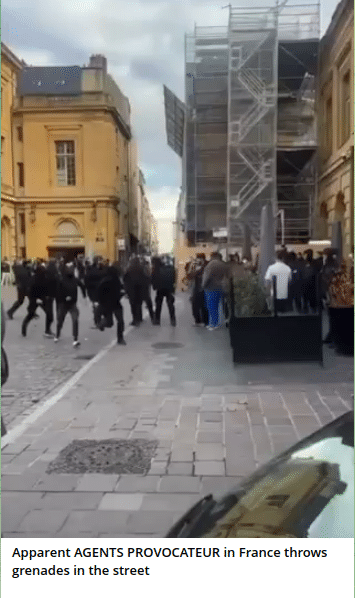
France: More than 550,000 people reportedly demonstrated on 17 October. Subsequent reporting put arrests at approximately 2,400, with more than 3,000 shops damaged. Police injuries and extensive damage to public buildings, vehicles and businesses were reported.
Belgium: Demonstrations in Brussels and other cities involved clashes with police, tear gas and water cannon. Reports cited approximately 195 arrests during the wider period of unrest; at least two police officers were injured in the 17 October events.
Italy: Protests in Milan, Turin and Bologna included clashes, injuries, vandalism and arrests. A single consolidated nationwide casualty or property-damage figure was not available in the reporting reviewed.
Albania: Anti-government protests in Tirana reportedly left 23 police officers and six civilians injured, with 35 arrests. Four ministry buildings were damaged during one violent episode.
Spain: Housing affordability and the consequences of evictions have fueled demonstrations. Available reports did not establish a comparable nationwide toll of protest-related injuries, arrests or property damage.
Portugal: Housing costs, low wages and pressure on public services have brought demonstrators into Lisbon and other cities. Reports describe major rallies and protest encampments but provide no comparable nationwide casualty or damage total.
These figures should not be added together as if they represented one simultaneous event. Nor should arrests be treated as proof of guilt.
Torture requires particular care. The reports reviewed document allegations of excessive police force, serious injuries and disputed crowd-control tactics, but do not establish a verified, Europe-wide pattern of torture connected to this latest wave. Allegations must be investigated independently, and any proven abuse must carry consequences.
Why are young Europeans losing confidence?
The first explanation is economic insecurity. Rising food, energy and housing costs have weakened purchasing power, while wages and opportunities have not kept pace for many households. Eurostat figures analysed by Euronews indicate that EU food and non-alcoholic beverage prices increased by 34% between August 2021 and August 2026.
Housing is especially important. Young people who cannot afford rent, much less buy a home, may reasonably question whether education and employment will deliver the security enjoyed by earlier generations. Teacher shortages, deteriorating school conditions and pressure on public services add to this frustration.
The second explanation is political alienation. When citizens believe that governments respond more readily to wealthy investors and established interests than to ordinary families, trust erodes. Albania illustrates this concern: protests have targeted a controversial coastal resort associated with Jared Kushner, US President Donald Trump’s son-in-law. Critics question its environmental impact and transparency, while the government presents it as an economic investment. The dispute has become a wider test of public accountability.
The third factor is the response to protest itself. Peaceful assembly is a democratic right; arson, assaults and looting are not. Governments must distinguish peaceful demonstrators from violent offenders, while ensuring that police use proportionate force. Indiscriminate repression can deepen grievances rather than resolve them.
Trump, Netanyahu and Europe’s international tensions
Donald Trump and Benjamin Netanyahu deserve scrutiny for their policies and their wider political consequences, but evidence matters.
Trump’s connection to the Albanian controversy is concrete through the business interests of his son-in-law. It does not, however, establish that Trump directed the protests or caused Europe’s broader affordability crisis.
Netanyahu’s government and its conduct of the Gaza war have generated substantial public opposition across Europe. Civil-society monitoring has documented restrictions and alleged excessive force against Palestine-solidarity demonstrations in numerous European countries. These tensions raise legitimate questions about freedom of expression, foreign policy and the consistency with which European governments uphold human rights.
Europe must listen before trust disappears
Europe is not abandoning democracy simply because people protest. Peaceful demonstrations can demonstrate that democratic freedoms remain alive. The danger arises when governments ignore legitimate grievances, police misconduct goes unpunished, or violence becomes a substitute for dialogue.
European leaders should prioritise affordable housing, better-funded education, decent employment, transparent investment decisions and independent investigations into alleged abuses. Protesters must also reject attacks on people and property.
Europe’s reputation will depend not on preventing every demonstration, but on proving that democratic institutions can listen, correct mistakes and deliver a fairer future. Young people need more than promises: they need a credible reason to believe that their societies offer them opportunity, dignity and hope.
Author:
Prof. Engr. Zamir Ahmed Awan,
Sinologist – Diplomat – Advisor – Consultant,
Founding Chair, Global Silk Route research Alliance.
(E-mail: [email protected]). WhatsApp: +923348777892