Rising from the Dust of Rafah
By Nora Hoppe and first posted at Al Mayadeen English
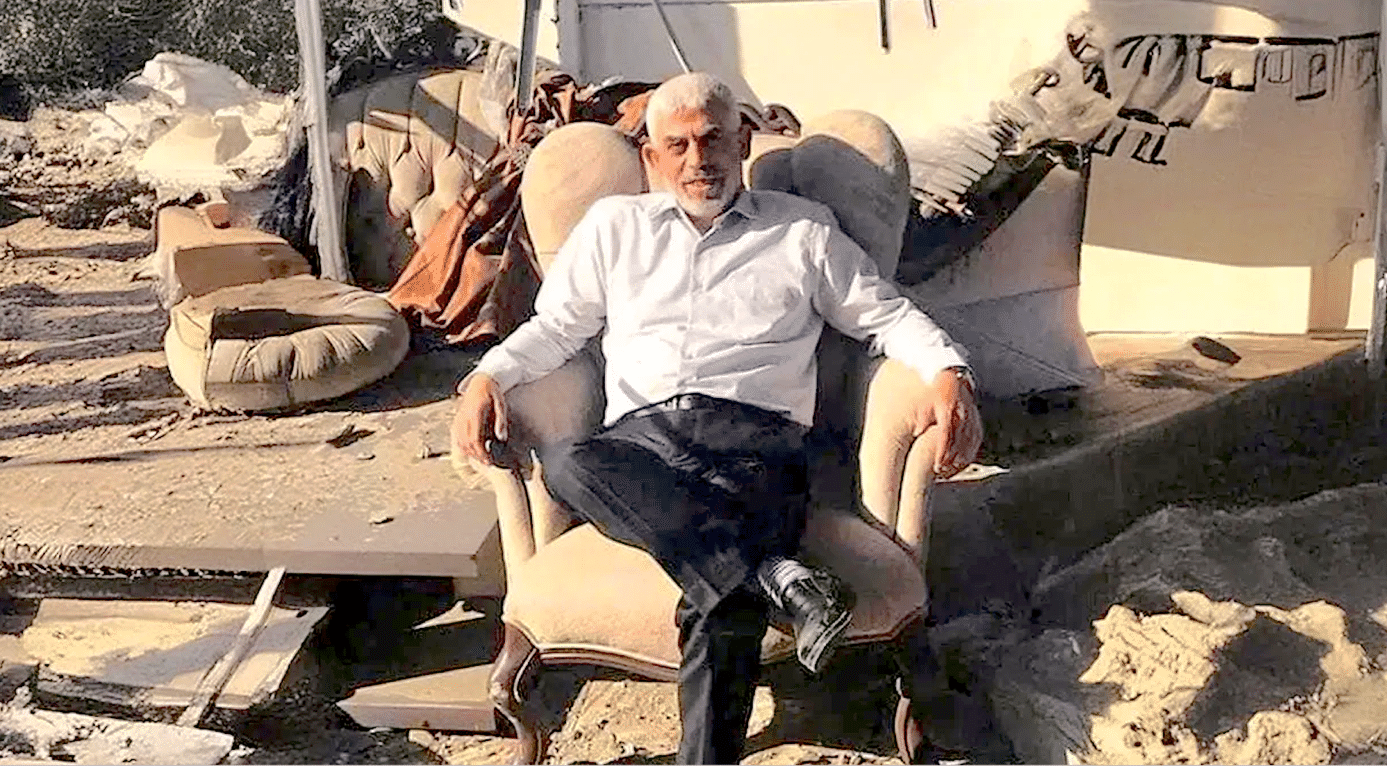
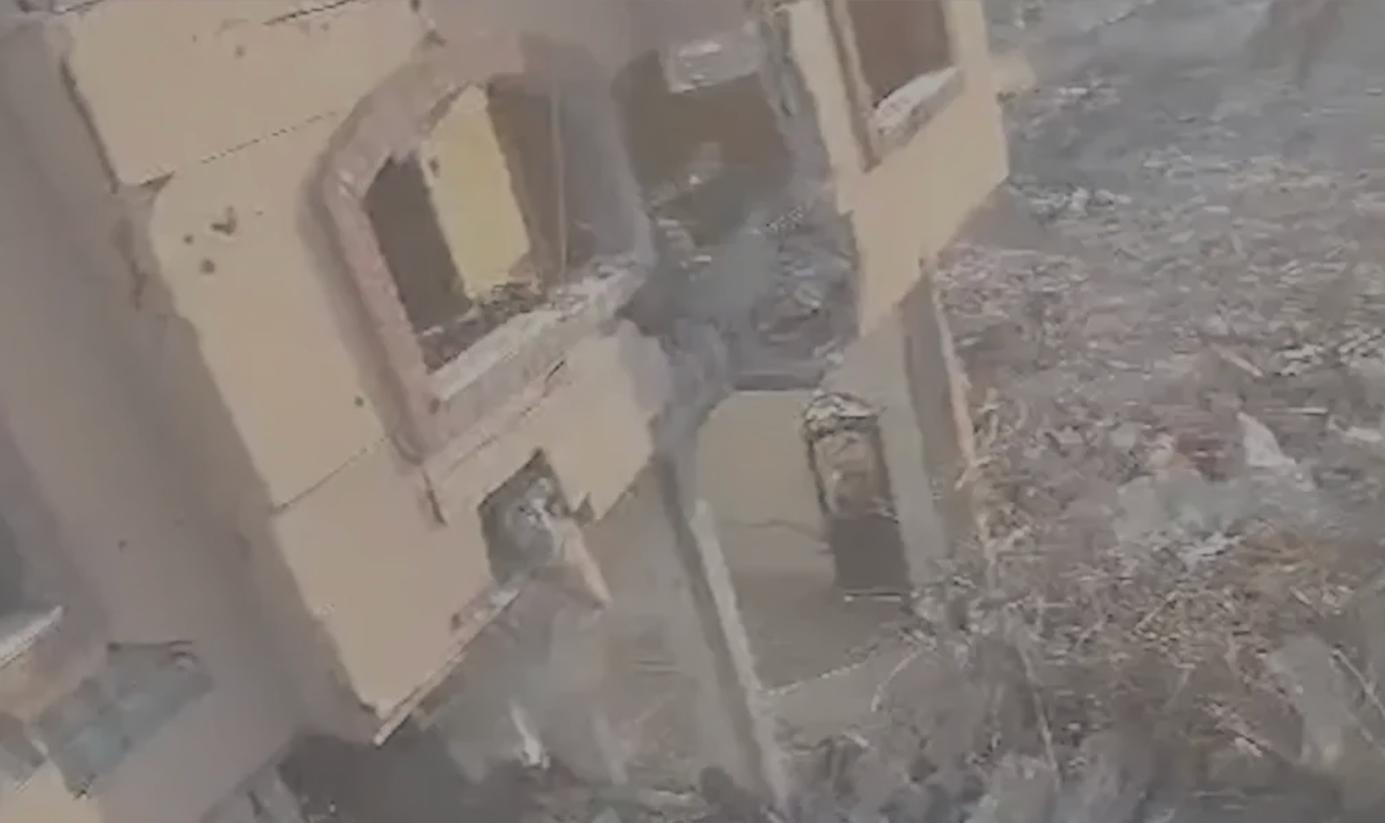
Shrouded in a sea of grey dust and rubble… in silence… abiding in a once rose-coloured armchair… partially masked by a keffiyeh and leaning forward… his left hand, missing its index finger, his right forearm a shattered stump… a self-made tourniquet of scrap wire biting into the flesh of his upper arm… waiting… alone… nothing moves… only his eyelids twitch occasionally, the dust lying like fresh snow on his long dark lashes… as he gazes out toward a pitiless white sky stretching infinitely beyond the gaping holes in the wall… The dust hangs… The dust hangs in the air… the dust of Palestine, the dust of Rafah – a city whose name was first carved into stone by the order of Pharaoh Seti I – the dust of centuries, millennia… the powdered bones of those defeated by King Sargon, the fragments of thyme, myrrh and olive leaves, the motes of seahorse carcasses, of gnats, jasmine, swallows’ wings, the ashes of burnt children’s books, the molecules of human mitochondria, of chloroplasts, of prokaryotes, of distant stars… all mingling with the shards of childhood, his mother’s embrace, the taste of a rare red apple, the eyes of his children, of his comrades – all united in the stillness… the Universe… endless wonders, endless horrors, endless questions, an endless passage… Then… emerging slowly from the silence, drawing ever closer, a high-pitched whirring, the whining of some monstrous mosquito… he leans further forward… and with his remaining hand, his left hand, he reaches out… for his only remaining possession, a wooden stick, progeny of a tree of his land… and, with all his strength – with all his might – he hurls it… toward the approaching drone – a hi-tech chimera of carbon fibre, thermoplastic polymers, titanium, silicon, gallium – that desecrates this sacred space… There flies his stick through the air… through the dust… it flies onward and onward.
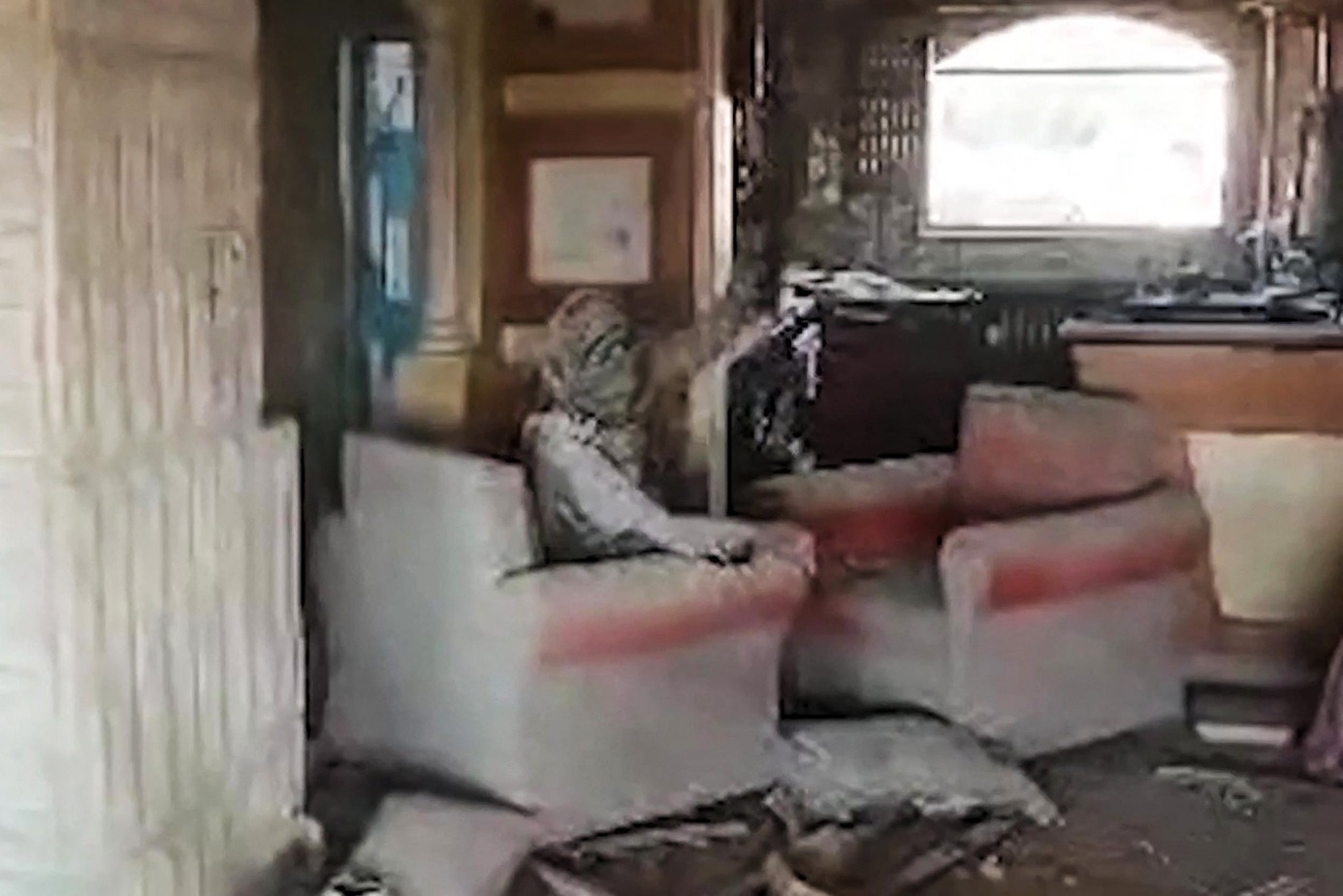
It is two years now. And the image is fixed in the still point of Time forever.
The body has merged with the dust of the ages, but the singular force that once emanated from that mortal flesh now pulses through the particles of dust. Death could not undo it.
This assassination – long sought and at last achieved by the invaders of his land – unintentionally gave birth to something immortal: a legend. Like the Phoenix rising from ashes – he has risen from the dust.
Yahya Sinwar – child of a concentration camp, one who knew nothing but deprivation, implacable freedom fighter for his people, prisoner of 22 years in an Israeli dungeon, warm but stern comrade to his brothers-in-arms, disciplined and formidable leader of the Resistance – was not seeking victory for himself; his own survival was not his highest good… His life was dedicated to something else. And the core of this is depicted in that final image.
The final landscape of Yahya Sinwar’s breathing body offers an iconography of his life… a visual grammar of images stripped of context, stripped of flesh, reduced not to bone but to marrow. Who was he? No, not his biography — but what was the essential substance of such a life? The final image is a vessel of questions, leading to other questions – questions about ourselves.
What are we living for? What would we die for? What are the lines we cannot cross?
We define our lives by how we live each day… and our death is the final tally.
For most, our personal survival is our most fundamental drive. For most, our personal well-being is our priority.
There exist those – very few – who will not and cannot compromise their principles, who cannot be bought or owned, who cannot betray the essential truth of their existences, who, also in facing death, refuse to let the truth of their lives be rewritten by any power that seeks to destroy them.
Throughout history, there have been known and unknown martyrs, who heroically sacrificed their life for their beliefs and for others. These people did not seek death. Many did not even seek to be heroes. They simply could not do the thing that would have saved them; they could not betray the essential truth of who they were.
What lies at the foundation of this resolution? It is not a doctrine. It is not a creed. It is a covenant – but a covenant with what?
Perhaps it is a covenant with life itself. A recognition that one’s existence is not a possession to be hoarded but a gift to be spent. Those who live this way – the martyrs, the witnesses, the unknown ones – they seem to have understood something that most of us spend our lives avoiding: that we are not the authors of our own being. We did not ask to be born. We did not choose our breath. And yet, here we are – given this strange, improbable gift of consciousness.
What do we owe in return?
The answer, for most of us, is nothing. We take the gift and we keep it. We protect it. We build walls around it. We call this “survival”, and we call survival “wisdom.”
But there are those who see it differently. They see the gift of life not as something to be kept but as something to be given back – not in resignation, but in gratitude. They see their own existence as a contribution to something larger: to their people, to justice, to the truth, to their beliefs, to their God. And in seeing this, they develop a consciousness – a responsibility to others – a conscience. The instinct to care…
To care about something fully is to give oneself to it. And in giving oneself, one loses the ego that clings to survival. What remains is something else – a kind of clarity, an inner serenity, a sovereignty of existence. The state of being the author of one’s own life, even in the moment of death.
The covenant I seek to suggest here is not a property of any one faith. It appears in the Sufi who polishes the mirror of the heart until it reflects the Beloved; in the Taoist who lets go of the self and finds the Way; in the Muslim who submits to the will of God; in the secular martyr who dies for a truth that has no name. The vocabulary differs. The surrender is the same.
The covenant is not only individual. It is also collective.
The individual who lives by this covenant – who cares more for the truth than for survival – does not do so in isolation. They are formed by communities, by traditions, by histories of resistance. And when those communities are threatened, the covenant becomes political.
Khomeini’s concept of the mustazafin is an attempt to articulate this collective covenant. It is not simply a political programme. It is a spiritual vision: the oppressed are not objects of pity but subjects of history. Their suffering is not meaningless. Their resistance is not futile. They are the ones through whom justice will be realised.
This concept points to something real: the idea that the covenant with life is not just a personal ethic but a collective one. The mustazafin are not merely the poor. They are those who have been denied their humanity by systems of power – and who, in their resistance, reclaim it.
Sinwar’s stick is not just an individual act. It is the gesture of a people. It is the gesture of all those who have been told they are nothing and who refuse to believe it.
In the end, death strips away the noise and clutter, leaving only a mirror. And in that mirror, we see not what we said we believed, but what we actually lived. Not what we intended, but what we did. Not the face we presented to the world, but the face we could not hide from ourselves. And beneath the face we could not hide from ourselves – something larger. Something that was always there, hidden beneath the dust.
Yahya Sinwar’s mirror shows a man who threw a stick at a drone. A man who had nothing left but the truth of his own life – and who offered that truth as his final statement.