

Iran, Russia reject alternatives to diplomacy over Gulf crisis
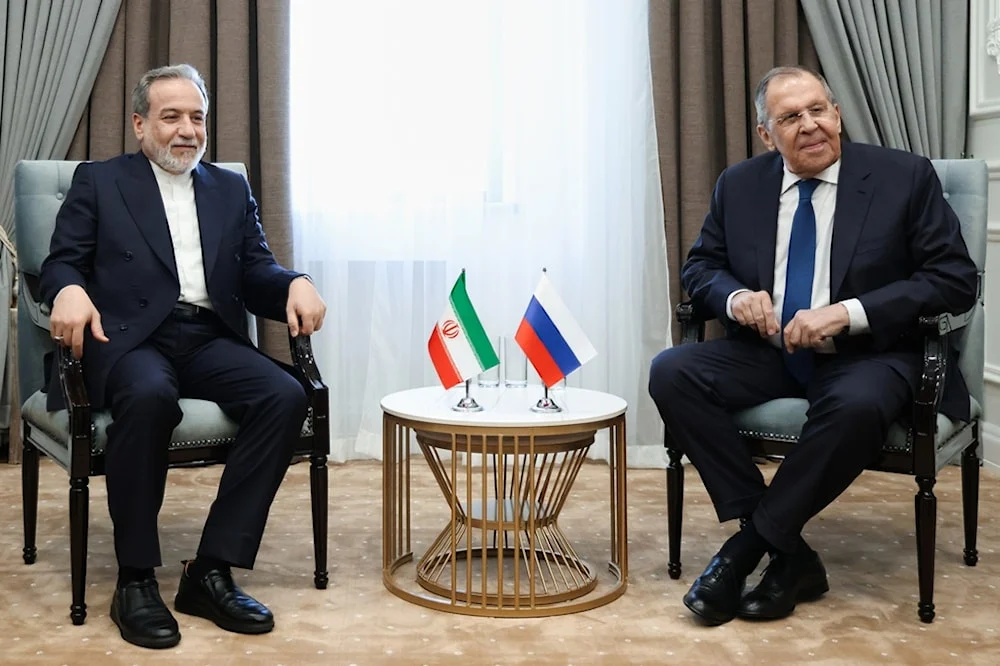
In this photo provided by Russian Foreign Ministry Press Service, Russian Foreign Minister Sergey Lavrov, right, and Iranian Foreign Minister Abbas Araghchi, pose for a photo on the sidelines of a meeting on the Council of Foreign Ministers of the Shanghai Cooperation Organization (SCO), in Cholpon-Ata, Kyrgyzstan, Friday, July 24, 2026 (Russian Foreign Ministry Press Service via AP)
Iranian and Russian foreign ministers Abbas Araghchi and Sergey Lavrov stress that diplomacy remains the only path to resolving the Gulf crisis.
Iranian Foreign Minister Abbas Araghchi and Russian Foreign Minister Sergey Lavrov stressed that there is no alternative to a diplomatic settlement to the Gulf crisis during a meeting at the United Nations.
The two foreign ministers discussed regional and international developments, with particular focus on the situation surrounding Iran and bilateral relations between Tehran and Moscow.
According to a statement from the Russian Foreign Ministry, the talks addressed developments in the region and internationally. The discussions focused in particular on the latest developments concerning Iran.
The ministry said the two sides “reaffirmed that there is no alternative to a diplomatic settlement of the crisis caused by the unlawful actions of the United States and Israel.”
Araghchi and Lavrov also discussed bilateral issues and the schedule of upcoming Russian-Iranian contacts at various levels, according to the statement.
Iran and US exchange messages through Qatar
The meeting comes as Tehran and Washington continue indirect communications over the diplomatic track.
On Wednesday, Iranian Foreign Ministry spokesperson Esmail Baghaei announced a new round of message exchanges between Iran and the United States through Qatari mediation in New York.
Baghaei said the exchange lasted around two hours, during which Iran’s conditions for reviving the diplomatic process were conveyed to the US side.
Araghchi condemns Europe’s role in facilitating war on Iran
Earlier on Wednesday, Araghchi hit back at NATO Secretary General Mark Rutte, saying the alliance chief “should know by now that groveling never satisfies a bully.” Araghchi’s remarks came after Rutte credited Europe with making the US war on Iran possible.
In a post on X, Araghchi said he had warned EU foreign policy chief Kaja Kallas and other European counterparts “of the severe long-term consequences of facilitating and supporting Israeli-U.S. war crimes, whether in Gaza or Iran.”
In meetings with @kajakallas and other EU counterparts, I warned of the severe long-term consequences of facilitating and supporting Israeli-U.S. war crimes, whether in Gaza or Iran.
That major folly aside, @SecGenNATO should know by now that groveling never satisfies a bully. https://t.co/pXITJTt24j
— Seyed Abbas Araghchi (@araghchi) September 23, 2026
He called that support a “major folly”.
Additionally, Araghchi said repeated US breaches of its commitments have damaged the standing of mediation efforts, while praising Pakistan’s role in facilitating negotiations between Tehran and Washington.
Araghchi made the remarks during a meeting with Pakistani Foreign Minister Mohammad Ishaq Dar on Wednesday, according to a statement from the Iranian Foreign Ministry.
The Iranian foreign minister said Washington’s violation of the understanding reached in Islamabad had contributed to increased insecurity and tensions across the region.
He also expressed appreciation for Islamabad’s “constructive efforts” as a mediator in the negotiations with Washington.
Pakistan’s Prime Minister Shehbaz Sharif said on Wednesday that Islamabad remained committed to mediating between Iran and the United States, despite unpredictable developments following the signing of the Islamabad Memorandum of Understanding.