

Iran says progress made in US talks, $12bln assets deal outlined
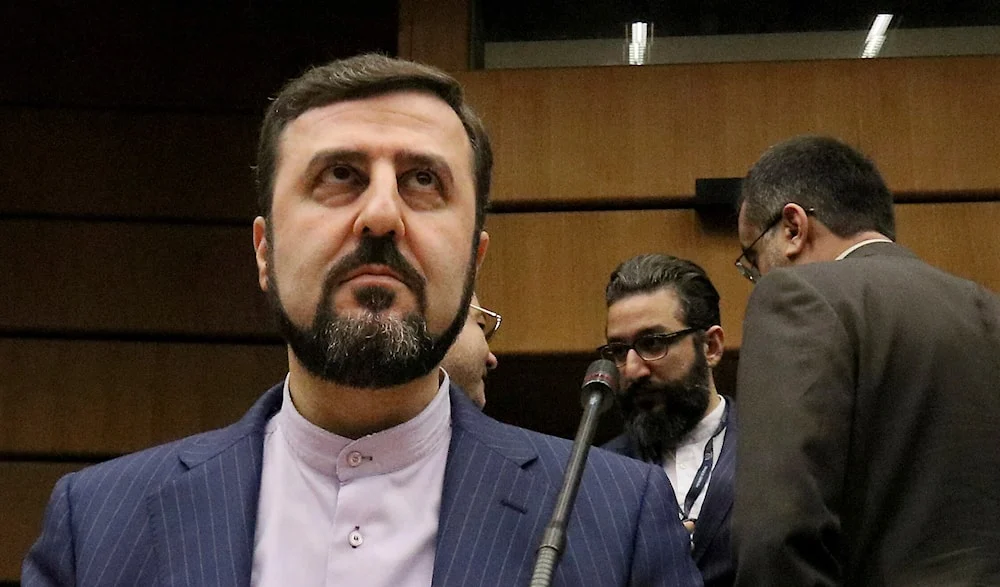
An Iranian official says technical talks in Switzerland have led to agreements on coordination mechanisms, working groups, and steps to address sanctions and nuclear-related issues.
Iran’s Deputy Foreign Minister and head of the technical negotiating delegation, Kazem Gharibabadi, announced that an agreement had been reached between the four parties participating in the technical consultations on the arrangements and mechanisms for the next phase of ongoing talks with the United States in Switzerland.
This came after the conclusion of a round of talks that included specialized discussions on issues related to the nuclear file and mechanisms for lifting sanctions. An agreement was reached to form specialized working groups to follow up on the issues on the table, primarily the nuclear program and sanctions imposed on Tehran.
Gharibabadi told Iranian state television that the technical talks between the four sides were held following a meeting of the Supreme Committee for Follow-up on the Implementation of the Islamabad Memorandum of Understanding, which lasted from Sunday until early Monday morning. The discussions focused on defining the implementation mechanisms of the MoU and the statement issued at the end of the meeting.
Specialized working groups and international supervision
The top Iranian figure added that the upcoming talks will be held under the supervision of the Supreme Committee, with the participation of the Speaker of the Islamic Consultative Assembly, the Iranian Foreign Minister, the US Vice President, and the Prime Ministers of Pakistan and Qatar. He noted agreement to form four working groups tasked with sanctions relief, the nuclear program, reconstruction and economic development, and monitoring and implementation mechanisms, with periodic reports submitted to the Supreme Committee.
Gharibabadi also announced significant security understandings, including an agreement to establish a joint contact point between the states party to the memorandum to ensure the safe passage of commercial ships through the Strait of Hormuz, as well as the formation of a “Lebanon de-confliction cell” to prevent escalation in Lebanon. This would include member states along with Pakistan and Qatar, with the heads of the technical delegations of the four countries overseeing the work of the working groups and joint units.
Oil licensing and release of frozen assets
On the financial and commercial level, the Iranian official noted that the technical talks completed the necessary procedures to issue a general license allowing the sale of Iranian oil, petrochemical products, oil derivatives, and all related services. He said the United States had already issued this license and published it through the Office of Foreign Assets Control (OFAC).
He also added that an agreement had been reached to immediately begin implementing arrangements for the release of $12 billion in frozen Iranian assets, in two equal installments of $6 billion each.
The Bürgenstock blueprint: Key takeaways
Iran and the US wrapped up their first round of Swiss talks with a phased agreement linking security, finance, and sanctions relief to conditional implementation steps.
A “Lebanon de-confliction cell” was established to monitor Lebanon’s fragile ceasefire, with Iran formally included, despite recent US efforts to sideline Tehran, and “Israel” explicitly excluded from the mechanism.
On maritime security, the two sides agreed to create a direct communication channel for the Strait of Hormuz, allowing parties to raise navigation concerns directly with Iran as part of broader discussions on gradually reopening the waterway.
Three working groups, on nuclear issues, sanctions, and monitoring, will only activate after Article 13 is implemented, which requires a full ceasefire, initial naval blockade lifting, release of frozen assets, and oil-export waivers. Iran will not enter final-phase talks until these conditions are met.
Separately, Iran and Qatar signed an MoU on releasing frozen Iranian assets, while US Treasury documents reportedly offer a 60-day suspension of OFAC sanctions on oil and petrochemical sectors, enabling resumed sales and Central Bank-managed payment mechanisms.