

FM Lavrov : Ambassadorial Roundtable discussion transcript
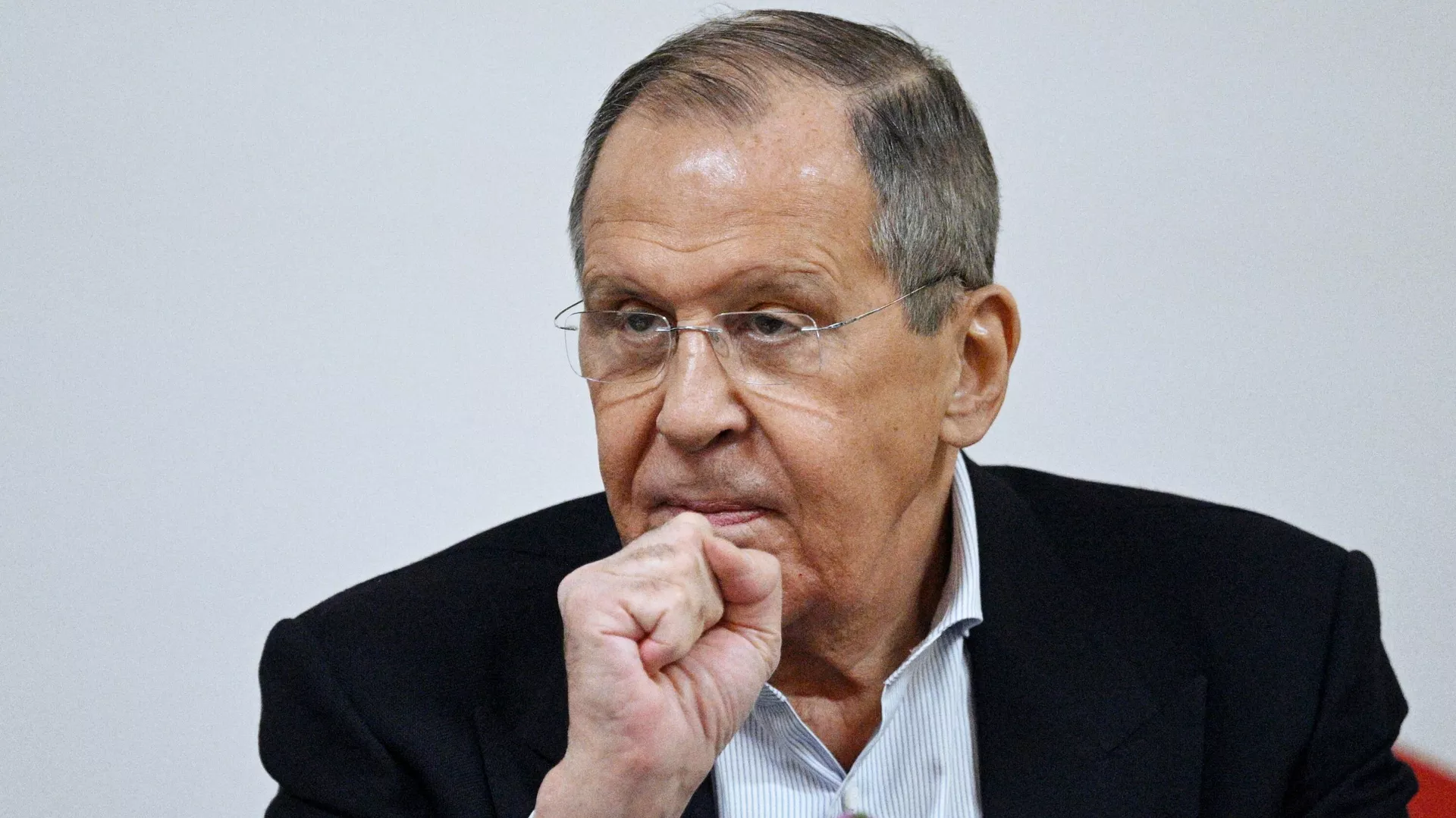
Foreign Minister Sergey Lavrov’s remarks and answers to questions during the Ambassadorial Roundtable discussion, Ukraine Crisis: The West’s True Goals and Role, Moscow, June 23, 2026
[Note Amarynth: Bolding is mine and I focused on the change in the US posture re Ukraine and after this, comments on West Asia]
Ladies and gentlemen,
Your Excellencies,
Before taking up the issue on our agenda today, I would like to express our support to Ambassador of Belarus to the Russian Federation Yury Seliverstov and the people of Belarus in connection with the terrorist attack carried out by the Armed Forces of Ukraine in the Bryansk Region, and the threats made by the Kiev junta against Minsk. I am referring to the outrageous statement by Vladimir Zelensky, who demanded that order be restored in the territory of a sovereign state or else he will do it.
In this context and considering that we will highlight European issues, I would like to quote Anitta Hipper (Germany), the lead spokesperson of the European Commission. Journalists asked her on June 22, 2026, if the EU supports the recent request by Vladimir Zelensky that Belarus dismantle relay stations from its territory. Hipper immediately accused Minsk of continued support of Russia’s “aggression” in Ukraine and alleged provocations against the EU and its member states, in particular, airspace violations and the use of migrants as an instrument of pressure.
She mixed up everything she could think of, concluding that this is why the EU adopted sanctions against the “Lukashenko regime,” as she put it, and will continue acting and taking measures against it until the Belarusian authorities change their behaviour. She said that Ukraine certainly had a right to defend itself. That German lady openly supported Zelensky’s threats towards a sovereign state, promising to use force if the Ukrainian dictator requested it.
I believe that this cynical attempt must be condemned. It is obviously aimed at involving Belarus into the conflict and expanding the area of hostilities, thereby hindering the potential settlement of the conflict by political and diplomatic means.
In this connection, I would like to remind those in Kiev who engage in such propaganda actions and issue threats, and those in the West who do the same and also support the Nazi regime, that the Treaty Between Russia and Belarus on Security Guarantees within the Union State entered into force in March 2025. If necessary, we are ready to take the full range of measures under that treaty to ensure the security of our ally and, of course, the Union State.
With your permission, I would now like to give the floor to Belarusian Ambassador to Russia Yury Seliverstov.
***
Colleagues,
I welcome all the participants once again.
Thank you for your interest in the developments surrounding Ukraine. These events, like ripples in water, are spreading ever wider. They have already reached across Europe and beyond, with reverberations now felt on other continents as well. I will speak about this later today.
The topic, as we agreed, is the West’s role in fuelling the Ukrainian crisis and its destructive contribution, so to speak, to current events.
At our previous roundtables, we have already discussed how, after the collapse of the USSR, the West undermined the principle of indivisible security – a principle clearly reaffirmed at several OSCE summits. In practice, as we noted, rather than honouring their presidents’ signatures on commitments not to strengthen their own security at the expense of others, the West consistently expanded the North-Atlantic military-political bloc towards Russia’s borders, creating an “arc of instability” and fostering Russophobic political regimes right on our doorstep – all with the aim of strategically containing our country.
Particular attention in this effort was given to Ukraine. The West spared neither money nor effort in supporting Ukrainian nationalism, which had been known since World War II for its particular brutality. The West carefully nurtured overt neo-Nazis, Russophobes, and anti-Semites in Ukraine – people who never hid their sympathies for Hitler, Nazi ideology, and Nazi symbols, and who took pride in the crimes of their predecessors during World War II against Russians, Belarusians, Jews, Poles, and other ethnic groups.
The West supported the coup in Kiev back in December 2004, when, in violation of the Ukrainian Constitution, it imposed a third round of elections (one not provided for by the Constitution). In that third round, every effort was made to prevent the election of the winner of the second round. And in that third round, the West installed its own man.
Certainly, the West played a direct role in the second coup in February 2014, when contrary to the settlement agreement between the government and the opposition, guaranteed by Germany, France, and Poland, outright Nazis and Russophobes seized power and immediately began the physical extermination of their fellow citizens in Donbass. The army, combat aircraft, and outright criminals from nationalist battalions were deployed against civilians, in flagrant violation of all norms of international humanitarian law.
Meanwhile, since 2004, Ukrainians have been told from Brussels that they must choose: side with Europe or side with Russia. Incidentally, Western players cynically deploy this “with us or against us” logic in many other situations as well. It was precisely through this logic that, in 2025 in Romania, when the election results were annulled, they arranged a re-election and installed a candidate the West approved of as president.
Regarding recent events, I would also like to mention the congratulatory message sent by European Commission President Ursula von der Leyen to Armenian Prime Minister Nikola Pashinyan: “The spirit of the Velvet Revolution you led in 2018 is alive and well. Yerevan can count on us.” In other words, they are no longer merely attempting to change governments through covert means, but are now proud of carrying out “colour”, “velvet” and other revolutions.
Getting back to Ukraine. Since 2015, Russia was firmly committed to implementing the Minsk set of measures signed after many-month attempts to stop the unlawful war unleashed by the Kiev regime against its own people. The agreement was signed in Minsk after 17-hour talks and guaranteed, again, by the then German Chancellor Angela Merkel and French President François Hollande.
Following its approval by the UN Security Council, we thought that the West would still be committed to its obligations to make the Ukrainian regime fulfil what the regime signed and what was secured by the guarantees by the leading EU members. However, neither the West, nor those leading members, nor Kiev itself did not even think of fulfilling that important document. Later, the former leaders of France, Germany and Ukraine, who signed the document, admitted it, and did it with pride.
In 2021, obviously with the support from the West, the Ukrainian regime expected to solve the Donbass problem by force, just by capturing the territories that had rejected the Nazi ideology imposed by the coup plotters, who unlawfully came to power. Then, we suggested that the West, NATO and the United States should settle the thereby provoked fatal crisis of European security by diplomatic means, through adopting and signing two agreements on ensuring a balance in the security sphere and ruling out the risks of a direct armed conflict.
In doing this, we proposed that reciprocal and legally binding guarantees be adopted for these agreements. Our proposals were arrogantly rejected. They told us that Russia had no say in whether to admit Ukraine to the North Atlantic Alliance or not.
Today, the United Kingdom and European Union countries continue to pump the Kiev regime with weapons and money, while pandering to its openly terrorist actions. They have gone as far as to justify any criminal actions by the Kiev regime. Thus, they accuse Russia in connection with repeated violations of EU countries’ borders by Ukrainian drones, including combat drones with explosives that could cause tragic consequences.
In their June 19, 2026 statement, members of the European Council (who recently held their meeting) openly note that Russia is fully responsible for all the consequences, bearing in mind that Ukrainian combat drones fly over the territory of EU countries and fall there.
The very same document notes that Europe should play a key role in the future settlement of the conflict between Russia and Ukraine. One can only guess what role they are talking about because a disorganised discussion is already unfolding in the media.
Following the above-mentioned European Council meeting, its President Antonio Costa noted that time was not yet ripe for talks with Russia, but that the EU needed a diplomatic channel for communicating with Moscow, as if there are no representatives of the European Commission and ambassadors of all EU countries in Moscow.
According to Politico, an EU publication, Costa’s chief of staff Pedro Lurti communicated with officials in Moscow twice over the past few weeks. The French and German leaders also reportedly condemned the Portuguese official for attempting to establish contacts with Moscow regarding the Ukrainian peace settlement.
According to Emmanuel Macron, the EU cannot a priori act as a mediator because it supports Ukraine and has introduced sanctions against Russia. Let this information remain on the conscience of Paris which seems inclined to request discreet contacts with Moscow (obviously without the knowledge of Brussels and others and without any permission) whereas Antonio Costa is forbidden to do this.
This is not to say that we are extremely interested in having these contacts. We know what they are worth. All I wanted is to give you an idea of how the European Union develops its policies and whether their persistent statements about Russia having to sit at the negotiating table can and should be taken seriously. They pretend to be willing to have talks while it is Russia that does not want it. At the same time, they want a free hand in determining when to have these talks. It is all mixed up. I would prefer not to mention this, especially considering that Vladimir Zelensky has been insisting on having talks while setting conditions that are totally unrealistic and can be viewed as offensive and derogatory not only for Moscow but also for his European curators. Just the other day, he stated that Europe had to think about a negotiating framework and offer several options, saying that it would be up to Kiev to decide who would be the EU’s negotiator. I think that there is no need to comment this. A Fuehrer is a Fuehrer. He used to be an actor, and was later picked to fill a Fuhrer’s role, but this character grew on him.
President of the European Commission Ursula von der Leyen has also weighed in on this topic by saying that the EU must prepare to start talks with Moscow. At the same time, she spoke out in favour of stepping up efforts to pressure our country with sanctions, and welcomed the renewal of the existing restrictions for an entire year instead of a six-month extension.
These are just a few examples to describe the position of the European Union and to demonstrate whether it is serious or deserves any attention. At the same time, the European Union persists in its aspiration to represent the entire West, including the United States, on the Ukraine conflict in terms of everything it does, thinks, the threats it makes or the promises it gives. Meanwhile, all the officials in Brussels and in European capitals whom I have already mentioned and other leaders agree that Europe will not be an impartial intermediary and will keep siding with Ukraine. There have even been statements that Europeans will keep supporting Kiev even after the crisis. What they want is to perpetuate this regime.
Therefore, when Europe is literally elbowing its way to be part of the Ukraine settlement talks by imposing its approaches and trampling upon the slightest germs of common sense demonstrated by the Donald Trump administration after his return to the White House, we have no illusions as to what the real plans of the Europeans are.
I mentioned earlier that they had sabotaged the outcomes of the talks held in 2014 and 2015. A Normandy Four meeting in Paris convened by French President Emmanuel Macron in December 2019 is part of that narrative. President Vladimir Putin, Zelensky, German Chancellor Angela Merkel, and French President Emmanuel Macron attended that meeting. They adopted a document enforcing the implementation of the Minsk Agreements. Primarily the issue was about imposing a ceasefire along the entire line of contact and reaching an agreement on the special status of Donbass, namely the areas that the Kiev regime had declared occupied by terrorists and against which it had waged war despite the Minsk Agreements.
By and large, the Minsk Agreements kept the whole of Donbass within Ukraine while granting its residents a special status, primarily meaning the right to speak Russian and to maintain their own administrative authorities. The signatures our Western colleagues put under the 2014 agreement, the 2015 Minsk Agreements, and the 2019 Paris agreements, of which President Macron was so proud in public, proved to be worthless, a dud.
After the start of the special military operation, Europe represented by London, which strives to be associated with the EU and to lead it, derailed the outcome that had been achieved during the Russia-Ukraine talks in Istanbul in 2022. The Europeans did nothing when Moscow-Kiev contacts resumed in Istanbul and Abu Dhabi in 2025 and were unilaterally disrupted by the Zelensky regime at the height of discussions on additional steps that could have made those talks more productive.
In general, Europe continues its all-too-familiar game of the “bad cop and not-so-bad cop.” This changes nothing in substance. Put plainly, everything we hear today from Brussels, London, Paris, Berlin, and other European capitals amounts to a demand for Moscow to surrender. That is what the statement issued by President Macron, German Chancellor Friedrich Merz, and British Prime Minister Keir Starmer following their get-together with Zelensky in London on June 7 is all about. The ambassadors from those three countries requested a meeting at our Foreign Ministry a few days later only to reaffirm the London ultimatum. No alternative proposals were put forward.
The statement issued at the G7 summit in Evian once again talks about unconditional support for the Kiev regime, assistance in strengthening Kiev’s military capability, expanding supplies of Western weapons, and ratcheting up the sanctions pressure on our country’s economy. Words such as “peace” or “settlement” didn’t make it to the statement. At a news conference held after the meeting, President Macron spoke at length about the comprehensive G7 consolidation based on anti-Russia approaches. He also rejoiced at the fact that in Evian Europe had been able to convince Donald Trump that the agreements reached in Alaska in August 2025 were a mistake and to reverse Washington’s position. In other words, he boasted that he had supposedly diverted the US President from the path to peace and set him on the road to war. Likewise, despite Donald Trump’s multiple statements to the effect that Ukraine should not be drawn into NATO, NATO Secretary General Mark Rutte continues to insist that the Alliance’s doors remain open to Kiev.
At a time when Ukrainian forces are losing ground every day on the battlefield, Europe is placing bets on the Zelensky regime’s openly terrorist tactics, including strikes deep inside Russia’s territory targeting civilian targets, such as medical buildings, blocks of flats, student dormitories, and even children, hoping to sow discontent and panic among our people and to split Russian society. We can see this perfectly well.
The real goal of the West behind its calls for talks is to save the Zelensky regime and to preserve Ukraine as a launching pad for fighting Russia. That is why they are seeking an immediate ceasefire. Their goal is to halt Russia’s advance and once again – just like they did during the Minsk period – to buy time in order to pump weapons into the Kiev regime and to deploy occupation forces with an anti-Russian mandate on the territory under its control under the banner of the coalition of the willing.
The European Union is leading the charge. Judging by what the United States is doing, it is in the process of abandoning its claim to the role of an objective mediator and following the same policy of tightening sanctions on Russia. In addition to renewing the Biden-era sanctions, the Trump administration has imposed a substantial sanctions package on Russia as well. President Trump said immediately after the Anchorage summit that Ukraine needed durable peace, not something that would last only a couple of years, and that Alaska had laid the foundation for moving in that direction. These words have been forgotten. Yesterday, the US Deputy Permanent Representative to the UN demanded an immediate ceasefire. Nothing more than that. He didn’t mention a long-term settlement. Moreover, during discussions of various international issues, it was stated that Washington was not constrained by international law, be it multilateral or bilateral treaties, and that the United States had “its own morality.”
Europe is equally unconcerned with international law, such as the seizure of Russia’s gold and foreign exchange reserves, the imposition of secondary sanctions on Russia’s trading partners, and the intimidation of the World Majority countries, especially the CIS states and Russia’s other neighbours, as well as countries around the world. At the same time, the EU and London proudly announced plans to supply Ukraine with advanced weapons openly declaring their preparations for a war against Russia and issuing threats to strike the Kaliningrad Region and the Kola Peninsula.
Norway’s Defence Ministry said in a statement that Norway, the UK and Germany have reached an agreement on working together to locate and destroy submarines in the Northern Atlantic, while London and Paris intend to put together some kind of the European Security Council where they would be calling the shots. It would be designed to bring together the most zealous Russophobes from the European Union and, you guessed it, the Kiev regime.
The EU Commissioner for Defence and Space, Andrius Kubilius, said that since it would be impossible for Ukraine to join NATO in the near future, and it would need more time to become part of the European Union, it would be advisable to discuss the possibility of having certain countries forge closer ties as part of a defence alliance.
But we must call a spade a spade. If the Department of Defence in the United States was renamed as the Department of War, this would-be European Defence Union should be called a War Union, which would be a more honest way to frame this matter.
In any case, Europe is once again emerging as the main threat to international peace and security. Just like Nazi Germany ahead of World War II, Brussels, together with Paris, Berlin and London are seeking to bring the entire continent under the banners of neo-Nazism and Russophobia. This time, they are trying to hand over this standard to Vladimir Zelensky by propelling him to the forefront of the war against Russia.
It is quite telling that European Union and NATO countries have been voting since 2022 against annual UN General Assembly resolutions on combatting the glorification of Nazism, neo-Nazism and other practices leading to present-day forms of racism, racial discrimination, xenophobia and related intolerance. Before that, they had the modesty to abstain, but today, as you can see, Poland was alone to voice its misgivings when Vladimir Zelensky kneeled in front of the ashes belonging to Adolf Hitler’s follower – the Banderite who executed Poles, Jews, Russians and Belarussians. It happened during a ceremony to rebury these ashes. The rest of the West stayed muted in the face of this outrageous gibe against the memory of Nazi victims. Moreover, this silence did not come from a feeling of shame. In fact, it was a sign of encouragement.
It is quite telling that President of Poland Karol Nawrocki withdrew Poland’s highest state decoration from Vladimir Zelensky, and all the preceding Ukrainian presidents, i.e., Pyotr Poroshenko, Viktor Yushchenko and even Leonid Kuchma, who was not on record for publicly encouraging Nazi ideology during his administration in the early 2000s – they all started returning their Polish decorations. What this means is that in reality, rulers in Kiev have long nurtured Nazi and racist aspirations, but they simply tried to keep this attitude to themselves.
Colleagues, yesterday we marked a tragic date in the history of our country – 85 years ago, Nazi Germany invaded the USSR. The enemy was defeated, but we can see that they failed to learn the lesson.
The aggressive revanchist sentiment among the European elites is a matter of special concern. Once again, they are on a mission to defeat our country, as they say. And it is Berlin who is leading the pack in an effort to militarise the European Union by officially announcing its plans to secure the status of Europe’s strongest army for Germany. And there is no ambiguity as to who will be targeted by the striking force of the German army. Commander of the German Air Force (Luftwaffe) Holger Neumann said the other day that the German air force was ready to fight Russia even today.
Present-day European elites have made no secret of the fact that they are preparing to fight a war against us in the near future. They said that it would happen by 2030 at the latest. But what matters here is not the timeline but the gist of the matter. For example, and it is quite an interesting fact, we heard that the Netherlands have been working on a scenario to create camps for Russian PoWs on its territory in case there is a war against us, much like Germany created concentration camps in Europe during World War II.
At the same time, they have openly recognised that Europe needs more time to better prepare its war against Russia. Chief of Defence of Belgium, Frederik Vansina, made a cynical statement a couple of months ago when he said: “We still have several years thanks to the blood of Ukrainians, who are buying us this time.”
It is obvious that the West is trying to take its historical revanche. For this to happen, the Kiev regime can do as it pleases, which includes making a cult out of worshiping Nazi collaborationists, enacting legislation to ban the Russian language from all social interactions and cancelling the canonical Ukrainian Orthodox Church, which constitutes a blatant violation of the UN Charter, multiple international conventions and the Constitution of Ukraine.
But on the day when Vladimir Zelensky signed yet another Russia-hating law – this time to remove the Russian language from the list of languages covered by the European Charter for Regional or Minority Languages – on this day President of the European Commission, Ursula von der Leyen, proudly announced the opening of the first accession negotiations cluster, which amounts to launching EU accession talks with Ukraine.
It may be a coincidence, but this cluster deals with the rule of law, democracy and human rights. There has been no criticism regarding Kiev’s human rights policies from Brussels or other European capitals in this or any other context. On the contrary, Brussels, London, Paris and Berlin have been praising the Vladimir Zelensky regime for what they called fighting for European values. This shows you the kind of would-be values the European Union has at its core. It turns out that the EU in its present-day form adheres to Nazi values. History is repeating itself.
The truth about what is going on instantly becomes taboo. There are plenty of examples. The most recent ones include preventing Politico Europe from publishing my article despite the fact that we had an agreement on this matter. So much for the freedom of speech. By the way, we included this article in the handout for today’s meeting. I hope you find it useful.
Talking about media opportunities, back in January 2018, which means eight years ago, Kommersant, a Russian newspaper, published an interview with me titled Unprecedented Focus on Russophobia. In this interview, I warned the West against pursuing its aggressive agenda and offered a wealth of examples demonstrating Russia’s readiness to bring its relations with Europe back to normal based on mutual respect and by achieving a fair balance of interests.
Regrettably, the many years of goodwill shown by the Russian leadership, and personally by President of Russia Vladimir Putin, in seeking to ease the tensions that had been building to a dangerous level within the EU and NATO in relation to Russia, were not reciprocated. As a result, we now face a situation in which any possibility of equal and mutually respectful negotiations is being rejected by Brussels bureaucrats and their associates in Berlin, Paris and London.
Let me stress once again: they seek revenge. They want Russia to capitulate and accept the absorption of Ukraine, under its current Nazi regime, either by NATO or by the European Union. At this point, there is effectively no difference between the two.
The extent of the West’s obsession with “defeating Russia” is illustrated by the OECD statistics: In order to increase spending on Ukraine in 2025, official aid to the world’s poorest countries was cut by more than 23 percent. All five leading donors – the US, Germany, the UK, Japan and France – reduced their assistance to the Global South as they expanded support for Ukraine. Everyone is free to draw their own conclusions as to the West’s true priorities.
The West’s sense of superiority is not limited to its approach to the Ukraine crisis. The US, the UK, and Europe are striving for total global dominance so that no one can prevent them from continuing to extract resources around the world and live at the expense of others.
This explains Washington’s declared objective of taking control of global energy markets. In January this year, we witnessed a US armed incursion into Venezuela that left dozens dead and injured. The President of Venezuela and his wife were abducted. The United States made no secret of the fact that its primary objective was to gain control of the Venezuelan oil industry.
This was followed in March by the unprovoked aggression of the United States and Israel against Iran, which seriously destabilised not only the Middle East but the world in general. A few days ago, US President Donald Trump stated that, should negotiations fail, the United States would take control of the Strait of Hormuz. Once again, it appears that the issue is oil rather than anything else. Neocolonial pressure is also being openly applied against Cuba, with which we reaffirm our solidarity.
The West is aggressively seeking to establish control over the development of energy and transport routes in Central Asia and the South Caucasus. France is attempting to undermine governments pursuing independent national policies in the Sahel and other parts of Africa. In doing so, Paris relies not only on local separatists and terrorist groups, but also, and increasingly so, on Ukrainian militants that have decided to open a “second front” against Russia in Africa.
In East Asia, where until recently all parties recognised the central role of ASEAN and the inclusive partnership mechanisms built around the Association, closed military-oriented blocs are now emerging in the form of various trilateral and quadrilateral groupings, some of them even involving a nuclear component.
NATO is already claiming that, despite the objective to defend the territory of the member states enshrined in the North Atlantic Treaty, the alliance has the right to govern the entire Eurasian continent – allegedly because threats to NATO currently come from the South China Sea, the Taiwan Strait, Southeast and Northeast Asia. We can see the complex picture: attempts to absorb the entire Eurasian continent starting from the West, the preservation of the Nazi regime in Ukraine with further threats to Russian security emerging around it, coercion of other post-Soviet states to follow the Western course and join the sanctions, and all the way to the promotion of so-called Indo-Pacific strategy in the east of the continent, with a proclaimed goal of deterring China and Russia.
We are countering this course with a concept of pan-continental security and cooperation architecture – an architecture open to all Eurasian countries without exception. This matter was discussed at the recent Russia-ASEAN summit in Kazan. Russia and other countries with similar views are not imposing anything on anybody. We are only proposing a serious conversation on all the problems and conflicts on this largest continent.
Which position will eventually prevail – submission to one centre or collective work and forming a balance of interests – is something that, without exaggeration, the future of the world order depends on. Russia and its partners in the CIS, the CSTO, the EAEU and the SCO, as well as other regional groups, decisively choose dialogue while being faithful to the principles of the UN Charter that were developed following the crushing defeat of Nazism and militarism in World War II. We must not allow the revision of the outcomes of the bloodiest war in the history of humanity. Even more so, we must not allow the revival of those forces of evil that started it. The global majority must realise its responsibility in this matter, protect the UN Charter and prevent attempts to stop the objective historical process of forming a just multipolar world order.
In conclusion, I would like to note that, despite all the subterfuge by European elites and their clients in Kiev, all the goals and objectives of the special military operation will be achieved. It is necessary to ensure the actual neutral, non-aligned and non-nuclear status of Ukraine. This is the status formalised in its Declaration of State Sovereignty, and the status in which Russia and other countries recognised Ukraine as a state.
It is necessary to guarantee the abolishment of discriminatory laws against the Russian language and the canonical Orthodox Church, and to recognise the new geopolitical reality following the free expression of will by the population of Crimea, Donbass and Novorossiya.
In his remarks at the 29th St Petersburg International Economic Forum, President Vladimir Putin commented, at journalists’ request, the notorious and obnoxious message from Vladimir Zelensky. Instead of addressing the illegitimate chief of the Kiev junta, he addressed Russian fighters and commanders at the front line. He said, “The entire country is watching you. The entire country is proud of you and places its hopes in you. Keep up the good work, brothers!”
“Keep up the good work, brothers” are the words said ten years ago by our police lieutenant, a man from Dagestan, surrounded by a gang of terrorists in the Caucasus, prior to his death. The terrorists were eventually eliminated. The same fate awaits their today’s followers.
Question: I would like to thank the Diplomatic Academy for organising our event. My thanks go to Foreign Minister Sergey Lavrov for the comprehensive information concerning your region and the Middle East. Yesterday in Jordan, a ministerial meeting was successfully convened. We discussed the resumption of navigation in the Strait of Hormuz and the conclusion of the military operation, as well as Qatar and other countries in the region. In your view, what regional and international contribution could be made to ensure the upholding of this agreement, particularly in light of the fact that the ministerial meeting in Jordan underscored the importance of the defence of Arab countries, including the countries of the Persian Gulf? To what extent can these peace agreements in the region create the preconditions for achieving regional and international peace? In particular, can these agreements lay the foundation for ensuring a just and lasting peace for the Palestinians?
Sergey Lavrov: A most important question. We are, of course, not merely monitoring developments as they unfold; we are taking an active stance and, in all of our contacts, we are encouraging the negotiation process.
It is unacceptable that an attempt at direct aggression was made against the Islamic Republic of Iran by the United States and Israel. This was entirely unprovoked, save for statements from Washington to the effect that the situation must be stopped because, purportedly, Iran has been a hotbed of terrorism for 47 years.
We all understand that no evidence whatsoever exists to support this. The fact that Iran and other countries in the region have interests beyond their own borders is well known. Members of the Gulf Cooperation Council have interests on the African continent and in other parts of the world as well. It is therefore unjust simply to demand that one State cease all external ties – including in the context of the Palestinian conflict (which, as you know, is a very serious and as yet unresolved problem; I will say a few words about it shortly).
Thank God that our American colleagues have recognised the need for a diplomatic settlement. It must not have been easy, as some observers have written, for them to set aside their pride. The decision was reached amidst disagreements, but the course of returning to peace prevailed. We actively support this and are fully prepared to facilitate negotiations between the United States and Iran.
We welcome the highly useful – not always conspicuous, but result-oriented – approach being pursued by Pakistan in organising a mediation effort together with Qatar, Saudi Arabia, Türkiye, and Egypt. The quartet, whose meeting you mentioned, is an interesting new format. It has convened before, not for the first time. Its understandings, which are always made public, are aimed at stimulating dialogue and creating conditions for reliable security.
Russia has long advocated this position – and has done so not merely in word. We have held several events dedicated to developing a Concept of Security in the Persian Gulf Zone, inviting academic representatives, scholars, and experts from all the littoral States of the Gulf – the Arab monarchies, the Islamic Republic of Iran, and their neighbours, including Iraq and Jordan.
These were highly productive gatherings. They began more than a decade ago. Our intention was to act pre-emptively. The discussions centred on developing confidence-building measures and transparency in military activities – broadly the same principles that underpin the OSCE. Our work was subsequently interrupted by the COVID-19 pandemic. However, we have since resumed this work and, not long ago, circulated an updated version of the Concept to the Gulf Cooperation Council and the Islamic Republic of Iran. We hope that this will help move all interested parties towards constructive negotiations on forging a balance of interests and codifying such a balance in legally binding arrangements.
Even before the present conflict – which erupted following the attack on Iran – similar initiatives aimed at developing some form of framework for cooperation in the Gulf region were advanced by the People’s Republic of China. More recently, other countries have also shown interest, including Egypt. I understand that Saudi Arabia is interested in shaping some kind of regional model. Doubtless each of these initiatives has its own particular nuances.
What matters most, it would appear, is that the architecture be inclusive and open, so that it enables – precisely within this universal framework – any and all concerns to be discussed and, where possible, resolved.
But this should not look like the current activities of the EU, which keeps talking about the need to strengthen European security, while implying security against Russia and deploying its forces in the territory of what will be left of Ukraine. Just like during WWII, Germany is deploying 5,000 troops and military assets in Lithuania on our western border. They want a system of security from Russia and against Russia.
It would be a pity if such ideas were suggested and promoted with regard to the Persian Gulf. We believe that it would be wrong for the Arab countries to join forces against the Islamic Republic of Iran. Thankfully, such ideas have not been advanced so far.
I would also like to draw your attention to what US Vice President JD Vance said in conclusion of his meetings with the representatives of Iran, Pakistan and Qatar in Switzerland – I do not remember the exact quote, but he essentially said that a regional agreement was necessary. I believe that we must welcome this statement. We are ready to actively contribute to discussing ideas of this kind.
As for Palestine, I think that we should all be ashamed, because the efforts taken over years to remove Palestine from the list of global urgencies are unfortunately yielding result.
Let me remind you that when our American colleagues submitted a draft resolution on the establishment of the Board of Peace at the initiative of President of the United States Donald Trump in the autumn of 2025, we did not see anything in that document that would in any way link the US plans for Gaza to the existing UN Security Council and General Assembly decisions. We pointed that out. Our American colleagues refused to change or add anything. We seriously doubted that the adoption of that resolution would help the Palestinians. Together with our Chinese friends, we did not use the right of veto only because the Palestinians themselves and all our other Arab friends asked us not to. The resolution was adopted without Russia’s and China’s approval. We abstained and did not apply our right of veto, which de facto amounted to a commitment to abide by this resolution.
It is notable that President Vladimir Putin has sent an official message to Washington saying that we will transfer $1 billion from the several billion in Russian assets, which were illegally frozen in the United States, for Gaza reconstruction efforts as part of that UN Security Council resolution. Almost a year has passed, but we are still waiting for an answer. This begs the question whether those who conceived this plan are interested in getting funds for the reconstruction of Gaza, or will they build a Gaza Riviera in the sector, as it is frequently said?
When considering the Palestinian issue, we must not forget about the developments on the West Bank, where everything possible is being done to prevent the establishment of a Palestinian State. Prime Minister of Israel Benjamin Netanyahu has officially stated that there would never be a State of Palestine. He is talking about Greater Israel (some add, “from the Nile to the Euphrates”), and Israeli forces are expanding the territory under their control in Syria. This creates an alarming situation.
President Vladimir Putin placed a special emphasis on the fact that we will never underestimate Israel’s security interests. We proved this in practice on many occasions. At the same time, acting by means of threats and the occupation of new territories where hardly anyone other than the current population ever lived, which we can see happening, and saying that this is the only way to ensure security does not look like a realistic solution.
If plans to build new settlements in East Jerusalem and the West Bank are carried out, it will be physically impossible to create a territorially continuous Palestinian State.
Of course, we primarily rely on the Palestinians themselves and our Arab friends in this regard. It is their region. There are many problems and contradictions there. We are highly interested in gradually resolving them. We are ready to contribute to this process. We have been working for a long time, including recently, to restore Palestinian unity. I have heard recently Deputy Head of the Political Bureau of the Hamas movement Mousa Abu Marzook once again calling for holding a meeting for all Palestinians. As far as we can see, all groups, excluding the Fatah party, are ready for such a meeting. This certainly does not inspire optimism, because having a single principled position is the only way to counter these trends.
Question: Mr Lavrov, I am the Ambassador of the Arab League. Are you planning to hold talks with the Ukrainian side in the near future? There has been no information about this recently.
Sergey Lavrov: We are always planning for a brighter future. First and foremost, this means ensuring that our country is completely secure, and that the interests of Russian citizens, as well as those who consider themselves part of the Russian world and Russian culture, are not infringed upon anywhere in the world.
As I have already noted, we are once again being asked whether we are ready for negotiations. When President of France Emmanuel Macron rebuked European Council President Antonio Costa, Mr Costa then backtracked and said that he saw no possibility of talks with Russia because our country is allegedly not ready. According to Antonio Costa, Europe does not discuss negotiations with Russia because Moscow has not demonstrated readiness, and the EU cannot act as a mediator because it supports Ukraine. President Macron expressed a broadly similar position. So what exactly are you talking about? What kind of negotiations are being advocated here? Are you calling for talks in which Europe demands a decisive role for itself?
President Macron outlined his position on Russia following the G7 summit in Evian. We also have the position of the United Kingdom, France and Germany following their meeting with Vladimir Zelensky in London. In none of these positions is there any mention of a balance of interests. Instead, there are demands for an immediate halt, without the liberation of territories held illegally, including the Donetsk People’s Republic, and without regard for the fact that occupation forces, led by the British and French, would be deployed on remaining Ukrainian territory. In addition, they are demanding reparations from us. Ukraine would then be pumped with weapons using our assets, which have been plundered by Brussels. Only after all reparations are paid, they say, could talks begin with us. One can only imagine how this looks in terms of the reputation and mental health of EU leaders setting out such conditions.
As always, we remain ready to negotiate with Kiev. We were ready in Istanbul in 2022, when the Ukrainian side brought proposals on ending the conflict that included safeguarding the legitimate interests of Donbass. These proposals were initialled, and final agreements were close to being signed, but Boris Johnson prohibited this. In 2015, we also took part in talks to draft the Minsk Agreements. Berlin and Paris trampled on these agreements and disregarded them.
I also recall the talks organised by Emmanuel Macron in December 2019, where it was explicitly agreed on paper that the Minsk Agreements should be implemented, including the provision of special status for Donbass. None of this was ever implemented. And it was not Russia that failed to do so.
Incidentally, when President Macron convened the Normandy Format summit in Paris in 2019 with the characteristic French sense of grandeur, experts had prepared a document for the leaders to approve beforehand. The draft agreement submitted to the Normandy Four for consideration included, as its first provision, the disengagement of forces and military equipment along the entire line of contact.
However, once the leaders had taken their seats at the negotiating table, Vladimir Zelensky looked at the document and said he could not agree to such a measure. Instead of disengagement along the entire frontline, he proposed selecting three pilot areas where this could be tested.
President Putin simply shrugged. President Macron was clearly not pleased either, having been told that the document was ready only to see it challenged at the last moment by Mr Zelensky. In the end, it was agreed that disengagement would take place only in those three sectors, while the rest of the document was approved.
In reality, none of the political provisions of the Paris document were implemented. This included the requirement to urgently grant Donbass special status and enshrine that status in Ukraine’s Constitution. Not even the measures proposed by Mr Zelensky himself were carried out. No disengagement of forces and equipment took place in the three areas he had indicated.
One final example. In 2025, Russia called for direct talks. We held meetings in Istanbul, Geneva and Abu Dhabi. The last round, which took place in the summer of 2025, ended with the Ukrainian side expressing dissatisfaction with the low level of representation in the negotiating teams and complaining that the talks were focused primarily on humanitarian issues. In response to those concerns, our delegation, acting on the instructions of President Putin, proposed significantly raising the level of the negotiating teams and establishing three separate tracks within the talks: humanitarian, political and military. This was precisely what the Ukrainian negotiators had said was missing.
Yet in the autumn of 2025, they simply disappeared from view and announced that they were withdrawing from the talks. We remain ready to resume them at any time from the point where they were suspended. Perhaps someone once again advised the Ukrainian side not to pursue dialogue and instead to continue fighting. That is what they are doing.
Let me reiterate that whenever President Putin speaks about Ukraine, he emphasises that we unequivocally favour a political and diplomatic settlement. The broad parameters of such a settlement were discussed and, in essence, agreed in Alaska. Nearly a year ago, when the US negotiators presented their proposed framework and roadmap, we accepted it. Its implementation was supposed to lead to negotiations on the details of a political settlement.
I don’t even want to speculate that the Alaska process, like certain European initiatives, was intended merely to buy time for the rearmament of the Kiev regime. I would rather not think that. But the outcome is what it is.
Question: It is common knowledge that certain Western European countries have pledged to increase military spending to five percent of GDP by 2035. An 800-billion-euro rearmament programme has been launched. One could say that Europe’s defence industry has acquired the rhythm of war. What is your view on this dangerous scenario of escalating military expenditure?
Sergey Lavrov: Increasing NATO military spending to five percent is not a plan – it is a demand from the Trump administration, one that has been actively supported by NATO Secretary General Mark Rutte. It has now been adopted as a guiding principle. Some countries are already approaching five percent; others are trying to buy time by presenting misleading statistics; and yet others are simply waiting for the Trump administration to leave the political stage. But the momentum is clear. Military spending is definitely rising – both NATO and the European Union are increasing investment in their defence industries and redirecting civilian production towards military use. The German automotive sector is a case in point. The same is happening in the United States. When the military-industrial complex is so heavily funded, it helps prop up the economy. No one is currently giving much thought to what happens once these plans reach some kind of culmination – though serious voices are beginning to ask where exactly Europe’s current trajectory is leading. Fundamentally, the thinking is not unlike that of Hitler, who sought, broadly speaking, to destroy Russian civilisation and seize its territory. These people are thinking along very similar lines.
There were numerous leaks about plans to “dismember” Russia in the aftermath of the Soviet Union collapse, but those plans failed. Russia revived in the early 2000s under President Vladimir Putin. That revival has now become an irritant – not because Russia refuses to listen to them, but because Russia has always stood in the way of total Western dominance. What irritates them in particular is that Russian culture and civilisation have absorbed so much of genuine European values. From the time of Peter the Great (and even earlier, through other processes that brought us closer) Russia, while absorbing European values, remained an independent civilisation, a Eurasian power that showed full respect for nations beyond the European sphere. Today, Russia is a multiethnic Eurasian country. The Europeans do not like that.
I have already given examples of the positions they take when issuing ultimatums for us to sit down at the negotiating table. They want us to comply, to accept their ultimatums, including paying reparations, and to agree to the deployment of occupation forces with an anti-Russia mandate to Ukraine, and much more.
Interestingly, we have distributed materials for today’s meeting (you have them, and I hope they will generate interest). There is another document we found particularly revealing, which looks at which industrial leaders supplied weapons to Nazi Germany during the attack on the Soviet Union and what those same corporations are doing now. In the vast majority of cases, the answer is: exactly the same thing.
Just look at the way defence budgets have been exploding within NATO, particularly in the European Union – military spending has increased severalfold. No one appears inclined to hit the brakes, at least not the current leadership in Brussels – President of the European Commission Ursula von der Leyen, her staff and acolytes are not willing to stop. We interpret this as yet another confirmation of the imperative to remain steadfast in our established maxim – “Trust in God, but keep your powder dry.” Our faith in Europe endured for far too long. President Vladimir Putin raised this issue shortly after launching the special military operation in one of his statements when he discussed the betrayal and the inability to strike deals by our European colleagues. He drew a line and affirmed that we are always ready to have a serious, meaningful conversation, while there was no going back to the relations with Europe and the West as they existed prior to February 2022.
Before February 2022, as you known, we made every effort to prevent the situation in Ukraine from taking the path of military escalation. We presented draft documents in Brussels and Washington; meetings took place in Brussels between our delegation and representatives of the North Atlantic Alliance. I had a meeting with Antony Blinken in January 2022. Until the final hour, we hoped that they would change their mind and that reason would prevail. It did not. It came down to undertaking not to expand NATO or other military blocs. It was also a matter of offering universal and inclusive security guarantees – for Ukraine, for Russia, and for the West. We were told that we could not interfere in NATO’s relations with Ukraine. They said they did not see any other way for this situation to move forward. At that point, they told us through then-US Secretary of State Antony Blinken that they could promise that ground-based intermediate-range and shorter-range cruise missile systems would be deployed on Ukrainian territory to a limited extent, in quantities which would later be coordinated with us.
Yet, what difference does it make when it comes to these quantities? Any ground-based intermediate-range and shorter-range missiles, which used to be prohibited until the United States withdrew from the relevant treaty – any such missiles in Ukraine represent an immediate threat to the Russian Federation.
Consequently, in my opinion there is no one among the leaders of the European Union capable of having a serious discussion on this matter. Nevertheless, certain countries are trying to return to a policy based on pursuing their own interests. Such was the approach adopted by former Prime Minister Viktor Orban in Hungary, and we are witnessing a similar policy today in Slovakia. In the Czech Republic, there is a burgeoning recognition of the detrimental nature of further militarisation and the Russophobia as fuelled by the Brussels bureaucracy in its frenzy.
Question: I want to confirm that that Kenya is looking forward to the Russia-Africa Summit slated for October this year. At the same time, I wanted to ask, and this is my question: how does Russia envision the role of African countries towards resolution of the conflict? Thank you.
Sergey Lavrov: African countries have been demonstrating their interest in assisting this process from the very start of the special military operation. I would like to place a special emphasis on efforts by President of the Republic of South Africa Cyril Ramaphosa. Following the 2nd Russia-Africa Summit in 2023, he arrived at a meeting with President Vladimir Putin as part of a group of African countries, about ten of them, to discuss ways to contribute to settling the conflict. They were receptive to our assessments, including the story on how the initiative to sign a deal in Istanbul in April 2022 fell apart.
President of South Africa Cyril Ramaphosa and his team made a special point on trying to understand what can be done to address this situation in terms of its humanitarian aspects. Following this discussion, South Africa’s then Foreign Minister Naledi Pandor and I worked together to coordinate a final statement. It focused on certain specific steps, which were designed to make mechanisms dealing with prisoner exchanges, locating missing person, etc. more effective. This group has remained proactive after that.
There have been no specific proposals lately, but we do know that South Africa and several other African countries are part of the Friends of Peace group in Ukraine as established by the People’s Republic of China and Brazil. They hold regular meetings at the United Nations at the level of their respective permanent representatives. This may seem quite odd, but apart from the countries of the Global South, representatives of France and Switzerland have been invited to take part in these meetings. It can be argued that having the French and the Swiss hear the voice of the Global Majority could be quite useful. The Republic of South Africa and other African countries are taking part in this initiative.
We have never rejected any initiatives coming from any region of the world. We have always given them a chance while expressing our readiness to assist these efforts and take the corresponding steps. Today, we are focusing on achieving the objectives of the special military operation with an understanding that all the Western approaches and all the hopes we had that the West could act as an honest broker – all these hopes have long been dashed. Taking them seriously has simply become pointless.
Scheduled to take place in Moscow in October 2026, the Russia-Africa Summit will focus on an economic agenda, including the digital economy, technology, artificial intelligence, healthcare, investment, and settlements in global trade. Of course, the agenda will also cover their political aspects. If our African friends bring along any specific ideas, we will make sure to give them all our attention.
Question: Ukrainian drones are striking Russian civilian infrastructure. They recently hit an oil refinery in Moscow. I think we’re all concerned about this. It’s a common problem. Can we expect reciprocity from Russia on this issue? Our embassy believes our embassy in Kiev is in danger.
Sergey Lavrov: Russia is striking targets associated with the actions of the Ukrainian armed forces. That certainly includes energy facilities and transport infrastructure. Reciprocity in these matters is difficult to find, because you cited the example of the Moscow oil refinery. That could somehow be “sold” to the Russian public and the international community as an attack on Russia’s energy infrastructure, which supports its military operations. But what we discussed at the beginning of today’s meeting – Starobelsk, what happened to the bus carrying Belarusian child athletes, and the attacks on the hospital and on colleges that trained elementary school teachers – all of this is being done deliberately. As I have already said: they want to sow panic, they want to undermine the unity of our society. That didn’t work for Hitler, and it didn’t work for Napoleon Bonaparte. Vladimir Zelensky played Napoleon once – in an amateur film, I believe. And that’s about as close as he’s ever come to being one. It never worked, and it won’t work now.
On the subject of your embassies: two months ago, we officially warned all our foreign colleagues, both embassies and corporate representative offices, that, to avoid misunderstandings, we recommend evacuating from Kiev. That recommendation remains in effect. It is not that something might happen tomorrow, as many expect. It is simply a recommendation based on a long-term strategy that will be implemented in order to achieve the goals of the special military operation.
I have said it many times: there is no other country in the world where a language is banned – least of all an official UN language. In Arab countries and the Palestinian territories, Hebrew is not banned. In Israel, Arabic and Farsi are not banned. Moreover – I will say it again – even in Ireland, English is not banned. But in Ukraine, Russian is.
I see a representative of the UN Information Centre in the Russian Federation here. He is probably reporting back to his superiors on how we work and what issues are being discussed here.
When, on June 12, which is Russia Day, Vladimir Zelensky signed a law declaring that Ukraine would not apply the European Charter for Regional or Minority Languages to the Russian language, the UN’s reaction was very vague, if not non-existent. This is a long-standing story. A year ago, a bill was introduced in the Verkhovnaya Rada declaring that the Russian language would not be covered by the Charter in Ukraine. Its consideration was postponed; then it was passed, and it lay dormant for a long time, waiting for person who still claims to be president to put his signature on it. He didn’t sign it then – but on June 12 of this year, on our national day, he did.
Cheap theatrical effects. But when, I believe, UN Secretary-General António Guterres was asked about this yesterday at a news conference in New York – how the UN views the law that removes Russian from the list of languages protected by the Charter in Ukraine – he offered no direct answers. He stated that the Organisation takes a principled position and advocates for freedom of language choice, cultural identity, and the maintenance of linguistic and cultural diversity. One could easily find any number of such slogans in the Communist Party of the Soviet Union. I ask specifically: “Do you support what Vladimir Zelensky has done?” And he says he fundamentally advocates for diversity. But Zelensky has undermined diversity.
The current state of the UN leadership, including its Secretariat, is very dismal. Unfortunately, that will not change until a new Secretary-General is elected. The election campaign is underway, and we simply must put an end to the current situation in which all key Secretariat positions have been “privatised” by NATO and EU members.
***
I would like to thank everyone and confirm that we are always open to any ideas, proposals, and initiatives your capitals may have. We are always happy to engage with you at all levels.