

The MoU : China reports – US, Iran reportedly outline MoU terms; differences remain over nuclear issue, Strait of Hormuz
At present, even if the US and Iran ultimately sign a related agreement, it is unlikely to fundamentally resolve the deep-seated contradictions between the two sides, nor will it be a decisive solution.
A US senior administration official on Friday laid out elements of a potential short-term agreement between the US and Iran, and said the best degree of confidence that the deal will be signed in the near term is 80 to 85 percent, according to multiple media reports on Friday. Meanwhile, Iranian Foreign Minister Abbas Araghchi announced on Friday that significant progress has been made toward finalizing a memorandum of understanding (MoU) reached between Tehran and Washington in Islamabad, stating that the agreement has “never been closer” to completion, the Islamic Republic News Agency reported.
Some Chinese observers said on Saturday that they believed it’s still too early to call this MoU a decisive factor of ending the hostilities between the US and Iran, but it will surely play a constructive role in easing tensions despite major divergences still existing on key questions such as war reparations, the handling of nuclear materials, the legal status of the Strait of Hormuz, and the unfreezing and return of Iranian assets.
The senior US administration official, in a call with reporters on Friday afternoon, said the deal: reopens the Strait of Hormuz and lifts the US blockade on it; “leads to the dismantling of the Iranian nuclear program;” “leads to the US getting the enriched [nuclear] material” and that material being destroyed and removed from the country and has “an inspection regime that makes sure that this is a long-term commitment and that it’s long-term enforceable,” according the ABC News.
In a post on his official X account, Araghchi provided an update on the status of the negotiations, which have been underway for over six weeks, the Islamic Republic News Agency said. The proposed MoU is understood to be based on a two-stage framework, first ending the war on all regional fronts, followed by nuclear negotiations. Iranian officials have stressed that no final decision has been made, with the text still under review by the authorities, per the Iranian media report.
In an interview with state-run IRIB TV, Araghchi said that upon finalized, the MoU will be signed digitally by both sides in their respective countries and then announced, the Xinhua News Agency reported.
He added that following the potential signing, both parties will commit not to initiate any other war, and will begin the second stage of negotiations, scheduled within a 60-day period, to reach a final agreement, focusing mainly on Iran’s nuclear program and sanctions removal, per Xinhua.
He stressed that Tehran insists that the only acceptable way of dealing with its highly enriched uranium will be diluting it within Iranian territory, Xinhua said.
Araghchi also said that the potential MoU would include provisions for ending the war on all fronts, including Lebanon, requiring Israel to withdraw from the occupied areas, Xinhua reported.
However, US President Donald Trump lashed out Friday at Iranian state media reports that differed from US descriptions of the potential terms, adding uncertainty to the state of talks, CNN said.
“The terms that Iran leaked out to the Fake News have NOTHING to do with the terms that were agreed to, in writing,” Trump said in a social media post, the White House tweeted on Friday.
According to US Central Command on Saturday, Iran launched multiple one-way attack drones in an attempt to strike commercial ships transiting the Strait of Hormuz. US forces have downed all of them in recent hours as traffic flow through the strait continues unimpeded, it claimed in an X post.
From the current situation, both the US and Iran appear eager to reach a ceasefire agreement and advance a temporary truce arrangement, Sun Degang, director of the Center for Middle Eastern Studies at Fudan University, told the Global Times on Saturday.
“It can be said that the two sides have already reached preliminary consensus on several issues, including ending hostilities, addressing the nuclear issue, the partial lifting of US restrictions on Iran in exchange for Iran easing restrictions on shipping activities in the Strait of Hormuz, as well as sanctions-related matters,” Sun said, noting that however, a number of unresolved uncertainties remain and will require further negotiations between the two sides.
Iran’s nuclear program has been a key point of division, AP said on Saturday. A senior US administration official, who briefed reporters on condition of anonymity under ground rules set by the White House, said Friday that the emerging agreement would begin the process of destroying or removing Tehran’s highly enriched uranium, according to AP.
At present, even if the US and Iran ultimately sign a related agreement, it is unlikely to fundamentally resolve the deep-seated contradictions between the two sides, nor will it be a decisive solution. However, it could help ease tensions, narrow differences, and potentially facilitate a ceasefire and an end to hostilities, Song Zhongping, a Chinese military affairs expert, told the Global Times on Saturday.
The future direction of Iran’s policy will, to a considerable extent, depend on how US policy toward Iran evolves and on the overall trajectory of bilateral relations, he added.
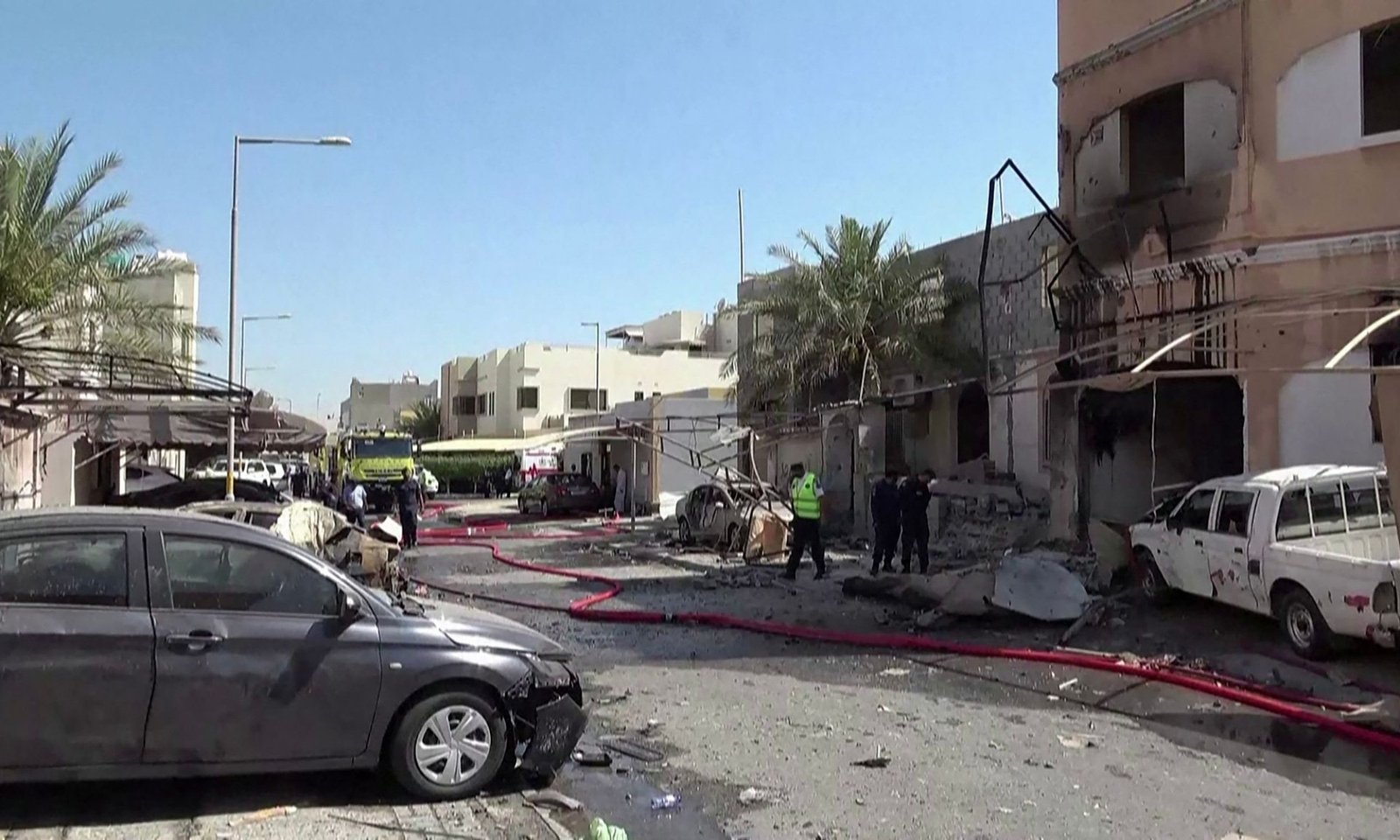
In response to the recent three rounds of strikes against Iran launched by the US on Wednesday Beijing time, toward which Iran responded by launching attacks against US military bases in Jordan, Kuwait, and Bahrain, the Chinese Foreign Ministry spokesperson Lin Jian said China is deeply concerned over the latest developments.
Relevant parties need to remain calm, exercise restraint, stop exacerbating confrontation and escalating tensions, take concrete actions to ease the situation, stick to political and diplomatic means for resolving disputes, and work for an early realization of a comprehensive and lasting ceasefire, Lin said.