

Finance, Sovereignty, and Colonial Histories
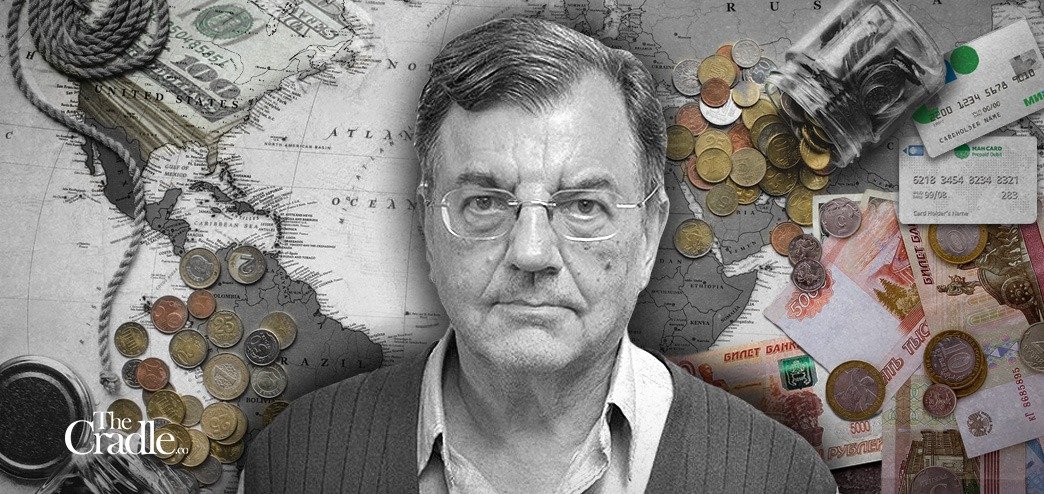
Michael Hudson, Anne Pettifor, Françoise Vergès
David Graeber Institute
1. Introduction
Lika (host, David Graeber Institute): Hello, David Graeber Institute is here, and we are very honored to introduce Michael Hudson, Anne Pettiford, and Francoise Vergès in conversation about finance, sovereignty, and colonial histories. So two series of lectures that we were doing about colonial histories and the economic of the end of the world now coming together. And so together, we’re going to explore the current global order, how it’s being configured, and how they reach the current transformation of global power and what it’s going to bring for us. And I’m giving now the floor to Anne Pettifor.
Anne Pettifor: Thank you very much, Lika. And as always, it’s an honor to be here at the David Graeber Institute, especially in the very distinguished company that I’m in today, which is on the one hand, Francoise Vergès and also Michael Hudson, who seems to have disappeared for a minute, but who’s here. So we’re discussing a really, really big issue, which is the collapse of today’s imperial order. And what is it reshaping? What is the shape to come of the world order, so to speak? So there are questions I think we will ask about whether it is really collapsing. I think we’ll discuss that at some point. I hope we’re going to discuss you know, whether or not the situation is changing for countries of the South, if they are feeling the transformation of the order in a way that is helpful to them, positive. And then the question will be, What role does the American-Israeli war on Iran mean for the collapse of this order and for the collapse of regional alliances and indeed global alliances? So there’s much to discuss, and I’m so proud to be here to have this discussion on an Easter weekend. So first of all, I might just go to Françoise and ask you, Françoise, what do you think is the view of the South, from the perspective of the South, what is happening today to the current imperial order?
[Note: Françoise was muted initially]
2. The View from the Global South: Françoise Vergès
Françoise Vergès: Well, I want to go back like, I don’t know, like two years ago, something like that. I was in Réunion Island. I’m from Réunion Island. And, I mean, the genocide in Palestine was going on. And it was interesting to see it from the south, to see what was happening from really physically the south. And I had come from France and the difference for me from Europe and from that place. And so the way in which, you know, north of the island was the Strait of Hormuz and the Suez Canal and Iran and the Gulf monarchy, the African continent, India, China over there. There was also, so what I meant, it was a certain geography that already transformed this question of the collapse of the world order.
Françoise Vergès: And the second thing was, I remember there was a debate about French imperialism to which, you know, I was there. And I realized that there was a certain, how can I say, a view of the French imperialism in that part of the world that dated from the nineteen seventies. And I wanted to say we have to be careful about new actors in this place, right? A small island from Mauritius Island had been bought or lent by India to create a military base there. And of course, there was Diego Garcia, the huge, huge US military base. So it was also, what I mean by that, the feeling I had about this world collapse was very different from when I was in Europe. Because what I saw was it meant more militarization. Of this ocean. More, of course, because the twenty percent of the oil goes through the canal of Mozambique and also a huge part of the maritime trade goes through that, through that ocean. So a feeling of being in the middle of a different transformation, not so as a spectator, but being, you know, like, OK, what will that mean?
Françoise Vergès: And the collapse of the world order is also compounded in this small island by a climate disaster. You know, hurricane, much more strong hurricane. There was in Mayotte the Shido hurricane, which was extremely devastating. And still, you know, three years later, nothing has been done. What I mean by that’s in Madagascar, the insurrection last year of the young people and the transformation and the betrayal already, more or less, of that one. in a revolution. So seeing that was very different because it was both an incredible, a lot of popular movement in that part of the world against imperialism and against militarization of the feeling that it will be direct, that one at moment or the other, it will strike directly. It will not be over there. And that was one of the feelings. And at the same time, a desire in some of this place to revive also anti-imperialism and the connection between the anti-imperialist movement in that part of the world, Mozambique, South Africa, Madagascar, Réunion, Mauritius, India, and really also reconnecting this South-South space, world, and seeing how it was much more different than the anti-imperialist movement of the sixties, seventies, much more different.
Françoise Vergès: And so that also in the second part, you know, reshaping the world, it’s also, I don’t like to use too much the word new, new as if everything is new, but yes, how to revive anti-imperialism there. how to reconnect with a different question. And the last thing also, this reshaping, the State of Israel is very present in that part of the world by buying land. They buy land. They buy land in Madagascar, they buy land in Mozambique. They bought land in Angola and it was a disaster. And they trained the police over there. It’s a direct action. It’s not only what’s happening, that they are bombing Iran and genocide in Gaza, but the way in which they penetrate also that part of the world through land, police training, and also selling weapons. So a need for a new mapping of all these forces and counter forces.
3. Parallels to the 19th Century: Anne Pettifor and Michael Hudson
Anne Pettifor: Oh, that’s so true. And it reminded me, Francoise, of many years ago, between nineteen seventy one and seventy three, I was in Tanzania at the height of the Vietnam War. And there again, there was an anti-imperialist movement on the campus of the University of Dar es Salaam, which is where I was based. And there again, there was also the intrusion of the South African apartheid forces into Tanzania at that time, even though Tanzania felt distinct from the war in Vietnam and perhaps not as vulnerable as Mozambique and other countries are right now, as you point out. So yes, these are struggles. And the question is, you know, you’re absolutely right. I mean, having worked in Africa, I know as well that it’s not just the Israelis who are buying land. It’s also the Chinese. It’s many countries who fear what climate change is going to do to their water supplies. and to their agricultural land, and who seek fertile agricultural land. And there’s nowhere, in a sense, more fertile than Africa. And also in places like, for example, Sierra Leone, where I once worked, where the regulation of land, of property ownership, is very weak. They don’t have these laws, the property laws that we have in many Western countries. Much land is common land and so therefore it’s very easy for these great powers to come in and just help themselves to vast acres.
Anne Pettifor: So yes, so this is happening in the South while in the West, if you like, United States and Britain, in Europe, there is a war being fought. And, you know, the Europeans are conflicted about it. My government, the British government, is participating in this war, whether they like to pretend to or not. And it is displacing and damaging in vast ways the global financial system and the global economy. that I want to address perhaps this afternoon, if we can move on to it at some point, are the imbalances, the imbalances between the North and the South, and in the South as we define it, the imbalances between countries in surplus and those in deficit, the imbalances between countries that are being dollarized and those that are not dollarized and the impact of the power of the dollar on exchange rates across the world, and then the imbalances in the financial system where both sovereign governments and the private sector built up vast quantities of debt with limited levels of income for financing that debt and for paying it down, if you like, so that at some point there must be a default on those debts. There’s the huge climate and ecological imbalances as well that I think are going to disrupt not just the world order, but all of our lives, I fear. The lives, yeah. The really, the daily lives, yeah.
Anne Pettifor: So the thing is that these are all the complex issues we’re addressing this afternoon, Michael. Is there anything you want to add to Francois’ perspective?
Michael Hudson: of colonialism is to remind people of the whole political evolution of the Global South in the nineteenth century, starting with Haiti, Mexico, Greece, Egypt, and other countries. They achieved their political autonomy and they had to pay for it. Haiti had to agree to reimburse the French government for all of the slaves that it freed to pay the former slave owners. Greece had to go to the brothers of David Ricardo. the Ricardo brothers for a loan that essentially tried to recover from the residue of colonialism there to develop itself. Same thing in Egypt, in Brazil, in Mexico, one country after another. All of these loans were just sort of exploded in eighteen twenty four to eighteen twenty five. And they all went into default almost immediately because once you borrow money to establish your political freedom, you free your slaves, you achieve domestic autonomy, but then you have to spend money on beginning to re-spend and industrialize and spend on agriculture to restore self-sufficiency. Every debtor defaulted.
Michael Hudson: And by the end of the century, the creditor nations had taken over the political structures of these countries. With their gunboats. Yes, France invaded Mexico under Maximilian. England invaded France. Egypt ended up to foreclose on Egypt’s debt, took over the Panama Canal. You could go right down the line for all of the countries. Greece was confronted with the British Navy to prevent it from being reintegrated into the Ottoman Empire. So the price of achieving their political autonomy and freedom and supposedly self-sufficiency was to lose their economic autonomy, their economic sovereignty. So their political sovereignty became essentially forfeited in almost every debtor country. The creditor countries, Britain and France, installed either a local currency authority to take control of the fiscal policy and the budget to pay, essentially make sure that all of the revenues of these countries would go to pay the foreign creditors, not to develop their own economy and to put the foreign financial interests first above their own economy.
Michael Hudson: Even earlier, in the United States, you can look at how Britain sought to control the US economy, the colonies that it had here. The first thing they did was to prevent the colonies from creating their own paper currency. They insisted that the colonies use the British currency, and the only people who had British currency were the foreign creditors that came over to make loans to the colonies. They tried to secure these loans with land and ended up trying to foreclose on the landowners by insisting on payment before the harvest was in. This led the United States to have a long-term distrust of bankers, starting with foreign bankers and then with the American bankers who were part of the Anglo-American financial system. So we’re having a similar situation today with the result of the US war in Iran interrupting the chokehold point of oil, gas, especially fertilizer, and other forms of energy. you’re having an enormous increase in the cost of imported power for the whole global South countries and America’s allies in Japan, the Philippines and Korea in East Asia and Western Europe.
Anne Pettifor: But Michael, can I just stop you at that point and ask Francoise, do you recognize in East Africa now that which Michael has just been speaking about, Egypt and Haiti and Mexico back in the day. Do you recognize parallels?
4. Haiti, Debt, and the Impossibility of Development
Françoise Vergès: Yeah, I do. And I will say for me, for instance, the question of Haiti is also, I mean, connected with what is being discussed today of the lie of liberal democracy and, you know, the pretense of international love. I mean, Haiti for me is also the example of how the French state will not allow a black republic to live, to survive, will not allow it. So of course it blockade sanction and no recognition of sovereignty. And as Michael say, impose a double debt, as we know, because not only IT had to pay, but had to borrow the money from the French bank. And so to pay, you know, the sum plus the interest. And then there was invasion by the US. The point for me is what we saw in Africa, in the African continent, Madagascar and some parts of Asia, is the impossibility of accepting development. And so what Michael says through loan, but also through austerity program, coup d’etat, assassination of a leader. I mean, it’s a long history of the impossibility from this, you know, power to accept development in any way, in any way. So by effectively debt, but also, you know, armed intervention, austerity program, corruption, the question of money. Yes, it’s a long history.
5. China’s Path and Global Imbalances
Anne Pettifor: Can I just intervene there by looking at the case of China? So China learned from this experience and determined that she was not going to borrow foreign currency. China began to build up savings at home. And that’s been, in my view, one of the causes of the global imbalances that we’re experiencing now. So China resolved that the way to develop was to invest, but in order to get the finance for investment domestically, she had to build up savings at a domestic level. And that meant suppressing consumption by the people of China and the surplus of their production. if you like, being captured by the state, but ultimately by the one percent. And that being used then for an export orientation of the economy in order to earn hard currency, in order to be able to import Western technology. But this buildup of a surplus of savings inside China is part of the reason for one of the profound imbalances in that country, the levels of inequality, which are not very different from the levels of inequality we see in countries like the United States and in Europe. And that inequality comes from the suppression of incomes and the buildup of surpluses, but also from excess production and underconsumption. So the people of China can’t afford to consume all that China produces.
Anne Pettifor: So like all the old imperialists, China exports her surplus. and exploits it to countries across the world, which that in turn causes political tensions. So there is something different about those countries that don’t do as Michael has suggested they did in the nineteenth century of borrowing hard currency from the hegemon, but instead of building up there. And the consequence of that has led to inequality inside China, but also to massive imbalances across the world. The United States was willing to absorb China’s surplus. And she did so because of course she was in charge of the world’s currency, the reserve currency, and could import that cheaply because of her strong currency. But what the Trump administration has recognized is that that hurt the manufacturing sector. That was what created the Rust Belt. And so they’ve been trying to weaken the dollar and they succeeded until the war on Iran, which has caused the dollar to strengthen and that in turn has weakened currencies across the world. So I just like to say that I think there are exceptions, Michael, to the just borrowing foreign currency for development. China learned a different lesson than other countries. including perhaps countries like Vietnam, have done the same. So, you know, there is a different dynamic now, although that doesn’t mean to say that the debts that are owed by countries like South Africa, the country of my birth, and many African countries, isn’t incredibly exploitative, extractive, and quite now deeply, deeply destabilizing. Michael, do you want to say something about that?
Michael Hudson: Well, Anne, you’ve focused quite correctly on the fact that the export promotion that the creditor nations and the colonial nations have imposed is an unequal exchange. They’ve wanted the Global South and their colonies not to compete with the parent countries, but to produce food and raw materials exports that are not produced at home. And the fact is that this concentration of foreign trade on food, raw materials, minerals, oil has led to chronic balance of payments deficits. that have led to foreign debts. And the one geopolitical factor distinguishing the U.S. and other Western countries from China is that these foreign debts that have accumulated as a result of the long-term trade deficits and balance of payments deficits of the Global South countries and other former colonies is that they’re denominated in Euros dollars. Well, right now, that the oil prices and fertilizers and the costs of trade are going up tremendously, forcing countries to decide how are we going to pay. This is simultaneous with the need to pay their foreign debts. And almost all of the foreign debts of the Global South countries are denominated in dollars. So they face a choice. Are they going to do what Germany England and now America is doing and say, we’ve got to cut back our social spending, cut back our support for laborers living standards in order to pay our foreign debts or in the United States for war.
Michael Hudson: Donald Trump yesterday said that America has to cut back its support for Medicaid, Medicare, for the privatized health system in order to pay for for the war, its war making, other countries have to decide who are we going to put first, the foreign creditor countries or foreign countries or our own? Now, of course, this includes China, as Ann points out, as a creditor country, But the debts that are falling due are mainly in dollars, as I said, and the only way that these countries can survive without a dismantling of their public health system, their public social support system, their infrastructure system, and their basic needs is to have a debt moratorium. That’s what happened. in the West when the United States agreed to have a moratorium on its inter-ally World War I debts to its allies, and they agreed not to demand further German reparations. Something like that occurred in the with the Brady Bonds writing down the Latin American debt crisis. The Asia crisis was not quite as happy. The result of the Asia crisis was a huge financial takeover by American firms financed with dollar credit creation. This is the choice that’s facing the global South countries, the former colonies, and even the industrial countries. How they respond to this crisis and are they going to let this crisis become a takeover for a new financial colonialism that is just as vicious and violent in terms of its social consequences and even longevity and demographic move as the military colonialism was.
6. Is the Current Order Really Collapsing?
Anne Pettifor: So can I say, if we look at the current context, you know, the theme of today is the collapse of a particular imperialism. I would like to hear from you both as to whether or not you really think it is collapsing. I mean, the dollar is strengthening even as the American president is wrecking the global economy and wrecking its reputation for military competence and wrecking its reputation for common decency. Nevertheless, the American economy is doing very, very well. Do we really think that the current order is collapsing? Françoise?
Françoise Vergès: Well, something is collapsing. Something, yes. I mean, we are witnessing. Will I call it a collapse? Because a collapse may induce some form of temporality that it’s happening. I think it will be extremely violent because they’re not going to let it happen. We never saw imperial power go away nicely. And so there is something, there is something happening. And I never want to forget what is happening with climate because effectively fertilizers are up and everything because of what’s happening with the Israeli-U.S. war against Iran. I mean, entire country right now are experiencing incredible flood, incredible megafire. This is happening. And all the rich country have abandoned every kind of measure. So there is no equality among the different country, none whatsoever. And what Michael was saying, I mean, the choice of country, the choice, of course, by government, but we see already in Europe, reduction, an incredible, you know, against earth services, education, housing, training, and of course, in everywhere, that was also the price to pay. So there was an accumulation of debt and also an accumulation of the collapse of public services that are extremely important. And we’ll have also an impact on what we call the world order.
Françoise Vergès: Just an example, a concrete example, there was an incredible epidemic of chikungunya in the southwest of Indian Ocean. And the scientists told us that it was not just because a virus has arrived and a mosquito has arrived, but there has been the collapse of the public health services all through that part of the world. that also contributed to that, also mass consumption, mass tourism. I mean, there were a lot of different things that will explain the fact, and they told us many more will come, many more will come because of climate change, fast urbanization, poverty, people moving, you know, everything we know about. So I will say, when we say collapse, it’s not just… okay i said you know the imperial power falling apart but what also this this power produced as as effectively incredible uh suffering incredible suffering direct suffering on the absolute daily life of people no it’s not tomorrow it’s it’s today um yeah
7. War, Climate, and Food
Anne Pettifor: So that makes a good link for us back to the United States, Michael, because as Francoise has said, you know, climate change is the big, big factor here, which is the destabilizing factor. And, you know, that compounded with austerity. has increased suffering on a scale that’s almost unthinkable. But to an extent, that’s also happening in the United States. I mean, I know that the United States in the past two weeks, there’s been what they called a heat dome over the center of the United States of America, and that farmers… The agricultural sector must be suffering as a result of drought. But there is also the question of the impact of the war on fertilizers on American farmers. And yet we get the impression that the United States is doing very well. Yesterday, the unemployment numbers were apparently very, very good. The stock market is booming. What is going on in America, Michael?
Michael Hudson: Trump has made it clear that the fuel of the future is oil and coal. He is fighting tooth and nail to prevent wind power and solar power from occurring. On the first day that he took office, his first act was to sign an executive ruling of closing down all of the investments that were being made in wind power throughout the United States. He said very clearly, The way that we can control the foreign policy is control the choke point for oil. If we can control the world’s oil trade and energy trade, we can turn off the spigots for other countries and cause chaos in them if they don’t support American foreign policy and join our Cold War against China and Russia. He has pulled America out of the Paris Agreement on climate and essentially said, in order to maintain our power over oil and energy as a means of creating chaos for other countries, if they don’t follow our policy, then we have to prevent any alternative to oil and coal.
Michael Hudson: Well, he did that and that is obviously, I’m going to get back to the effect of the war in a minute. In addition to the war in Iran forcing up fertilizer prices through the entire world, Trump’s tariffs had a great effect impeding American agriculture because the tariffs of fifty percent on steel and aluminum were applied against all foreign imports of mechanized goods, of industrial products that contain steel and aluminum. These include harvesting equipment, tractors, and other equipment. The price of new tractors that were made by International Harvester and other companies in Germany, for instance, went way up for American farmers. So what happened was the price of used tractors and harvesting equipment went way up, squeezing the farmers in this country.
Michael Hudson: Well, when you add to that, the cost of fertilizer as a result of the bombing of the natural gas supplies of Qatar and the general blockage of a natural gas trade out of which fertilizer is made. Most American farmers have said that we were now losing money to produce our crops. It costs more money to produce our crops using fertilizer to increase the crop yields and paying for the higher equipment of harvesters and the other equipment that we have to do and paying higher credit to the banks for moving the crops and to sell the crops forward to the big crop producers. trading companies in the United States. So the farmers are facing defaults and are being forced to sell their land or either increase the mortgage on the land which they can hardly do because the banks say, well, you don’t have any more free income to pay the mortgage since your income is being shrunk by your rising costs.
Michael Hudson: And this is applauded by the information companies like the largest landowner in the United States. is an information technologist. There’s a new concentration in turning the American farming economy into an absentee-owned economy, leased out to farmers, very much like it was under feudalism and the legacy of feudalism in Britain at the time of David Ricardo’s fight against the Corn Laws there, which is very similar to today’s by farmers wanting free trade, but the farmers also being flag-waving Christians have supported the Trump administration’s attack on their farmers on themselves and on their income, and they’re willing to go bankrupt and to essentially go out of farming and depopulate the land because it’s the patriotic thing to do to fight against communism and the non-Christian countries that Americans at war with. This is the internal contradiction of the effect of the war on American farming. It’s hurting American farming just as much as these same dynamics of rising oil prices and fertilizer prices are having on the whole rest of the world.
Françoise Vergès: May I say something, Anne? Yeah, certainly. I wanted also to add, because if we are talking about climate change and the disaster, that if there is something that aggravate that are wars, you know, I mean, the destruction of the Gaza, I mean, the incredible toxicity of weapon, the destruction of South Lebanon, or the bombing in Iran that brought this, you know, in the middle of the day, it was a night and also the black rain that contribute, I mean, and also it’s a destruction of the soil. I mean, it’s contaminated, you cannot cultivate after that. And weapons, I mean, all these new weapons are huge, you know, use a lot of oil and gas and everything. And so the concentration also, I mean, the whole of the imperialist army in climate disaster is huge, absolutely huge. And this region, West Asia, is being also destroyed, not just, you know, bomb in the sense, okay, that’s terrible, but also transformation of the climate and the soil and the water supply.
Anne Pettifor: So thinking about that and thinking about the resistance to the current order, a lot of people are going to go hungry. because food prices will rise. Some may even starve. There might be even mass starvation. Given those circumstances, what will happen to the resistance? How will people organize or not organize? Has anybody got any thoughts about that? Because I can’t remember a time when as many countries… You know, there were times when there was starvation, there was, you know, collapse of agriculture in countries, but never on the scale that it is today. You know, this is happening. It’s happening to rich countries and to poor countries. This impact of the cost of fertilizer on production and tariffs and so on. what’s going to how is that going to affect the public the general public both in the north and the south how are they going to react are they going to become more nationalistic more defensive more fascistic as as is happening in in parts of europe or are are they going to organize i just want to put that question to the two of you michael
[Michael: Could you rephrase? My computer was taken over by Google.]
Anne Pettifor: The question was simply that given that this crisis of the war on Iran, the Israeli and American war on Iran, is going to result in high food prices and in the destruction of agricultural land, as Francois has just pointed out, the poisoning of land as well, which will contribute towards, if you like, Hunger, hunger on the scale that we’ve probably not ever experienced before. What impact does that have on the resistance to the current order? How will people react? Will they become more defensive, more nationalistic, or will they become, you know, do we see a great uprising?
8. Political Disconnect and the Possibility of Revolution
Michael Hudson: Well, here’s the problem. We know that the voters in almost all countries, from the United States to Europe, are opposing the U.S. war. But the politicians are all in favor of it. We have a disconnect between the political class from Western Europe to the United States to global South countries, where you have leaders of all these countries whose political careers have been blocked, backed by the United States, by the so-called Democracy Institutes, the non-governmental organization, and all sorts of support from the time that the State Department and other US officials find very sort of charismatic students at universities who are also very ambitious and greedy. And they’ve nurtured these leaders to the leadership of Britain, France, Germany, the United States itself, and certainly throughout the whole global South. So when you talk about the political response, What can the response be if you no longer have elective democracy in any of these countries? They’re all oligarchies with oligarchy control, mainly by the financial and landlord and raw materials, rent extracting interests. The so-called Western democracy doesn’t work. You need a strong central authority to make the economic planning independent of leaving it to the financial sector to take over national planning by being in control of the credit system. Who gets the credit and for what?
Michael Hudson: Well, this is what the West Asian countries and Asian countries did. before Western civilization began. There was always a king to prevent an oligarchy from developing. There isn’t a king to prevent an oligarchy from taking place ever since classical Greece and Rome right down to America and Western Europe today. I don’t see any way in which the popular uprising to support the principles that you and I have been talking about for over a decade or two now can work without some kind of political revolution. Well, political revolution in today’s world where you’re actually having a police state. develop. I understand that in England and Germany, if you criticize Israel’s attack on Palestine, this is now criminalized. You can pay enormous fees and you’ve seen what happened to General Baud in Switzerland, and I think also the American press has British cases and German cases. You’re having really a tightening of a police state atmosphere. It looks like a political revolution is the only alternative, but it’s much harder today than it was in in seventeen seventy six or nineteen seventeen. So I’m not sure how to answer your question.
Anne Pettifor: So so what about the South Francoise? What what what is your feeling about what’s happening there?
9. Uprisings in the Global South
Françoise Vergès: Huge, huge uprising everywhere. But what Michael said, the disconnect between the oligarch or the billionaire now, which is a growing class, and the government and the people is growing. In Tanzania, in Kenya, in Madagascar, everywhere, in Argentina, in Mexico, wherever, people are rising. What is now is like there is no, you cannot trust the government to do that. You cannot trust effectively the elected people. They no longer represent whatever. I mean, Europe is totally following Trump in genocide in Gaza, has not protested barely about Iran. So there is, and people are marching every day, you know, in the streets. So this disconnect, I think, is also a moment of political education, if I may say, you know, about what, effectively, what we’re going to do, if not going to be, you know, like the Bastille Day, or, you know, the Winter Palace, but there is something, there is a strong understanding. I mean, when I talk to young people, you know, some years ago, they were There was a strong individualism. Now, you say Nakba, they understand Nakba. There was a criminalization, huge criminalization in France, also everywhere, effectively of solidarity with Palestine. And nonetheless, people are still doing. Young people are still marching. I mean, they are huge. So they are learning something. There is a huge moment of political education right now. I’m not saying, okay, this is going to come out of it, but this is the moment also. We are learning something. We are learning that we can no longer trust fully or blindly. And so how to organize? So I would say we are in that moment. And which way it will take, it may be different in Argentina from Italy or elsewhere, but the resistance is quite strong. I mean, you got, you know, in some port of Europe, they refuse to, you know, to… to bring things for Israeli ships, you know, I mean, a lot of different things. So a huge consciousness and a new understanding also, and I will repeat about land and water coming back as political question and not just, you know, humanitarian. So there was an incredible, I will say, a very formative moment with a lot of things being written, debate like that, through journal, online or not online, it’s a very fertile moment.
10. How Will the War End? World War III
Anne Pettifor: So given that, and thank you both for those insights, but given that, how do we think this war in the Middle East will end, this American-Israeli war? We see today that an American jet has been downed inside Iran. The resistance is extraordinary by the Iranian people. But how is this going to end and how is it going to end for Europe as well as for the United States? Michael, do you have a view on that?
Michael Hudson: You should think of it as World War III. World Wars I and II lasted four years each. I think that this war is going to last four years also, and it’s a world war because energy involves the entire world, and the entire world is being dislocated by the interruption and the destruction of OPEC’s ability to export oil and gas. The United States intends to blow up Iran’s oil fields. If the United States cannot control a foreign oil country, it will destroy its source of oil. a basic rule of American policy. Iran has said, if you destroy our oil, we are going to make sure that the oil of all of the Arab OPEC countries whose economies are symbiotically linked to the United States are also destroyed. And the reason we’re doing that is to let the whole rest of the world know, from Western Europe, to the Global South that if you do not intervene and stop the United States and Israel from bombing us, you will have no oil. Your oil-using industries will have to go out of business. Your labor will be unemployed. You will be in a depression worse than the Third World Depression. That is the price for your not withdrawing from the American-centered system.
Michael Hudson: And we realize that this requires that the United Nations is dead. It is unable to prevent this because of the U.S. veto. and its satellite powers with veto. And we need to create a new United Nations, just like United Nations was needed to replace the League of Nations that was dead. We need a new alternative to the International Monetary Fund, not based on austerity stabilization programs, but on mutual gain. We need a new alternative to the World Bank and the World Trade Organization, that a domestic uprising cannot create a multilateral new system. And it’s obvious that this new system has to be built around the core of self-sufficient basically Asian economies, China, Russia, and Iran. This will have to be rebuilt. It’ll be rebuilt from the position of economic depression that the United States has intended to create throughout the rest of the world. from Western Europe to the global south to make it a grab bag for the American companies to come in once again and use the distress to grab up whatever resources are available and reconsolidate the dollar standard. And if other countries do not fight against this, and they won’t, They will jump on the bandwagon and at least hope their personal career is saying, well, there’ll be a depression, but we wealthy people, oligarchies are always going to come out on top. If somehow there’s not a revolution, there’s going to be a depression until such time as a new international economic order is created.
11. Political Education and the Question of Organisation
Anne Pettifor: Yeah. So I think that’s a really profound insight that actually this is already a world war, as Michael has noted, and that Michael suggests it could go on for four years. My view is that, yes, that’s the first and second world wars lasted that long, but they were not half as destructive as this world war will be, it seems to me. That’s what’s so terrifying. And, you know, what remains afterwards? So it’s pretty bleak outlook. What do you think, from the point of view of the South, Francoise, do you think that somehow I mean, I take your point, which is so powerful, which is that this is a political education moment and that people are learning and that the youth are being politicized. And I see it as well as you see it. I see it here, too. You know, a decade ago under Blairism, they were apolitical. Politics was of no interest or relevance. Now they’re passionately political. And the question is whether or not they have the political program or the political organization, the institutional organization. For example, we had trade unions. We had trade unions during the Second World War and during the First World War. There are virtually no trade unions today. at least, you know, as a proportion of the world’s workers and in terms of their power and their influence and their ability to organize even more. So from the South, Françoise, how does that look to you?
Françoise Vergès: Well, I mean, I agree with what Michael said over that. The United States, we prefer chaos to anything else, you know. and put everyone in a double bind. But I mean, there are also, I mean, we cannot underestimate also already the discontent about the price. I mean, the understanding of how this is connected, really the understanding that is not just about a war about, you know, they have the nuclear weapon and they’re gonna be, you know, they are dangerous. No, this is also an understanding what is needed is a connection, effectively what Michael explained, about the fact that this war, the US-Israeli war, is in fact a war against the world, we could say, you know, against the entire world. It’s not just, you know, Iran being bombed. It has repercussions for the peasants in India, for, you know, I don’t know, fishermen in Chile or whatever, or children everywhere in the world. And this is absolutely important. It’s also for me, I have to say, it’s very important that Iran is resisting, because this is absolutely fundamental, you know, whatever we think. It’s absolutely fundamental. And because otherwise, it’s really, I mean, the door is open for the most brutal and cruel people, really. Absolutely no, I mean, human life is nothing for that. Absolutely nothing. And we saw it. I mean, Gaza was absolutely a testimony for that.
Françoise Vergès: So in the South, I mean, the understanding that the West is no longer, I mean, all the pretense of human rights, all the pretense of… you know, liberty, equality, fraternity for the French, or, you know, whatever, this is really also growing. Now, the government are not quite capable of doing a South-South, you know, like the BRICS have not been able to really constitute a force. But this understanding that there is absolutely a connection a growing connection between the people of the South. This is there. This is really there. And I’m not undermining the danger, the threat coming, you know, and the threat, not the collapse, but the threat to life, not just human life, but also non-human life. But I think that a lot of people don’t underestimate the threat, don’t underestimate the danger, and so wonder, effectively, what is to be done. And as I say, for me, the return to the demand for land and water constitute also a new ground for, you know, connection, because everyone needs land and water. So there is, I mean, will the revolution, whatever we want to call it, I mean, the change, take as a as a demand, not just sovereignty and independence like was needed in the fifties, sixties, but a new effectively connection to land and water that is not about extractivism, that is not about dispossession, contamination, destruction, you know, what we see. And that understanding that without land and water and air, in fact, you know, pure air, There will be no life. I mean, no human life anyway. There will be some other life. Constitute, I think, perhaps also what is a new form. I mean, as I say, I don’t like new every time, but the form of resistance, really the connection, the connection between, for instance, peasants in South Africa and peasants in India. They talk to each other, you know, on this basis. or feminist in the Global South, having a conversation against, effectively, the reactionary forces that are not just in the West, that are also in the Global South, and want, again, to control women’s body and queer body and trans body. So I would say that it’s a very interesting time. It’s a dangerous time, but it’s a very interesting time because it’s this moment. of effectively saying goodbye to that world.
12. Water, Land, and the Path Forward
Anne Pettifor: I’m so glad you’re talking about water because water is really going to become the new oil. And the United States would love to make the whole world into an extended Thames Water Company. That’s the US and European idea. What do you think, Anne?
[Anne continues:]
Anne Pettifor: And I think that Francoise is right, because that’s where we can make the connection. I mean, here there is an uproar. There is total uproar over the way in which privatized water companies have poisoned our rivers and our seas. And it’s across the board, across the political spectrum. And it is something that you’re right, it could be a connection between people here and people in Africa, people in drought-struck areas everywhere across the world. And you’re right, that’s the way to do it. The question for me is, as someone who once helped to organize a global movement, It’s really extremely difficult to, if you like, come together behind a single demand or a single series of demands like we want to safeguard land and water and bring everybody together while at the same time allowing them to have the autonomy of their special conditions, their special where they are, you know. So that kind of movement. And we struggled with that. We struggled with the idea of should we have a centralized committee at the top, you know, that would decide on the strategy. We said no to that. So instead, we had a D committee. devolved power bases but all behind a common goal and I don’t know if there are political movements that could organize in that way but that’s you know Francoise is right that’s what we can do because the connections are very powerful you know land and water is so fundamental to human life connect people in Arizona in Peru with people in Chad and Niger with people in India and Kashmir with people in Poland and Russia, and as you say, in UK and France.
Françoise Vergès: I mean, this is it. And so, yeah, this connection and the understanding through the environmental movement against also environmental racism. And that has, you know, it, I will say, this is, because all what Michael described has been effectively organized to steal, you know, to steal and to put people in debt. And I am absolutely, for instance, the fact even of peasants will go to court and will, you know, sue huge corporations. that have like thousands of lawyers for them, you know, and medias for them and everything. And they would fight and never stop, you know. So I think we have to look at this incredible determination, commitment, and with really weapon of the poor, if we may call that.
Anne Pettifor: I mean, we’re going to have to wrap up in a few minutes. And so I want us, therefore, to end on this message of, hope, if you like. I don’t like to use the term hope because hope is not a strategy, as someone said once. The point is that I think we must have confidence in the youth and we must have confidence in this ability of human beings to connect with each other. And that power, that ability, that capacity can be transformational. And so the question then becomes, how do we push it up the levels of consciousness so that we can begin organization? And let’s have final comments on this because I don’t think we can leave this conversation without some idea of the way forward.
13. Conclusion: Reform or Collapse
Michael Hudson: What you’ve described is just what the Americans are fighting against, any cooperation. And I think it’s significant that the single most important Israeli attack on the Arab countries was to blow up Kuwait’s water desalinization plant and try to blame it on Iran. Israel’s attempt is to prevent all desalinization throughout the Near East, to depopulate it, thereby removing OPEC basically from the world oil trade, leaving it free for the United States and its oil companies. And Israel. Yeah. And this is the fight of the whole world. And I think that it’s easier, the way to create a willingness for the alternative oil, world order that we’re trying to promote is to say, here is what’s going to happen if you continue along the present line. That’s what David Ricardo did when he said, if you don’t stop, begin to tax the landlords and economic rent, there will be no profits left for British industry. It will not be the workshop of the world. The entire surplus will be the end of economic rent. Well, by the end of the nineteenth century, it was realized that, well, money rent by the financial sector is the same. There will be no profits left for industry. That’s why Europe and America have been deindustrializing. We have to show this experience and give a narrative for the rest of the world to realize that if you don’t remake the world along the lines pretty much that were described by classical economists in the nineteenth century before the anti-classical, anti-socialist revolution, then this is how you’re going to end up. You have to give them the motivation that it’s reform or collapse. reform or starvation.
Françoise Vergès: yeah yeah you know policy we have to politicize this issue you know i mean a lot of revolution i mean it was like we need food we need food we need you know a roof i mean we need that our children have a decent life you know and like going back to basic but not in a in a in a real sense i mean the vital needs of all human beings And that has been totally cut constantly by capitalism, imperialism and racism. And so these are political. I mean, what was revolution about? You know, they were about, you know, like, uh, they were not just, I mean, uh, freedom, it was not an abstraction. It was really, how do we change the life of people? And, and as you know, because you have been, I mean, and from South Africa and Africa, all the independence started by people. We have land, water, food. education and health. And this has been denied. This has been constantly denied and the denial has been legitimated and people fight for that. People go, I mean, and they die for it. So this question of really to say that these are the political struggle and they still the terrain of political struggle for liberation.
Anne Pettifor: Yeah. And as Michael says, you know, we should show them what Israel and the United States is doing in the Middle East for the world to understand what is coming your way, basically. So for that, we have to fight for land and water. And I just want to thank my two colleagues for this really very important and very wonderful discussion. I’ve learned a great deal myself, and I hope you, the listeners, will have learned from this as well. And I’d like to thank the david graver institute and david graver himself whom i always love to be reminded of um for the opportunity to for us to have these important discussions and to share these views across the board so they may be debated everywhere in the world so thank you michael and thank you francoise and thank you thank you and thank you right right thank you goodbye
Michael Hudson: Thank you.
Françoise Vergès: Thank you. Right. Thank you. Goodbye.
Related Posts
-

Venezuela Sit Rep: The view from Caracas
January 8, 2026 -
The Zionist grip on Russia
December 22, 2025 -

Venezuela Sit Rep: the reason for the struggle
November 20, 2025 -

Gustavo Petro’s Powerful Speech on Freedom, Sovereignty, and Latin America’s Role at EU-CELAC
November 12, 2025 -
Russia on Iran Snap-Back Sanctions
September 26, 2025 -
The Choice is Stark – Global Governance or Barbarism
September 21, 2025 -

Khamenei’s Victory Speech to Iran
June 27, 2025 -
Sovereignty Under Siege
June 23, 2025 -
NATO Faces Capitulation in Europe
November 27, 2024 -
Trump may be Oreshniked on Ukraine even before he gets to China
November 27, 2024