

Russia: tells two parties exactly where to go
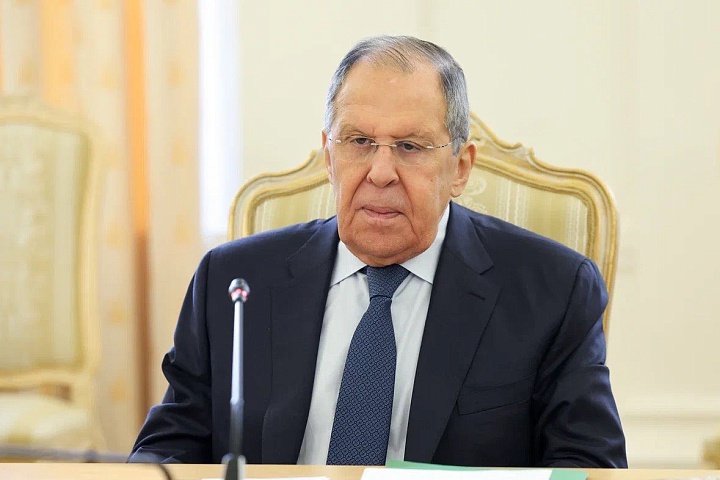
First, Mr Lavrov to the Gulf Arab Ambassadors and second, India. In reality there are honeymoons coming to a sharp end, driven by: “It is only business. If you want to be friends with us, you have to deserve our friendship. Traitors will pay!”.
To the Gulf Arab Ambassadors, the message is clear: You are hypocritical and your ability to attempt to be clearheaded is cancelled by your actions.
1. Russian Foreign Minister Sergey Lavrov responds to an appeal from Gulf Arab ambassadors urging Russia to pressure Iran over escalating tensions in the Middle East.
Speaking at an embassy roundtable on the Ukrainian crisis and international information security, Lavrov questions the one-sided blame placed on Iran and asks why the actions of the United States and Israel are not equally condemned.
Lavrov calls for a unified international position to stop the escalation and urges all parties to advocate for an immediate cessation of hostilities that are causing civilian casualties and damage to critical infrastructure across the region. He also warns that attempts to push a UN resolution condemning only Iran could further divide the international community.
The Russian foreign minister stresses that ending the broader conflict requires addressing the actions of all parties involved and supporting diplomatic solutions instead of selective accusations. This exchange highlights Russia’s position on the growing Middle East crisis and its call for a comprehensive ceasefire and balanced international approach. Moscow, March 5, 2026
2. INDIA (excerpted from Larry Johnson’s blog)
This is quite delicious. This is what Russia does with Traitors. Brent Crude right at the moment is at 107.5 and increasing by the 15 minute interval as expressed on oilprice.com. You do the math. Russia has just made India pay ‘biggly’ for their perfidy.
Prime Minister Narendra Modi’s recent trip to Israel was ill-timed, coming three days before Israel and the US attacked Iran. Although India is one of the founders of BRICS, he made a big show of elevating the India-Israel relationship from a “strategic partnership” to a “Special Strategic Partnership for Peace, Innovation, and Prosperity.” Modi signed 16 agreements and announcement of 11 joint initiatives in areas like defense (joint development/production with tech transfer), critical/emerging technologies (led by national security advisors), cyber security (Indo-Israel Cyber Centre of Excellence in India), agriculture, water management, labor mobility (facilitating over 50,000 Indian workers in Israel over five years), culture, education, and more.
Modi, along with Netanyahu, announced the advancement of free trade agreement (FTA) negotiations (first round concluded, next in May; Modi stated a deal would be finalized “soon”). He also reaffirmed India’s strong defense and counter-terrorism cooperation with Israel, including potential transfers like Iron Dome technology. Talk about bad timing. Modi’s obsequious behavior in Israel was a direct insult to the other members of BRICS… Advocating warm relations with a country guilty of genocide has not been well-received by other BRICS members.
The attack by Israel and the United States on Iran, a member of BRICS, has created a potentially catastrophic economic problem of Modi and India. India imports the vast majority of its crude oil needs (around 85-88% of total consumption), as domestic production is limited. India’s total crude oil imports average roughly 5 million barrels per day (bpd) in recent data (early 2026 figures). The Persian Gulf countries (primarily Iraq, Saudi Arabia, United Arab Emirates (UAE), Kuwait, and Qatar; sometimes broadly including other Middle East suppliers) are a major source, especially via the Strait of Hormuz, through which a significant portion of these flows pass. Iran’s de facto closure of the Strait of Hormuz has created an emergency situation for India.
The war against Iran has given Russia tremendous leverage over India. Kremlin spokesman Dmitry Peskov, in remarks made on March 6, 2026, emphasized that Russia would not disclose specific quantitative data on oil exports to India, citing “too many ill-wishers” and security concerns. This came in response to reports of potential large deliveries (e.g., up to 22 million barrels in a week) amid India’s supply crunch. Peskov also noted the Iran war has significantly boosted demand for Russian energy resources, positioning Russia as a “reliable supplier” of oil and gas.
Russia, instead of leaving India to sleep in the bed it made with Israel, highlighted its readiness to support India, but at a cost. For instance, earlier in March (around March 4), sources indicated Russia was prepared to divert oil cargoes (e.g., ~9.5 million barrels near Indian waters) and potentially raise India’s share of Russian crude imports to up to 40%. Russian Deputy Prime Minister Alexander Novak mentioned receiving “signals of renewed interest” from India in larger volumes due to the crisis.
Amid the surge in demand for Russia’s Urals crude, Russia hit India with a firm, but diplomatic, reminder of the cost of betraying a friend. Prior to the attack on Iran, Russia sold oil to India with deep discounts ($10-13 below Brent pre-conflict). While promising to help India compensate for its loss of Persian Gulf oil, Russia inoformed Modi that India would have to pay a premium of $4-5 over Brent for March/April deliveries. This reflects market forces rather than explicit “assurances” of continued discounts; some reports frame it as Russia treating it more as “business” without prior friendship-based concessions.
India has managed itself into irrelevance. According to Markandey Katju (former Supreme Court judge) in his March 2026 post, India’s irrelevance on the world stage stems from two main factors: economic weakness and loss of moral authority. These explain why India remains largely silent and powerless in major global events, such as the ongoing US-Iran war.
Vile, coward, traitorous rats. Unredeemable, in every aspect – geopolitical and moral.
These people should be expelled from BRICS.
And from the Russia-Iran-India transportation corridor. https://t.co/le6dEliQuX
— Pepe Escobar (@RealPepeEscobar) March 9, 2026