

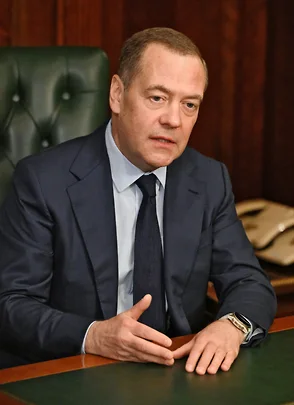
Dmitry Medvedev: Problems in the strategic sphere are only getting worse
With the imminent expiration of the New START Treaty, the world will be in a position where there is no agreement on nuclear weapons and no arms control and therefore, no strategic stability. China has repeatedly refused to negotiate and its position is that it does not have nuclear weapons close to the number that Russia or the US has.
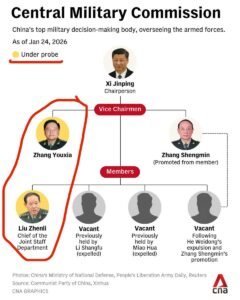 China has just purged some very senior military officials. Part of the reason is said to be that one of them (or more) spied for the US specifically on the Chinese nuclear program. The other reason proferred is that it is about insubordination.
We’ve had a controversy on Professor Karaganov and his statements about how nuclear arms are to be used as a deterrent. Tucker Carlson: interviews Prof. Karaganov
Dmitry Medvedev in this interview expresses similar thoughts as Professor Karaganov.
https://www.kommersant.ru/doc/8377464?from=vertical_lenta
Dmitry Medvedev, Deputy Chairman of the Russian Security Council, on the key Russian-American treaty that expires in February
The Russian-American Strategic Arms Reduction Treaty (START) will expire on February 5. After this date, Moscow and Washington will be left without any arms control agreements or negotiation process for more than half a century. About the significance of the New START Treaty and the future of nuclear deterrence, Deputy Chairman of the Russian Security Council and leader of the United Russia party Dmitry Medvedev told Kommersant’s special correspondent Elena Chernenko, during whose presidency the New START Treaty was signed.
— What role did the New START Treaty play in Russian-American relations and ensuring strategic stability? Did it meet the expectations you had when you signed it?
— At a certain historical period, the START Treaty has generally fulfilled its main functions. It really played quite a positive role. It worked to maintain strategic stability and reduce the number of incentives for an arms race. It provided the necessary predictability in the field of strategic offensive weapons.
At the same time, there were also negative aspects. The Russian side had a number of claims against the American side in connection with specific provisions of the treaty. There were also destructive steps taken by the Biden administration. They went against the fundamental principles and understandings set out in the preamble to the START Treaty. Without their agreement at the negotiation stage, the contract simply would not have been concluded. All this eventually led to the fact that in 2023 Russia was forced to suspend the START Treaty. The problem was not the “quality” of the agreement itself, but the US’s irresponsible approach to its implementation and to the entire complex of Russian-American relations.
Nevertheless, the New START Treaty has not lost its positive significance in recent years, even though it has been suspended. Recognizing this, both parties have expressed their intention to continue adhering to the central quantitative restrictions of the treaty until its termination in February 2026.
In September last year, our country proposed going even further. The President of Russia put forward a constructive initiative: the voluntary adherence of the parties to the START limits for at least one more year after the end of its life cycle. The Head of our State emphasized that this measure can only be viable if America acts in a similar manner and does not take steps that violate the current parity.
The implementation of the Russian initiative could be a significant contribution to global security and the expansion of strategic dialogue with the United States. However, we have not yet received a substantive official response to our proposal from Washington.
— American officials (primarily from the Republican Party) have repeatedly claimed that the New START Treaty is not beneficial to the United States. Recently, President Donald Trump stated that the treaty has “many weaknesses” and that the negotiators did a poor job. What do you think?
— I think that Trump was referring to the American negotiators. He “loves” Obama.
But I want to emphasize the main point. Washington’s decision to take steps that ultimately undermined the New START Treaty was not the fault of those who prepared and signed the treaty.
At the negotiation stage, both teams worked professionally. The agreement was complex, multi-layered, and non-trivial. Each point was carefully considered. The final document was the result of genuine compromises that were equal and mutually beneficial. At the time, we both agreed that this was a classic win-win situation.
I remember this as a direct participant in the events. For obvious reasons, as the President of the country, I was deeply involved in the negotiation process. I had numerous telephone conversations with the then President of the United States on this matter. In one of these conversations, I ironically referred to a well-known saying: if you want to do something truly well, you have to do it yourself.
Although, of course, it was a team effort. And the scale of the efforts of all the participants was really impressive. As was the result achieved.
Therefore, all the negativity that later began to “grow” around the New START Treaty is not related to the document itself, but to the subsequent behavior of the American side and the events surrounding the treaty.
If Washington has reevaluated the parameters of the treaty over time and decided that they allegedly “didn’t get enough” from the New START Treaty, it only speaks to the high level of professionalism of the Russian negotiators who managed to defend our national interests.
— As you stated, the United States has not yet responded to Russian President Vladimir Putin’s proposal to maintain the central quantitative ceilings of the New START Treaty for one year after its expiration. Do you see potential for renewed cooperation with the United States in the field of arms control?
— The prospects for resuming fruitful cooperation with the United States on arms control are directly related to the availability of favorable conditions for this. First of all, basic normalization of Russian-American relations is necessary. Under Biden, these relations have deteriorated to a level significantly worse than during the Cuban Missile Crisis.
We see that the new US administration is trying to rethink the reckless and extremely risky course of the previous US authorities, who sought to inflict a “strategic defeat” on our country. This is a shift in the right direction, but the movement is still very weak. We are only at the beginning of the journey, and success is not yet guaranteed. Moreover, Donald Trump is inherently unstable in his political orientation.
Before building something new, you need to make sure that it won’t collapse under the burden of old and unresolved problems.
We need to make sure that Washington is truly willing to respect our fundamental security interests, not just in words but in practice. We also need to ensure that we can work together to reduce the potential for conflict on an equal footing.
Therefore, there is no point in rushing to make optimistic predictions about the imminent resumption of a comprehensive and fruitful strategic dialogue between Russia and the United States, which would include issues related to arms control. The problems in the strategic sphere continue to grow as a result of the US’s destabilizing actions. Suffice it to recall the highly provocative “Golden Dome for America” missile defense project. It fundamentally contradicts the assertion of the inseparable relationship between offensive and defensive strategic weapons, which, by the way, was enshrined in the preamble of the New START Treaty.
It is also worth mentioning the statements made by the American leadership that Washington may resume full-scale nuclear tests. This would significantly complicate any potential strategic dialogue between Russia and the United States.
There are many other negative examples.
However, there are clearly not enough positive signals from the American side. In particular, there is no positive response to our post-START initiative. Therefore, I will say briefly that it is better to have no START IV than a treaty that only masks mutual distrust and provokes an arms race in other countries.
— What do you think the future of the arms control regime will be like after February 5? Do you see potential for multilateral agreements? Or will there be no regime and the world will face a new arms race between nuclear powers?
— First of all, we need to wait until February 5 and see if the United States provides any meaningful response to the Russian initiative. Theoretically, if we look at the calendar, there are still some small chances for positive decisions.
If we don’t hear any specifics from Washington, we will proceed based on the actual steps taken by the American side. We are closely monitoring these steps and will continue to do so.
Russia is ready for any development of events.
New threats to our security will be met with timely and harsh measures. There should be no illusions about this. Moreover, in addition to traditional strategic offensive weapons, new and very powerful types of weapons are emerging. All countries are engaged in this process. And we are, of course. We do not need to look far for examples: just recall the Burevestnik, Oreshnik, and Poseidon systems.
As for possible multilateral agreements, there is currently no queue of people willing to discuss a new restrictive regime in a broader format than Russia-USA. Therefore, discussions on this topic are pointless. Moreover, I am confident that the nuclear club will expand.
— How do you see the development of the situation in the field of nuclear deterrence in general, given that, as you said, there is no prospect of an early resumption of the comprehensive strategic dialogue between Russia and the United States, but there is also no queue of people willing to discuss a new restrictive regime in a broader format?
— A lot still depends on Russia and the United States in this area, as they are the largest countries in terms of their nuclear capabilities. It is pointless to deny that the nuclear club is much larger today. There are official members of the nuclear club who have signed the Treaty on the Non-Proliferation of Nuclear Weapons, as well as unofficial members who either recognize themselves as nuclear powers and even have it stated in their laws, or do not recognize themselves as such, but everyone knows that they are. Given this, it is time to look at the issue from a broader perspective.
As for the overall situation, it is not a happy one, to put it mildly. It is getting worse, as the general instability in the world and the contradictions, or even the rift that has formed in the global order, are pushing some countries to consider the most effective way to protect themselves. It is possible that some countries will believe that acquiring nuclear weapons is the best option. Therefore, as I said earlier, I believe that the nuclear club will continue to expand, despite all the discontent.
A number of states have the technical capabilities to create a military nuclear program, and some of them are already conducting research in this area. Yes, humanity may not be interested in this, but let’s be honest, there is no other way to guarantee the protection of one’s country, its sovereignty, and its interests.
There’s no need to be coy; we need to openly acknowledge that if the Soviet Union and Russia didn’t have nuclear weapons, our country might not exist anymore.
In general, my assessments of the future nuclear non-proliferation regime are quite pessimistic.
The current officially recognized nuclear powers have the potential to prevent this scenario from unfolding. All that is needed is political will.
— Do you have any idea which new countries could join the nuclear club?
— I will only say that many countries, as evidenced by both open sources and intelligence data, are conducting research in this area. However, the line between peaceful and military nuclear energy is highly fluid. The emergence of new members in the nuclear club is a possibility.
—Will this stabilize or destabilize the situation?
— This is a difficult question. On the one hand, it may seem that the more members there are in the nuclear club, the more countries that have nuclear capabilities, the less stable the situation becomes. There is always the possibility that someone might use nuclear weapons in a local conflict.
On the other hand, it will make states think about the consequences of provoking certain conflicts.
Since you asked me about this, the Europeans, and under the Biden administration, the Americans, have constantly provoked us into taking tough decisions. And these provocations continue. Remember what happened at the end of the year, when there was an attack on the residence of the President of the Russian Federation using a massive number of unmanned aerial vehicles. In fact, this could have been grounds for a retaliatory strike, including the use of special weapons.
This kind of game is extremely dangerous.
I don’t think it’s possible to say definitively what the military atom brings to the conditions of humanity’s existence. On the one hand, it creates immense tension, and on the other, it clears the minds of those who may have the most dangerous intentions.
— In your opinion, what measures, in addition to the system of arms control treaties that is becoming obsolete, could reduce the risks of nuclear war?
— When it comes to reducing strategic risks, we have always taken a comprehensive approach. In today’s context, we believe that nuclear powers should follow a set of fundamental principles in their interactions.
I will note the most important of them: this is the principle of equal and indivisible security, the refusal to infringe on each other’s fundamental interests, and the focus on resolving contradictions that could lead to military confrontation. If these principles are met, strategic risks will be reduced.
In any case, arms control serves a secondary function. It is a tool that helps the parties to consolidate their positions in practice, through the implementation of the agreements reached. This is achieved through restrictions on specific types of weapons and regular inspections to ensure compliance. However, these measures alone are not a panacea.
We consistently advocate that any strategic dialogue and all efforts to reduce nuclear danger should be systematic. They should be based on constructive political positions in building bilateral relations in this crucial area.
If we are not heard, we act proportionately to restore parity.
Or we create something fundamentally new. Something that calms our enemies for a long time. Therefore, the successful work of the Russian military-industrial complex is a tranquilizer for the neurotics in the club of Russia’s enemies.