

Michael Hudson: Passive Income Poodles
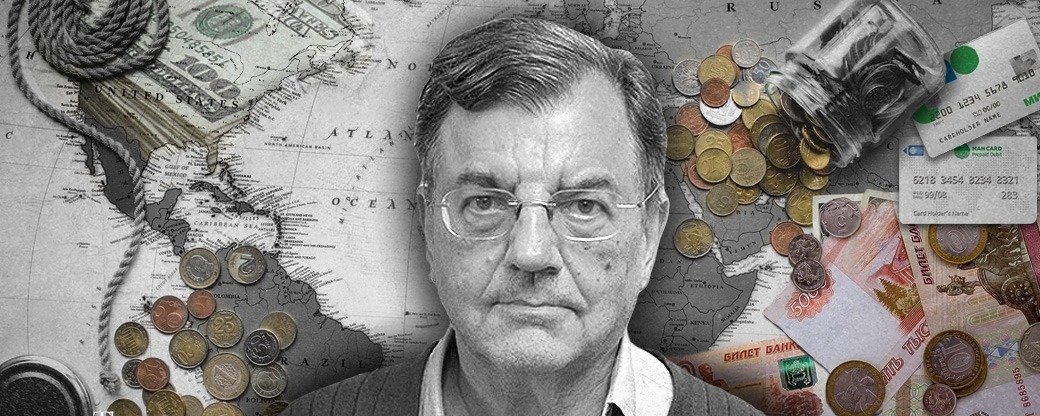
In Short Form: America will continue to export financial colonialism abroad — and deepen economic feudalism at home.
Economist Michael Hudson warns that the U.S. has morphed into a “free lunch economy,” where wealth flows not from production but from unearned rents and financial gains. Wall Street landlords like Blackstone buy up homes, driving rents higher while families face stagnant wages and rising debt. What was once industrial capitalism has become finance capitalism, hollowing out the economy and enriching a rentier elite. The result is growing inequality at home and financial colonialism abroad.
The United States prides itself on being the land of opportunity, but its economy has been quietly transformed into something closer to a rentier feeding ground. The “free lunch economy” sees a system where wealth is siphoned not by producing value, but by extracting unearned income — rents, fees, and financial gains made in one’s sleep.
Wall Street firms like Blackstone now own hundreds of thousands of homes across the country, turning what was once the American dream of homeownership into a landlord’s empire. As rents soar and homelessness explodes, private equity celebrates “passive income” as if it were innovation, while working families face rising costs and stagnant wages.
This isn’t industrial capitalism, where profits once came from organizing production and employing labor. It is finance capitalism — an economy dominated by debt, speculation, and monopoly control. The wealthiest Americans have successfully shifted the tax base away from themselves, while inflating housing and healthcare costs that drain workers’ paychecks.
Milton Friedman once declared “there is no such thing as a free lunch.” Yet modern U.S. capitalism is built on exactly that: a free lunch for the landlord, the monopolist, and the banker, funded by the indebtedness of everyone else. Meanwhile, nations like China that keep banking and credit in the public sphere are outpacing the West in real, productive growth.
The “free lunch economy” is not sustainable. It hollows out the industrial base, fuels inequality, and locks society into dependency on the very rentier class the classical economists once fought to abolish. As Hudson argues, unless this system is confronted, America will continue to export financial colonialism abroad — and deepen economic feudalism at home.
Related Posts
-
Epitaph for the MoA between the U.S. and Iran – and for U.S. control of West Asia
July 13, 2026 -

Michael Hudson : Well, I sure was wrong in what I expected Trump to say and do
April 2, 2026 -

Michael Hudson: How Washington Uses Energy as a Weapon (Important Replay)
January 15, 2026 -
Lend a hand to Michael Hudson to destroy the hoaxes
October 31, 2025 -
Michael Hudson: How A Nation Makes Money in Their Sleep
October 11, 2025 -
Michael Hudson & Radhika Desai: Geopolitical Economy, New Season
October 6, 2025 -

Richard Wolff & Michael Hudson: The U.S. Cannot Survive this WAR
October 6, 2025 -

Michael Hudson, Prof Wolff: Cascading Policy Failures Undermine Empire
October 1, 2025 -
Michael Hudson: The Fascist Protection Racket: Tribute States
September 25, 2025 -
Michael Hudson & Glen Diesen: When Most of the World Says No
September 13, 2025