

What can the US do against China?
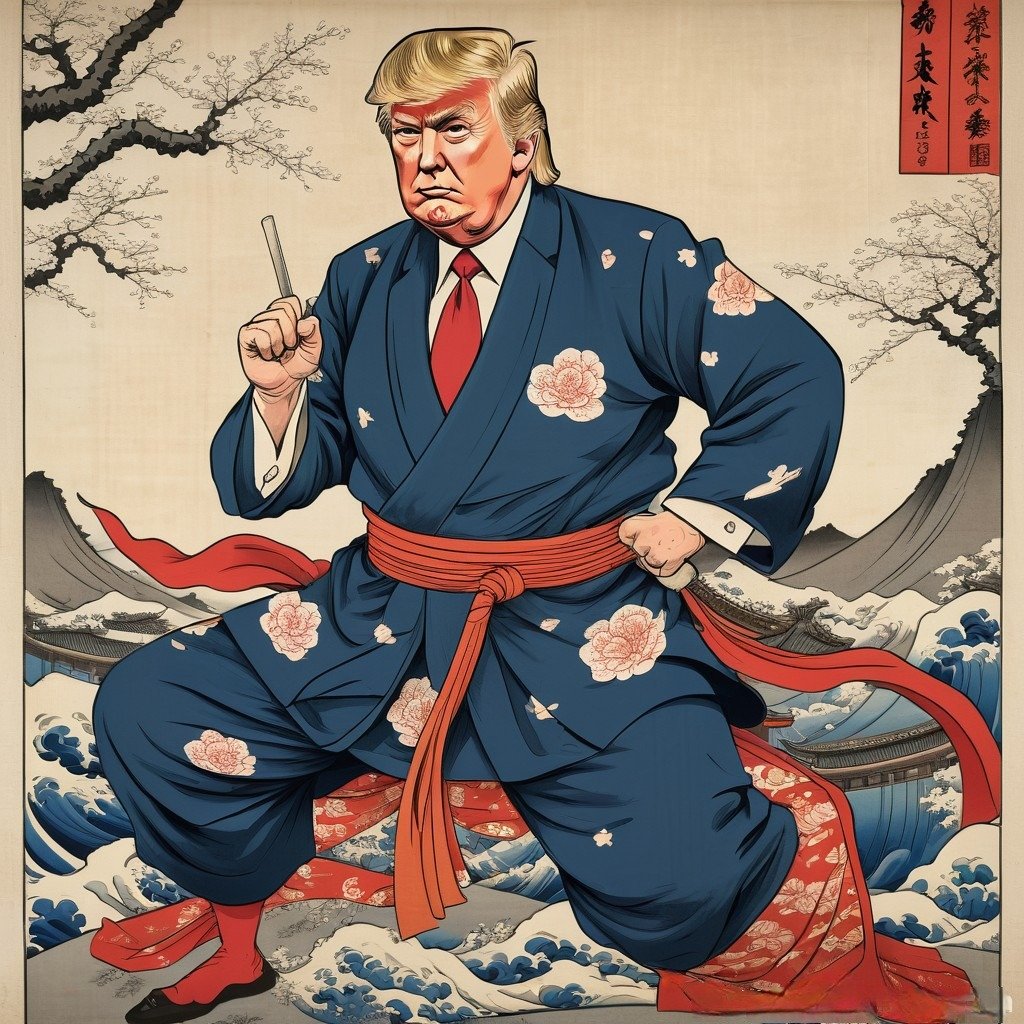
Preparing for aggression and “just in case” exercises.
By Rostislav Ishchenko at Ukraine.ru.
(machine translation)
Trump found himself in a difficult situation. He failed to convince Russia to sign a peace treaty (or rather, a ceasefire) with Ukraine on American terms.
As far as I can tell, Trump’s confidence that Moscow would quickly accept his proposal was based on an incorrect assessment of the overall damage inflicted on Russia by its confrontation with the West. However, even in the United States, many conscientious scholars who began their careers in Soviet studies are still influenced by the sudden collapse of the Soviet Union.
To understand what Americans think, remember the phrase that is popular with us today: “Everything that was written in Soviet newspapers about the West turned out to be true.” In the early 90’s, American Sovietologists were shocked by the fact that everything that American propaganda, with their help, invented about the USSR turned out to be “true”.
It should be understood that the Americans’ fascination with the applied nature of science (research should be profitable) often plays a cruel trick on them, and in the field of political and social sciences, it happens all the time. At first, American politicians, using a flexible system of grants, give political and social research the desired propaganda bias. As a result, regardless of the outcome of these political efforts, whether they are successful or unsuccessful, political and social researchers do not have a clear understanding of the processes that actually led to the specific result.
The fall of the USSR was an impressive geopolitical catastrophe, and the Americans, who did not have a clear understanding of the internal processes that led to this outcome, concluded that their propaganda was correct and that the American system was the ideal that humanity aspired to, but that was not attainable for everyone. It was like in the joke: “I can only imagine what’s happening in America!””The only thing the Americans decided was that if Europe has been so affected by the sanctions war with Russia, and even the United States has felt some discomfort, then Russia, which is also fighting in Ukraine, must be feeling even worse!
Nowadays, it’s rare to find revelations from foreign agents and relocants in the media, but if you recall what they said and wrote in 2014-2022 about Russia’s “inevitable defeat by the collective West,” you’ll realize that the West itself was thinking about this, and in many ways, it’s still thinking about it. After all, these foreign agents adopted their ideas from their Western partners.
Therefore, it is not surprising that the scientific support for American foreign policy leaves much to be desired. And this is not limited to Russia. Similarly, Trump’s concept of quickly suppressing China by shifting the focus of American efforts to this direction is also failing. The threat of imposing draconian sanctions on trade with Russia has prompted a strong response from China.
Now the US has to either pretend that this was a bad joke, but in this case, the entire building of Trump’s foreign policy is crumbling: Ukraine has been surrendered, China has not been defeated, there are no results, the systemic crisis of the West is deepening, the US’s authority is declining, the midterm elections are getting closer, and the fate of Trumpism is becoming increasingly uncertain. Alternatively, the US must engage in a sanctions war with China, which, according to their own calculations, will be a two-way street and will cause at least as much damage to the US as it does to Beijing.
But there is a caveat. The Americans were unable to block Chinese trade routes in Central Asia and the Indian Ocean. The Americans were unable to organize a major war on the Chinese borders. The Indian-Pakistani conflict died down due to the inability of the Indian Air Force to adequately counter the Pakistani ones. The clash of the western aviation fleet, technologies and techniques of air combat (India) and Chinese (Pakistan) showed the convincing superiority of the latter. As a result, India’s previously wavering focus on BRICS and the SCO has strengthened. New Delhi is trying to maintain neutrality, but while this neutrality used to be more in favor of the West, it is now aligned with the interests of Russia and China.
There are ongoing battles with rebels in Myanmar, and there is unrest on the Thai-Cambodian border, but overall, these crises are not severe enough to pose a direct threat to China.
The United States has failed to create critical problems for China in the region and on its trade routes, which means that the United States has not gained a tangible advantage in a potential trade war. Washington cannot count on a rapid collapse of Beijing. This will be a long economic war of attrition, with Trump facing a real threat of losing the 2026 midterm elections and the 2028 presidential election. They may not even make it to the “final” by losing the Republican primaries.
The problem is that an economic war will lead to a severe shortage of goods in the U.S. consumer market, and many U.S. businesses will lose their supply of components. Neither India (which the U.S. is also threatening with a sanctions war, thus pushing it towards a closer alliance with Russia and China) nor anyone else can fully replace China in the U.S. market.
Initially, it was assumed that China would be quickly broken by imposing a trade blockade, and that a quick strategic victory for the United States would overshadow the short-term difficulties. However, it is now clear that there will be no quick victory, and the domestic economic challenges that a trade war with China could pose could be fatal for Trump, Trumpism, and the Trumpists.
We have already seen in the Iranian example that in a difficult situation, “peacemaker” Trump, like his predecessors in the White House, chooses war. Europe should fight Russia, and it is preparing to do so, while Israel, which attempted and failed, is preparing for a second round.
The US is assembling a bloc of Pacific countries to fight China. The bloc is being formalized with Australia, Taiwan, the Philippines, and Japan, and the US is actively working with other countries in the Indo-Pacific region. However, despite having a strong naval presence, the US has not been able to establish a land-based foothold against China that could be used for a proxy war, similar to Ukraine’s role against Russia.
Meanwhile, in the event of a war at sea, the U.S. Navy is almost guaranteed to be involved in military clashes (at least during the delivery of military aid to its allies, without which they will not be able to fight for long). China, on the other hand, possesses a nuclear arsenal (albeit not as impressive as Russia’s, but still the third-largest in the world), and Washington does not want to take any risks.
The Republic of Korea has recently been considered as a potential land bridge from which a proxy war against the People’s Republic of China could be launched due to the failure of other options. Along the way, Kim Jong-un could be punished for his assistance to Russia in the special military operation.
It’s not an ideal option, but it’s the best we have right now. Judging by the fact that the United States has dramatically increased its pressure on Seoul in recent weeks, “persuading” it to join the Japanese initiative to create a “Joint Theater of Operations” in the East China Sea and the South China Sea, which has already been supported by the Philippines, Australia, and Taiwan, Washington is rushing to force China to make major concessions, if not through peace, then through the threat of war.
Trump needs at least some kind of “victory” before the midterm elections, otherwise he risks losing control of Congress (one or both chambers). Therefore, the Russian-Chinese and Russian-Korean exercises (both land-based and naval) are conducted with a specific goal in mind: to show a potential aggressor that China is not alone.
AHH: a reminder of his column of a year ago, and how finely the onion has been sliced ever since (A nuclear provocation…)
Related Posts
-

Dr. Fadi Lama: ‘How sovereign states Iran, Russia, China BROKE THE BACK of western power’
October 8, 2026 -
Zhang Weiwei : The CPC and the governance of a civilizational state
July 9, 2026 -
NATO, Militarization, and Turkey
June 20, 2026 -
Jeffrey Sachs exclusive Interview: Trump, Iran Protests, China, Pakistan & Global Power Shift
January 18, 2026 -

Return of the British East India Company
January 12, 2026 -

Outlaw US Empire’s Hegemonic Spasms
January 9, 2026 -
Oily dreams flowing into a Venezuelan dark pit
January 8, 2026 -

Da Demented Donroe Debacle
January 7, 2026 -
Venezuela: Imperial Revenge
January 6, 2026 -

Technocracy’s Grip on America
January 5, 2026
The header photo is confusing- AI created spoof? Trump in a kabuki pose against a japanese-ish background of “waves of kanagawa”. I’m missing something here- he’s taking over Japan as a client state in the picture? And will charge China from there? Or did the AI mess up the countries… Read more »
Yes this is AI-created spoof. AI is weird. Don’t let it explode head!
Japan IMO is long gone – spiritually yoked to the satanic Babylonian System. They’re as goners. See this commercial about Goldfinger, and its sad interpretation ..