

Here Comes China
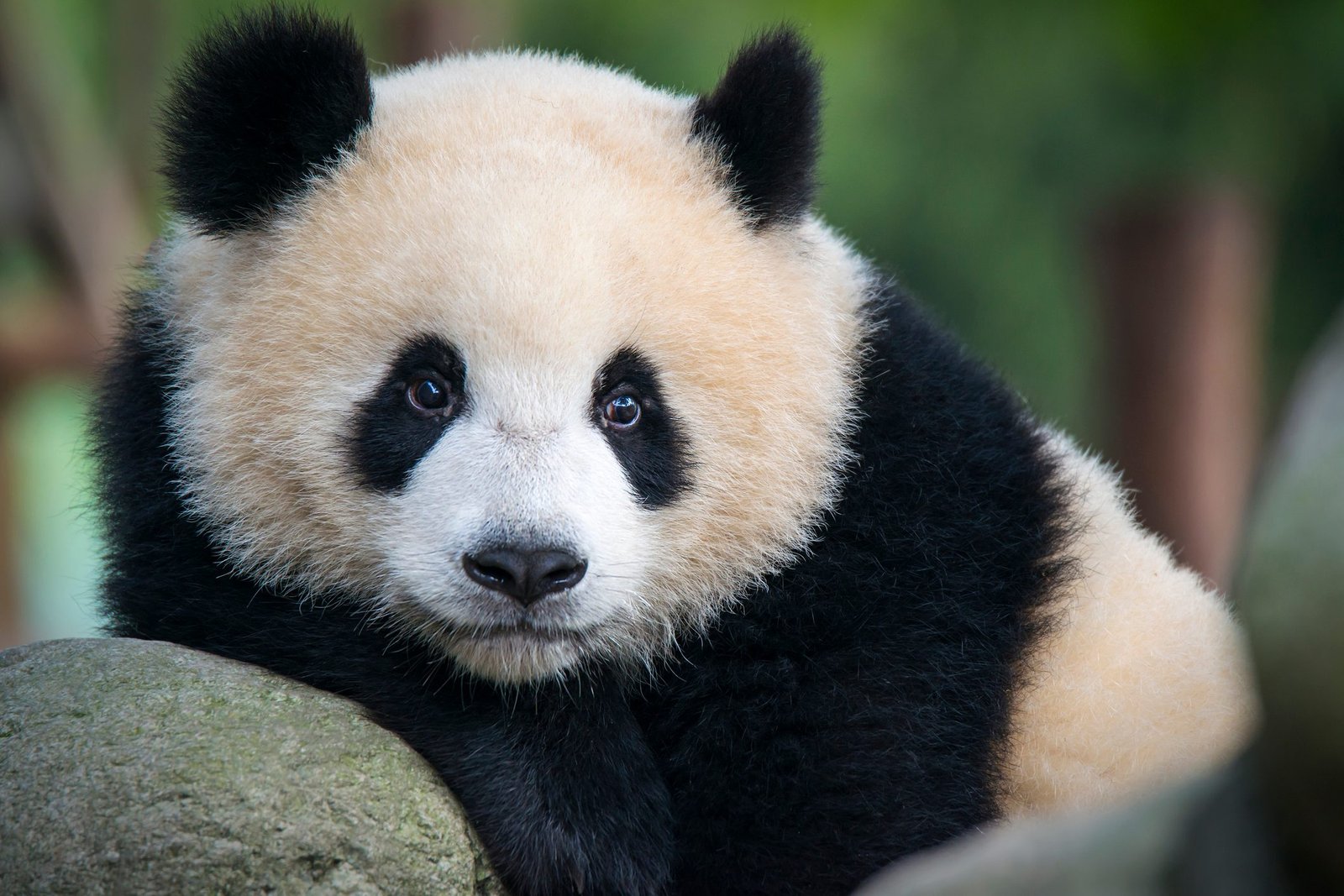
China has brought Giant Pandas back from extinction levels. This process has formed a heartwarming part of the Chinese story over the past 30 years. By the 1980s, their numbers in the wild had fallen to just over a thousand and extinction loomed. China started a dedicated program to bring these cuddly animals back. Around 2016 when the wild population doubled, China announced that they are no longer endangered but still vulnerable. Then the story broke of the two pandas in the Memphis Zoo that looked emaciated and certainly not cared for. YaYa and LeLe were loaned to the zoo as part of a program of panda diplomacy and as a symbol of peace and friendship. LeLe died and YaYa was taken back to China.

December 31, 2021, Memphis, Tennessee, USA: YA YA the giant Panda at the Memphis Zoo in Memphis, Tennessee on December 31, 2021. She is on loan from China. There is a controversy surrounding YaYa saying she is not being well cared for. A zoo spokesperson said diagnostic testing show that Ya Ya is healthy. (Credit Image: © Karen Focht/ZUMA Press Wire
By the time Ya Ya arrived home “We welcome Ya Ya’s return online” had chalked up 340 million reads on the Chinese messaging platform Sina Weibo by the time her 16-hour flight from Memphis, Tennessee, touched down. The Sina Weibo hashtag “Ya Ya has landed in Shanghai” had been viewed 430 million times.
Chinese living in other countries started a process whereby all the panda’s in zoos outside of China were visited and eyeballed to see for themselves that the pandas are being well cared for.
Ya Ya looks much improved now after about three months.

Now the Giant Panda has become a global symbol of conservation success in China and the population cares deeply for these wonderful animals. Ya Ya is now in the Beijing Zoo and regular health updates are demanded from the Chinese citizenry.
 There is much conservation work being done in China. Now, they are doing it again with the Yangtze River Finless Porpoises. Data from the Yangtze Finless Porpoise Expedition 2022 across the whole Yangtze River basin showed their population had reached 1,249, a historic “rebound.” They are known as the”smiling angels of the Yangtze River” as their slightly curly lips resemble those of a smiling person. But, China had to do serious remedial and cleanup work on the Yangtze river to the extent of running electrical ships.
An electric-drive-only, 700 TEU container ship is plying a regular 600-mile Yangtze route, from world’s largest container port on the Yellow Sea. 36 containers of freshly charged batteries will be dispersed through 30 container ports along the 2,700 km waterway (2x the Mississippi and 3x the Rhine) so the ship can slip into a berth and exchange batteries. Read article →
The programs of remediation are dedicated, reserves and land is set aside for the animals to have their specific bioregions, and of course, at the end of the day, it is a massive tourist attraction. Again we see China doing what it does best, i.e., do development of the right thing, and reaping the rewards later.
This environmental improvement bears fruit. 1 million Yangtze waterfowl, 109 species spotted in the Yangtze River Delta during a 10-day survey. Among them, 106,508 migratory waterfowl of 65 species were recorded in Shanghai, 436,583 of 82 species in Jiangsu Province, 130,936 of 79 species in Zhejiang Province, and 476,931 of 66 species in Anhui Province. Read article →
If you know anything about planting food, you will know that hybrids do not produce viable seeds. China put this problem in the laboratory. Hybrids of Japonica and Indica rice are stronger and more resistant to pests, diseases and drought, but cannot produce seeds because of reproductive isolation – mechanisms that prevent different species from producing fertile offspring. Finally, CAAS and Nanjing Agricultural University, led by academician Wan Jianmin, overcame this challenge. Read full article →
 Xi inspected the best-preserved ancient artificial cypress forest in the world, the Cuiyun Corridor in Jiange County, above, an ancient passageway connecting Guanzhong Plain with Sichuan Basin saying, “The forest has survived for so long and been protected so well, thanks to the inheritance and practice of such policies since the Ming Dynasty (1368-1644) as logging prohibition for both officials and civilians, and has benefited from the protection efforts of generations..” Read article →
Power

China’s green energy generation is now exceeding its coal-powered generation.
Medical and Health
The US FDA licensed Sinovationmed’s 3D structure neural surgical robot — reportedly the first of its kind in the world — for sale. Read full article →
Leukemia patients who failed to respond to other therapies have 90% remission rates within two months of CAR-T treatment, which works by supercharging T-cells, the body’s main disease defense, so that they latch onto and destroy cancer. China’s Gracell speeds up the cell production stage, cutting CAR-T treatment to $71,000, below Novartis $475,000 and Gilead’s $373,000. Read article →
Health Ministry pushing a vaccination drive for the elderly ahead of a possible COVID-19 XBB wave in the autumn and winter. Read article →
At Shanghai Yueyang Hospital, “Outpatient treatment is arranged by disease in a new building, so all departments and tests required for each disease are in the same place,” said Dr Zhou Jia. “The arrangement streamlines cooperation between experts from different departments for a more timely and precise health service. Through digital-twin big-data systems, we know the real-time data of patients, service quantity, registration quantity and number of waiting patients, to conduct 5G-based direction in time”. Read article →
This is the state of current propaganda on China .. It is either too fast, or too slow, or at what cost or any such a little rider to make it sound like a wonderful thing that China has done, is just a little too fast, or too slow, or at what cost or something like this.

A History Break: After the deployment of THAAD (US missile defense system) in 2016, China instituted a range of informal measures to punish both the Lotte group, which previously owned the property on which the THAAD system was deployed, as well as other South Korean economic interests. Lotte’s supermarket division in China faced a rash of alleged fire safety violations that forced at least 87 of Lotte’s 99 stores in China to close and cost the firm an estimated $1.7 billion before it pulled out of China. Beijing also informally sanctioned South Korean interests unrelated to THAAD. Group tours to South Korea were halted, costing the South Korean economy an estimated $24 billion. Beijing also cracked down on Korean cultural exports. Despite the Moon Jae-in administration reaching an agreement with China to normalize economic relations in 2017, China did not allow a new Korean online game or movie release until December 2021, and the first streaming of a new K-drama had to wait until January 2022. South Korea’s experience is that even after China agrees to end retaliation it lingers. [S. Korea is in a recession–Ed] Read more →
“Come and visit us again,” said my host. “Bring your wife and have a good holiday here. But I advise you to come soon if you want to see our country as it is now.” He waved his hand toward the window which looked out on a broad, tree-lined boulevard of shining new apartment houses and shops. “It is possible that all this will be destroyed if war breaks out. I say to my comrades that they should not think they can keep our nice theaters and things as they are now; they must realize that as long as imperialism exists, war may break out again. Especially as long as the unification of our country has not been achieved, things may be destroyed again.” My host was Premier Kim II Sung of North Korea, Pyongyang, May 20, 1967. Wilfred Burchett, AGAIN KOREA, 1968
The bottom line is that in the Korean War, the US confronted the hard truth that threatening a nuclear attack would not be enough to win the war. And the nuclear Korean War simply petered out. That is a historical truth that is unlikely to be forgotten today as a “lesson” when the US faces not one but three nuclear powers in Northeast Asia and all three with deterrent capability. That is why the visit by a US nuclear ballistic missile submarine to Busan, South Korea, on July 22, the first visit by a US submarine since 1981, which some US congressmen interpret as not only a warning to North Korea but also a deterrent against China, can only be seen as empty bravado. Read more →
Global Times: “China decided to resist the US aggression and aid North Korea during the Korean War after it had repeatedly sent stern warnings that if US forces crossed the 38th parallel China would not sit idle. However, the US did not take it seriously, thinking that China was only making empty threats and would not take action. As a result, they were caught off guard when they encountered the Chinese People’s Volunteers Army on the battlefield. Today, a similar major misjudgment toward China is occurring in Washington. The biggest difference between now and the Korean War era is that China’s strength has greatly increased. The consequences of infringing upon China’s security interests and national sovereignty will undoubtedly be much more severe… However, it must be clear that if there is another strategic misjudgment this time, the price it will pay will surely be much higher than 70 years ago.” Read more →
And from the lovely Tings Chak, unraveling the Argentina Deal
Related Posts
-

Here Comes China
September 8, 2025 -

China News: Here Comes China +
August 3, 2025 -
Here comes China: Selections from Godfree Roberts on his substack
September 4, 2024 -

Here Comes China: Economy, Tech
August 4, 2024 -
China’s Excellent Half-Year: More done in a week than the West in a year
July 16, 2024 -

Here Comes China!
June 1, 2024 -

Here Comes China – At technical breakthrough speed
January 7, 2024 -

Here comes China
November 28, 2023 -
Here comes China
July 29, 2023 -
Here Comes China
June 29, 2023