

This Month in China – October 2026
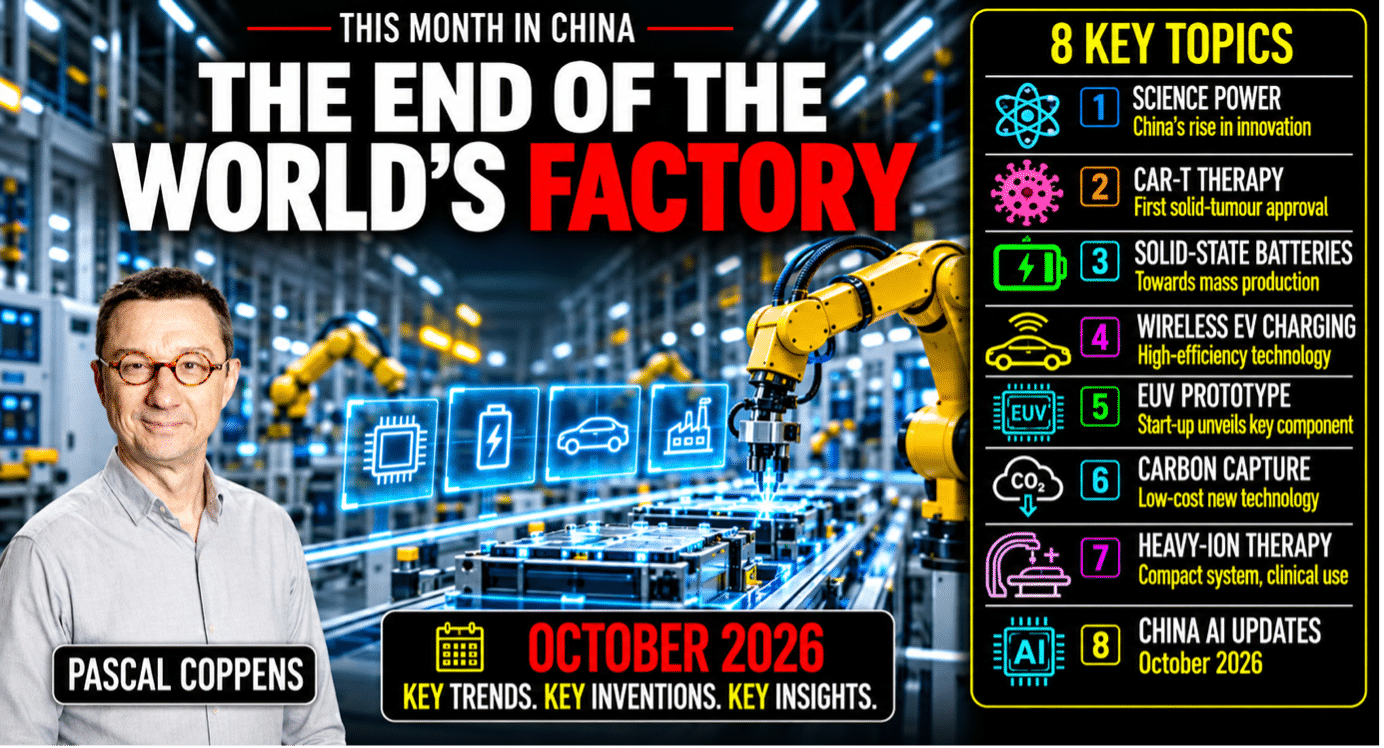
Bringing you the latest innovation news from China
The End of The World’s Factory
On my recent visit to Dongguan, an electronics manufacturing hub in China’s Greater Bay Area, I kept asking myself new questions. Why do Chinese producers remain somebody else’s factory? How long will they enable Western brands to make the big bucks? What is still missing for them to become global brands that ship more than just boxes?
For decades, the bargain suited us. Chinese factories manufactured and shipped products we sold to the world. Western companies largely controlled the design, development and intellectual property, along with branding, marketing and the customer relationship. We added software, integration, upgrades and support, allowing us to charge considerably more than the hardware cost. Those activities created real value. As we outsourced more production to China, we increasingly treated intelligence, creativity and the management of complex systems as our territory. We assumed China would always keep making or assembling the physical products, while we kept owning the intangible value around them.
That bargain, however, is beginning to break down. The end of the world’s factory therefore does not mean China will stop manufacturing. It means Chinese companies today increasingly see no reason to just stop at manufacturing for somebody else.
1. Chinese factories are leaving our shadow
This change begins with a customer we often underestimate: the Chinese buyer. In my personal experience, Chinese customers are among the world’s most impatient and demanding. They want things fast, cheap and always available, but they also expect good quality, reliability and strong support. For years, Chinese producers were associated with the first three qualities, while foreign brands, from KONE elevators to iPhones, were sought out for the latter three.
That distinction is becoming harder to sustain. McKinsey describes how local Chinese companies increasingly win through quality, value and relevance, supported by rapid product cycles and immediate customer feedback. I believe this domestic pressure has pushed Chinese brands and manufacturers to think more in complete solutions. Good hardware is no longer a good enough offer if the software frustrates users or the service lets them down. Having learned to deliver more solution-driven value at home, leading Chinese brands increasingly question why they should leave the overseas customer to somebody else to make the big bucks.
Five developments are now accelerating the ambition to take that capability abroad.
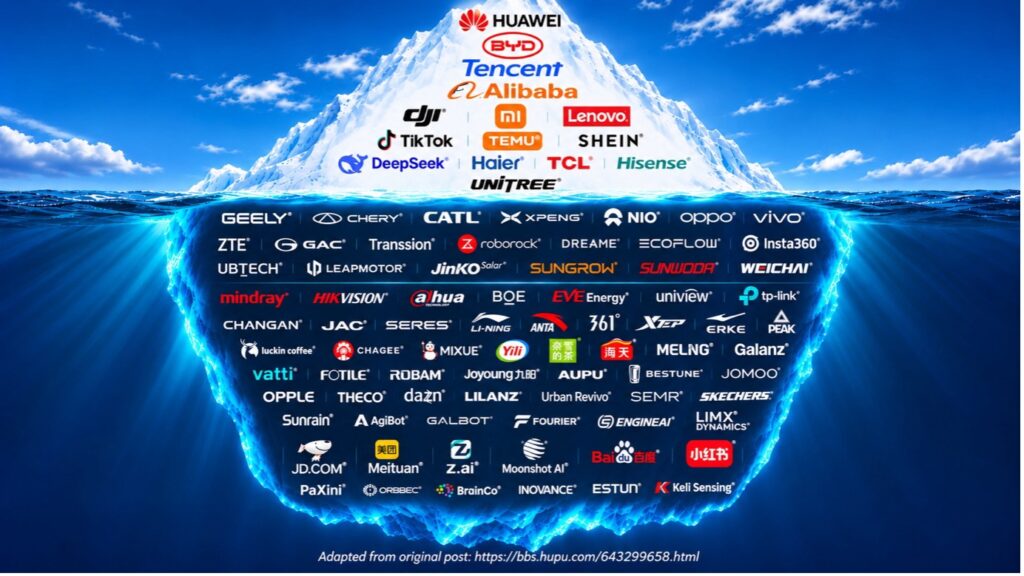
1. Product quality has crossed the threshold in more and more categories. During the 2020s, leading Chinese suppliers have increasingly combined competitive hardware with software and service suitable for the most demanding national and international markets. Not every supplier is ready to take on the world, but the pool of capable companies below the waterline is growing. The assumption that Chinese products need a Western company to make them attractive, usable and reliable is outdated. My brother tested a Tesla Y and Xpeng G6 yesterday, and today placed the order for the Xpeng. He called me afterwards justifying his sudden decision based on technical specs and driving experience. If you would have told me a decade ago he would ever buy a Chinese car, I would have told you the chances are close to zero.
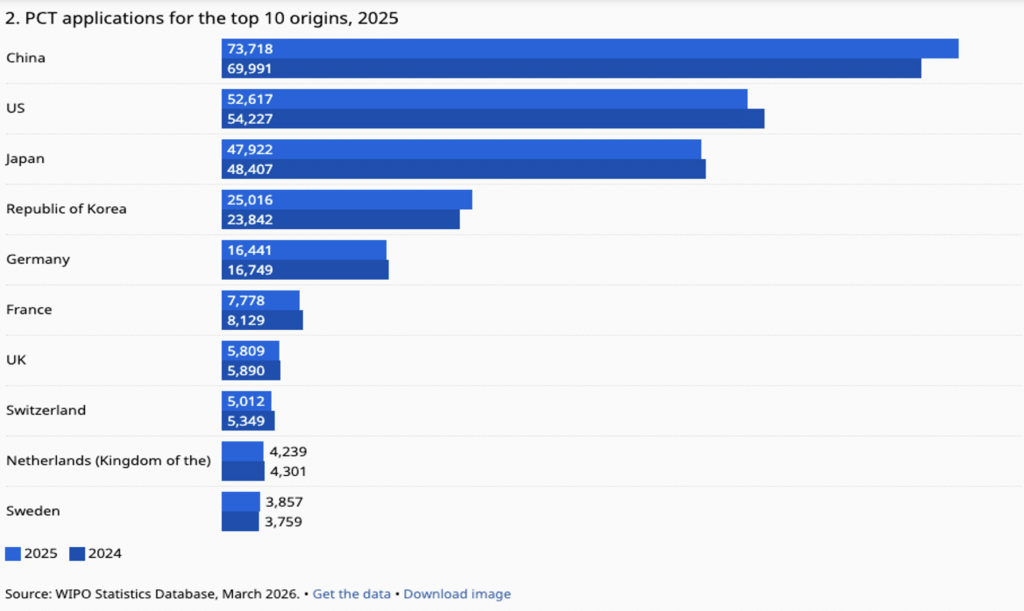
2. China has more IP of its own. Its companies have stronger portfolios and more experience protecting and using them internationally. China-resident applicants filed 73,718 international PCT patent applications in 2025, compared with 52,617 from US residents. At BYD, I was told last month the company files 45 patent applications every working day. As I explain in my recent book, China’s Next Miracle, we should no longer view Chinese companies as copycats but rather as “IP squirrels” strategically deploying the Western IP model against competitors. Applications are, of course, not proof of superior inventions, but a country creating this much IP has reasons to own the offer, not merely execute someone else’s specification.
3. Geopolitics makes dependence on Western buyers riskier as well. US technology restrictions and Western efforts to reduce reliance on China weakens the old division between Chinese production and Western intellectual value. The pressure runs both ways. This month, Chinese authorities prohibited SoftBank’s acquisition of ABB’s robotics business in China. As both sides seek greater tech independence, Chinese producers have more reason to build, sell and support their own technology now.
4. Domestic growth is harder to find. Market saturation in maturing industries and oversupply of producers is a reality, as well as more cautious consumption since the property crisis began. Fierce competition pushes companies abroad and towards services that extend the customer relationship. Even Beijing has acknowledged the imbalance between strong supply and weak demand. It is not that slow consumption drives all Chinese producers to dump their products, but lower margins at home are definitively a cause for them to look for more profitable markets. This follows the same logic that leads Western brands to first target markets with greater purchasing power for a new product launch.
5. Artificial intelligence accelerates the move from making products to delivering smart systems. It helps manufacturers develop software, interpret operating data and automate tasks around their equipment. Instead of leaving another company to add the intelligence, producers can increasingly offer it themselves. The opportunity is not simply better support but greater visibility into how customers use the product. Shipping the hardware then becomes the beginning of the relationship, not the end.
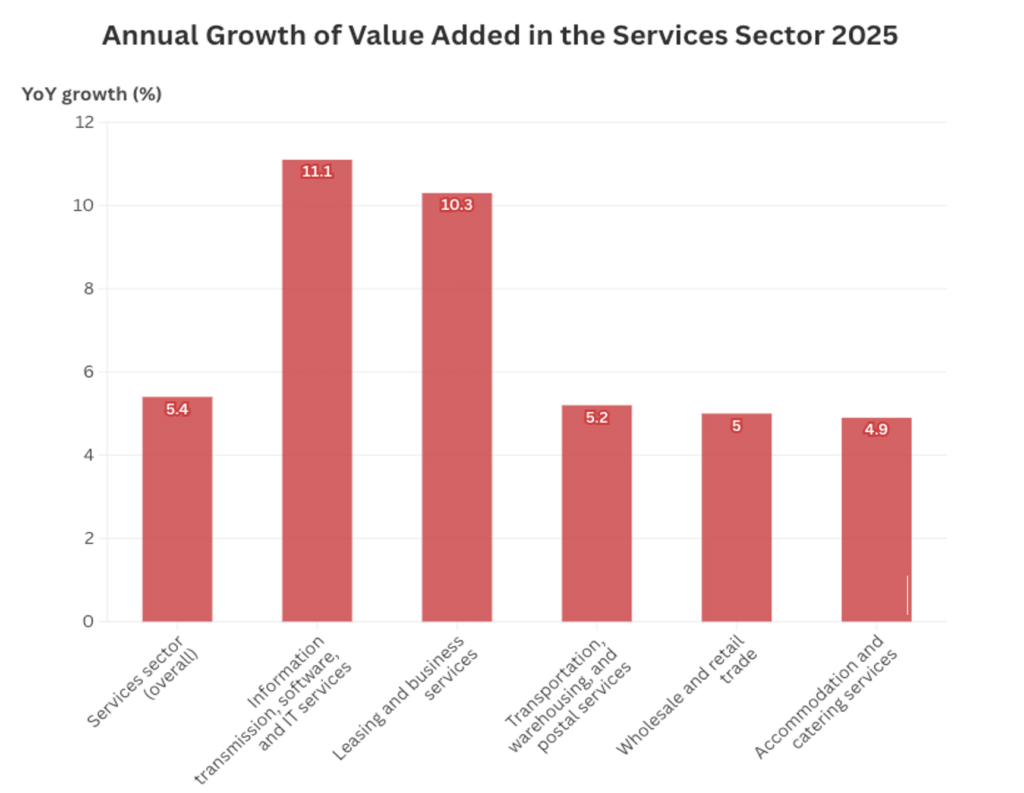
The economy reflects this expansion of capabilities. In 2025, information transmission, software and IT services grew by 11.1% in real value-added terms, and high-tech manufacturing by 9.4%, against a GDP growth of 5%. In January-September 2026, those sectors grew by 10.4% and 14.3%, respectively, against GDP growth of 4.6%.
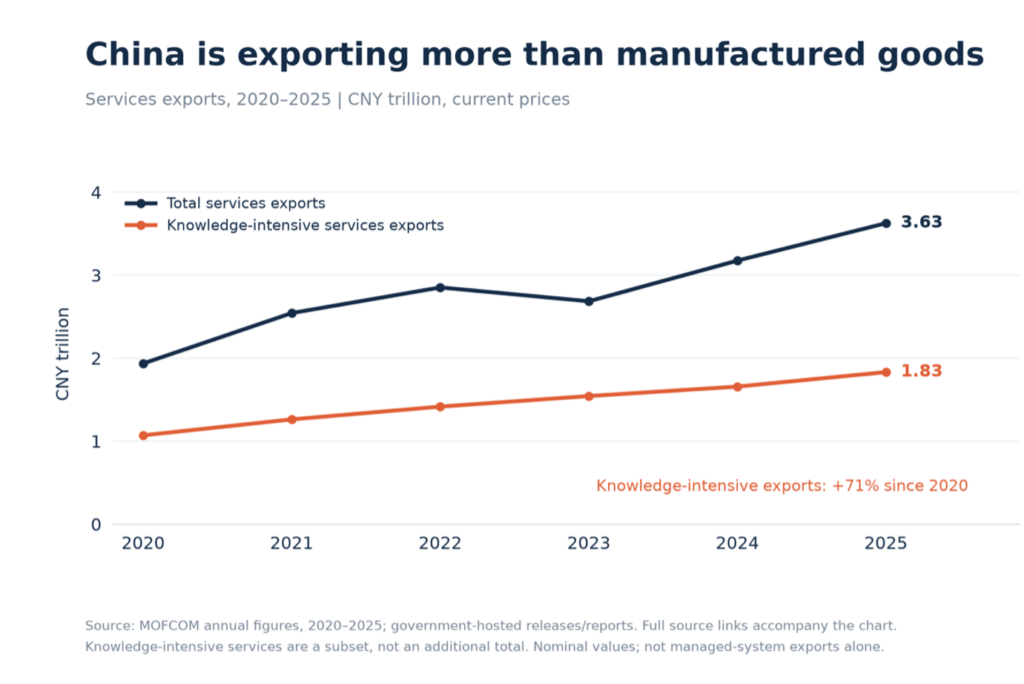
This expansion is not limited to the domestic economy. China’s knowledge-intensive services exports grew from approximately US$155 billion in 2020 to US$254 billion in 2025, an increase of about 64% in nominal US dollar terms.These exports cover more than services around manufactured products, but they underline a broader change: China’s international offer increasingly extends beyond the physical goods.
These developments fit Beijing’s New Quality Productive Forces agenda, which seeks innovation-led growth and higher productivity. In my book, China’s Next Miracle, I interpret this ambition through four connected goals: improve QUALITY, create NEW businesses, increase PRODUCTIVITY, and develop the FORCES of talent, knowledge and technology that build capabilities.
In the graph below, I separate the four distinct strategies of Beijing’s master plan for 2035 in how better manufacturing has to strengthen China’s traditional industrial base, while the new sources of value (read services, intelligence and branding) are aimed at building China’s future economy.
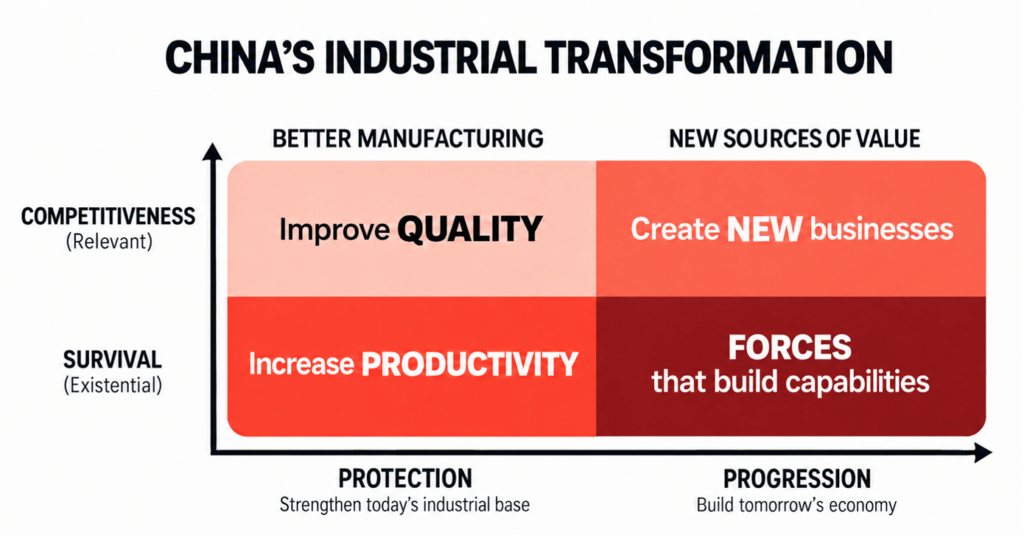 Adapted from my framework in China’s Next Miracle.
Beijing wants to PROTECT today’s industrial base through higher productivity and better-quality products, while pursuing PROGRESS through smarter systems, new businesses and new expertise. The horizontal axis captures these parallel ambitions: strengthening what China already has and building what comes next.
In my framework, the vertical axis distinguishes SURVIVAL from COMPETITIVE RELEVANCE. Automation raises productivity, while education and technological capabilities build the productive forces needed to sustain the economy. I see these as existential priorities for Beijing, making the path of transformation a non-negotiable. Better products and new businesses help China remain globally competitive and allow it to capture more value through services, support and branding. Here, China aims to become an innovation leader over time. The ambition is to move up the value chain without leaving manufacturing behind.
2. China wants to anchor the customer
In the same book I also distinguish between two corporate growth mindsets: brand positioning and market anchoring. Positioning asks, ‘Why should somebody choose you?’ Anchoring asks, ‘Why would somebody leave you?’
Many Western brands have excelled at making products distinctive, desirable, well supported and worth a premium. Chinese manufacturers on the other hand have more often built their strength through supply availability, the ability to deliver at speed, scale and affordability. These are differences in emphasis, not exclusive abilities. But for many decades, they supported a complementary relationship. Western companies positioned the offer, while Chinese suppliers became the hard-to-replace source behind it. What is changing is where Chinese companies want to anchor themselves today. Instead of remaining one link in a Western brand’s supply chain, they increasingly want to become embedded directly in the end customer’s operations.
Western brands could divide production among specialist suppliers while retaining the design, integration and customer relationship. No individual supplier needed to understand or control the whole product. But as more production concentrated in China, something larger developed around those suppliers. Engineers, designers, component makers, tooling specialists and assemblers built the collective knowledge and strong relationships needed to work together. Expertise remained spread across companies but increasingly became available within the same Chinese ecosystem. A Chinese producer no longer needed to master everything themselves to bring a complete product to the market. We outsourced each individual task. China built the collective capabilities.
Replacing a standalone robot in a factory can be relatively straightforward. Replacing a supplier whose robots, software and support are woven into the factory’s daily operations is a much bigger decision. It can mean retraining employees, changing integrations and rebuilding processes. The Chinese producer today is no longer just supplying equipment. He has become part of how the buyer’s business stack
This is market anchoring: becoming part of how the customer’s business runs, rather than simply supplying what it orders. The next step is to build a commercial model around that continuing end-user relationship. Instead of selling equipment once, the manufacturer can provide the equipment, software and support as ongoing service.
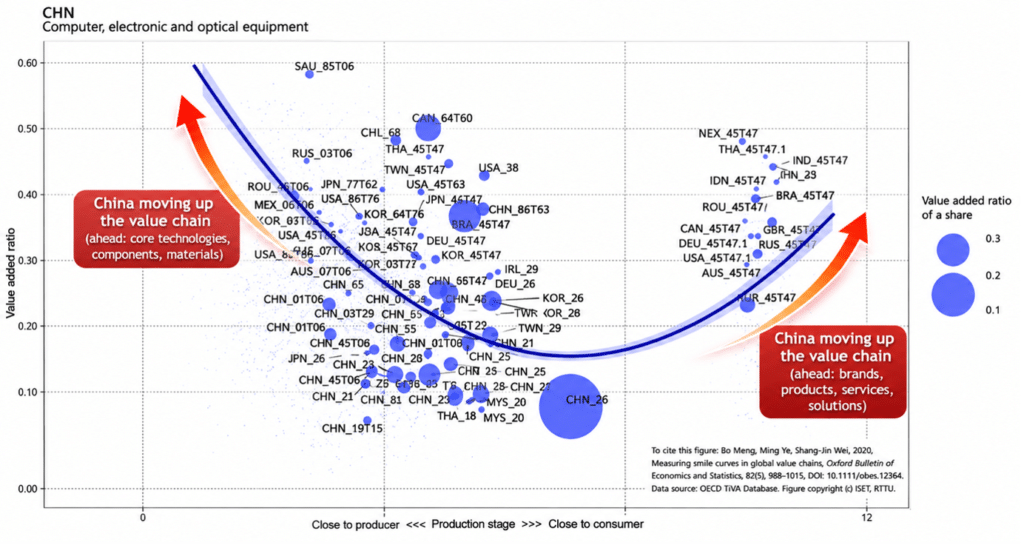 The OECD graph is based on the Smile chart from Stan Shih
3. From shipping hardware to delivering services
Hardware-as-a-Service (HaaS) changes the transaction from buying equipment to paying for continuing access to equipment and supporting services. My visit to Hai Robotics in China last month put a face to this shift. Its published Robotics-as-a-Service (RaaS) offering in Singapore provides an entire robotic system through a monthly subscription, including operation, maintenance and management services. The robot manufacturer is becoming an ongoing automation partner, not simply an equipment supplier. DJI illustrates a related shift around drones. Its Dock and FlightHub platform extend the offer into mission planning, remote supervision and data management, including paid software services. The drone becomes the physical entry point into a wider system. Operators can build inspection services around that system, while the customer relationship for DJI continues beyond the hardware sale.
Behind these possibilities lies something I experienced in Shenzhen: an innovation casino as David Li, the director of Shenzhen Open Innovation Lab coines it. For anyone with a smart physical product innovation idea, go to Shenhen and placeyour commercial bet, as much of what you need to test your idea on is already available: components, design expertise, engineers, software and integration partners. You do not need to build every capability yourself anymore. You need to bring the right ones together around a customer’s problem.
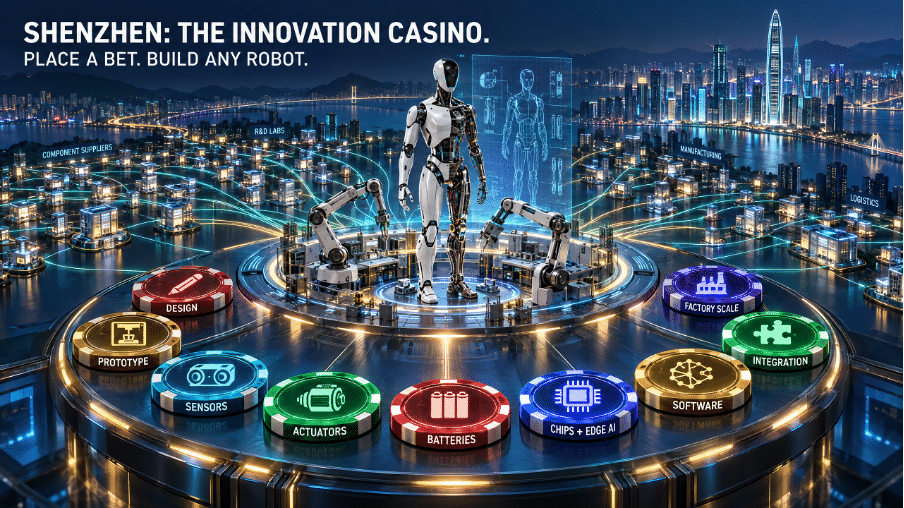 Generated by ChatGPT
Design-as-a-Service (DaaS), in the sense of sourcing in China product design and development expertise, is part of this ecosystem. Another company I visited in October was Artop, a design and industrial innovation service provider. Its services span product planning, design, R&D and supply-chain coordination, showing how far China’s ecosystem extends beyond assembly. Chinese international design awards and established client references give buyers good reasons to take these capabilities seriously. The gap is closing in fast. A producer no longer needs a complete in-house design and development organisation to bring a competitive offer to market. Just go to Shenzhen. Roll the dice!
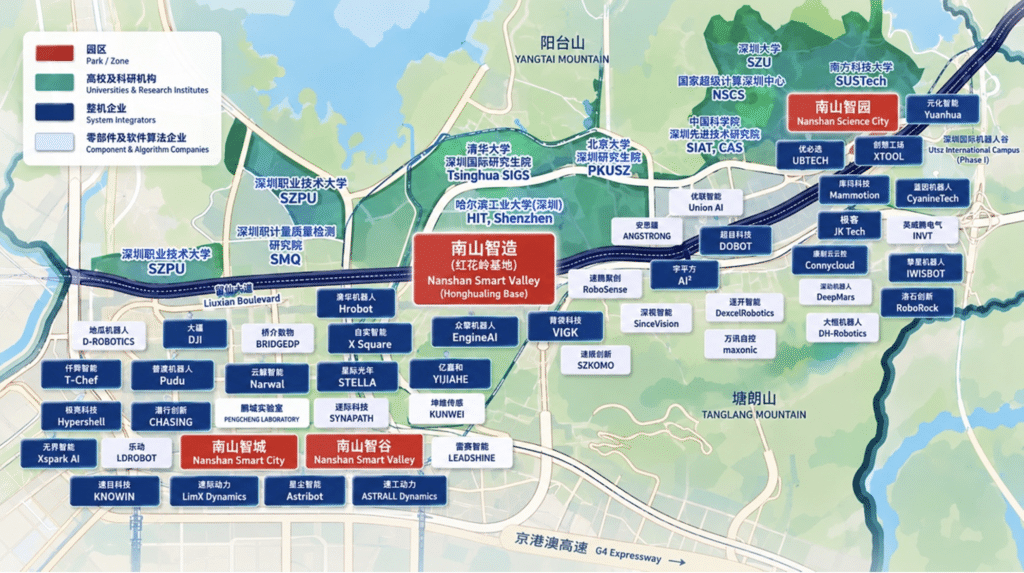 Picture taken at the Robotuo office in Shenzhen, adapted by ChatGPT
Platforms such as Robotuo in Shenzhen connect builders with robotics companies and component suppliers. More than 200 robotics firms are active along Nanshan’s roughly ten-kilometre Robot Valley belt, and more than 1000 local companies can help you with building everything from a component to design, software or full application of the robot you envision. China also offers an enormous deployment base. Approximately 354,000 industrial robots were installed in China in 2025, about 59% of global installations annually. This creates huge opportunities for Chinese and international suppliers alike.
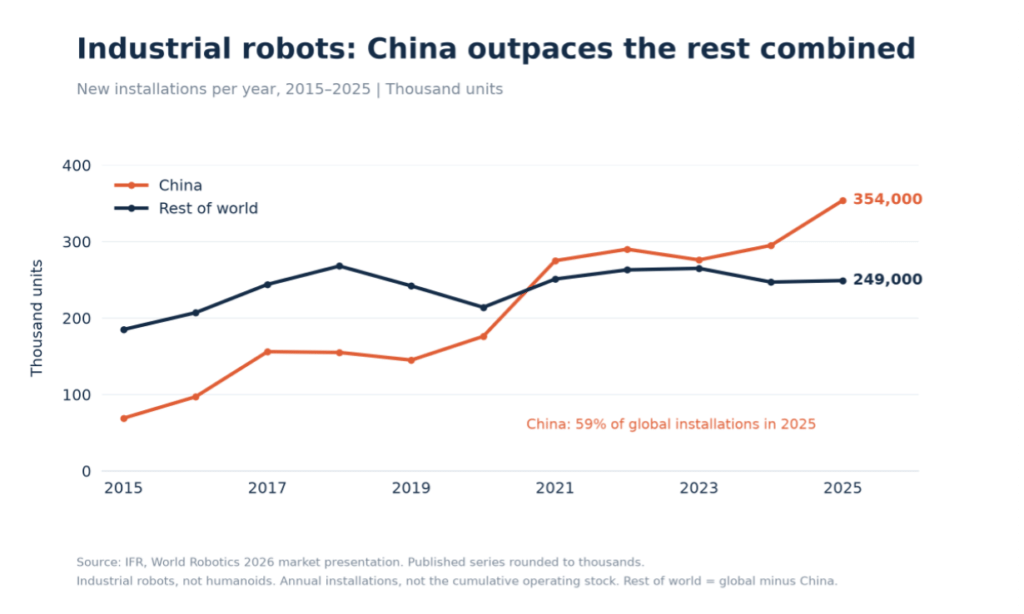
ABB CEO Morten Wierod captures both sides of that attraction. China is the group’s second-largest market, but it also provides “access to talent”. In a recent interview, he described “how ABB has more than 13,000 employees in China, including more than 2,000 in technology and R&D. China is not simply where equipment is sold. It is also where new solutions are developed.”
In a world of AI, Shenzhen’s innovation casino increasingly includes intelligence as a service. Model-as-a-Service (MaaS) gives manufacturers access to AI capabilities without training their own foundation model. For example, Tencent’s model services and agent-development platform connect different compatible models to tools and workflows. The best model for one task may not be the best for another. A model-agnostic AI approach lets providers choose according to performance, cost and customer needs. Manufacturers can source intelligence alongside design and engineering. Chinese, as such, can build valuable systems around the customer.
But supplying all these new capabilities from China is not the same as operating a customer’s system in Europe. Someone still needs to integrate it, manage local data and provide support. Geopolitics makes the question of who takes that role and responsibility increasingly sensitive and important.
4. Could Europe become China’s New India?
Geopolitics could create a new role for Europe. Customers may want to buy Chinese technology and run on its platforms without allowing Chinese suppliers to operate sensitive systems or access their data. Where that technology is permitted, European companies can provide integration, security, local data management and support.
That can be a valuable business. The question is whether European companies own the solution and customer relationship or mainly service somebody else’s platform. Brand value still remains a last differentiator for European companies, but Xiaomi, DJI and Anker show that Chinese companies can build trust too. Western origin alone no longer guarantees a premium.
The end of the world’s factory may be the beginning of the factory that runs the world. Europe must decide whether to own the solution or only servicing it.
Chinese Innovation: October 2026
1. China’s rise as a science and innovation power
2. CAR-T therapy becomes the first approved treatment for a solid tumour
3. China moves all-solid-state batteries towards production
4. China develops high-efficiency wireless charging for electric vehicles
5. Start-up unveils prototype ‘heart’ of EUV lithography
6. Scientists develop low-cost carbon capture technology
7. China’s compact heavy-ion therapy machine moves towards clinical use
8. China Artificial Intelligence updates October 2026
(Click the links in titles below to read a larger news article on each topic)
1. China’s rise as a science and innovation power
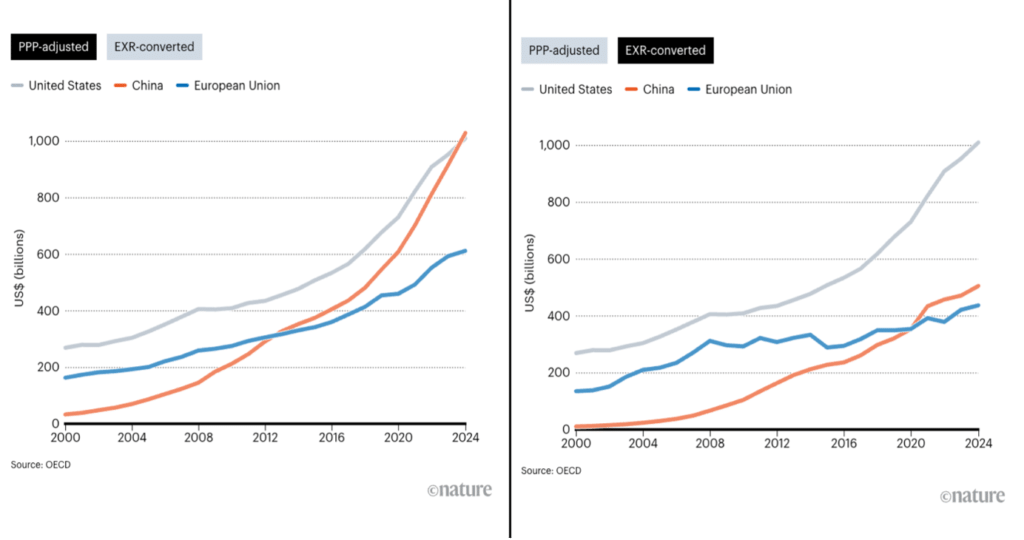
China’s rise from near-absence on the scientific stage in 1978 to a research and development powerhouse has accelerated since 2000. The magazine Nature reports that China is among the largest R&D spenders, leads in patent applications and dominates research in dozens of crucial technologies. Its universities and institutes have topped the Nature Index chart. In the 2026 Research Leaders table, China ranks first, with a 2025 Share of 52,735.17, ahead of the United States at 26,006.
The expansion is backed by state planning: R&D spending grew roughly 100-fold in three decades and by more than 10% on average over the past ten years. China’s 2024 expenditure on R&D exceeded the US when adjusted for purchasing power parity, but Nature notes that exchange-rate comparisons put China at about half the US level. China has developed strong capabilities in several fields, including chip design and semiconductor manufacturing equipment, biotechnology, medical research, AI and space science. Yet, the Nature Index is one indicator, not a complete measure of quality. Publication pressure has also been linked to integrity problems.
China’s scale, continuity and private-sector role are changing the geography of scientific capacity, but the trajectory is not self-validating. China is now trying to turn its growing research strength into more original technologies and successful commercial products. How consistently it can make that transition remains for many an open question. Sustained progress will require fundamental research, oversight and conditions that reward original work instead of paper volume. I am confident China will surprise the world as a younger Chinese generation increasingly seeks purpose over prosperity, and meaningful impact over material success.
2. CAR-T therapy becomes the first approved treatment for a solid tumour
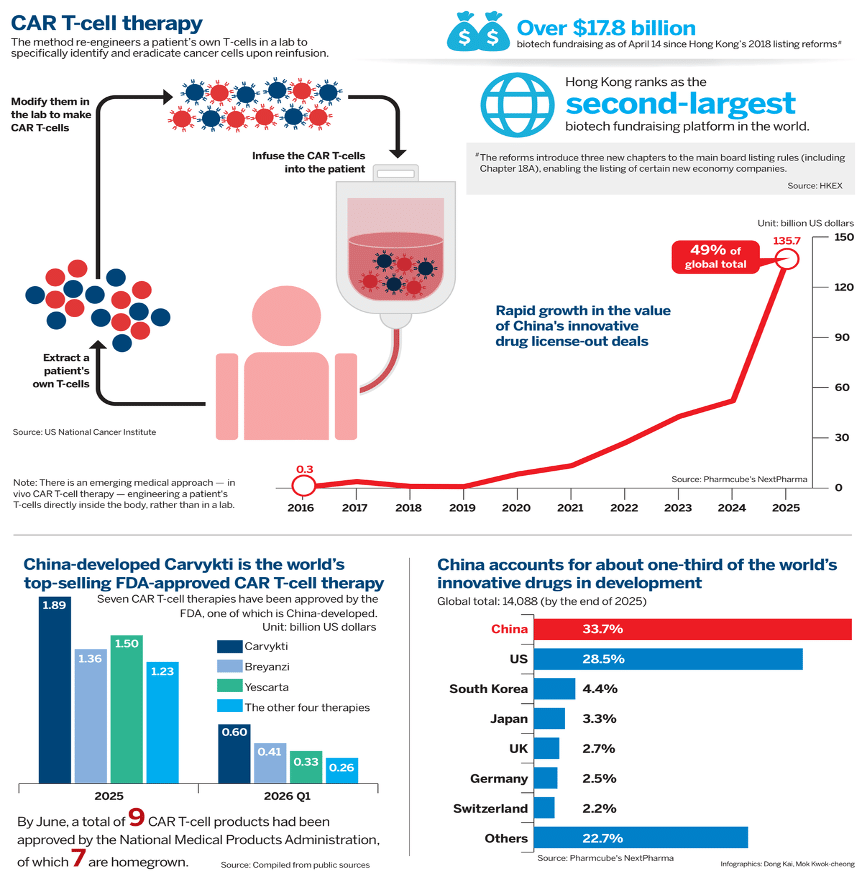
As the world’s first CAR-T product approval for treating solid tumours, China has approved a China-developed treatment called satri-cel, or satricabtagene autoleucel. Developed by Shanghai-based CARsgen Therapeutics, it uses chimeric antigen receptor T-cell therapy. The procedure collects T cells from a patient’s blood, genetically modifies them and reinfuses them so they can better recognise and attack cancer cells.
This approval is part of a rapid expansion of the country’s cell-therapy industry. China has developed seven of the world’s 17 commercial CAR-T products and is home to half of the top 10 institutions driving the world’s CAR-T research and development pipelines. China is building an ecosystem around “living drugs”, from research and clinical treatment to manufacturing, regulation and overseas delivery; all thanks to its large patient pool, rapid iteration and improved insurance and payment systems.
3. China moves all-solid-state batteries towards production
China is moving all-solid-state batteries closer to industrial production. Guangzhou Greater Bay Technology (GBT) developed the first all-solid-state battery cell to meet the newly released national standard and pass testing by the China Automotive Battery Research Institute. They began mass production in Guangzhou and reported an energy density of 260 to 480 Wh/kg, controllable costs, cycle life comparable to conventional batteries and stable fast charging.
The national standard for solid-state batteries for electric vehicles mainly establishes terminology and categories; it is not a full performance certification or a guarantee that commercial cells meet a particular energy density, lifetime or safety level. The company already signed agreements concerning possible commercialization in electric motorcycles, the low-altitude economy, computing power centers and high-end energy storage. This marks a shift from laboratory research toward production, paving the way for China to scaling and validating all-solid-state battery producers.
Separately, China’s national battery-industry plan sets a policy target for all-solid-state batteries to initially achieve large-scale application by 2030 and also calls for breakthroughs in industrialization technology. That is a roadmap, not evidence the target has been met. Together, the company milestone and national plan show China building production experience and a common vocabulary to lead its wider adoption.
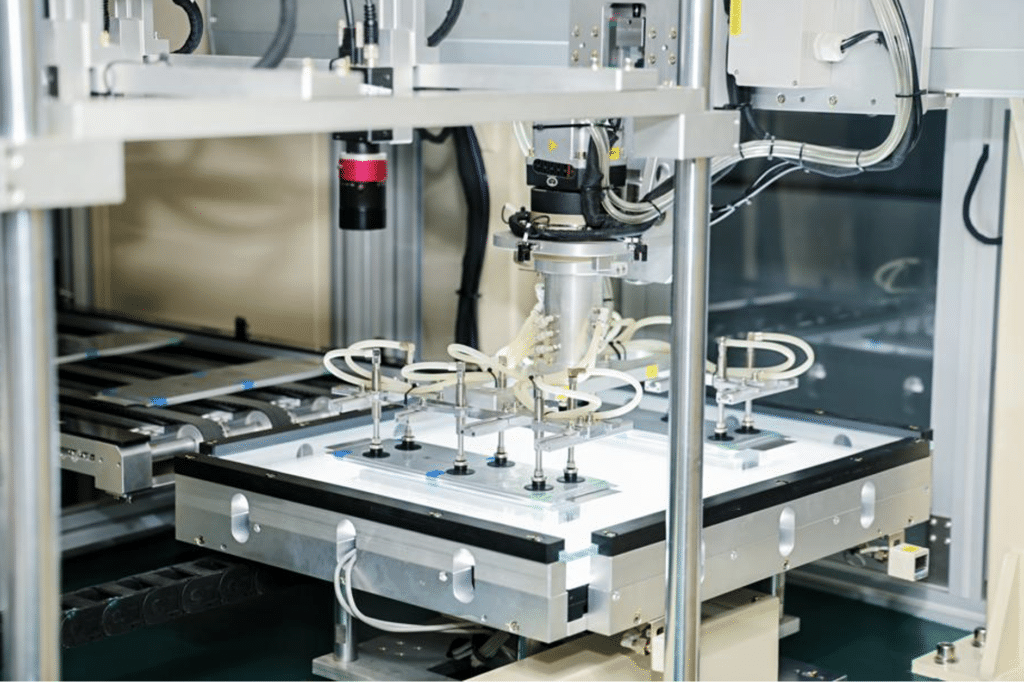 (Photo: China Daily)
4. China develops high-efficiency wireless charging for electric vehicles
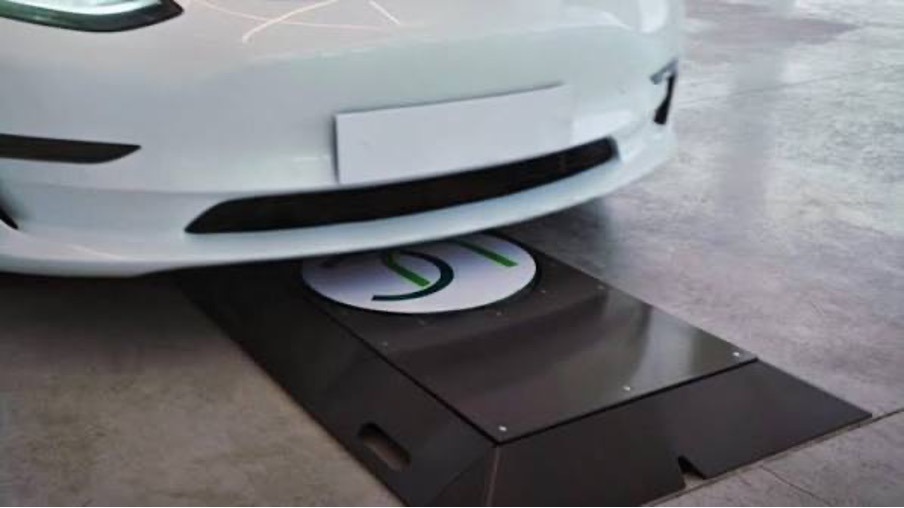
Chinese researchers have developed a wireless charging system for new-energy vehicles that achieved an efficiency of 98.51 percent and a volumetric power density of 9.55 kilowatts per litre. The 20-kilowatt system uses new magnetic materials and is designed to transfer electricity without connecting cables to a vehicle. The research combines materials science with power-electronics design to make inductive charging more efficient and compact.
The charging system uses magnetic-core components made from an iron-based nanocrystalline alloy. The researchers developed the material through stress annealing and aligned lamination, then integrated it into the wireless power-transfer system. The design is intended to reduce energy losses and the size of charging equipment, two important barriers to practical wireless charging.
The development is still an engineering demonstration, not a commercial charging solution. The sources do not show wireless charging while a vehicle is moving, autonomous parking and charging in daily use, or long-term operation in different weather and road conditions. Its importance lies in addressing a practical problem as electric transport becomes more automated: how to make charging easier and less dependent on human action. If the technology can be integrated into reliable, safe and affordable products, it could support China’s wider shift towards EVs, robotaxis, industrial automated vehicles and other forms of transport. I saw a similar concept in Oslo many years back, so it is not original, but China might very well be the first country to commercialise it for real and build an infrastructure at scale.
5. Start-up unveils prototype ‘heart’ of EUV lithography
A Shanghai start-up, Langdao Silex, has unveiled a prototype extreme-ultraviolet light source, the component at the heart of an EUV lithography system used to manufacture advanced semiconductors. The company says that around 90 percent of the components were produced domestically, while core parts were developed in-house. The reported prototype uses a laser-produced-plasma system and is designed to generate EUV light for chip-exposure testing.
The technology builds on research from a Tsinghua University gas-discharge plasma laboratory. The low-power system produces more than 15 watts of EUV output and can operate continuously for more than 100 hours. The company is also developing a higher-power version. However, commercial EUV scanners require light sources producing power in the hundreds of watts, as well as extremely precise optics, wafer stages, vacuum systems and control technologies. The prototype is a light-source subsystem, not a complete EUV lithography machine.
Langdao has estimated that mass production could still be three to five years away. Its significance lies in the attempt to develop the most difficult parts of the semiconductor production chain under technology restrictions. China is not simply trying to reproduce a finished foreign machine; it is building capabilities component by component. Whether this parallel innovation path can reach the reliability, power and precision required for high-volume manufacturing remains uncertain.
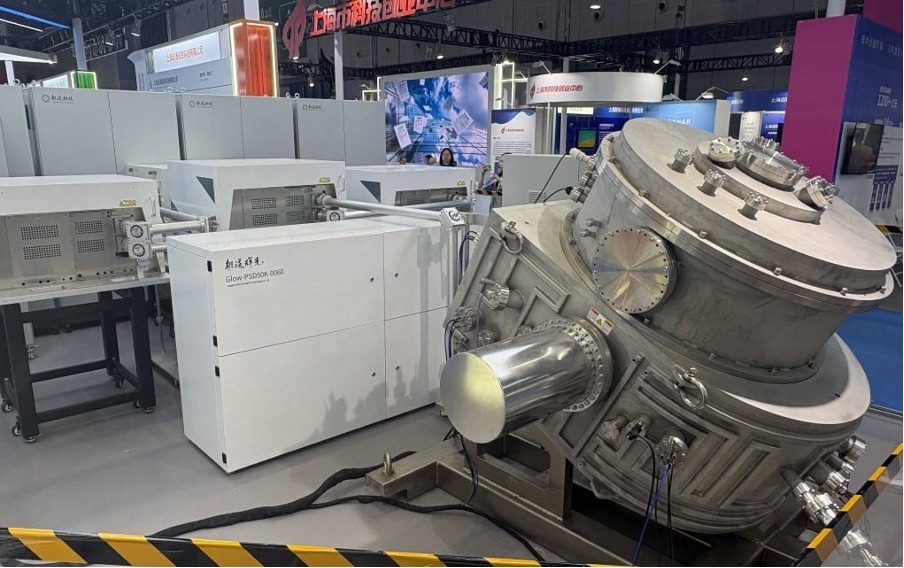 Langdao Silex’s EUV light-source machine. (Photo: Sylvia Ma)
6. Chinese team develops a more efficient membrane for industrial carbon
Chinese researchers from Tianjin University have developed a novel all-organic mixed-matrix membrane that acts like a “CO₂-specific sieve” for industrial flue gas. The membrane is designed to allow carbon dioxide to pass through quickly while maintaining long-term durability and remaining suitable for large-scale manufacturing. The breakthrough addresses the challenge of developing membranes that are both effective at separating carbon dioxide and easy to manufacture.
Steel, cement and coal-fired power are important sources of industrial emissions, including carbon dioxide released by chemical reactions that cannot be fully eliminated through better energy efficiency. Captured carbon dioxide could be stored underground or recycled to produce methanol, biodegradable plastics and construction materials. Conventional carbon-capture technologies typically cost between $40 and $120 per metric ton of CO₂. Tests show that the new membrane’s CO₂ permeability increased by an order of magnitude. A first analysis, under defined process and cost conditions, estimated the capture cost at around $38 per ton.
The technology has not yet reached full industrial application. The researchers still need to produce the material at large scale, develop membrane modules and verify long-term operation with real industrial flue gas. Their next step is to test large-area membranes in industries with relatively concentrated emission sources. If succesful, the membrane could help reduce emissions globally from hard-to-abate industries while limiting the cost pressure of decarbonisation.
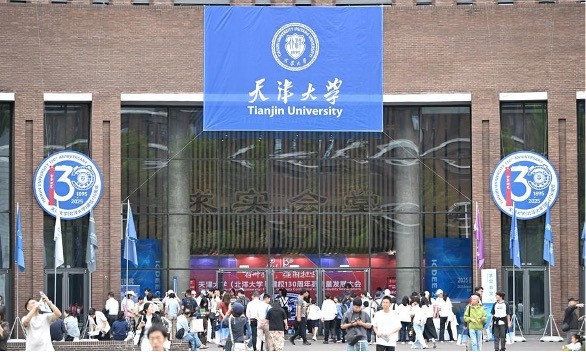 (Photo: Xinhua)
7. China’s compact heavy-ion therapy machine moves towards clinical use
China has completed the first demonstration unit of a new-generation, domestically developed medical heavy-ion accelerator. The unit has entered equipment testing and is expected to begin clinical trials by the end of 2026. Known as SIMM, the ultra-compact rotating-beam system is designed to deliver heavy-ion therapy, an advanced form of precision radiotherapy that can target tumours while limiting damage to healthy tissue. China became the fourth country, after the US, Germany and Japan, to independently develop a heavy-ion therapy system and apply it.
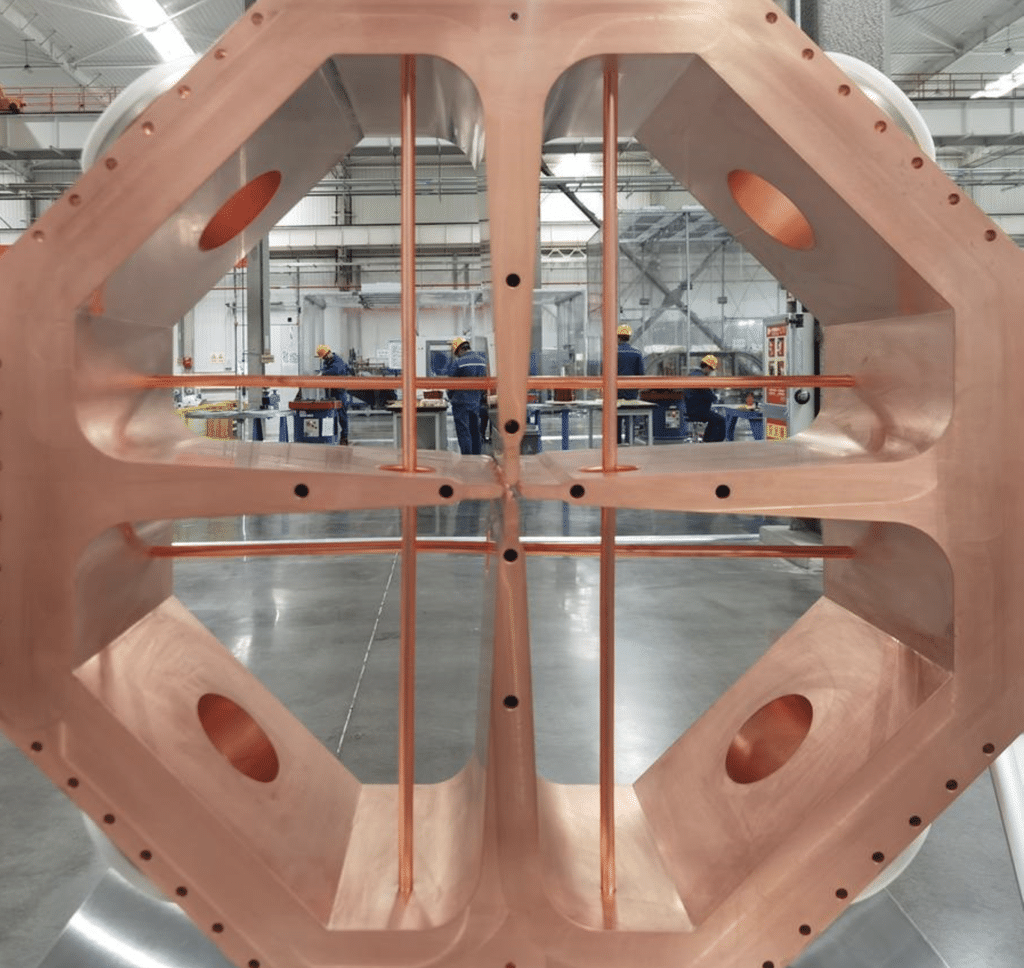
SIMM uses a compact high-current linear injector, a short-circumference rapid-cycling synchrotron and an intelligent rotating beam-delivery system. It reduces the required floor area from 4,600 square metres to 1,200 square metres and cuts energy consumption to about one-third of previous levels. Annual treatment capacity could rise from about 1,000 patients to between 2,000 and 5,000, which is expected to lower construction and operating costs and help reduce treatment fees.
The facility still has to complete equipment testing and clinical evaluation. So far, ten domestically developed medical heavy-ion accelerators have been promoted across China and that nearly 5,000 patients had been treated with it. SIMM could extend that development by making heavy-ion facilities smaller and less energy intensive.
 (Photo: Xinhua)
8. China AI updates of October 2026
Beijing pushes for UN-led governance of artificial intelligence at global forum
China is pitching open-source artificial intelligence and a greater voice for the Global South as cornerstones for future tech regulations at the three-day meeting.
Chinese video AI models beat US rivals in visual quality but lag on safeguards
Chinese AI video-generation models have surpassed leading US rivals in visual quality, but several fall behind in safety precautions. ByteDance’s Seedance 2.0 Pro took the top spot.
DeepSeek, MiniMax secure open-source licences days after new China export rules
Chinese AI model developers DeepSeek and MiniMax have completed export registration procedures and proceeded with open-source releases and overseas licensing activities days after Beijing moved to tighten oversight on AI tech transfers.
China’s tech giants are paying 1 million yuan for a new kind of AI engineer
Chinese technology giants are dangling annual pay packages approaching US$150,000 to attract AI engineers to commercialize AI applications.
AI microdramas are a test case for China’s next big export wave
A quiet shift is happening in China’s services exports. Services exports rose by 17.1 per cent year on year in the first seven months of 2026, while exports of personal cultural and entertainment services surged by 57.8 per cent.
Former PBOC governor warns of potential crisis from AI investment
Former Chinese central bank governor Zhou Xiaochuan has warned that failed artificial intelligence investments could trigger financial turbulence and urged preparations to mitigate risks amid concerns over a potential bust of the AI investment bubble.
DeepSeek seeks ‘total victory’ over closed-source AI with new open-source tool
DeepSeek released Open-Source DeepInfer, an inference framework tailored to support its DeepSeek-V4.1-Flash model on both Nvidia’s SM100 Blackwell graphics processing units (GPUs) and Huawei Technologies’ Ascend 950 chips.
Why Anthropic has a major China problem ahead of its blockbuster IPO
Surging demand for low-cost Chinese AI models is sparking investor jitters, with some fearing ‘massive capital destruction’ in Silicon Valley.
China creates state-owned firm in Xiongan to develop nation’s AI data resources
China has set up a new state-owned enterprise “National Data Group Co.“ dedicated to managing the country’s massive data resources, a significant move designed to turbocharge the nation’s AI industry and bolster its digital economy.
US orders DeepSeek removed from federal systems, citing national security risks
The US government has ordered federal civilian agencies to remove DeepSeek products and any third-party services developed using the Chinese artificial intelligence model from their information systems…
Kimi’s AI credit card turns spending into computing quotas – with limits
Moonshot AI teamed up with the Agricultural Bank of China (ABC) and American Express for what it calls “the world’s first AI native credit card”.
China mulls new tech export bans covering AI, biotechnology and solar power
China unveiled a draft plan to impose new export bans affecting 14 technologies in sectors ranging from artificial intelligence to biotechnology and photovoltaic solar power. It also lists a further 26 technologies from the three sectors that would face fresh export restrictions.
China’s proposed AI tech export bans may create short-term costs, long-term gains
The scope of the export bans on AI technologies covered by the regulation is targeted and limited. Chinese companies who are providing AI services overseas, including through official APIs and mobile apps, would not be covered by the new export restrictions.
OpenAI’s GPT-6 may lead to robotics breakthrough in 2027: Unitree founder
Wang Xingxing, the CEO of Unitree said that OpenAI’s recently released GPT-6 model prompted expectations that a breakthrough could happen “within one or two years”. “It’s possible that, say, a GPT-7 model released next year could directly crack the problems of embodied intelligence.”
China’s factories leaping straight into agentic AI and taking it global
Just as China skipped credit cards and jumped directly to mobile payments, China’s manufacturing sector is now leapfrogging straight into the era of agentic AI and is now exporting that playbook to global supply chains.
Can China match up with Meta’s Muse in race to harness AI agents?
Analysts say agent harnesses could shift more of the AI sector’s value away from foundational models and towards software layer.
China rolls out ‘token factories’ to drive AI economy
A token factory can be thought of as the AI era’s equivalent of a power plant. It integrates electricity, chips, data and models to directly produce tokens. Unlike traditional data centers that only rent out computing cards, customers no longer need to deploy models or optimize inference themselves. They simply pay for the tokens they use.
China’s generative AI user base crosses 700 million, covering over half the population
Nearly half of all Chinese employ AI tools to process images or videos, while 38 per cent use it for text processing and 33 per cent for work notes.