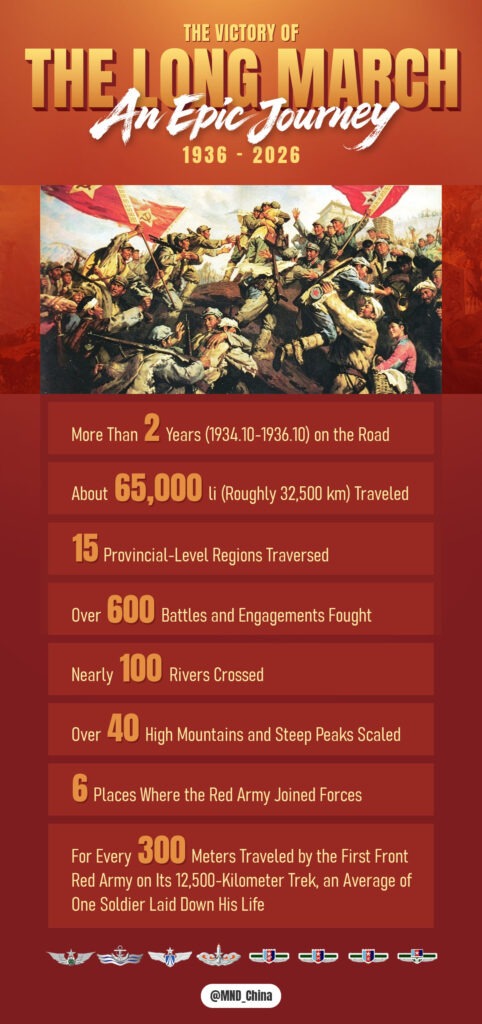
The Long March (长征 Cháng zhēng), 1934 – 1935 (Part 1)
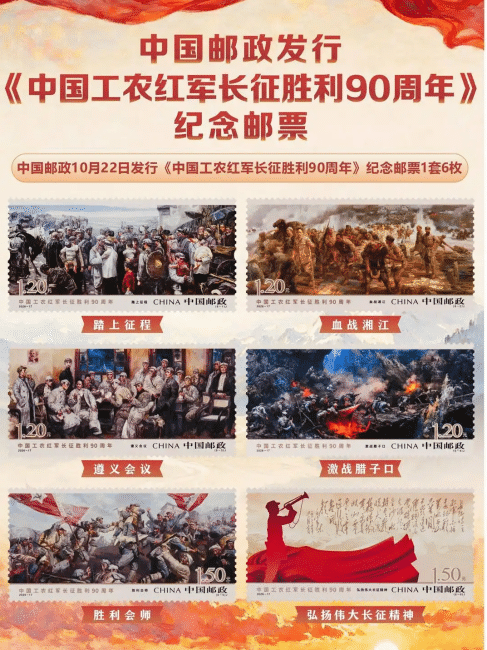
Official stamps issued to commemorate the 90th anniversary of The Long March
After celebrating the 77th anniversary of the founding of the People’s Republic of China on October the 1st, China is now celebrating the 90th anniversary of the Red Army’s Long March military expedition.
The Chinese Civil War saw two ideologies, that of the Communist Party of China (CPC) and its Red Army, and that of the Nationalist Party, or Kuomintang (KMT), between 1927 and 1949 fight, cooperate, and fight again to impart their vision for the future of China. After a number of years into this war the KMT had failed in four attempts to fully encircle the CPC and establish a foothold in the countryside. By 1934, the KMT was having more success with a fifth attempt at encirclement which led, in October 1934, to the CPC and Red Army making a gruelling tactical retreat which would become known famously as “The Long March”.
The route took the Red Army soldiers from Jiangxi Province in the South, as well as various places along the way, across 14 provinces, over 18 mountain ranges and across 24 major rivers to Shaanxi Province in the North. Up to 100,000 soldiers slogged through swamplands, traversed snow-covered peaks, and covered a distance of 12,500 kilometres (roughly 8,000 miles) mostly on foot.
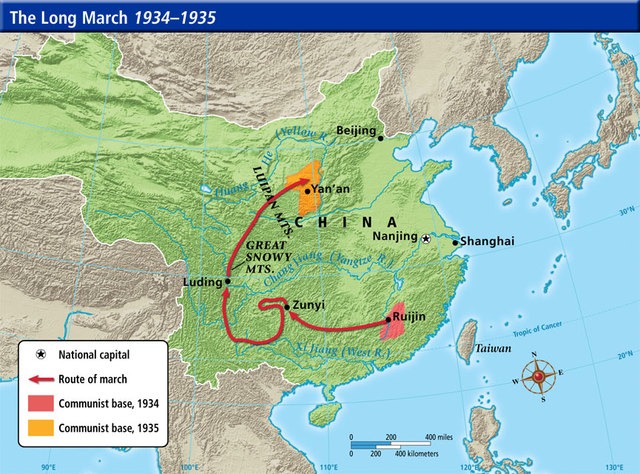
Overview of the Long March Route
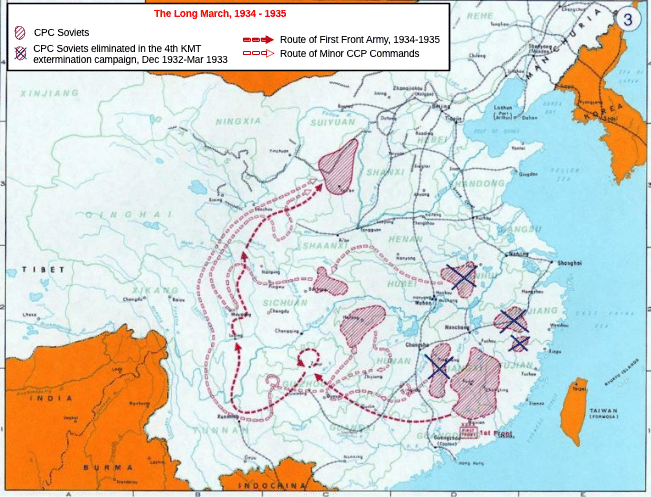
Detailed View of The Long March Route
Over the next few days we will present the story of The Long March as portrayed by the Ministry of National Defence of China in a series of X posts made throughout October of this year. We begin…
What is the Long March?
From October 1934 to October 1936, the first, second and fourth front armies of the Red Army, along with the 25th Red Army, undertook the epic Long March, which was a military manoeuvre.
The victory of the Long March marked the successful strategic shift of the CPC and the Red Army to northern China, where they carried national hope for resistance against Japanese aggression.
It marked a great turning point for the CPC and for China’s revolution, putting them on the path to victory. And it marked the beginning of a new advance by the CPC to liberate the Chinese people and to achieve national independence.
It was an earth-shaking revolutionary feat. It was a magnificent epic written by the CPC and the Red Army, and a great milestone on the Chinese nation’s historical path to rejuvenation.