

The Dangerous Advance of the Far Right in Latin America: U.S. Hegemony, Israeli Expansion, and Evangelical Zionism in the Face of Resistance
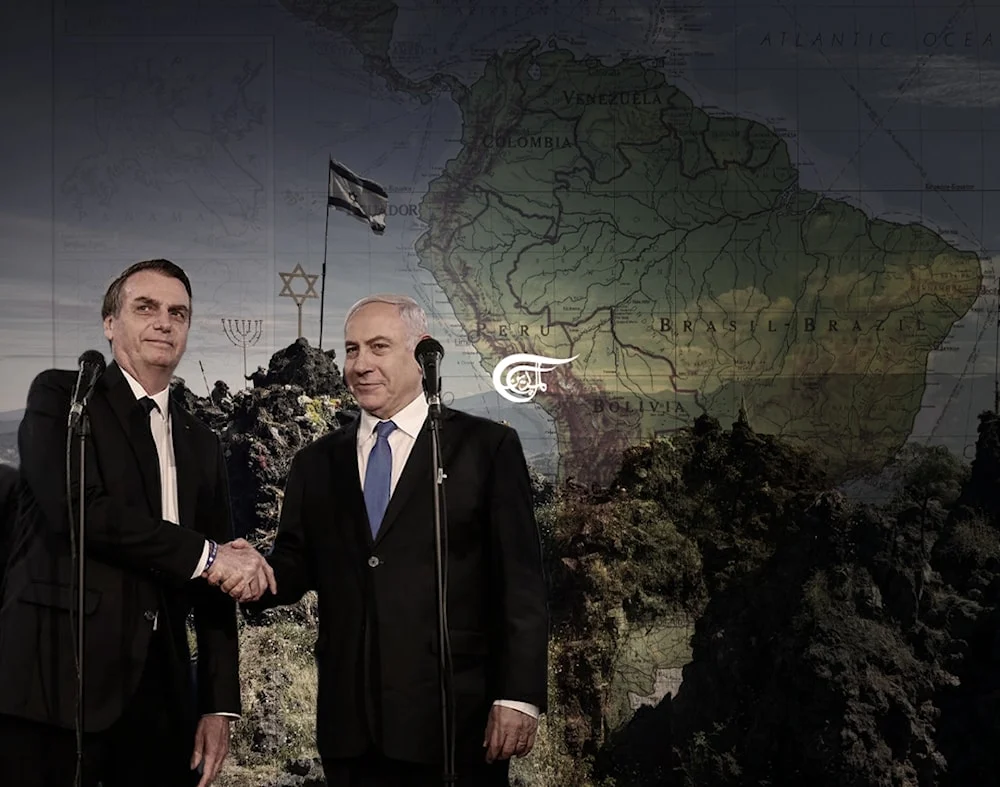
Latin America’s far-right turn is consolidating a hemispheric bloc aligned with Washington and Tel Aviv, driven by US interventionism, the Isaac Accords, Christian Zionism and Israeli security technology.
Listen
The Dangerous Advance of the Far Right in Latin America: U.S. Hegemony, Israeli Expansion, and Evangelical Zionism in the Face of Resistance
Pedro Monzón Barata Pedro Monzón Barata
Source: Al Mayadeen English
Introduction: A Geopolitical Phenomenon of Transcendence.
The turn toward the far right in Latin America is not a simple electoral alternation but a geopolitical movement that strengthens US hegemony and offers “Israel” an unprecedented strategic opportunity. It reverses decades of relative autonomy and pragmatic diplomacy, establishing a hemispheric bloc aligned with Washington and Tel Aviv.
The wave of far-right governments —Milei in Argentina, Bukele in El Salvador, Kast in Chile, Noboa in Ecuador, Asfura in Honduras, De la Espriella in Colombia— is functional to Washington, which seeks to restore its hemispheric dominance. These leaders subordinate themselves to the US strategy in exchange for support, ceding sovereignty over strategic resources such as lithium and copper, and in security policies.
This advance is articulated in three pieces: the Donroe Doctrine, which provides the coercive framework; the Isaac Accords, a diplomatic instrument of Israeli expansion; and evangelical Christian Zionism, the social and electoral base that legitimizes and sustains both. None can be understood without the others. Against this advance, popular, diplomatic, and cultural resistances are also being articulated, which this article seeks to make visible.
I. The Three Pieces of the Framework
1. The Donroe Doctrine: The Coercive Framework
The Donroe Doctrine, a contemporary reformulation of the Monroe Doctrine, was proclaimed in 1823 against European interference and soon justified US interventionism; the Roosevelt Corollary (1904) added the US “right” to intervene in Latin America. The National Security Strategy of December 2025 states that the US “will reaffirm and enforce the Monroe Doctrine to restore American preeminence in the Western Hemisphere.” Trump rebranded it the “Donroe Doctrine.”
Its core consists of denying non-hemispheric competitors —China, Russia, Iran— the ability to position forces or control strategic assets, since any rival presence is considered a direct threat and casus belli. Hence an open and unilateral interventionism, such as the bombing and kidnapping of Nicolás Maduro in Venezuela in January 2026 and the ongoing siege of Cuba, Nicaragua, Mexico and, now, dangerously, Brazil; an expansive definition of the hemisphere —from the Aleutians to Greenland and from the Arctic to Antarctica—; and support for far-right allies through promises of financial bailouts and political backing.
The Donroe Doctrine turns the old “defensive” doctrine into an instrument of offensive and permanent intervention, with no limit in international law. However, coercion is not enough: it needs local allies to legitimize it. There enters “Israel”, a provider of technology, intelligence, and security doctrine, and a diplomatic partner that allows Washington to maintain a facade of multilateralism while excluding Beijing, Moscow, and Tehran. The Donroe Doctrine thus creates the space that “Israel” will occupy with the second piece.
2. The Isaac Accords: The Diplomatic Instrument
In that framework, “Israel” launched the Isaac Accords in April 2026, promoted by Netanyahu and Milei and inspired by the 2020 Abraham Accords, but adapted to Latin America. They declare the purpose of strengthening diplomatic, economic, technological, security, and cultural cooperation, expanding innovation, trade, artificial intelligence, and economic openness, as well as combating terrorism, antisemitism, and drug trafficking. Behind these apparent objectives, however, lie deeper interests: securing markets for the Israeli security and surveillance industry, expanding territorially, guaranteeing access to strategic resources, and politically aligning the region with Washington and Tel Aviv.
In September 2026, at the UN, Netanyahu invited Paraguay, Panama and Bolivia to join and to withdraw from the International Criminal Court, which he called “corrupt,” in line with the aggressive US policy. Argentina remains the only country that formalized its state participation at the presidential level, and since there is no multilateral accession mechanism equivalent to a treaty, “Israel” and Washington retain room to add allies without legal obligations. “Israel” declared 2026 “the year of Latin America,” and both Israeli Foreign Minister Gideon Sa’ar and Israeli diplomat Yinam Cohen, former head of the Latin America department, stressed that the region is a main axis.
The “Israel” Allies Foundation (IAF) coordinates pro-“Israel” parliamentary caucuses around the world, while American Friends of the Isaac Accords (AFOIA), created in 2025 by The Genesis Prize Foundation, promotes cooperation between “Israel” and Latin America. Through these bodies, a regional parliamentary network has taken shape: from June 28 to 30, 2026, Buenos Aires hosted the Conference of Presidents of the “Israel” Allies Caucuses of Latin America, organized by the IAF and AFOIA and inaugurated by Milei, with legislators from 12 countries who signed a resolution supporting the expansion of the Isaac Accords. Brazil is the network’s most prominent case: commitments with “Israel” were led by Flávio Bolsonaro, a far-right senator and current presidential candidate, who launched the Brazil-“Israel” Parliamentary Front and promised to restore the “healthy, close and partnership relationship” with “Israel” starting in 2027; Bolsonaro was among the legislators present in Buenos Aires. Although it does not amount to formal accession by governments, the parliamentary network operates as alignment infrastructure even when executives keep their distance.
Israeli sources divide the region into solid relations (Argentina, Paraguay, Costa Rica, Panama, Bolivia, Ecuador, Honduras and Chile after Kast), confrontational (Venezuela, Nicaragua and Cuba) and a third undetailed group. Colombia overflows the classification: with De la Espriella, in June 2026, it reversed the rupture with Petro —reestablished relations, recognized Israeli sovereignty over the Golan, promised an embassy in Jerusalem and withdrew its support for the case before the ICJ—, moving from “confrontational” to strategic ally in weeks. Brazil and Mexico confirm the pattern: in Brazil it operates through parliamentary channels (Flávio Bolsonaro promises to join if he reaches the presidency); in Mexico, through technological, religious and security channels, despite the distance of the Sheinbaum government. They are medium-term bets: if the far right wins in Brazil or Mexico turns, the infrastructure will already be laid.
The Isaac Accords went from a bilateral initiative between “Israel” and Argentina to an expanding framework that articulates a network of presidential and parliamentary allies. But they do not float in the air: they require a social and electoral base to sustain them while state accession is not formalized. That base is, to a large extent, evangelical Christian Zionism, the third piece of the framework.
3. Evangelical Christian Zionism: A Social Base
The ideological alignment of evangelical sectors with “Israel” has gained prominence where their presence and political influence grow. It is fostered by transnational networks, by the US geopolitical agenda for the Middle East, and by the “faith diplomacy” of successive Israeli governments. Its theological roots go back to dispensationalism, which linked the second coming of Jesus Christ to the return of the Jews to Palestine. Since the 1950s, “Israel” has cultivated the support of US Protestant churches; in the 1960s, Zionist pastors approached the Republican Party and the Moral Majority.
Today, Guatemala and Brazil stand out for evangelical growth: they represent 45% and 31% of their populations. The ICEJ representative for Latin America is Brazilian Renê Terra Nova, evidence of the transnational articulation. Zionist rhetoric mobilizes biblical symbols and the idea of divine blessing to justify political support for “Israel”. Not all evangelicals are pro-“Israel”, but the sector that is constitutes a crucial electoral and mobilization base for far-right governments aligned with Tel Aviv. This base not only votes: it organizes, funds campaigns, mobilizes networks, and provides the moral language that turns a geopolitical alliance into a religious crusade.
II. Israeli Expansion in Practice
1. Concrete Steps of Israeli Expansion in South America**
Argentina has been the seat of the laboratory of state Zionism. Milei proclaims himself “the most Zionist president in the world,” and Argentina is “Israel’s” main strategic partner in the region. The Accords cover security, intelligence, cybersecurity, and artificial intelligence: Argentina committed to real-time intelligence exchange, moving its embassy to Jerusalem, supporting “Israel” at the UN, and opening up to Israeli security technology. At the UN (September 2026), Milei called Netanyahu and Trump “the two great heroes of humanity,” warned that “Israel’s” disappearance would be a danger for all the West, described Netanyahu as “one of the greatest leaders in history” and defined his support as “unconditional.”
Honduras evolved from defender of Palestine to military ally. A year ago, it had withdrawn its ambassador and joined the genocide lawsuit before the ICJ. With Nasry Asfura, it returned its ambassador to Jerusalem, withdrew from the lawsuit and signed a defense and security agreement with “Israel”. In August 2026, “Israel” Katz and his Honduran counterpart Enrique Rodríguez Burchard signed a memorandum contemplating military information exchange, tactical training and institutional strengthening.
In Bolivia, after nearly fourteen years of the government of Evo Morales (2006-2019) and the continuation of his party’s policies under Luis Arce (2020-2025), the government of Rodrigo Paz reestablished relations with “Israel” in December 2025, with a ceremony in Washington, D.C.
In Chile, the unusual turn of Pinochetist José Antonio Kast, who took office on March 11, 2026, represents a radical change from Gabriel Boric: he has again appointed military attachés in “Israel”, suspended by his predecessor. Researcher Anna Ayuso (CIDOB) points out that this change responds to security priorities and alignment with the United States rather than a historical pro-Israeli tradition.
In Ecuador, Daniel Noboa has sought Israeli cooperation to update its intelligence against organized crime, from cybersecurity to drug and explosives detection devices. In August 2026, Gideon Sa’ar and his Ecuadorian counterpart Roberto Kury signed agreements to increase cooperation in counterterrorism and cybersecurity.
In Paraguay, Panama and Costa Rica, diplomatic and parliamentary alignment with “Israel” continued. Paraguay moved its embassy to Jerusalem, the third country in eight days to open one there, after the United States and Guatemala. Panama was formally invited by Netanyahu to join the Accords and maintains active participation in the parliamentary network. Costa Rica announced a free trade agreement with “Israel” and the move of its embassy to Jerusalem, closing the door to Iran.
2. The Acquisition of Territory and Strategic Resources
Beyond embassies and security agreements, “Israel” consolidates territorial and resource presence through various mechanisms: mining concessions (lithium exploitation in Argentina and Chile, and copper in Peru and Ecuador, taking advantage of the deregulation of far-right governments); port and logistics infrastructure (interest in ports such as Chancay, in Peru, and projects in Central America); technological operations bases (data centers, surveillance systems and cybersecurity platforms that constitute a functional territorial presence without formal sovereignty); land purchases and agro-industrial projects (large extensions in Brazil, Paraguay and Argentina for intensive agriculture and export). This pattern reproduces in Latin America the model of territorial and resource control applied in the occupied Palestinian territories, adapted to the scale of the hemisphere: here it is not exercised through formal military occupation, but through contracts, concessions, security agreements and corporate presence.
3. The Technological and Cybersecurity Dimension
A fundamental pillar of this expansion is the export of Israeli surveillance and cybersecurity technology. As Middle East Eye notes, “the growing cooperation is opening new markets for an industry closely linked to the Israeli military and intelligence establishment, where technologies have been developed and tested through the occupation of Palestine before being commercialized abroad.”
Ecuador, Argentina and Colombia have signed agreements to increase cooperation in cybersecurity and the fight against “terrorist threats.” Digital rights advocates warn that the distinction between defensive cybersecurity and surveillance blurs when technologies developed within the Israeli military and occupation apparatus are exported to governments with weak safeguards and a history of abuses. Pepe Flores, of R3D Mexico, puts it clearly: “The main mentality of governments in Latin America is a risk-based approach, not a human rights-based one. There is an illusion of control with technology.”
The Palestinian “laboratory” has been the testing ground for this model of social control. Its export to Latin America represents the transfer of a repressive apparatus validated in the occupied territories: it does not sell only software, but a security doctrine that conceives the dissident, the activist and the opponent as threats to be neutralized.
III. The Offensive against Progressivism
1. The Offensive against Cuba, Venezuela and Nicaragua
The turn to the right seeks to dismantle the legacy of progressivism and isolate Cuba, Venezuela and Nicaragua. The current right has broken the diplomatic consensus that protected the Cuban Revolution in forums such as the OAS and CELAC. Governments such as Argentina’s have withdrawn their ambassadors and refused to condemn the blockade, while facilitating military bases or DEA surveillance in their territories.
In his speech before the UN General Assembly (September 2026), Donald Trump reinforced this offensive: he called the governments of Cuba, Venezuela and Nicaragua “failed regimes” and “threats to hemispheric security”; he warned that his administration “will not tolerate the presence of extra-hemispheric powers” in the region; he praised Milei as “a true leader” and celebrated Latin America’s turn toward “governments that respect freedom and property.”
“Israel” hopes that purported political changes in Cuba and Nicaragua will lead to a recomposition of diplomatic relations. Its strategy aims for these governments to be replaced by aligned administrations that would grant full recognition of “Israel” and automatic alignment with its positions in international forums—though the reality on the ground remains far from this desired outcome.
In Venezuela, after the kidnapping of Nicolás Maduro in a US interventionist military operation on January 3, 2026, “Israel” and Venezuela agreed to reestablish consular relations after 17 years of rupture. Highly enriched uranium was removed from the country, a Hezbollah member was detained, and the “Israel” Defense Forces arrived in Venezuela to provide assistance after the June earthquakes. The case shows Washington-Tel Aviv coordination: while the United States executes the military intervention, “Israel” provides the diplomatic and technological framework for “reconstruction” and subsequent control.
IV. The Ideological and Media Battle
Media manipulation, disinformation and deliberate digital influence played a not insignificant role in shaping votes and the rise of the far right. A sophisticated continental interference operation has been documented that combines digital attacks, disinformation and political networks to tip the electoral balance. The “Hondurasgate” audios revealed an operation of this type in three countries, with the participation of state and parastatal actors linked to the United States and “Israel”, to which are added the evidence of the capture of Fernando Cerimedo, a digital consultant noted for his role in electoral manipulation and disinformation in the region.
The major media, mostly owned by transnational corporations, have been fundamental in constructing the narrative that legitimizes the turn to the right: biased coverage, criminalization of progressive governments and amplification of scandals —real or fabricated— to erode their legitimacy. To this are added evangelical churches as an electoral mobilization apparatus: Zionist pastors, articulated in transnational networks, present right-wing candidates as “defenders of the faith” and the left as “enemies of God and Israel.” This religious manipulation is combined with disinformation campaigns on social networks, financed by external actors and coordinated with corporate media. The result has been a distorted information ecosystem where the popular vote is oriented toward options that, once in power, apply neoliberal shock policies and unconditional alignment with Washington and Tel Aviv.
V. Resistance
1. Essential Self-Criticism and Articulated Resistance
This is a moment of necessary self-criticism. The previous explanations are insufficient if we do not recognize that left-wing movements affected by lack of unity, protagonism, and inefficacy weakened the bond with popular bases, and that progressive governments, dragging internal contradictions —corruption, inefficiency, dependence on extractivism— generated the breeding ground for the protest vote.
Cuba, from its socialist reality, warns of the dangers amid an unparalleled blockade. It does not position itself as a passive victim, but as an example of resistance that is forced to assume all the internal changes necessary to strengthen its socialist model of popular participation.
Israeli expansion in Latin America, articulated through the Isaac Accords, evangelical Zionism and the export of surveillance technology, is not a secondary phenomenon: it is an integral part of the US strategy of hegemonic restoration, with “Israel” as the technological, military and diplomatic spearhead. Understanding this articulation is indispensable for any project of regional sovereignty. Resistance must be multiple and cover four spheres: the political (promoting political and social movements so that they gain prestige and strengthen their relations with the people, and recovering the initiative in forums such as CELAC and the OAS, rebuilding the diplomatic consensus that protected Cuba and Venezuela); the economic (developing alternatives to extractivism and dependence on Western markets, strengthening regional integration); the cultural (disputing the common sense built by corporate media and evangelical networks, recovering narratives of independence, sovereignty and social justice); and the technological (developing own cybersecurity and defense capabilities that do not depend on Israeli and foreign technologies designed for surveillance and control).
The battle for Latin America is not fought only at the polls, but in the media, the churches, social and political movements, universities and the capacity to build an alternative project that returns hope to the peoples. Without that cultural and political battle, the far-right tide will continue to advance, dragging down the region’s sovereignty and consolidating the hemispheric bloc aligned with Washington and Tel Aviv. Resistance, however, is already underway.
—
Selected Bibliography
1. Mearsheimer, John J., and Stephen M. Walt. The Israel Lobby and US Foreign Policy. Farrar, Straus and Giroux, 2007.
2. Loewenstein, Antony. The Palestine Laboratory: How Israel Exports the Technology of Occupation Around the World. Verso, 2023.
3. Sizer, Stephen. Christian Zionism: Road-map to Armageddon? IVP Academic, 2004.
4. Grandin, Greg. Empire’s Workshop: Latin America, the United States, and the Rise of the New Imperialism. Metropolitan Books, 2006.
5. Klein, Naomi. The Shock Doctrine: The Rise of Disaster Capitalism. Metropolitan Books, 2007.
6. Galeano, Eduardo. Open Veins of Latin America: Five Centuries of the Pillage of a Continent. Monthly Review Press, 1973.
7. Pappé, Ilan. The Ethnic Cleansing of Palestine. Oneworld, 2006.
8. Chomsky, Noam. Hegemony or Survival: America’s Quest for Global Dominance. Metropolitan Books, 2003.
9. Bevins, Vincent. *he Jakarta Method: Washington’s Anticommunist Crusade and the Mass Murder Program that Shaped Our World. PublicAffairs, 2020.
10. Zunes, Stephen. Tinderbox: US Middle East Policy and the Roots of Terrorism*. Common Courage Press, 2003.
Serious though this is, I’m old enough to recall that these periods of dominance go in waves.
The Left learns from the setbacks.
As the article concludes — Resistance, however, is already underway.