

From Seoul to Manila: How the Evolving GSOMIA Architecture Could Make the Western Pacific Less Secure
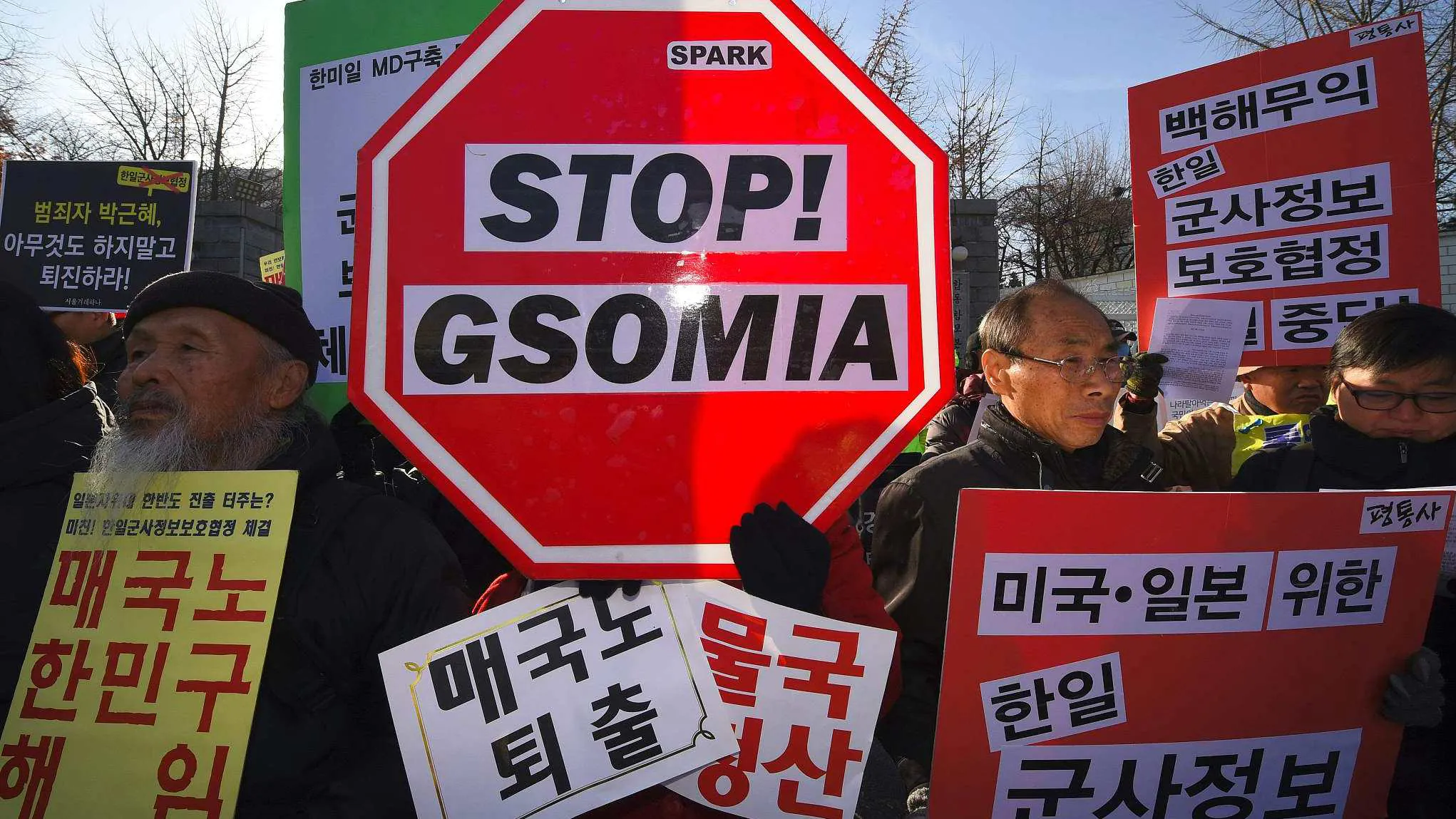
What makes the recent military-strategic developments orchestrated primarily by Japan, South Korea, Philippines and United States more dangerous than ever? And how can their impact on the Western Pacific be evaluated?
These developments are a series of serious changes in the Western Pacific which could endanger the security of China, Russia, and North Korea. In fact, the combined efforts of Japan, South Korea, Philippines and US are creating insecurities for the regional countries. The upcoming Doshin-Bayanihan 6-26 military exercise between Japan and Philippines scheduled from 4 October 2026 till 9 October 2026, and the Acquisition and Cross-Servicing Agreement (ACSA) are applied for the very first time.
General Security of Military Information Agreement (GSOMIA)
The General Security of Military Information Agreement (GSOMIA) between Japan and South Korea is also key to this. Signed in November 2016, the agreement provides Japan and South Korea the means to protect classified military information, and in particular, intelligence relating to North Korea’s nuclear and missile programs. In 2019, South Korea announced it was terminating the agreement. However, in March 2023, it withdrew the termination notice. For Japan, GSOMIA is a foundation of trilateral cooperation in security with South Korea and the United States.
The above-mentioned arrangements in conjunction with Japan’s shifting focus towards the south, give this cooperation a completely new and bigger dimension.
Japan-Philippines Military Cooperation
On May 28, 2026, Japan and the Philippines formalized a partnership to expand cooperation in a wide range of areas from defence and maritime security to trade and technology. Japan sees the Philippines as one of its most important regional security partners and the Philippines’ view of the partnership as a means to support its efforts to preserve sovereignty and help establish a ‘rules-based’ Indo-Pacific order.
More importantly, Japan and the Philippines are also negotiating their own version of the Japan-South Korea General Security of Military Information Agreement. Per the Japanese Defence Ministry, negotiations have already started and so have increasing military interactions, including Japan’s participation in the Balikatan exercise, the implementation of the Reciprocal Access Agreement and Japan’s signing of an Acquisition and Cross-Servicing Agreement (ACSA) with the Philippines in January 2026.
Neither the potential transfer of the Abukuma-class destroyers nor the TC-90 aircraft have been officially announced by either country.
Separately, all the above-mentioned interactions and agreements are indicative of normal defence interactions. However, when analysed together, they are illustrative of a more comprehensive regional defence architecture.
So, what is the geostrategic position of the Philippines in the changing security policies of Japan? The Philippines is at the northern entry point of the South China Sea and is close to Taiwan. Because of its location, the country strategically values Japan and the USA, but the Philippines could get stuck in conflicts that are not in their national interests.
Philippine-Japan relations also cover economic cooperation. Japan is a trade and development partner of the Philippines. In 2025, bilateral trade between the two countries was at $22.2 billion. The economic partnership and security cooperation have merged to form a long-term strategic relationship.
However, because of the expansion of cooperation to include construction, investments, access and movement of troops, equipment and supplies, as well as transfer of weapons and other defence-related equipment, such a relationship warrants further assessment.
China expressed its security apprehensions
The shifting relationship between Japan and the Philippines also worries China. In January 2026, China’s Foreign Ministry expressed concern about the expanding military cooperation between Japan and the Philippines and said such relationships should target only Japan and the Philippines, not other countries.
There have been statements by China regarding Japanese military cooperation with other countries, and Japanese remilitarization; however, if China thinks Japan is remilitarizing, then Japan has created a security dilemma. Dilemmas happen because of differences in perceptions. Japan must work to close such gaps.
North Korea has legitimate security concerns
North Korea takes issue with Japan’s growing military.Pyongyang views the deepening trilateral U.S.-Japan-South Korea ties as a security bloc. Northeast Asia’s peninsular and archipelagic geography, as well as North Korea’s missile and nuclear programs, have spurred Japan and South Korea to build up their military alliances. Today, North Korea, along with Russia and China, strengthened their alliance, and the U.S., Japan and South Korea responded likewise. The security environments and alliances in the West Pacific seem to mirror each other, similar to what exists in Europe.
Conclusion
The confluence of alliances has led to critics questioning whether GSOMIA is truly defensive. Security alliances deepen partnerships, and integrations facilitate command and control structures. While the alliances and partnerships of Northeast Asia have become more integrative, there exist differing expectations concerning ripple effect of alliances, including the triggering of a crisis.
In the security environments of the East and West Pacific, there exist numerous points of political contact through alliances. Japan and the Philippines both argue, from their own perspective, that the further integration of their alliances strengthens deterrence, thereby preventing the outbreak of war. While the integration of alliances may discourage aggression, it may conversely trigger an expansion of alliances and partnerships, which, cumulatively, provides less security.
The Western Pacific therefore has a strategic paradox. All the while, more defence spending and modernization, increases the region-wide security dilemma.
East Asia’s defence and security landscape has changed since the 2014 negotiations for Japan-Philippines GSOMIA, Japan’s changing defence posture, South Korea-Japan GSOMIA, and the growth of Japanese defence cooperative policies.
What the Western Pacific needs is not more dividing lines, but greater transparency in the military, crisis hotlines, and controlled arms. It needs to determine clear limits on the use of intelligence and create diplomatic channels that include the U.S., China, Russia and the two Koreas.
Other than that, a security architecture built to create peace and prevent war can encourage the very bloc politics that create strategic distrust and unintended escalation that makes war harder to avoid.
Simon Westwood, Research Fellow at the Department of History, Dublin City University (DCU), Ireland