

Is BRICS Becoming Just Another Western Style Bloc?
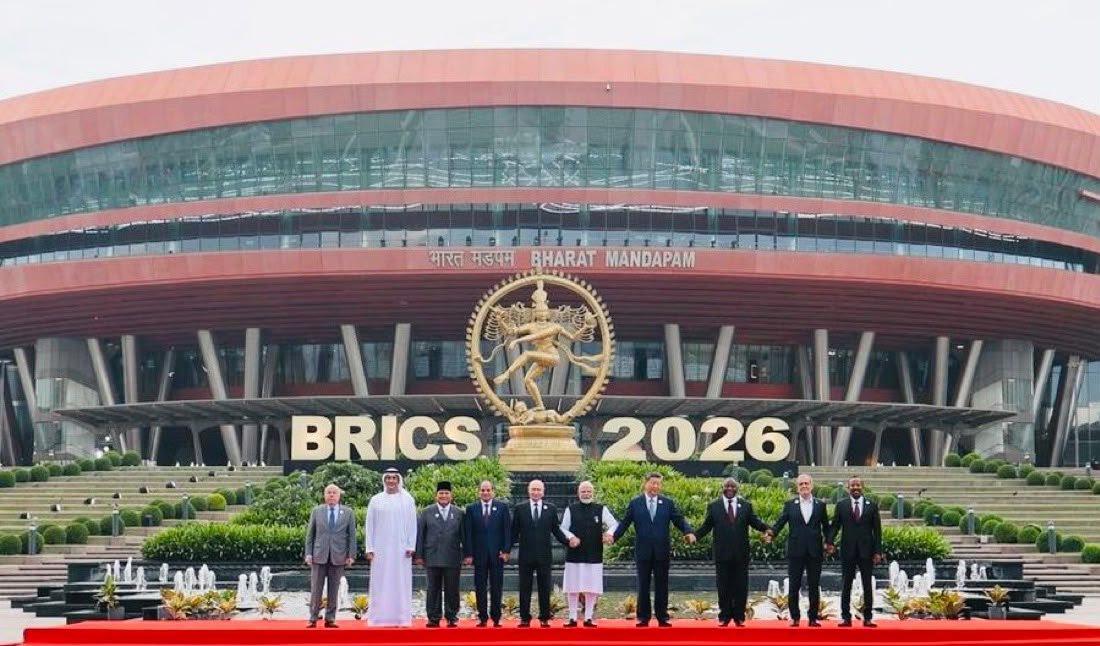
A Betrayal of the Original BRICS Idea?
by Peter Koenig (An alternative BRICS view)
20 years of BRICS – from 2006 to 2026, almost to the day. From a little-known Wall Street (WS) acronym to a global power center; an economic heavyweight challenging the old global order, is what they would like us to believe. It is wishful thinking, no more.
Over the last 20 years, other than the BRICS growth in membership, from 4 to 6 and now to ten member-countries, not much evidence, other than rhetoric, of a real challenge to the west, has emerged. Under leaderships such as India’s and Brazil’s – totally committed to the western monetary system and institutions – little is likely to change in the foreseeable future.
On India – see this BRICS 2026: https://www.irishsun.com/news/279300922/brics-2026-india-charts-its-own-course-between-russia-and-the-west .
Take the New Development Bank (NDB), also called the BRICS Bank, it is still legally and financially denominated in US-Dollars. The bank’s founding agreement specifies that the “dollar” means the official currency of the United States, and its shares and capital commitments are therefore expressed in US dollars.
Its current subscribed capital stands at USD 53.4 billion, with almost 60% of its active portfolio denominated in US dollars. Remaining currencies include, Chinese yuan, euros, South African rand, Swiss francs and Indian rupees. NDB lending has been sparse and almost unnoticeable over the past couple of decades.
For more details on the BRICS, see this https://www.rt.com/news/645503-20-years-of-brics/?utm_source=Newsletter&utm_medium=Email&utm_campaign=Email .
——–
The 18th BRICS Leaders’ Summit is taking place 12–13 September 2026 at Bharat Mandapam in New Delhi, India. India is chairing BRICS in 2026. The Delhi summit is hosted by Prime Minister Narendra Modi. The agenda concentrated on the following key themes: “Building for Resilience, Innovation, Cooperation and Sustainability”, and included these specific discussion items:
- Global governance and multilateralism, including reform of international institutions.
- Trade and investment, economic cooperation and financial coordination.
- Food and energy security.
- Technology, innovation and digital cooperation.
- Resilient critical supply chains.
- Public health and healthcare cooperation.
- Disaster resilience and climate-related risks.
- Broader developmental priorities of the Global South
Most of the sessions will be held behind closed doors. The principal open session is titled “Resilience, Innovation, Cooperation and Sustainability: Shaping the Future for Inclusive Global Growth.”
BRICS Final Declaration
Strangely, the BRICS New Delhi Declaration was already issued at the end of Day 1 (One), i.e., 12 September 2026, under the title, Building for Resilience, Innovation, Cooperation and Sustainability.”
It can be summarized presenting the BRICS as a coalition seeking a more representative, multipolar and development-oriented international order seeking, in which emerging and developing countries have greater influence over global political, economic and technological rules.
As RT says (11 September 2026), “The Gears of Change Keep Grinding” – https://www.rt.com/news/645504-brics-payments-trade-energy/?utm_source=Newsletter&utm_medium=Email&utm_campaign=Email
Relation to the Global South
The declaration treats the Global South not merely as a group needing assistance, but as an active force in shaping global governance. It suggests that the BRICS should:
- Increase the representation of emerging-market and developing countries—particularly in Africa, Asia, Latin America and the Caribbean—in international institutions.
- Reform the UN system and global economic institutions so that they better reflect today’s economic and demographic realities.
- Defend the interests of developing countries on trade, finance, technology, climate, energy and development.
- Ensure that BRICS-created solutions—such as digital, financial and AI initiatives—are accessible and adaptable beyond the BRICS membership to the wider Global South.
Concisely this means:
The Global South is heavily affected by global crises but remains under-represented in global decision-making; BRICS wants to help transform it from a rule-taker into a rule-shaper.
What is distinctive
The declaration links political representation with practical development. It is not only calling for more seats or votes for developing countries at the UN and other international bodies (WB, IMF, World Trade Center [WTO], regional finance and trading institutions); it also addresses local-currency trade, development finance, technology access, AI governance, climate and disaster resilience, health, food and energy security. In this sense, it would appear that BRICS is presenting itself as an institutional vehicle through which the Global South can gain both a stronger voice and greater policy autonomy.
The message sounds ambitious, but implementation will depend on whether BRICS can convert this broad consensus into financing, interoperable systems, concrete projects and coordinated positions in institutions such as the UN, IMF, World Bank, WTO and G20.
Therefore, how believable is the declaration? – The world must know that as long as there is a dependency on these very politico-financial organizations – IMF, WB, WTO, G20 [and you might as well add, Wall Street] – there is no independent BRICS; their influence on the Global South is at best limited.
This broad political consensus, however, is no treaty with detailed enforcement mechanisms. It points out the positions that all members were able to accept, and in particular, that were acceptable to the summit’s host, PM Narendra Modi. For example, the wording on sensitive geopolitical issues is cautious and non-committal. In the Middle East, for instance, it calls merely for restraint and diplomacy without directly assigning responsibility for conflicts to a particular state.
The final statement becomes just another semantic illusion or “treason-gimmick”, that keeps the world quiet for another year, when other similar nothing-saying, nil-meaning, non-committal statements are being issued.
Let us focus on this small detail, the war(s) in the Middle East, namely primarily the Zionist-Israeli genocide in Gaza and Palestine in general, plus Lebanon, Syria, Somalia, Yemen, even Pakistan, and more. And not least, of course, the warrantless, unprovoked Zionist-US aggression on Iran, under the pretext of nuclear threats, when Israel has more than 300 nuclear warheads, never controlled by the International Atomic Energy Agency – IAEA [whereas Iran is regularly controlled].
In reality, like all wars, this is a bankers’ war, attempting to sustain the US-dollar as the currency hegemon of the world. And at the same time, make the already-billionaires to multi-multi billionaires by speculative oil price [inside] trading, as Trumps cronies have access to algorhythms (Artificial Intelligence – AI) that react to every word the self-nominated global master utters in regards to Iran peace or war, or open or closed Strait of Hormuz.
But this is a different story, for a different day.
Let us stay with the blander than bland BRICS statement with regard to the Middle East. For this a “slight deviation” to the Venice Film Festival 2026 and the 2026 Oscar nominations is in order.
The 2025 Venice-winning docu-drama of Kaouther Ben Hania’s ‘The Voice of Hind Rajab’ has been blocked by India’s ratings body. Beyond censorship, this decision reveals a shift in Israel-India relations under prime minister Narendra Modi.
The Tunisian docu-film is about the death of a six-year-old girl during the Israel-Gaza war. Hind Rajab was the sole survivor of an Israeli attack in Gaza. Hind made a distress call to the Palestine emergency services, as she was trapped in a car with the corpses of her relatives.
She begged for help as the Israel Defense Forces (IDF) tanks closed in, with the Palestine Red Crescent volunteers trying to calm her and get an ambulance to her location.
The rescue attempt failed, as it was confirmed and documented by The Washington Post and the Euro-Mediterranean Human Rights Monitor, that the IDF riddled the car with 355 bullets and killed Hind, and two paramedics coming to the girl’s rescue.
In a report by Variety, Manoj Nandwana of Mumbai-based Jai Viratra Entertainment – and most certainly speaking on behalf of PM Modi – said that he was told that if the film was released, it would “break up” India-Israel relations.
The film was however released in the US and most EU countries, including in the UK, Italy, and France – many of which also have diplomatic ties with Israel.
In his defense, Manoj Nandwana, added, “I told them: the India-Israel relationship is so strong that it’s idiotic to think this movie will break it.”
Reactions to the ban in India have been fierce, with many calling out the decision as disgraceful and labelling prime minister Narendra Modi as an Israeli puppet. See this for more details https://www.euronews.com/culture/2026/03/20/indian-film-board-blocks-release-of-oscar-nominated-gaza-drama-the-voice-of-hind-rajab .
What is remarkable, though, is what the mainstream media are not able and willing to do, waking up people to reality, art, in this case film, may just be able to bring about: A more awakened people, worldwide. That is of utmost necessity to stop the Zionist global onslaught.
Back to the BRICS….
How credible is this “powerful” counterweight to the western G7 and G20 – with leader such as Indian PM Narendra Modi, and as it were, Brazil’s Luiz Inácio Lula da Silva (known as Lula), who’s first-term President of Brazil’s Central Bank, Henrique Meirelles, was a Wall Street banker?
Lula was once praised by the IMF as a “fast learner”. Then and today, he keeps Brazil’s economy strongly linked to the western IMF-WB-WS system.
What can be expected from the “grindingly changing” BRICS, when its leaders are traitors of the original BRICS principles and associated with such Human Rights rejecting countries as Zionist-Israel, and / or western monetary and trade domineering institutions, like WS, IMF, WB and WTC?
———–
Peter Koenig is a geopolitical analyst, regular author for Global Research, and a former Economist at the World Bank and the World Health Organization (WHO), where he worked for over 30 years around the world. He is the author of Implosion – An Economic Thriller about War, Environmental Destruction and Corporate Greed; and co-author of Cynthia McKinney’s book “When China Sneezes: From the Coronavirus Lockdown to the Global Politico-Economic Crisis” (Clarity Press – November 1, 2020).
Peter is a Research Associate of the Centre for Research on Globalization (CRG). He is also a non-resident Senior Fellow of the Chongyang Institute of Renmin University, Beijing.