

Shanghai Cooperation Organization (SCO) – Last Hope for Peace?
by Peter Koenig
On 1 September 2026, the 26th meeting of the Council of Heads of State (CHS) of the Shanghai Cooperation Organization (SCO) was held at the Yrys-Ordo Congress Hall in Bishkek, Kyrgyzstan, under the chairmanship of the President of the Kyrgyz Republic, Sadyr Japarov. While this was the 26th conference of the SCO’s Heads of State, the Bishkek summit did celebrate the organization’s 25th Anniversary.
The summit will be remembered not only for the high caliber heads of states in attendance, but foremost because it is the first-time that a political and economic force clearly seems to point to the future of a multi-polar world, and simultaneously giving clear signs of an ever-declining west.
However, it must be mentioned, a west that will not disappear overnight, and a west that will not leave the world stage without a major struggle. One of the west’s non-stop aggressions on its population, is a multi-faceted attack on its people from all sides with the one goal, of massively reducing world population (based on the Club of Rome’s first major Report of 1972, “Limits to Growth”) – a massive reduction starting with the so-called western populace.
Why? – Because once the western population is reduced to a minimum and the thinking is largely taken over by Artificial Intelligence (AI) and robots, control and unopposed management of the still assumed economically and militarily leading west will be a piece of cake, in a manner of speaking. That’s the larger thinking of the self-centered and self-nominated western empire. But will it?
Many doubt this projected development scheme will actually pan out, including a number of western analysts. Western hypothesis are still based on linear thinking, while the world is dynamic, unpredictable, and the forces, both economically, militarily, as well as scientifically (research) are rapidly shifting. This fact seems to be escaping western so-called leaders. To their detriment.
——
Back to the ten-member country SCO summit which was attended by
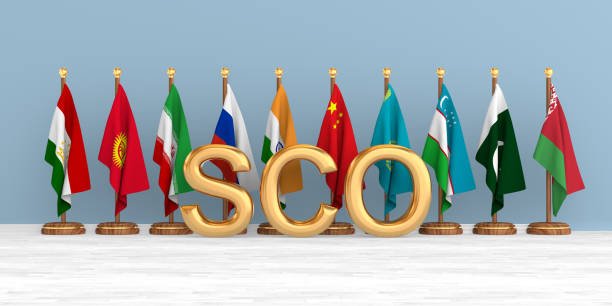
China (Founding member); Russia (Founding member); Kazakhstan (Founding member); Kyrgyzstan (Founding member); Tajikistan (Founding member); Uzbekistan (Joined in 2001); India (Joined in 2017); Pakistan (Joined in 2017); Iran (Joined in 2023); Belarus (Joined in 2024).
The bloc also has two observer states, Mongolia and Afghanistan, as well as 15 dialogue partners. including Türkiye, Saudi Arabia, and Egypt, without full voting membership rights.
For the record, the meeting’s high-flyer attendance, included the President of Belarus, Aleksandr Lukashenko, Prime Minister (PM) of India, Narendra Modi; President of the Islamic Republic of Iran, Masoud Pezeshkian; President of Kazakhstan, Kassym-Jomart Tokayev; PM of Pakistan, Shehbaz Sharif; President of the Russian Federation, Vladimir Putin; President of Tajikistan, Emomali Rahmon; President of Uzbekistan, Shavkat Mirziyoyev; as well as SCO Secretary General Nurlan Yermekbayev; and Director of the Executive Committee of the SCO Regional Anti-Terrorist Structure, Ularbek Sharsheev. Also in attendance was UN Secretary-General Antonio Guterres.
——–
Outlook for a future world order
The ten SCO member states now cover roughly a quarter of the world’s landmass, account for more than 42% of its population, and generate over 23% of global GDP. About half of the world’s inhabitants were represented in Bishkek. The leaders’ of China, Russia and India alone, simultaneous presence, embody the world’s largest countries by area, the second-largest economic block, and with the latter two, China and India, the globe’s most populous nations.
Along with the SCO’s other members, they form a demographic, resource, industrial, and political bloc without which any serious discussion of reshaping the international order is now impossible.
However, and the topic may have been mentioned behind closed doors, or not at all, because it is known to all of them, the group is still ultra-diverse, in culture, in financial autonomy, geographic location, as well as consistent political affiliation. A true analysis of the SCO summit, must include this fact. It is one that requires serious work for closer unification, as geographically it is not possible, at least a closer alignment in matters of politics, economy, finance and monetary policy is needed and must be possible.
The SCO is a platform from where a new balance of power is supposed to emerge, through regular meetings between leaders, security coordination, settlements in national currencies, new transportation corridors (implementation and expansion of the Belt and Road), energy cooperation, and the gradual development of independent mechanisms for growth.
The summit in Kyrgyzstan should be seen as more than another entry on the diplomatic calendar. It attempted to demonstrate, and partially was successful, that multipolarity is no longer an abstract formula, but is beginning to acquire a clear institutional shape.
However, looking closer at the economic and financial independence of the SCO members, many of them have a long way to go to reach sufficient autonomy and economic and trading sovereignty, to gradually gravitate towards a new type of a common SCO policy-sovereignty. All the while it is understood though, that SCO members will maintain their national sovereignty, legislative as well as financial, but closer aligned with each other.
The summit focused on issues of multilateral cooperation across the full range of areas: politics, security, trade, investment, energy, industry, ecology, tourism, new technologies.
————–
The Agenda
Under the title of “25 Years of the SCO: Together for Sustainable Peace, Development and Prosperity,” topics of security with economic and connectivity priorities were blended together.
They comprise Security -because given the west’s aggressive posture, security is a priority, in order to pursue the peaceful and peace-building, as well as economic development agenda:
Economic connectivity and trade: Transport corridors (notably the China–Kyrgyzstan–Uzbekistan railway), which is also part of the Belt and Road plan.
Energy security: Cooperation on energy systems and proposals like an SCO Energy Consortium, alongside bilateral pipeline talks (i.e., Power of Siberia between Russia and China).
Development finance and de‑dollarization: Renewed push for an SCO Development Bank and settlement mechanisms in national currencies to reduce reliance on the US dollar.
As mentioned above, the truth is that most of the BRICS, some of them also important SCO members, and associates are still not free from the dollar. Many of them (especially Brazil and India) have still strong links to Wall Street and IMF / WB which all keep “dollars flowing”. In other words, the dollar hegemony is still in control of most of the BRICS countries (except for China and Russia).
This may become a major issue for a real multi-polar world, and might become the subject of an entirely separate SCO summit; politically not easy, but with China and Russia in the lead it should be possible.
Sustainable development – Climate action, green technology in favor of protecting water resources, making sure that water, as a Human Right, is not systematically privatized, which is silently already happening, as people do not pay attention.
Geopolitical context: The joint statement condemned US / Israel actions on Iran and Western sanctions on some members, while leaders also discussed the Ukraine war, Afghanistan’s instability, and the SCO’s role in a multipolar order.
What is missing is a clear condemnation of Israel’s ongoing genocide in Gaza, Palestine in general, and rapidly expanding to Lebanon, Syria – soon Sudan and Iraq; the gradual but ever faster expansion to Greater Israel, at the cost of millions of citizens lives.
This quick assessment of the SCO Conference – nevertheless sheds a Light of Hope for Peace onto an uncertain future.
———
Peter Koenig is a geopolitical analyst, regular author for Global Research, and a former Economist at the World Bank and the World Health Organization (WHO), where he worked for over 30 years around the world. He is the author of Implosion – An Economic Thriller about War, Environmental Destruction and Corporate Greed; and co-author of Cynthia McKinney’s book “When China Sneezes: From the Coronavirus Lockdown to the Global Politico-Economic Crisis” (Clarity Press – November 1, 2020).
Peter is a Research Associate of the Centre for Research on Globalization (CRG). He is also a non-resident Senior Fellow of the Chongyang Institute of Renmin University, Beijing.
SCO, definitely last hope for Peace. Russia and Iran must be victorious and the SCO has to be involved as the Rules Based Order is dismantled on the battlefield, and the economic (banking) system is replaced. Disarming the defeated West will take the SCO, not just Russia-China. Soon, SCO will… Read more »