

Putin, the Man Trump Cannot Remove From the Chessboard
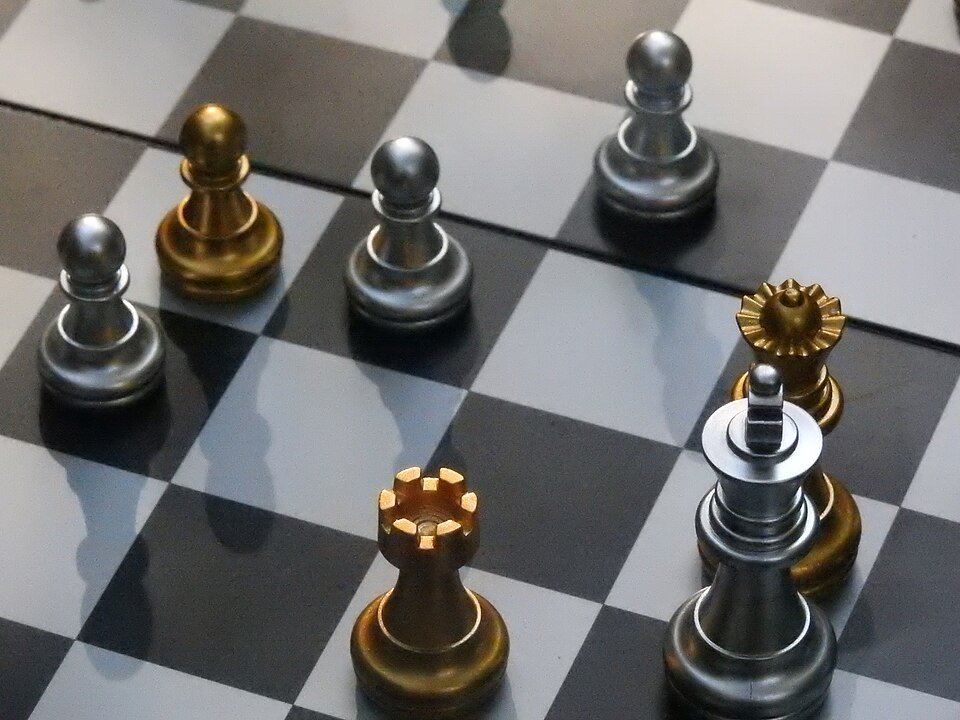
(Image by The People’s Internet / wikimedia)
Iran, Hormuz, China, and India: The Half-Truths of a War Washington Can Start but Can No Longer Decide Alone
“Trump can move aircraft carriers, bombers, and sanctions; what he cannot do is remove Putin from the chessboard, silence China’s needs, or force India to forget that a war in Hormuz can also become an Asian crisis.”
“In this game, Trump has more aircraft carriers; Tsar Putin has something different: the ability to turn every move against Iran into a problem Washington can no longer calculate solely within the Middle East…”
Donald Trump speaks about Iran as if there were still a world in which a great power could bomb, sanction, declare victory, and then explain on television how the map should be rearranged. The problem is that such a world no longer exists. The United States retains extraordinary military capabilities, but Iran sits astride a throat through which, before the war, approximately one-fifth of the oil and liquefied natural gas transported globally passed. Washington maintains that Hormuz is open; Tehran says otherwise.
On August 19, barely six commodity vessels crossed the strait, far below the more than 130 daily transits recorded before the conflict. Speeches can declare a maritime passage open; ships, insurers, and markets decide whether they actually believe it.
“A power can declare that it controls a strait; true control begins when ships are no longer afraid to cross it.”
Behind Iran stands Russia. Not as the owner of Tehran, nor as an army automatically prepared to fight every Iranian war, but as the major actor Washington cannot erase from its calculations. Moscow maintains a strategic relationship with Iran while at the same time preserving a direct political channel with Trump. Putin knows that a complete destruction of the Iranian balance would alter the Caucasus, Central Asia, the Caspian, energy markets, and Russia’s position in the Middle East.
Trump knows that confronting Iran while continuing to measure forces against Russia in Ukraine could end up connecting two chessboards that Washington would prefer to keep separate. Putin does not need to personally stop every American bomber; it is enough for his presence to raise the strategic cost of every decision.
“Putin does not need to place an aircraft carrier in Hormuz to be there; it is enough for him to make Washington calculate what Moscow will do after the next missile…”
The Putin lion does not sit across from the Trump lion armed only with diplomacy, oil, or regional influence. Behind Moscow stands the world’s largest nuclear force by total estimated number of warheads. Russia possesses roughly 5,420 nuclear warheads, compared with about 5,042 for the United States, in addition to a nuclear triad capable of striking U.S. territory from land, sea, and air. That is why Putin represents something fundamentally different from every other actor surrounding Iran: Washington may surpass Moscow in many conventional, economic, and technological dimensions of power, but it cannot treat Russia as a secondary military power. When two lions capable of destroying each other begin pushing against the same chessboard, prudence stops being diplomacy and becomes survival.
“Trump may have more aircraft carriers; Putin possesses the largest total nuclear arsenal on the planet. Between those two lions, real power does not lie in proving who can destroy more, but in preventing either one from ever trying.”
“Putin does not restrain Trump because Russia is invulnerable; he restrains him because behind the Tsar stands a nuclear force no American president can afford to forget.”
But the chessboard does not end with Russia. To the east stands China, the gigantic industrial consumer that needs ships to keep sailing. The insecurity surrounding Hormuz has already forced two major Chinese state-owned shipping companies to suspend operations through Hormuz and Bab el-Mandeb, companies that previously transported approximately half of China’s oil imports from the Middle East. Freight rates from Oman to China rose to around US$140,000 per ship per day. Beijing may remain diplomatically cautious, but every disruption to energy flows transforms a Western war against Iran into a Chinese economic problem.
“China may remain silent in the face of a missile; it is unlikely to remain indifferent when that missile begins to change the price and route of the energy that powers its factories.”
And then comes India, perhaps the most interesting piece on the board. New Delhi retains that old tradition of strategic autonomy born under Nehru, but today Narendra Modi administers it in a far more dangerous world. India cooperates with the United States, competes with China, belongs to BRICS, and buys enormous quantities of Russian oil.
In July, Russia supplied 50.83% of all Indian crude oil imports, around 2.47 million barrels per day, while the share supplied by Middle Eastern producers declined because of disruptions caused by the war. India imports more than 90% of the oil it consumes; for New Delhi, therefore, Hormuz is not a diplomatic abstraction: it means inflation, transportation, industry, electricity, and political stability.
“Nehru’s old question was how to belong to no bloc; Modi’s question is how to preserve that autonomy when every barrel of oil forces India to choose carefully whom to confront and with whom to negotiate.”
This is where the real danger begins. A war against Iran may appear regional when viewed from Washington, Tel Aviv, or Tehran. But one only has to follow the oil to discover another geography. It crosses the Gulf, feeds China, sustains India, alters Russian revenues, changes European prices, and ultimately reaches every consumer filling a fuel tank on the other side of the planet. Brent closed on August 19 at US$91.62 per barrel, near its four-week high, precisely as uncertainty surrounding Hormuz increased once again.
“Modern wars may begin on a regional map, but oil has the unpleasant habit of quickly turning them into global problems.”
That is why language matters (see Anatomy of Deception I). When Washington speaks of appropriation, domination, or territorial control over an international artery, we are not simply dealing with an extravagant phrase. We are confronting a conception of power according to which military superiority can be transformed into political entitlement. That logic is dangerous whether it comes from Washington, Moscow, Beijing, Tehran, or any other capital.
The principle that must be defended is not that Iran has the right to strangle Hormuz, nor that the United States has the right to appropriate it: it is that no power should turn a vital passage for all humanity into property acquired through war.
“When a great power begins to confuse the ability to destroy with the right to possess, the danger no longer belongs only to the country under attack; it begins to belong to the world…”
Half-truths complete the problem. Washington may say that Iran has lost military capability; Tehran may proclaim that it completely controls Hormuz; Moscow may conceal how much it is actually prepared to commit on behalf of its partner; Beijing may present itself as an observer while reorganizing its oil tankers; India may speak of autonomy while its refineries multiply their purchases of Russian crude.
They are all telling part of the truth. None of them is necessarily telling the whole truth. And between those incomplete truths sail oil tankers, markets, and millions of people who will ultimately pay the bill for a war they never chose to begin.
“The language of deception does not always need to manufacture a complete lie; it is enough to deliver one half of reality while carefully hiding the other…”
Trump can strike Iran. Russia can raise the cost of doing so. China can transform energy into economic pressure. India can lean in one direction without fully aligning itself. Iran can continue using Hormuz as an instrument of deterrence. But none of those lions fully controls what will happen if the escalation continues.
“Precisely for that reason, stopping it does not constitute weakness; it is the true test of power: knowing how far to go before one side’s victory becomes everyone’s tragedy.”
“It means recognizing that, in a nuclearized, interdependent, and energy-connected system, the victory of any one lion will become destruction and defeat for the entire planet…”
“Trump can continue moving pieces; Putin will remain seated across the chessboard, China will keep watching the oil, and India will continue calculating its autonomy. The problem begins when one of the lions forgets that all of us live beneath the board.”
“Trump and Putin are two lions with enough power to destroy each other; the danger is that, in doing so, they could drag much of the world into the same catastrophe.”
Brief Bibliography
- Reuters – “Hormuz traffic slows as uncertainty over waterway persists” – August 19, 2026.
Highly useful for supporting the central argument of the column: Washington says Hormuz is open, Iran maintains the opposite, and maritime traffic remains far below pre-conflict levels.
- Reuters – “Trump tells Putin he is ready to help end Ukraine conflict, Kremlin adviser says” – June 14, 2026.
Supports the 55-minute conversation between Trump and Putin, during which Iran was also discussed and Putin expressed satisfaction at the possibility of stopping a conflict that could spread beyond the region.
- Reuters – “Hormuz shipping unchanged amid U.S.-Iran stalemate, data shows” – August 20, 2026
Mauricio Herrera Kahn, Mechanical Engineer, graduated from the Universidad Técnica del Estado (UTE), Chile in 1975, with more than 45 years of experience in the mining engineering and project development sector. He has held positions such as General Manager, Project Manager, and Head of Engineering at national and international companies, where he led studies and project execution under the EPCM (Engineering, Procurement, and Construction Management) model. He is currently General Manager at HyB Ingenieros, developing studies and analyses of new plants and processes with Capex and Opex at the engineering profile level. For several years, he has been writing articles and columns on national and international social, political, and economic analysis.