

The Cockroaches Have Learned to March
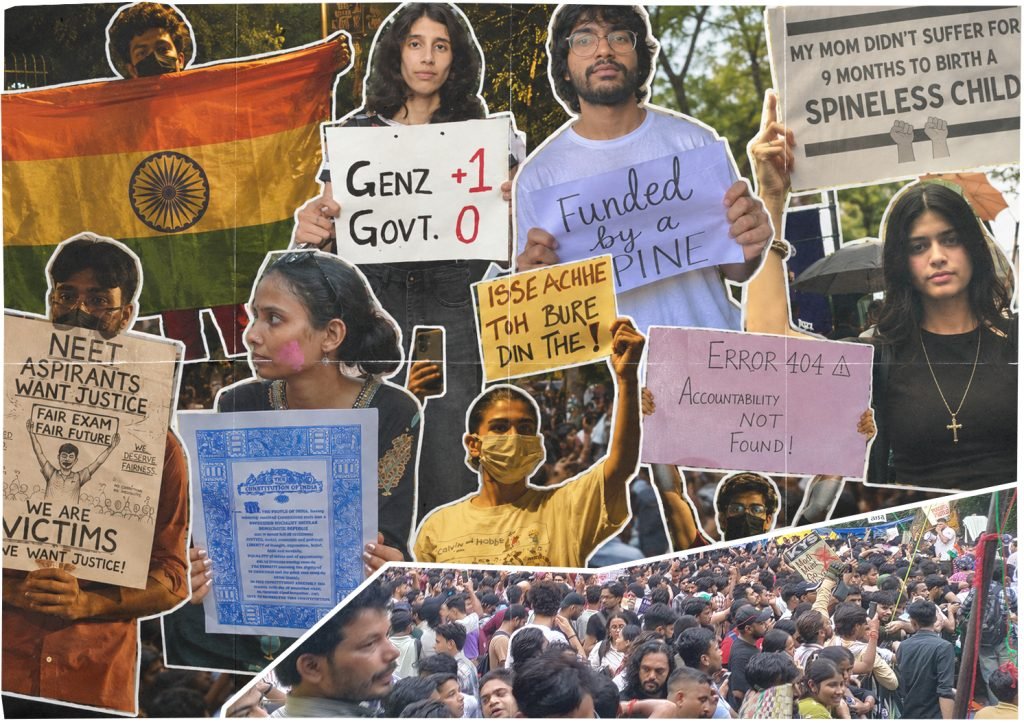

From Colombo to Kathmandu, a stratum treated as disposable has learned to bring down governments – but power keeps passing to armies, technocrats, and the right. Why?
Dear friends,
Greetings from the desk of Tricontinental Asia.
This summer, students marched through Delhi, India, in cockroach masks. The masks were a response to India’s Chief Justice Surya Kant calling the country’s unemployed youth ‘cockroaches’. India’s youth reclaimed the insult, naming their movement the Cockroach Janta Party. After a medical entrance examination was leaked, a wave of students committed suicide and Indian educator and activist Sonam Wangchuk went on a twenty-six-day hunger strike. These events culminated in the resignation of Union Education Minister Dharmendra Pradhan on 25 July – the first cabinet resignation forced from Prime Minister Narendra Modi’s government in twelve years.
The mainstream media has filed these events under the simplistic label of ‘Gen Z’. However, the ‘cockroaches’ are not a generation but a stratum of people whom the economic system treats as disposable – an unwanted surplus of humanity. The young people in Delhi were not protesting their age; they were protesting a socioeconomic system that had failed them. In 2022, graduate unemployment in India stood at twenty-nine per cent – nine times the rate among those who never went to school. In other words, a more educated Indian is more likely to be unemployed. We at the Tricontinental: Institute for Social Research call this a class struggle, rather than a struggle between generations.
Similar conditions can be found across the region – from Sri Lanka to Nepal. Genuine anger is everywhere, but the outcome is decided by which forces have the organisational capacity to capture it.
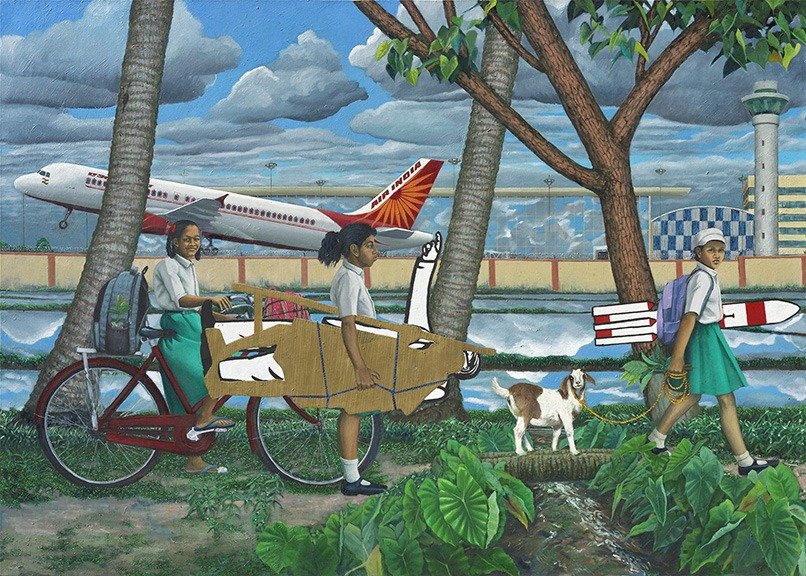 K. P. Reji (India), Mary Had a Little Lamb, 2020.
One Anger, Four Inheritances
In March 2022, Sri Lanka experienced its worst economic crisis in modern history, resulting in shortages of fuel, medicine, and food. Spontaneous protests by informal workers eventually attracted large sections of the middle class and student and trade unions. These culminated in Sri Lanka defaulting on its foreign debt for the first time and the resignation of President Gotabaya Rajapaksa. The interim presidency of Ranil Wickremesinghe took the country to the International Monetary Fund (IMF) and imposed an austerity programme that doubled the poverty rate and gutted economic sovereignty in order to pay back the creditors. About four-fifths of the debt was owed to Western banks and bondholders, not to China. Western finance made the crisis in its own offices, and the cure strengthened those same offices. Two years later, public anger found a better outlet through the National People’s Power and its presidential candidate Anura Kumara Dissanayake. Yet the new government administers the same IMF programme that Wickremesinghe entered into. Political power did not translate into economic power.
In July 2025, a quota reserving a third of state jobs for the descendants of the country’s freedom fighters, mass graduate unemployment, food inflation, and fifteen years of Awami League rule drove students and workers into the streets of Bangladesh. The state killed hundreds. On 5 August 2024, Prime Minister Sheikh Hasina fled to India. But the revolt did not belong to those who made it. Washington’s long friction with Hasina is a matter of record, and the Indo-Pacific contest over Bangladesh is real. The fact is that power passed to a technocracyunder microcredit pioneer Muhammad Yunus. Elections in February 2026 led to a landslide victory for the right-wing Bangladesh Nationalist Party (BNP). The extremist Jamaat-e-Islami was rehabilitated as the principal opposition, while the Awami League was banned from the ballot. The women garment workers who made the victory possible, and the organised left, were pushed to the margins. Though people rose with their genuine anger and demands, reactionaries and their foreign patrons captured power.
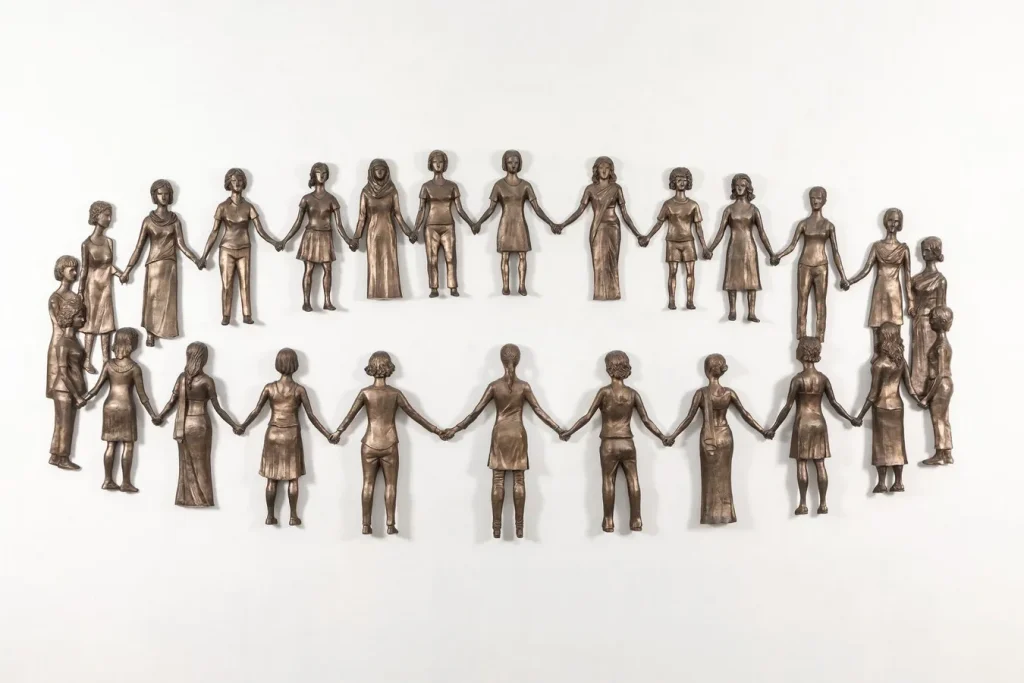 Gigi Scaria (India), Ringa Ringa Roses, 2018
In September 2025, the government of Nepal banned twenty-six social-media platforms, leading to youth protests. Police shot dead nineteen protesters on 8 September, and the death toll rose past seventy in the following days. Angry crowds burnt down parliament, offices of governing parties (CPN-UML and the Nepali Congress) and other traditional parties. They also burnt down the residential buildings of the leaders of these parties. Prime Minister K.P. Sharma Oli resigned. Nepal lives on the export of its own workers – one in five people are unemployed, three thousand people leave the country every day in search of work, and remittances comprise a quarter of GDP. The ‘nepo kid’ meme, mocking the conspicuous wealth of the children of political elites, was not simply a culture war – it was a manifestation of class struggle. But anger without durable leadership and organisation led to a rightward drift. Nepal’s army chief became kingmaker and brokered the transition. The March 2026 election brought the Rastriya Swatantra Party of rapper Balendra Shah to power. The combined vote of the communists fell from about forty to twenty-one per cent. A revolt that burned parliament simply cleared the space for the right to walk in.
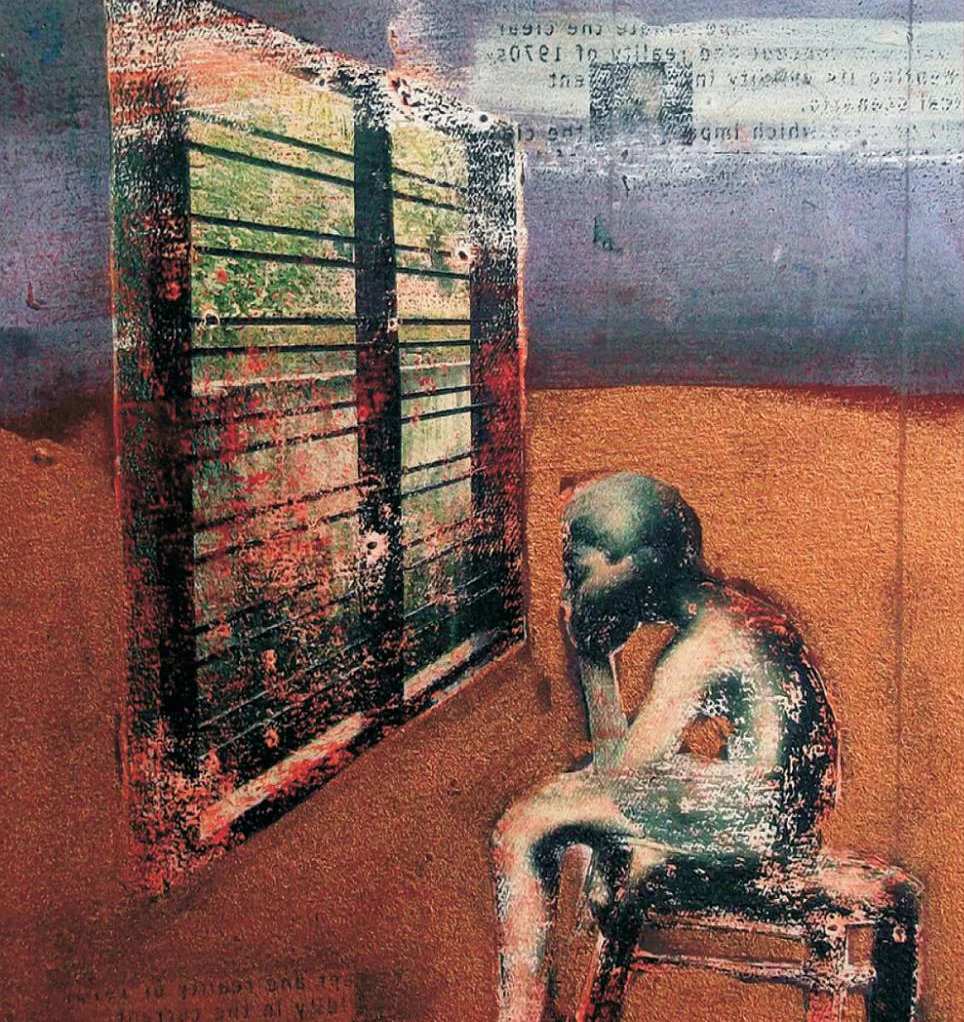 Ameen Khaleel (India), The Cage of poignant Evolution, n.d.
The Form Is New; the Task Is Old
Something in these revolts is genuinely new – Nepal’s protesters chose an interim prime minister on the social-media platform Discord (which was one of the platforms the government had just banned). This organisational form is horizontal, fast, and ‘leaderless’ by conviction. It can bring down a government in a week. But a movement with no organisational structure has no body to hold the line once the ruler is gone and governance begins. In Sri Lanka, foreign creditors and their domestic allies continued to hold the line. In Nepal, the army held it before power shifted to the political right. In Bangladesh, the old parties and the Islamists held the line. A victory in the streets is only Pyrrhic if it does not lead to a programmatic organisational form.
The struggle in India has not reached the maturity of its neighbours. The government that gave up a minister remains in power. It will continue to mobilise communal sentiment and scapegoat minority communities to distract from real issues. Since paper leaks and unemployment are issues that cut across identity lines, the state will work to split the working class along communal lines. Therefore, unity is a necessary strategy and the main task ahead.
This is an argument for organisation. Anger can remove a ruler, but only organised workers and students can decide what comes after. Instruments such as trade unions, student unions, farmers’ organisations, and the party remain necessary to carry a revolt past the moment of rupture. The cockroaches have learned to march; they must now learn to organise and rule.
Warmly,
Atul Chandra
Atul Chandra is a co-coordinator of Tricontinental Asia.
Sri Lanka’s color revolution wasn’t an organic one. People had genuine grievances, but it was the Western-funded NGOs and other 5th columnists that converted what was an economic crisis into a political crisis. The current political party that’s in power (NPP) was at the forefront of these anti-govt subversive attempts.… Read more »
Thanks for that. Yes, we figured it out that the Sri Lankan protests were set to fire by outside forces. It is the danger of today when the people go to the streets. The action immediately gets taken over and real grievances buried under a political blanket. This is one… Read more »