

Mohsen Rezaei: Iran Will Become the 4th World Power
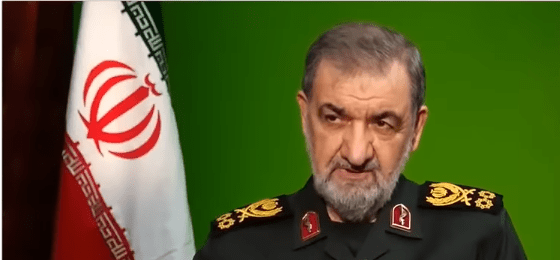
Interview with Mohsen Rezaei, military advisor to the Supreme Leader, member of the Expediency Discernment Council, and former commander-in-chief of the Iran Revolutionary Guards Corps, on Iranian state television, August 3, 2026.
Source: YouTube
Translation: resistanceaxis.substack.com
- The violation of the Islamabad agreement
- The ground invasion plan
- Iran’s response
- Israel, the ceasefire, and the risks of an invasion of Iran
- The widening of the war: Saudi Arabia and Ukraine
- The specter of a third world war
- The incompetence of the Trump administration
- Is Iran warmongering?
- How to end the war/negotiation/ceasefire cycle
- The Iranian people, key actor in the Revolution’s renewal
- Toward the status of 4th world power
Statement from Iran’s Supreme National Security Council, August 8, 2026
In the Name of God, the Exalted.
As long as the United States does not correct its behavior, the Strait of Hormuz will not be reopened.
Correcting its behavior means:
- Never again threatening Iran, in any language whatsoever, nor insulting this nation’s sanctities.
- Putting a definitive end to the war and aggression against Iran and its allies in Lebanon, Palestine, Yemen, and Iraq.
- Lifting the naval blockade and withdrawing its military forces (naval and air) from the approaches to Iran.
- Paying in full, without any reduction, the damages of the two aggressive wars imposed on Iran.
- Lifting the unjust and illegal sanctions against the Iranian people.
- Releasing, unconditionally, the frozen and stolen assets of the Iranian people.
These are the demands of the Iranian people who have risen up, which they have chanted during one hundred and sixty days of uninterrupted presence in the squares and in the streets.
The Supreme National Security Council will never yield, whether on the battlefield or at the negotiating table.
Mohammad-Bagher Zolghadr Secretary of the Supreme National Security Council (SNSC)
NOTE: On August 9, Mohsen Rezaei was appointed representative of Supreme Leader Mojtaba Khamenei to the SNSC, which appears to be a repudiation of the reformist line in favor of the principlist/conservative line; President Pezeshkian had no choice but to follow suit by appointing Mohsen Rezaei Secretary of the SNSC; Mohammad-Bagher Zolghadr was appointed political advisor to the Leader.
Presenter: In the Name of God, the Most Gracious, Most Merciful. Dear viewers of Khabar channel, good morning. Welcome to this interview with the former Commander-in-chief of the Revolutionary Guards, Mr. Dr. Mohsen Rezaei, on developments on the ground and in the region, as well as forecasts of what might occur in the coming days. Good morning, greetings to you.
Mohsen Rezaei: Good morning, greetings to you as well. May God protect you.
Presenter: Thank you for the opportunity you’re giving us.
Mohsen Rezaei: Be well. In the Name of God, the Merciful, the Compassionate. First of all, in these days of Arbaeen, I offer my condolences for the unjust martyrdom of Imam Hussein, (nicknamed) Abu Abdallah, of his family and his faithful companions in the desert of Karbala, to the noble people of Iran and to all those who mourn him, and I hope that this path of freedom, of independence, of humanity, which the Iranian people have taken in the light of Abu Abdallah’s blood, and recently in the light of the blood of our great and eminent Leader (Ali Khamenei), as well as of our oppressed people — Iranian men, women, and children — we may, God willing, continue to follow it with speed and strength. I am at your disposal.
An indispensable read to understand the Iranian/Shia mindset: An Account of Imam Hussein’s martyrdom at Karbala
The violation of the Islamabad agreement
Presenter: May God preserve you. If you agree, let us begin with the new wave of American attacks, which occurred after the Islamabad agreement — an agreement whose several clauses were violated, which triggered this new wave. Previously, it seemed that the Americans had not achieved the objectives they were pursuing in the war, from the very beginning of the “Ramadan war”; they tried to obtain them through negotiation, and since that too failed again, they returned to war, with this difference: they now had the experience of a failure during the Ramadan war. In your view, why did they return to war?
Mohsen Rezaei: This war, in reality, must be called the third war; it lasted seventeen days, many regions of the country were targeted, and we too dealt them severe blows. In my view, this is “Trump’s third war,” the seventeen-day war of (the Islamic month of) Moharram. And while this return to hostilities was surprising for the world, for us it was foreseeable: two or three days before he withdrew (from the Islamabad agreement), I had said, on this very program, to those who opposed the negotiation: “Do not rush: just as Trump tore up the JCPOA [the Iranian nuclear deal], he will tear up this agreement too.” And the day after, or two days after my remarks, he announced his withdrawal from the agreement.
It was clear to me, because apart from the first three or four days when Trump’s remarks and those of his entourage were relatively good, and when the blockade was easing, from almost the fourth, fifth day onward, everything turned around: they began violating the agreement that they themselves, as well as our respected president, had signed, even though the Supreme Leader had declared that we would wait for these clauses of the agreement to be fulfilled. I had said that the noble Iranian people and this servant of the people would wait for the clauses to be fulfilled, and that authorization to sign had been given.
Our respected president therefore signed. Trump too, with Mr. Macron at his side, put on a global spectacle, declaring “We have made peace, we have made peace with Iran.” From the fourth, fifth day onward, he began acting contrary to what he had signed.
First, he came to create another corridor, another route, different from the Iranian arrangements he had accepted and signed, in the south of the Strait of Hormuz, and began implementing it. He was warned, he did not listen; we gave a warning, he did not listen. Seeing that he was violating the agreement, our forces struck one or two ships to make them turn back.
Instead of treating this as a dispute… In any agreement, one generally provides a procedure, provisions for the case where a dispute might arise: a dispute resolution committee had been set up. The Prime Minister of Pakistan and the Emir of Qatar, during the meeting that Mr. Dr. Ghalibaf held with (J. D.) Vance, had established this committee. It had been agreed that we would begin implementing the agreement, and that in case of a dispute, we would turn to this committee.
Without even turning to this committee, he began attacking our southern coasts, around the seventh, eighth day, even though he had signed, in the first paragraph, that he now recognized Iranian sovereignty and that he was ending the war. He again bombed our coasts, struck Qeshm, struck Sirik, and so on, almost without interruption. This violation of the agreements lasted… until, after about twenty days, almost three weeks, he announced his withdrawal and launched a new wave of attacks. One could say this new confrontation began around the 17th of Tir (July 8). In this new confrontation, first, he completely excluded Israel: unlike the forty-day war, where he himself and Israel attacked together, this time he kept it out of it. Second, he only struck the southern provinces; for example, he did not target Tehran or the northern provinces, except for one case in Golestan province, where a road bridge was struck.
The ground invasion plan
So, what was the objective? We understood that he wanted to carry out an airborne assault, a ground operation, to open the Strait of Hormuz and attack our nuclear sites. He himself declared he wanted to strike a certain mountain [the underground site of Pickaxe Mountain, near the Natanz nuclear complex], for example. For a ground attack, it was first necessary to cut the connection between the southern provinces and the north, and this is why he struck all the bridges, particularly those leading to Hormozgan province and the city of Bandar Abbas, around the Strait of Hormuz: by landing troops and taking the strait, no one — no tank, no artillery, no foot troops — would be able to move any longer from northern Iran to the south.
He struck the bridges, then the radars — the radars of the coastal provinces —, certain military centers, [command] cells… This affected about fifty cities and fifteen provinces, at precise, determined points. Militarily speaking, this means that in order to launch a ground attack, one must first cut off the logistics of the defending side: destroy its radars, cut its bridges, so that ground troops can land.
He did all of this. Mr. Trump called the commander of CENTCOM to demand stronger strikes; his ground troops felt that what the air force and missiles had struck up to that point was not enough. The commander of CENTCOM replied that they were striking with all their forces, that no more could be done.
Thus, the first problem that arose was that they had to abandon the ground attack, abandon the airborne assault, this poorly prepared plan of the American army commanders, who had not correctly calculated that to deploy troops toward the Strait of Hormuz, forty or fifty thousand men are not enough; at least one hundred thousand would be needed, crossing the Zagros mountains, passing through at least Fars province, to arrive for example near Isfahan. With forty-five [thousand], their calculations were completely wrong. But that was not enough; Trump kept demanding action: “I don’t even want to involve Israel, I want a resounding victory in my name alone.”
Iran’s response
The second event that occurred is that during this last week of the seventeen days, new waves of missiles and drones were set in motion — more precise and more intense than during the forty-day war — from Iran.
Presenter: From Iran?
Mohsen Rezaei: From Iran, waves of attacks, more precise, more intense, of missiles and drones, were directed toward the American bases, to the point that Kuwait was largely turned into ruins, most of the forces having been evacuated from it. In Erbil, more than forty to fifty wide-body aircraft came to evacuate a large part of the forces. More importantly, CENTCOM’s command, which was located in Qatar, moved to Jordan — which we also struck severely —, then the command left Jordan for Israel. That is to say, this close-combat setup, meant to come and take the Strait of Hormuz to allow for close command and support — command of support from the theater of operations, targeting, etc. —, moved away from the Strait of Hormuz.
Presenter: In reality, what they wanted to inflict on Iran, we inflicted back on them, successfully?
Mohsen Rezaei: Yes. In reality, we broke their tempo. And so the third war is the first war that failed midway through. Whereas the forty-day war had failed after the [ground] operation was carried out: they had prepared these preliminaries, but the main part — the intervention of ground and airborne troops — had failed. This third war, then, on the seventeenth day, he spoke neither of a ceasefire nor of an attack; but we continued for two more days, to show that our number of missiles is greater than theirs and that we have the capacity to defend ourselves, as a warning. This was the first new defensive point that we imposed on the enemy: it was not on the very day he declared the ceasefire that we also ceased fire, but two days later.
This third war was therefore a very bitter failure; this failure added to Mr. Trump’s previous failures, but even more intensely and more discouragingly.
Israel, the ceasefire, and the risks of an invasion of Iran
Presenter: Now, why did they not involve Israel?
Mohsen Rezaei: Israel had several reasons. First, part of its forces are engaged in Gaza, two or three of its divisions are there. More than fifty percent of the Israeli forces are also engaged in southern Lebanon, unlike during the forty-day war. Part of the Israeli forces are also engaged in the West Bank. Thus, Israel, whether its air force or its ground forces, mainly engaged elsewhere, was not ready. Then, Trump wanted to act without Israel’s presence, to tell the American people that it was not Israel encouraging him to attack, that it was he who had decided, he who had achieved victory. There were also political questions: disagreements had emerged between them. Trump, in reality, did this without Israel.
Presenter: You were among the opponents of the ceasefire during the Ramadan war and the forty-day war. This current ceasefire, are you in favor of it or not?
Mohsen Rezaei: Currently, there is no ceasefire of that kind. We do not have ceasefire conditions at present.
Presenter: So we do not currently have a proper ceasefire?
Mohsen Rezaei: No, currently we do not have one. However, our attacks are significant. The previous attacks, carried out during the forty-day war or the seventeen-day war, were perfectly clear: annihilation of the enemy’s equipment, annihilation of its forces. And during the seventeen-day war, it was not bad; let me give these figures: the Pentagon itself speaks of sixty-five dead and wounded; our estimate is five hundred dead; as for the wounded, our friends are currently counting them.
The objectives of the seventeen-day war were therefore to neutralize their ground offensive plan. For that, it was necessary to push back their command and their logistics, to inflict human losses on them: this had military meaning. Currently, there is no ceasefire, but our attacks are significant. For example, we do not authorize, under any circumstances, the opening of a second corridor in the Strait of Hormuz. Even if they bring in a warship, we will strike it. If they bring in military forces, we will strike. For now, we are threatening the ships so that they do not pass through. Fortunately, many ships heed our warnings and turn back; we do not engage in a confrontation. But some, on whom the Americans are clearly putting pressure, come anyway: they then suffer damage, and leave on their own. So for now we hold the command of resistance and defense: this has meaning, and goes in the direction we have been moving in until now.
Presenter: Do you think this American ground operation plan, given also the troop movements from Erbil, Kuwait, and Bahrain, is now completely obsolete, or do you think it could remain on the agenda?
Mohsen Rezaei: I cannot say it is completely obsolete, but it has been greatly weakened. If, before the seventeen-day war, we assessed the probability of an airborne assault at fifty or sixty percent, this probability has now been greatly weakened and limited. It could be, for example, that instead of the Strait of Hormuz and the scale they wanted… their plan was very unrealistic. I heard that yesterday, apparently, Mr. Trump said that we had carried out an operation bigger than the Second World War.
Presenter: Is that an allusion to what you’re saying?
Mohsen Rezaei: Yes. You were dreaming, Mr. Trump, you were asleep and dreaming. But why did it not happen, why did your men not set foot on the ground? No, I cannot say it is completely obsolete, but first, it has been greatly weakened, the probability has decreased; then, if it were to happen, it would be limited, for example in the form of a raid, a quick action, something close, for example, to the Isfahan operation, which is similar to what they might carry out.

The widening of the war: Saudi Arabia and Ukraine
Presenter: This event, and this response given by the Islamic Republic of Iran, in your view, what change will it bring about in the Americans’ military and operational program, or in the field of negotiations?
Mohsen Rezaei: The Americans are, on the whole, in the process of devising a new plan, for the fourth time: after the twelve-day war, the forty-day war, the seventeen-day war, they are now entering a new model. First, they have once again placed their hopes in triggering internal uprisings; in other words, they have told themselves: “So it is clear that we cannot [win] through military war, let us use the internal capacities [to foment a civil war].”
Then, they are doing something dangerous: they are bringing other countries into the war. They pushed Saudi Arabia to attack Yemen and Iraq. Moreover, I heard that yesterday, a Saudi official called one of our foreign affairs officials to say that they were not involved in the attack against Iraq; we are currently investigating this.
Or else, they pushed Ukraine to attack our ships in the ports; they too called to say it was a mistake. This too, of course, we are examining, because we had prepared to strike three points in Ukraine; after they said they had made a mistake, since we are not actually seeking to escalate the war, since we do not want to stir up a warlike spirit, the response against Ukraine has for now been cancelled.
But we are examining both files: regarding Ukraine, whether it really was a mistake; and if it was one, one still cannot let someone strike our ship and then say “it was a mistake, excuse us”; an Iranian citizen was moreover killed…
Presenter: There is nonetheless a share of responsibility in that.
Mohsen Rezaei: There is a share of responsibility, yes, but there is an element — perhaps this element is not a missile, something else, or a misunderstanding; in any case we have disputes with Ukraine that could be at the origin of several matters. Regarding Saudi Arabia too, we sent an investigative team to the bombed sites to examine them, because each country’s munitions are different: for example, the drones possessed by the Emirates are different from those of Qatar or Kuwait, they are all different from one another. If a drone, or its wreckage, falls into our hands, we understand which country it was actually fired from.
The specter of a third world war
The second dangerous act the Americans are committing, then, is that they are widening the war. This is precisely the danger: instead of this agitation by Trump resolving the problem, ending the war, saving him from the war, this agitation could very well light the fuses of a third world war, because West Asia (the Middle East) has far more [explosive] fuses than Europe, where the Second World War took place. The Europeans did not have even a tenth of the potential for a third world war that West Asia has, where this one began. Why? First, there are the problems of West Asia itself: Israeli expansionism, the attack against Lebanon, the attack against Syria, and the challenge that has begun between Turkey and Israel: if Israel advances further toward Damascus, Turkey could enter from the north. Or else the Persian Gulf itself: the Persian Gulf and the Strait of Hormuz are a very dangerous fuse for a third world war. Why? Because that is where the energy is. I would say, if we take up the subject of the Strait of Hormuz, why we have currently closed it, and what our issue is: are we seeking war, or are we pushing it back? Because the most important chokepoint of the world economy is located precisely in this strait.
The Americans came to the Strait of Hormuz saying: “Associate us too (with the management of the traffic), or else you will not participate, it is we who will manage it”; or: “Let us dominate the oil and gas of the region.” What was their objective, in Trump’s third war and in the imposed fourth war? Trump’s third war aimed at this: they said “We are going to open the Strait of Hormuz, take Iran’s oil and gas, Kharg’s, etc.”; in the north of Iran, we defend ourselves — these bridges and these roads that go from north to south are few in number, and most pass through heights — so “We take Iranian oil and gas, and the management of the Strait of Hormuz falls to us too, it escapes Iran’s control.”
Would the world tolerate that? Would even the Europeans tolerate the chokepoint of the world economy being in America’s hands? Would China tolerate it? This alone could be a fuse for a third world war. The second act they are committing, then, is that they are extending the war to Saudi Arabia, Ukraine, NATO itself: for example, NATO was not at all part of the equation; now they have organized a NATO meeting in Turkey, they are trying to involve it a little. On the other hand, that previous (British) Prime Minister (Keir Starmer) who was opposed to the war, they pushed him aside; this new Prime Minister (Andy Burnham) is a friend of Mr. Blair, who, during the American attack against Iraq and Afghanistan, was the only European leader who remained at the Americans’ side. Germany (under Gerhard Schröder) had withdrawn saying “We are not participating”; France had withdrawn (under Jacques Chirac); but England, under (Tony) Blair, remained firmly, which moreover earned it, afterward, many troubles in England. This new team is now saying: “No, we want to help the Americans.”
The very fact that he is thrashing about like this, the fact that America wants to bring other countries into action, shows in itself that the Americans have suffered a heavy defeat. Because, as every analyst knows, the Americans, during the twelve-day attack against Iran, consulted neither the Europeans, nor even informed them, even though they are American allies. America consulted no Arab country, did not inform them, even though all its bases for attacking Iran were located in these Arab countries; even Iran had not been informed of it.
But now, they have reached an exceptional situation where they are clinging to everyone, saying: “Come help me.” Our message to Trump and to America is this: why are you doing this? Since you are achieving no result, why are you widening the war? Are these countries really cooperating with you? Is Europe really cooperating with America? Is even the UK cooperating with America? That remains to be seen. The war has become difficult: everyone is going to leave him alone, just as Israel left Trump alone in these matters.
Another dangerous act: while Trump had taken his distance from Israel after the agreement, recently, during Netanyahu’s trip there [to the United States], the Mossad presented a series of wiretaps of Iranian officials, of the population, etc. Netanyahu told Trump: “Yes, they have these plans, etc.,” and once again tried to deceive him in order to drag him into a new spiral. But this time, Netanyahu did not really succeed: my analysis is that his power of persuasion has greatly diminished. Nevertheless, Trump did not give a totally negative response to Netanyahu. Whereas during these seventeen days he spoke only of the Strait of Hormuz, he now says: “No, I have two files on the table: the Strait of Hormuz, and the nuclear file,” which shows the effects of this deception employed by Netanyahu. But Trump’s confusion is quite manifest. If your question concerns the model, Trump’s plan regarding Iran, it is confusion.
Presenter: And really he is struggling (to get other countries involved)…
Mohsen Rezaei: That’s it, he can do nothing else.
The incompetence of the Trump administration
Presenter: Some, contrary to the point you are raising — the confusion, the lack of a plan —, say on the contrary that the Americans are devising a very precise scenario, consisting notably of maintaining this intermediate, ambiguous situation, until the American Congressional elections in Aban [November].
Mohsen Rezaei: You see, any individual who, in carrying out an action, suffers a failure, tries to correct it; this is a behavior present in all human beings. But how does one know that someone who has suffered successive failures is devising a genuinely precise and meticulous new plan?
The problem Trump faces, in my opinion, is a defect of rationality. I am not even speaking of moral rationality but of practical rationality. When we look at the twelve-day, forty-day, and seventeen-day wars, we observe that the level of American decision-makers has considerably dropped. We no longer find, among current American commanders, the refinement they had during the wars in Iraq and Afghanistan.
This plan they devised — bringing in an airborne assault to separate the south of Iran from the north — is extremely weak militarily speaking, not very technical, it is very unprofessional. On what basis did they devise this plan? This shows in itself a weakness: it shows the way Mr. Hegseth, the Secretary of War, who designed it, works, even though he was never truly a military man, that he does not have complete military competence.
Trump himself was also never a military man, nor was his Secretary of Defense, nor were his commanders, because he seeks out flattering people. Under such conditions, how can one expect anything other than a drop in level? The first problem the American side encounters is not technological: American technology is indeed very advanced, the THAAD missiles, etc., are at the height of global military technological advances. China is approaching it at great speed, certainly, but has not yet caught up with it. The question is: who uses this technology? Who stands behind it?
During the [Iran-Iraq] war, I remember that an official from the government of the time had asked the Imam [Khomeini]: “If we were given a HAWK missile, to place in the Isfahan refinery, could we shoot down such-and-such an aircraft?” He was told that this missile has no anti-missile, that it would infallibly hit the aircraft. The Imam had replied: “Good, but who is sitting behind [the controls]?” That is to say, possessing advanced technologies is one thing; knowing who will use them is another.
America has now reached the conclusion, after its successive failures, of coming, through a media staging and by inflating economic problems, to once again stir up trouble inside Iran. Our forces are fully ready: we will defend our country to the last drop of our blood, against any unrest or attack coming from outside.
The Americans are now at a loss: on one hand they stir up internal unrest, on the other they stir up the widening of the war. No reasonable human being would go toward an individual such as Trump, whose own successors, in the governments to come, will certainly say that his presidency is one of the darkest points in American history. What reasonable man, in Iran, would then go and forge a friendship with Trump or Netanyahu, participate in unrest, when his own successors will later say that it was a dark point in America’s history?
Is Iran warmongering?
Presenter: Doctor, you alluded to an accusation leveled against the Islamic Republic of Iran, according to which it would be warmongering, particularly after the violations of the agreement by the Americans, these ships that were hit, or the preventive actions and attacks that Iran has sometimes carried out, as you mentioned, after the Americans themselves stopped their attack, when we continued. What is your response to this accusation? Are we really seeking to continue the war?
Mohsen Rezaei: You see, in my opinion, if a poll were taken around the world to find out who, during this year of war between Iran and America, was warmongering and who was anti-war, the overwhelming majority of the world’s peoples would say that it was America that was warmongering. Why? We had three negotiations before each confrontation with America. Before the twelve-day war, we negotiated. Before the forty-day war, we negotiated. Before the seventeen-day war, we had an agreement.
The mere fact that the Americans came to break off the negotiations and enter into war proves that it was America that was warmongering. We, we were anti-war, in the sense that we wanted, through negotiations, to prevent war from breaking out. Unfortunately, they interpreted our insistence on preventing war as weakness. They told themselves: “Now that the Iranians, every time they are asked, come to negotiate, that they seek to avoid war, it means they have weakened.”
Instead of learning from our political nobility, they regarded our presence at the negotiations as weakness. So it was they who were warmongering, and we who were anti-war.
Another reason: they launched three wars against us. What did they do? Why did they martyr our Leader? Why did they martyr our children (in Minab elementary school)? Was it we who did this against the Americans? We have never, anywhere in the world, been able to attack the Americans. We have never attacked any American, any American country, any American people. It is America that attacked our people. It is America that attacked our country. It is America that killed our children. They martyred our Supreme Leader. So why is it said that we are warmongering?
Today’s warmongers raise the flag of peace. We, who were opposed to war, opposed to warmongering, who stood up against the warmongers, are being told that we are warmongering. This is nothing but one of the ruses of psychological warfare, a well-known device. If some allow themselves to be deceived, believing this psychological warfare to be sincere, honest propaganda, well, let them correct themselves.
We were truly not seeking warmongering. Now too, we are not seeking escalation. We are not happy that Saudi Arabia attacked Yemen, or that Yemen attacked Saudi Arabia, because this is dangerous, this widens the war. If America again sets off the fuses of a third world war, many human beings will be killed: we do not want human beings to be killed.
How to end the war/negotiation/ceasefire cycle
Presenter: Many believe that we still have not emerged from this cycle of threat, negotiation, and war, mentioned since the very beginning of the forty-day war. Do you share this view?
Mohsen Rezaei: You see, I believe in diplomacy, although diplomacy is not limited to negotiation alone.
Presenter: Have we currently emerged from this cycle, or not?
Mohsen Rezaei: Allow me first to address the question of diplomacy. From the time of the late Imam, from the time of our martyred Supreme Leader, and now too, diplomacy has always been a just policy. It is done sometimes through negotiation, sometimes through a message, a dialogue, intermediaries. Moreover, during the eight-year war (against Iraq), we had a very active diplomacy, but we did not speak with Saddam (Hussein); we spoke through international intermediaries, with the UN Security Council. Diplomacy must therefore exist.
Regarding negotiation, the important question currently facing the Leader of the Revolution (Mojtaba Khamenei) is that the Americans change their behavior. This means we must see something new in America’s behavior. Mr. Trump says for example: “Accept a ceasefire, and let’s come and talk.” Let them start by acting! Those same clauses they were supposed to implement, let them begin implementing them, the first, second, third, fourth, fifth. Let them return our money. Let them declare they are not at war with Iran.
On the question of the Strait of Hormuz, let them stop creating insecurity; let them allow us, according to our own arrangements, to better assist world trade than in the past. Because it is not only our own security that matters to us, but also that of world trade. We act responsibly in the Strait of Hormuz: this means that, just as we want to preserve our security, world security matters to us as well. The security of Brazilian farmers matters to us, the security of the peoples of Africa and Europe matters to us. We therefore act, in the Strait of Hormuz, more responsibly than America. However, since they are creating insecurity, they are preventing this strait from truly opening. As soon as they implement these clauses, the five clauses provided for in the preamble of the agreement, which they had begun implementing for three-four days, we will see in that the sign of a change in behavior. This could be a signal.
Presenter: That is to say, do you consider that the Islamabad agreement can still remain the main framework for negotiations?
Mohsen Rezaei: On this point, since it is the officials of the Supreme Security Council who must decide, I do not want to commit myself, so that it is not said tomorrow that I said something else. But what I understand from the Supreme Leader’s point of view is that America must change its behavior. The Iranian people must see that an event has occurred, that something has taken shape; these concluded agreements could constitute a good basis, perhaps precisely what could get us out of this cycle of threat, negotiation, and war.
If America’s behavior changes, everything changes completely. Otherwise, it is once again war, then negotiation, then ceasefire. This was moreover the entire purpose of the agreement itself. It makes no sense that there should be war at the same time, then ceasefire again, negotiation again, the shadow of war and that of negotiation simultaneously; this absolutely must change. The American people themselves say so. You have surely heard the recent polls: Mr. Trump is experiencing the worst situation of all American presidents, his popularity has fallen to around thirty-two, thirty-three percent, a considerable drop.
The American people say: “It’s over”; Congress says: “Let the war end.”
Presenter: Iran too, however, signed for the war to end, so why this insistence, for what reason? Some here, regarding the blockade, believe that instead of waiting for the Americans, in an agreement, to lift it, we should break it ourselves; or, regarding the negotiation and the fulfillment of the conditions, they say that it must first happen concretely, and only then should we enter into negotiation sessions; that is to say, proactive action on the part of the Islamic Republic of Iran, to provoke this change.
Mohsen Rezaei: Even a proactive action must first come from America. It is America that must now take the first step. Moving forward together, taking steps together, this presupposes a first step, and it is up to America to take it, to change its behavior now. This would be a positive start, but if America…
Presenter: If it does not do so?
Mohsen Rezaei: If it does not do so, can we withstand a maritime blockade? Certainly, for American warships, for American bases, serious dangers will arise.
Presenter: That is to say, would we remain with our arms crossed, America continuing the maritime blockade without making the slightest gesture on Iran’s conditions?
Mohsen Rezaei: Certainly not. Moreover, we have currently activated many alternative routes. Our exports through other routes have, for example, doubled or tripled; our imports have changed. But the maritime blockade, we will not [tolerate] either…
Presenter: So, you consider that the ball is currently in America’s court: either they change their behavior, or we will not tolerate this situation?
Mohsen Rezaei: The ball is currently there. It is up to them to take the first step.
The Iranian people, key actor in the Revolution’s renewal
Presenter: And finally, the presence of the people in the streets — do you think it remains necessary, that it must continue, Doctor?
Mohsen Rezaei: You see, in my previous interview, I asked everyone — the people, dear statesmen, analysts — to understand that we suffered real harm in this war: from the martyrdom of our dear Supreme Leader, whose faithful followers we were, to the people, great harm was inflicted upon us; but in return, an immense revolution rose up, a great outpouring rose up.
This outpouring, this great revolution, we must not limit it to the front line of resistance — the field, the street. This front line must be preserved; the people’s presence must be maintained; our missiles must be ready to be launched with power; our drones, our armed forces become this front line, this first trench. But this front line needs logistical support.
Should our economy not be transformed so that this front line can be supplied? The people, in the street, in terms of livelihood — should we not improve their situation day after day, so that they remain on this line? We must therefore develop this outpouring, this revolution, from its political and military dimensions toward other dimensions: transformations in the economy, in investment, in production, in new technologies, so that the people’s livelihood improves through higher incomes, and so that we can financially support the armed forces and provide them with new technologies.
My main point, then, is this: yes, the street must exist, the missile too must exist; but if we limit this outpouring, if we reduce it, if we belittle it, it will not be equal to the harm that was inflicted upon us.
Many now say: “No, with this political-military activity alone, if we reach an agreement with the Americans, so much money will come,” etc. Well, the money comes — what happens next? Imports come, but how is the people’s purchasing power resolved? If imports increase without purchasing power increasing, that is not enough. How do we get out of this state-run economy — in the same way that we make the people participate in the streets, in the armed forces, let us also make them participate in the economy.
Among our people there exist extraordinary talents, very gifted young people, but they encounter difficulties in obtaining loans, in investing; our investors, for their part, have problems of economic security: “We are being inspected from everywhere,” they say — trust us, let us trade, control us, supervise us. Or let us take savings: through savings alone, we could have, over one year, an income of one hundred billion dollars.
Of course, savings that would not weigh on the shoulders of the people in this way — let the people themselves come and participate in it, become a stakeholder in it — that is to say, that these one hundred billion dollars do not go solely into the pocket of the state, but that a large part, through savings, returns to the pocket of the people themselves. Savings, investment, production, participation of the people, economic security: that is what constitutes the outpouring, but a global outpouring, a global revolution; defensive, political, military, economic, cultural.
Why would we not want to use this great outpouring? This is why, in my previous interview, I said that we must use it to create a Mahdist society [oriented toward awaiting the Mahdi]. A Mahdist society is, on one hand, prayer [salat], and on the other, the production of wealth — for prayer without almsgiving [zakat] is not possible; many verses of the Quran say so: “Pray, give alms.” Who can give alms? A people that produces wealth.
Our entire people can produce wealth. Even disabled persons have this capacity. Seven or eight years ago, a disabled person who painted with his foot was shown: he created the most beautiful paintings this way [see her meeting with Cristiano Ronaldo here]. The Most High has wronged no one; all talents are found among our young people. We must develop this outpouring.
Unfortunately, a political culture has developed in the country, where even today’s protesters come with political slogans, without saying how, starting from this outpouring, to set the economy right, to increase investment and the production of wealth. We must truly get out of this all-political culture, in the management of the country, in society, among the country’s elites. We are a cultural people, an economic people. And yes, we are also a political people, a military people.
Toward the status of 4th world power
Presenter: To conclude, if there remains a point I have not raised, dear Doctor…
Mohsen Rezaei: In truth, I do not sometimes consider myself worthy of giving advice, for I myself need, more than anyone, to be warned and advised. But as a simple soldier in the service of all Iranians, of all those whose hearts burn for Iran, I ask that the current situation be understood, which is a transitional phase toward the status of fourth world power.
Even the nationalists, even the minorities — let us all join hands. We have come a very long way to this point, with wisdom and with strength, in accordance with this political line of our martyred Imam, who said: “Dignity, wisdom, opportunity” — for opportunity and dignity stand face to face with one another. This was a beautiful journey.
In opportunity, one must show prudence; in dignity, one must show strength. What unites this opportunity and this dignity, what links them and brings them together, is wisdom, is prudence.
I therefore still believe that the doctrine of our martyred and beloved Supreme Leader continues to prevail. Let us join hands today, let us endure these pressures, these difficulties — not that we cannot find a solution to them, but that we preserve our unity, that we show resistance, that we move forward. Without unity, we truly cannot move forward.
These divergences that have appeared among the forces of the revolution serve our country’s interest in no way — they must cease. Yes, constructive criticism must certainly exist, and those who are the targets of this criticism must welcome it with open arms. Criticisms, for their part, must not slide toward destruction, insult. We must, within the Iranian family, the family of the Islamic Republic, the family of the Islamic Revolution, have constructive and serious dialogues, to preserve the interests of our nation and the security of our country, without letting ourselves be drawn toward discord and division, by the grace of God.
Presenter: Thank you very much, Commander-in-Chief, Pasdar, Mr. Dr. Mohsen Rezaei, for your presence and the time you have given us for this interview. Thank you for your effort and that of your collaborators.
Mohsen Rezaei: Thank you.
Presenter: Thank you, and thanks to the dear viewers who have accompanied us up to this hour and who have followed this interview.