

This Month in China
JULY 2026

CHINA’S NEW “NEW THREE”
Since 2023, China’s “new three” referred to three renewable industries where China achieved global dominance and made China an electrostate: solar panels, lithium batteries, and electric vehicles. After the financial crisis of 2008, China’s policy plans moved from theory to concrete industrial engineering, committing massive capital to clean tech. It took five years for solar to achieve global dominance, ten years for lithium batteries, and fifteen years for EVs. Today, the West has largely lost the industrial race with China on solar and batteries, and automakers are bleeding today to keep up with Chinese EVs.
But while Western policymakers are busy erecting tariffs and protectionist walls around the old “new three”, China has moved on. In the first half of 2026, a new generation of high-tech products has emerged as China’s new export engines: artificial intelligence, humanoid robots, and innovative biotechnology. These are China’s new “new three”.
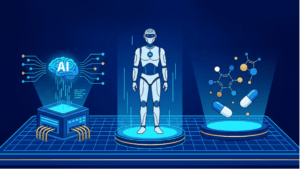 Photo: CGTN
But while the fifteen-year clean tech wave was rooted in manufacturing, the new “new three” are rooted in knowledge-based and high-tech industrialisation. Talent, R&D, and labs are the new factory ingredients. And I believe the same timeline could well play out again: China’s global leadership in AI by 2030, in robots by 2035, and in biotechnology by 2040. If you look closely at what happened in July 2026, the volatility in Western stock markets every time a new Chinese model is released already shows the first real cracks.
1. AI: The Commoditisation of Intelligence
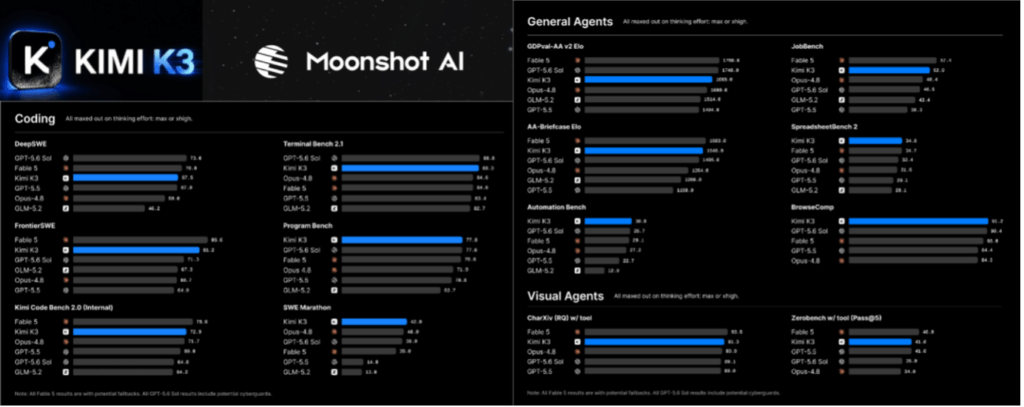
When Moonshot AI unveiled Kimi K3, a 2.8-trillion-parameter open-weight model that outperformed both Anthropic’s Claude Opus 4.8 and OpenAI’s GPT-5.5 across most coding and AI agent evaluations, it was considered China’s second DeepSeek moment. US chip stocks tumbled, the semiconductor index posted its worst weekly decline in months, and the Wall Street Journal ran the headline “Chinese AI Models Rattling US Stocks”. DeepSeek’s V4-Pro (April) and Z(dot)ai’s GLM-5.2 (June) had already closed the gap, with Marc Andreessen writing that GLM-5.2 was “the first Chinese AI model to match and often beat the American big lab public AI models. ” Three China AI shocks in three months are no anomaly anymore but a pattern. And the disruption is not just performance. These Chinese models are being released as open-weight, allowing companies globally to download, modify, and deploy them without depending on a much more expensive proprietary American platform.
The logic here is simple but devastating: AI models are becoming commodities. When a technology commoditises, competition shifts entirely to price. And nobody will beat China on price. My prediction is therefore that over time Chinese open-weight AI models will be capturing up to 80% of the global markets. US closed-weight models will remain important, mainly for highly secure environments or for the last mile of very complex systems. China will dominate AI because its models are easily accessible and locally deployable (open-weight), much more affordable (optimised models and abundant electricity), and very easy to use (readily applicable in every industry).
At the World AI Conference (WAIC) in Shanghai in July, President Xi Jinping delivered his first-ever keynote at the country’s premier AI summit, pitching China as the champion of a new global AI order. Comparing AI’s significance to the invention of the steam engine and electricity, he urged countries to seize the “historic opportunity” of open-source AI and pledged to help developing nations build their own capabilities. He launched the World AI Cooperation Organisation, and signed up 29 countries. His message was unambiguous: “China is not going to follow anyone on both AI technology and standards. Instead, China is going to lead the world in both aspects.” The three key takeaways from his speech were China’s commitment to open-weight AI infrastructures, a stricter regulatory framework on AI, and a multilateral push to help developing nations build AI capacity.
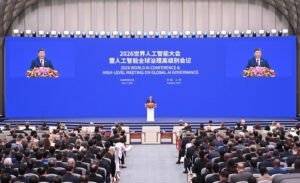 Photo: Xinhua News
Even the hardware bottleneck is being resolved domestically. At WAIC 2026, nearly every major Chinese chip and server vendor showcased a supernode design, integrating hundreds or thousands of AI processors into a single system. ChangXin Memory Technologies (CXMT) debuted on the Shanghai STAR Market, surging 466% to become China’s most valuable mainland-listed company, securing the domestic supply of critical memory chips. By then, the US semiconductor ETF had already lost over $1 trillion in market value from its June peak. Meanwhile, a state-backed company in Shanghai has begun manufacturing homegrown DUV lithography machines. Nothing that can challenge ASML yet, but another step toward reducing China’s dependence on Western chipmaking equipment for the commodity chips that power its AI supernodes.
The race is far from over. But the Chinese peloton is closing in fast on the American breakaway, and China is determined to industrialise and democratise AI by giving Global South countries and Europe what Silicon Valley never offered: affordable, locally deployable intelligence.
2. Robots: The Embodied AI Economy
If AI is the brain, robots are the body. As I wrote in last month’s newsletter “China: The Next Robot State”, and WAIC 2026 made it abundantly clear, the focus is no longer just on digital AI. It is squarely on embodied AI.
The American Boston Dynamics has long been the world’s most recognisable humanoid robot company. Founded in 1992 as a spinout from MIT, it has had a 34-year head start. When Hyundai bought SoftBank’s remaining stake this July, the implied valuation was approximately $3.4 billion. Today, five Chinese humanoid robot firms now carry a valuation above or close to that number, three of them founded in 2023. The symbolism is hard to ignore. As the chart below puts it, “Shipping volume is settled. Pricing is not.” In other words, China has already won the manufacturing race. The financial race is just beginning.
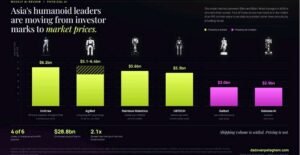 Photo: Dado Van Peteghem
Washington escalated its response in July when the US banned imports of new foreign-made humanoid and quadruped robots, citing national security risks. It is a desperate move, but it misses the point entirely. China already commands an estimated 85% of the global humanoid robot market with an estimated 100,000 robots leaving Chinese factories in 2026, a five-fold leap from 2025.
The ban gives US companies, primarily Tesla, a time-window. But protection will not help American firms to compete for two reasons: First, the US lacks the industrial hubs, where all hardware components are readily available and at low cost. Secondly, without the cheaper humanoids, American startups will not be able to develop and train their own designs. They may have a better AI (brain) and more money, but will burn through far more time and money with every new robot they launch.
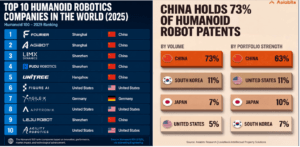
The IP race is equally one-sided. According to Asiabits Research and LexisNexis, China holds 73% of all humanoid robot patents by volume and 63% by portfolio strength. The United States holds just 5%. Six of the world’s ten most innovative humanoid robot start-ups are Chinese, and the top five are all Chinese: Fourier, AgiBot, LimX Dynamics, Pudu Robotics, and Unitree.
 Source: AsiaBits Research | LexisNexis Intellectual Property Solutions
Banning Chinese robots in the US will not slow China’s overall humanoid development. It will simply mean that the rest of the world, from factories in Southeast Asia to hospitals in the Middle East, will automate using Chinese technology. The US is building a wall around a shrinking market, while China is building the physical workforce for the global economy.
For the past decade, the old ‘new three’ – electric vehicles, lithium batteries, and solar panels – added trillions to China’s GDP and reshaped global trade. The humanoid robot economy is being built on the same industrial foundations, with the same policy ambition, and the same long-term commitment. If history is any guide, the next decade will belong to those that will build the physical AI-workforce, and China is already building it.
3. Biotech: The Health Silk Road
The third pillar of the new “new three” is perhaps the most overlooked, but it is following the exact same industrial playbook. In my May 2025 newsletter, I predicted that biotech would be the next battleground between China and the US, with a reverse brain drain of biotech scientists living in the US steadily moving back to China. A year later, the data is undeniable.
In the first half of 2026, China’s National Medical Products Administration approved 38 Class 1 innovative drugs. None had been approved anywhere in the world before. Of these, 31 were developed by domestic Chinese pharmaceutical companies. In all of 2025, the equivalent figure was 11. China is on track to multiply that seven times over in a single year. China now accounts for around 30% of the world’s innovative drugs under development, ranking second globally. Overseas licensing deals exceeded $110 billion in the first half of 2026, equivalent to 80% of the total for all of 2025, which was already a record year itself.
The Western biopharma industry is beginning to panic, and rightly so. Western drug development is hyper-linear, hyper-expensive, and designed to protect single patented monopolies. China has commoditised early-to-mid-stage drug discovery. By leveraging AI, urban hospital networks, returning scientific talent, clinical trials and investment in R&D infrastructure, China can reduce drug discovery costs by up to 60% and move exponentially faster in approvals.
 Photo: CGTN Frontline
Global capital is now investing in Chinese assets and capabilities to keep its own R&D flowing. In doing so, it pumps money directly into the Chinese industrial ecosystem, training the very competitor that is about to make it obsolete. We have seen this before. When Western manufacturers massively invested in the Chinese supply chains, they transferred expertise, precision engineering knowledge, and industrial scale that China absorbed and built upon. Today, Western pharma is doing the same. They are licensing Chinese drug assets, funding Chinese clinical trials, and building Chinese R&D capacity. The difference is that this time, the Chinese government is also investing massively into the sector, and the product is not about atoms. It is about molecules. By driving down the cost of complex molecular manufacturing, it is constructing a parallel infrastructure of global health dependency.
The Civilisation Factory
These three emerging industries, AI, robotics, and biotechnology, are reshaping how humans think, work, and live. Together, they form the foundations of a new stage of civilisation. Taken together, AI, robotics and biotechnology represent a transition from manufacturing physical products to industrialising intelligence, work and health.
China is therefore evolving from exporting products to exporting technology, clinical solutions, and industrial operating models. Decades ago, China’s exports of clothing, furniture, and household appliances showcased its manufacturing capability. Over the past decade, exports of solar panels, batteries, and electric vehicles have demonstrated the strength of its industrial ecosystem. In the coming decade, Chinese AI models, humanoid robots, and innovative medicines will showcase something fundamentally different: China’s ability to export knowledge, industrial know-how, and human capabilities: the traditional strengths of America and Europe.
The new ‘new three’ are not isolated sectors. They are knowledge and high-technology-intensive industries driven by continuous iteration, long-term commitment, and scale. China is not even trying to defeat the West within the parameters of the ROI (return on investment) model. It is building an independent, self-sustaining industrial system that prioritises investment of resources (IOR)—expanding the total market rather than maximising its own short-term share. As I wrote in China’s Next Miracle: “Low profit margins often seem like market disruption, but in China, it’s like charging a battery: the energy is in the capacity being built up. Once the battery is fully charged, they unleash the power to conquer the market.” The transition is already happening. And once again, the West is still refusing to understand it until it is already complete.
Chinese Innovation: July 2026
-
- China Recovers Reusable Rocket with Giant Sea-Based Net
- Clonal Hybrid Rice: The HUAXU Gene Breakthrough
- Breakthrough Bionic Auditory Nerve Interface Restores Hearing Perception
- World’s First Commercial Brain-Computer Interface Implant
- China identifies 30 key science and technology challenges for future breakthroughs
- China’s First 3D Near-Memory AI Chip (DF1000)
- New Single-Electron Chip Breaks the AI Memory Bottleneck
- China Artificial Intelligence updates July 2026
(Click the links in the titles below to read a larger news article on each topic)
1. China Recovers Reusable Rocket with Giant Sea-Based Net
China achieved a major milestone in reusable spaceflight on July 10, 2026, with the successful recovery of a Long March-10B rocket booster using a giant sea-based net. The first-stage booster deployed four hooks during descent and was caught by a net on the Linghangzhe, a 25,000-tonne recovery vessel waiting in the South China Sea. Developed by the China Academy of Launch Vehicle Technology (CALT), this marks the first time an orbital-class rocket outside the US has been recovered intact.Unlike SpaceX’s Falcon 9, which uses heavy landing legs for vertical recovery, the Chinese system eliminates landing gear to reduce dry weight, allowing the rocket to carry a larger payload into orbit. The recovery vessel utilises high-precision dynamic positioning and laser sensors to track the descending booster in real time. This unconventional approach has sparked international aerospace debate over the economics and engineering of mid-air marine recovery.
This breakthrough represents a strategic pivot in China’s effort to lower space access costs and challenge Western commercial dominance. By validating a parallel recovery architecture, China demonstrates multiple pathways to space reusability. For the global aerospace industry, this model offers an alternative blueprint for increasing payload capacity while maintaining reusability, reshaping the future economics of satellite deployment.
The Long March-10B rocket booster was safely recovered in the South China Sea. Photo: Xinhua2. Clonal Hybrid Rice: The HUAXU Gene Breakthrough
Chinese scientists have taken a major step toward developing hybrid rice that can reproduce itself, a breakthrough that could dramatically lower seed costs and expand food security worldwide. Published in the journal Vita, the study was led by Wang Kejian at the China National Rice Research Institute. While hybrid rice is known for superior yields and resilience, its offspring lose these traits, forcing farmers to buy fresh seeds annually at prices up to 10 times higher than conventional seeds. The team identified a naturally occurring rice gene, HUAXU, which acts as an almost ideal “embryo activation switch” for embryo development.In field tests, the discovery of the HUAXU gene boosted the cloning rate to more than 99 per cent while maintaining normal seed production and yields. This overcame a longstanding scientific trade-off between producing genetically identical offspring and maintaining normal fertility. Although the technology is still in the experimental stage and requires safety evaluations before commercial use, it brings science closer to preserving hybrid vigour across generations without fresh breeding cycles.
This agricultural milestone addresses a critical bottleneck in global food production. By enabling farmers to replant harvested seeds without losing yield, this technology could reduce seed costs and make hybrid rice accessible to outside China, where it grows on less than 5 per cent of rice acreage. For the developing world, this technological breakthrough in clonal hybrid rice offers a sustainable model to enhance agricultural productivity, reinforcing food security for the global population in the face of climate change.
 Photo: Courtesy of Wang Kejian
3. Breakthrough Bionic Auditory Nerve Interface Restores Hearing Perception
Chinese researchers have developed the world’s first bionic neuromorphic auditory nerve interface, a breakthrough device that enables hearing-impaired individuals to “understand” sound rather than merely “hearing” it. Led by Professor Xu Wentao at Nankai University and published in Nature Materials, the device addresses the “last mile” challenge where conventional cochlear implants fail if the natural auditory nerve is severely damaged. By directly stimulating the auditory nerve with bionic signals that mimic biological neuromorphic encoding, the system creates a closed-loop pathway from sound perception to neural signal transmission.In animal trials, deaf rabbits implanted with the interface not only regained sound perception but also successfully recognised voice commands and performed related tasks, demonstrating a complete artificial auditory processing chain. The device bridges the gap between mechanical sound processing and the human nervous system by filtering and analysing sound signals just like a natural nerve. This innovation provides richer neural data to the brain, significantly improving speech recognition in complex acoustic environments and moving neurotechnology from simple amplification toward genuine biological reconstruction.
This medical breakthrough highlights China’s rapid ascent in advanced medical engineering and bionic intelligence. By pioneering interfaces that directly replace biological neural functions, China is setting a new global standard for neuro-rehabilitation and neural repair. For the international healthcare community, this technology offers renewed hope for the 3 per cent of the global population suffering from sensorineural hearing loss, paving the way for a new generation of smart neuro-prosthetics that seamlessly integrate with the human body to restore complex sensory functions.
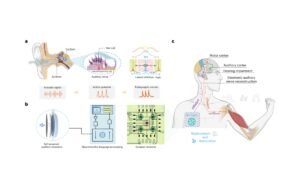 Photo: Courtesy of Xu Wentao
4. Commercial Brain-Computer Interface Implant Enters Clinical Service
China achieved a landmark breakthrough in neurotechnology, with the completion of the world’s first commercial surgery using an invasive brain-computer interface (BCI) device. The coin-sized chip, named “NEO” and developed by Shanghai-based Neuracle Medical Technology, was implanted in a patient at Huashan Hospital who suffered impaired hand mobility following a spinal cord injury. In the newsletter of March 2026, I wrote about the NEO-implant approval by China’s National Medical Products Administration. While the device had already accumulated extensive validation through clinical trials involving more than 36 patients and over 14,000 cumulative safety-implant days, showing clinically meaningful improvements in upper-limb function for over 60 percent of recipients, this procedure marked its debut as a commercially prescribed medical product following its NMPA approval.The NEO device is placed on the brain’s outer surface, capturing stable epidural signals and translating them into hand movements without penetrating brain tissue. The rapid transition from regulatory approval to hospital adoption and inclusion in local health insurance within four months underscores the efficiency of China’s commercial neurotech ecosystem. Following the surgery, the patient showed stable vital signs and successful signal capture, proving the clinical readiness of the device.
This development positions China at the forefront of the global race for neural integration, challenging Elon Musk’s Neuralink. By moving BCI from the laboratory to the commercial market, China is pioneering the practical application of neurotech to treat disabilities. For the world, this signifies the beginning of an era where brain-machine communication is a regulated medical reality, setting a global precedent for integrating advanced neural devices into mainstream healthcare.
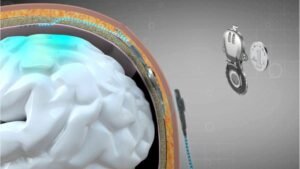 The coin-sized NEO brain chip rests on the brain’s protective outer layer, making it less invasive than implants that pierce brain tissue. Photo: Tsinghua University
5. China identifies 30 key science and technology challenges for future breakthroughs.
The China Association for Science and Technology (CAST) released a strategic list of 30 major scientific and technological challenges, providing a national blueprint for research priorities during the 15th Five-Year Plan (2026–2030). Divided into three distinct categories, 10 frontier scientific questions, 10 engineering challenges, and 10 industrial technology bottlenecks, the initiative covers critical fields such as quantum physics, advanced materials, biotechnology, and clean energy. This domestic “choke points” roadmap aims to guide private and public firms to make them future-ready.This framework reflects China’s strategic shift toward a more security-driven and coordinated innovation model while ensuring higher industrial resilience and self-sufficiency. The list emphasises the deep integration of AI into traditional industries, the development of homegrown solutions for semiconductor manufacturing, and advancements in high-end medical equipment.
For the world, this roadmap offers a clear view into China’s long-term technological ambitions and the areas where it will concentrate its resources and support. It signals a decisive move away from Western-defined technology races like the AI or space race toward a self-defined innovation track. While this coordination strengthens China’s internal self-reliance, it also provides a model for international scientific collaboration to tackle global challenges, such as climate change and advanced medical research. Instead of second-guessing where China will challenge the West, check the roadmap first.
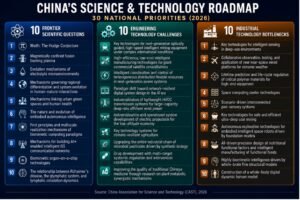 Translated from original post: http://www.chisa.edu.cn/general/202607/t20260715_2111501789.html
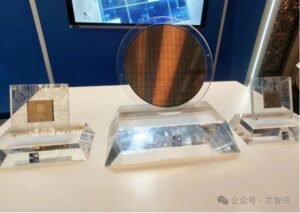
6. China’s First 3D Near-Memory AI Chip (DF1000)
Shanghai-based AI chip startup Dongfang Suanxin unveiled China’s first software-defined 3D near-memory AI chip, formally named DF1000. Designed to overcome the “memory wall” that causes a slowdown by data travelling between separate processors and memory, the DF1000 chip places memory components directly alongside the processing unit and stacks them vertically in a 3D architecture. This structure significantly accelerates data transfer and also lowers power consumption without relying on ultra-advanced semiconductor lithography tools.Led by veteran semiconductor scientist Wei Shaojun, the company built upon two decades of research to develop domestic hardware architectures and software ecosystems. While current chips target AI training, next-generation products have been announced for the end of the year, aiming to match mainstream international performance AI-chip standards while bypassing external supply chain restrictions.
This milestone highlights Shanghai’s Pudong New Area as a surging national hub for semiconductor innovation. By utilising this 3D near-memory architecture, China is demonstrating a parallel innovation track that circumvents EUV lithography bans through advanced packaging and chip design. Shanghai is currently home to more than 1,200 chip companies, roughly 40 per cent of China’s semiconductor talent, and nearly half of the country’s innovation resources in the chip sector.
7. China’s New Single-Electron Chip Breaks the AI Memory Bottleneck
A research team at Fudan University in Shanghai has achieved a semiconductor milestone by developing a memory chip that stores a single bit of data using just one electron at room temperature. Published in Science, the breakthrough involves a 2D flash memory device named “Guiyi”, led by microelectronics professor Zhou Peng. While modern DRAM chips require approximately 200,000 electrons to ensure a “1” or “0” does not fade into noise, the Guiyi chip collapses this to the theoretical floor of one, boosting signal readout from millivolts to a robust 0.5 volts.This stability at room temperature overcomes a long-standing barrier where such quantum behaviour was believed to be possible only at extremely low temperatures. By manipulating individual electrons through the atomic-scale properties of two-dimensional semiconductor materials, they achieved the world’s largest non-volatile quantum memory window. This technology combines high speed and low power consumption with the ability to retain data without a power supply, thus bridging the gap between fast but volatile DRAM and slow but permanent 3D NAND flash.
This breakthrough positions China at the bleeding edge of quantum-level hardware engineering. By enabling large language models to run locally on mobile devices with minimal power, the Guiyi chip could decentralise high-performance AI. For the tech sector, this signals a shift toward 2D materials and subatomic precision, offering a blueprint for ultra-efficient electronics.
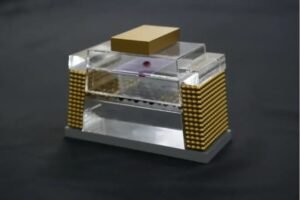 The 2D flash chip photo: Handout
8. China AI updates of July 2026
Another ‘DeepSeek moment’? What China’s Kimi K3 means for the global AI industry
The arrival of Moonshot’s AI KIMI K3 sent shock waves across the global AI industry. The 2.8-trillion-parameter open-weight model performed close to the latest frontier systems from OpenAI and Anthropic, fuelling concerns in Silicon Valley that China had closed its model-development gap with the US to weeks rather than months.Chinese AI agent Qiushi Engine outperforms Anthropic’s Claude Code in autonomous research
Zhejiang University-led Qiushi Engine held the top overall spot on the leaderboard of ResearchClawBench, which tests the ability of AI agents to independently carry out research. Open Science Desktop came in second, and Claude Code came in third.Global AI boom sees China’s chip exports nearly double in first half of year
China’s chip exports were up more than 94 per cent in the first half of 2026, exporting 179.44 billion integrated circuits (ICs) worth a total of US$177.28 billion, as a global AI boom cemented computing hardware’s place as a key economic growth engine.China launches AI framework to improve ‘black box’ transparency and raise standards
New guidelines released by the central government said Beijing would create a common yardstick for AI, allowing models, computing power and data quality to be measured and compared under a unified national standard.Nvidia’s future challenger? Chinese start-up reveals aggressive AI chip road map
Dongfang Suanxin, a Chinese semiconductor start-up, announced that its strategy was built on software-defined computing and 3D-stacked near-memory architecture, which it said could reduce reliance on the advanced manufacturing processes and cutting-edge memory currently restricted by Washington.China to head off AI-fuelled inequality by lifting salaries, narrowing pay gap
China has made income growth and the reform of its wage-distribution system a priority within broader efforts to cushion the domestic job market against the impact of artificial intelligence over the next five years. A new blueprint laid out a detailed road map for the strategy, vowing to promote collective wage bargaining within the private sector, ensure steady wage growth, and tilt pay towards frontline workers.US-China AI war boils down to a contest over electricity (opinion piece)
Soon, AI services will be priced by cost rather than the uniqueness of their model. With electricity the main cost of the services, the AI war between China and the US is turning into a straightforward contest over electricity output and price.ByteDance discovers new scaling law that could sustain AI boom
ByteDance’s Seed AI team revealed that AI agents can double their learning speed every three months by interacting with real-world environments over extended periods. They logged 38,000 hours of environment interaction to evaluate five frontier models.BrainCo unveils mind-to-robot platform at World AI Conference
BrainCo’s Brain-Controlled Robot AI Platform captures brain signals via an EEG headset worn by the user. Their AI-based algorithms then decode the neural signals to identify the user’s intentions, translating them directly into robotic actions.How China’s beauty brands are using AI to turbocharge the industry
Chinese companies are using AI to sift through millions of social media posts for emerging trends, discover new cosmetic ingredients with biotechnology partners, and bring products to market in months, rather than years.How a Chinese model stopped a cyberattack when US guard rails failed (opinion)
A US company found itself under attack by American AI systems. During an internal test, advanced OpenAI models bypassed network restrictions, gained access to the internet and launched autonomous cyberattacks on open-source platform Hugging Face. As engineers rushed to respond, several leading closed-source AI systems reportedly failed to provide meaningful help because their security rules could not distinguish the attacker from the victim. Hugging Face ultimately relied on a locally deployed Chinese open-source model – Zhipu AI’s GLM-5.2 – to analyse the attack, trace abnormal behaviour and support the emergency response.What leaked comments reveal about DeepSeek’s founder Liang Wenfeng
While Anthropic and OpenAI focus primarily on commercial implementation and ecosystem expansion, Liang “does not seek short-term commercial gains but focuses solely on ultimate technological breakthroughs, thereby fostering a unique, long-term, technology-driven corporate culture”. “I prefer the narrative that ‘a group of ordinary people did extraordinary things’ rather than ‘geniuses did extraordinary things’,” he said.Job fears in changing world make AI a hot subject at China’s vocational schools
Tsinghua University study finds that nearly half of China’s vocational schools have rolled out introductory AI courses. Beijing had ordered China’s technical colleges to launch targeted training programmes in cutting-edge sectors like AI to help rural migrant workers, recent university graduates and other jobseekers find employment.The West is debating AI’s future with half the world absent (Allen Huang/Frederik Anseel)
More than 200 leading economists and AI researchers, including 16 Nobel laureates, signed an open letter organised by the Stanford Digital Economy Lab to warn AI may drive an economic transformation “larger than the Industrial Revolution” compressed into a fraction of the time, and that we “must act now” to build the institutions to steer it. While most Chinese researchers would agree, most signatories came from North America, and the rest primarily from Europe. Not one name came from China.China’s Kimi K3 ‘significantly below’ US rivals in hacking power, study shows
Kimi 3, currently considered China’s most powerful large language model, performs “significantly below the most recent frontier cyber-capable models”. Kimi 3 achieved a score of 32.2 per cent, outperforming domestic rival Zhipu AI’s GLM-5.2 at 24.4 per cent but lagging well behind top, unnamed US models that averaged 76.2 per cent.Alibaba says newest Qwen AI model is second only to Anthropic’s Claude Fable 5
Alibaba Group Holding has previewed its next AI model, with 2.4 trillion parameters, Qwen3.8-Max-Preview, which the company says is “second only” to Anthropic’s Claude Fable 5.MiniMax challenges ByteDance with low price, open weights for new H3 model
Chinese AI firm MiniMax has launched H3, its newest multimodal video generation model, pledging to break closed-source “dominance” through open weights and competitive pricing – as rival ByteDance rolls out its latest Seedance 2.5 model.Xiaohongshu (RedNote) achieves significant AI milestone
RedNote recently announced that its dots-note 3.0 model scored a perfect 42 points on this year’s 67th International Mathematical Olympiad, making it the first AI system in IMO history to achieve both a flawless score and a gold-medal-level result.China releases action plan on international AI ethics governance
The action plan on AI ethics governance reinforces China’s ambition to play a leading role in shaping international AI governance through multilateral institutions, ethical standards and capacity building. Beijing is positioning its governance approach within ongoing global discussions on AI regulation.China introduces rules to rein in AI companion bots amid emotional dependency concerns
The rules will encourage companies to shift their focus from maximising user immersion and engagement to developing healthier and more responsible human-AI interaction models.China’s StepFun claims it has unveiled the world’s first AI smartphone
When talking about China’s little “AI Frontier model” dragons, we often mention DeepSeek, Kimi from Moonshot, GLM from z(dot)ai, and Minimax. But let’s not forget Baichuan and StepFun! Tencent-backed StepFun just introduced the StepX Neo. The device runs on Step AOS, an operating system designed specifically for AI agents. StepFun called StepX the world’s first AI terminal brand built natively around large language models. Tencent-backed StepFun introduced the StepX Neo in Shanghai, which it claims to be the world’s first agentic smartphone. Photo: Weibo