

Base of the Russian Business Community and Economist article
[Note: The original article in The Economist is causing quite an uproar in Russia. ]
Transalated from: https://globalaffairs.ru/articles/biznes-i-globalizatsiya-lukyanov/
The publication in The Economist of an article by a major Russian entrepreneur who continues to work in Russia does not oppose himself to the Russian government and is under sanctions for this, is extremely unusual. It is naive to expect that the leading British ideological publication will print such material solely out of love for pluralism of opinions.
Naturally, quite frank reasoning by Andrei Melnichenko about the challenges facing Russia is presented as a sign of a split of the Russian ruling class, evidence of rebellious sentiment among big business. The real logic of the author’s reasoning is not only not interested in, it is even contraindicated for it, because it will destroy the slender picture of the world, and this is unpleasant. And this picture is perhaps the most interesting in the reaction to the article Melnichenko.
The Russian business community was formed in the era of globalization. Not because of the total burning desire to immediately join the ranks of transnational business, but because it was the decline and self-liquidation of the USSR that served as the starting point for the spread of the principles of liberal globalization to the whole planet. And the Russian Federation, where economic transformations were carried out in the fire regime in the conditions of the acute socio-economic crisis, immediately turned out to be an element of the world context. He did not offer any alternatives to the global cosmopolitan economy. It was seen – whether it liked it or not – a manifestation of the notorious “end of history” that crowned the global West to an inexhaustible kingdom, along with his ideas about the proper and its being.

Considering such a statement of the question is extremely evil will or malicious selfishness of the hegemon. Nothing personal, just the winner of the century writing his rules, and in this case they were not even so cannibalistic – globalization gave many opportunities, although metered-dose and distributed rank. But the main beneficiaries, of course, should have remained those who stood at the origins of globalization. Actually, its erosion began when it turned out that dividends could go to others, for example, China. The curtailment of the liberal global system is the result of the actions not of the revisionist countries, but those who designed it and created it, but was unpleasantly surprised by the growing competition.
Analysis of the trajectory of globalization is a separate topic. Be that as it may, the rapid change in the distribution of forces and influence in the world, the increasing dissatisfaction with the inequality, aggravated as a result of global development, military-political imbalances and global turmoil, such as pandemics, have led to the fact that the scheme of the “right” structure of the world economy went in all directions. The “end of history” has been replaced by “historical infinity,” and unipolarity is not just a multipolarity, but a vast multivariance of further scenarios.
What does these arguments have to do with the article by Andrei Melnichenko and its submission in the British magazine? Pretty straight. The crisis of globalization in the West without a great hunt, but admits. And even ready to agree that, probably, there will be no return to the future, the development of the world in the “right” path is not guaranteed, new methods of analysis, approaches, recipes, understanding prospects are needed. However, in terms of Russia, there is a rigid ideological attitude: having turned from the right path, Moscow has moved into the abyss, erased itself from among the states and peoples that have the future. Accordingly, salvation is only to come to his senses, to transform, to repent and return to the previously predetermined rut. And since this will not happen under the current Russian leadership, it should change. Signs of the approximation of this, albeit imaginary, are intensively sought out or generated by simple interpretations.
Meanwhile, reflections on the problems faced by Russia, the uncertainties of the future, are not always spirit-receiving, are now unfolding in a qualitatively different environment and with a different goal-setting.
Moreover, it itself was the object of carpet influence from the West, and its rights and interests in Western countries largely ceased to respect. As a result, the globalized type of activity and consciousness, formed since the end of the last century, is simply no longer possible.
But it’s not just about Russia’s case. As stated above, the system of uncontested globalization itself has failed. And the question facing all the essential economic players, all communities, is how to defend their interests and ensure development in an increasingly fragmented, albeit still closely interconnected space. As before it will not work out, as otherwise – it will still be necessary to find out, because the current world system (very conflict, but integral, integral) in many has no analogues in the past, there is nothing to focus on.
Melnichenko is about that. Large Russian business has ceased to be globalized, if we understand the build-up in a common scheme with a single control center. He lost the illusion of equality with Western players (if such illusions were). It has not ceased to be a comprehensive international, it still does not allow isolation. But the main thing is the reliance on its own national base, its expansion and development – not against the rest of the world, but in favor of finding acceptable forms of coexistence and cooperation to all. And this is a completely new goal compared to the era of liberal globalization, which is over. Then the tasks were different.
It is foolish to say that punitive measures against Russia have not caused damage to it and have not created new problems. But they formed another “core”, a different understanding of the interests of strategic development. And after the phase of an acute military confrontation, the next stage will come – no less, but rather more important. National construction, corresponding to the realities of the future world, which promises to be completely different than everything we are accustomed to. The experience of 1990s-2020s will be useful for understanding, perhaps, will help to avoid repeating some mistakes (unfortunately, not a fact), but it is unlikely to be necessary from the point of view of practical application.
This applies not only to Russia, this approach is now characteristic of almost everyone. Only everyone has different potential. Russia has a huge one, but it will have to be revealed differently. What Melnichenko writes about. And this is not a matter of tactics, but a strategy that has yet to be developed.
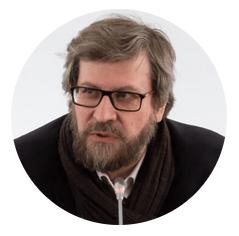
Author: Fyodor Lukyanov, editor-in-chief of the magazine “Russia in Global Politics”.