

The Ankara Summit: NATO’s Strategy is No Longer Victory But Attrition
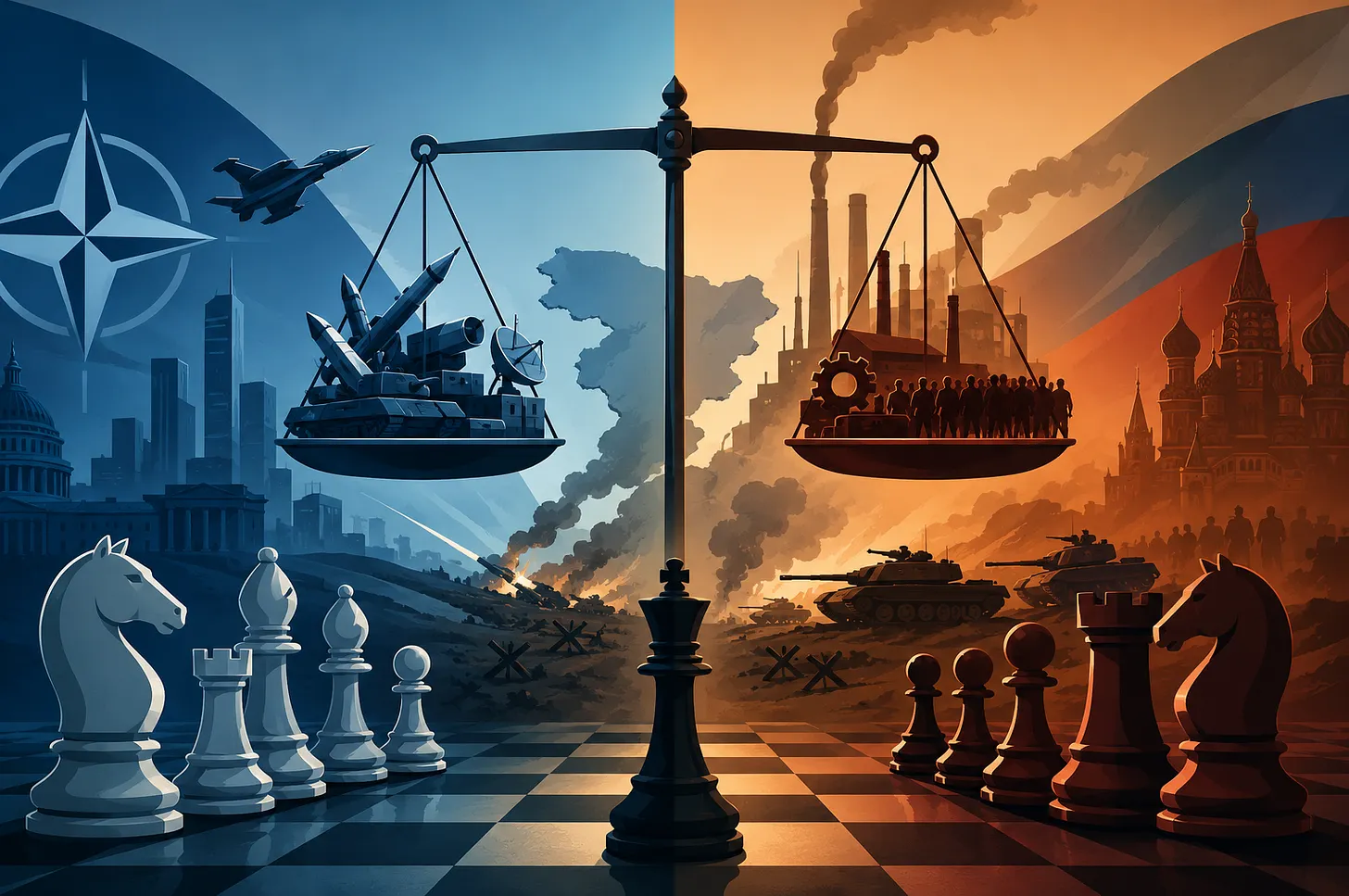
The Ankara summit institutionalized a strategy of endurance rather than one of resolution. If history has taught anything, betting on exhausting Russia has rarely ended well for its adversaries.
The recently concluded NATO summit in Ankara was presented as another demonstration of alliance unity. Leaders reaffirmed their unwavering support for Ukraine, pledged €70 billion in military assistance through 2027, expanded defense-industrial cooperation, endorsed new drone production agreements and announced plans to help Ukraine develop the capacity to manufacture Patriot missile systems. The imagery of US President Donald Trump and Ukrainian President Volodymyr Zelensky standing together reinforced the message that the West remains committed to Kiev for as long as necessary.
Yet beneath the carefully choreographed declarations lay a more revealing reality. The summit produced no new diplomatic initiative, no political framework for ending the conflict and no serious discussion of what an eventual settlement might look like. Instead, Ankara institutionalized a strategy of endurance rather than one of resolution. If history has taught anything, it is that betting on exhausting Russia has rarely ended well for its adversaries.
The summit therefore raises a fundamental question. Has NATO abandoned the search for a political solution altogether? For several years, the alliance’s policies have increasingly suggested that its objective is not to negotiate an end to the war, but to prolong it, thereby buying time for Europe’s rearmament while seeking to impose maximum military, economic and political costs on Russia through sanctions, long-range drone and missile strikes and continued battlefield attrition. The underlying assumption appears to be that time will gradually weaken Moscow while strengthening NATO. Whether that assumption withstands strategic scrutiny is the central question this essay seeks to answer.
Ankara Institutionalizes a Long War
The clearest message to emerge from Ankara was not one of victory but of long-term commitment. The pledge to sustain at least equivalent levels of military assistance through 2027 signals that NATO increasingly views the conflict as a prolonged contest requiring years rather than months.
The emphasis on expanding Ukraine’s domestic defense industry points in the same direction. Trump’s announcement that Ukraine would eventually receive the capability to produce Patriot missile systems was politically symbolic, but its practical significance is far less obvious. Patriot production requires sophisticated industrial facilities that would almost certainly become priority targets for Russian ballistic missiles and long-range drone strikes.
A far more plausible outcome is that production will remain in Europe, with missiles or major components transferred into Ukraine much as European partners already support drone manufacturing today. The announcement therefore signals a long-term commitment to continue waging the proxy war more than an immediate transformation of Ukraine’s industrial capacity.
The Missing Political Strategy
Every NATO summit since the conflict began has announced additional weapons, funding and security commitments. What none has articulated is a realistic political end state.
Unlike NATO, Russia has consistently framed the war in terms of concrete political objectives, specifically preventing further NATO expansion into Ukraine, demilitarization and securing what it regards as its core security interests. Whether one accepts these objectives is beside the point. They provide Moscow with a clearly defined political framework against which military operations can be assessed.
The omission from NATO summits is striking because military strategy derives its coherence from the political objective it is intended to achieve. If the objective remains the restoration of Ukraine’s internationally recognized borders, the battlefield offers little evidence that this is becoming more attainable.
If the objective is Russian capitulation – a goal that several European leaders have at times implied or articulated in various forms – it rests on an assumption that is detached from both history and ground realities. The result is an increasingly open-ended strategy whose costs continue to mount even as the political objectives it seeks become progressively less attainable.
Buying Time for Rearmament
Viewed through this lens, NATO appears less concerned with ending the war than with using time as a strategic resource. Across the continent, governments are increasing defense budgets, expanding industrial capacity and rebuilding armed forces after decades of post-Cold War reductions. These efforts require years to bear fruit.
Ukraine increasingly serves as NATO’s strategic bulwark on Russia’s border while Europe rebuilds the military capabilities that decades of post-Cold War underinvestment allowed to atrophy. Buying time is only strategically valuable if it materially improves one’s political position. What evidence suggests that another three years of war will produce a fundamentally different political outcome than the previous four? The Ankara summit offered no explanation for that.
Can Attrition Actually Work?
The central assumption underpinning NATO’s strategy appears to be that time favors the West. Yet this raises a more fundamental question: what if prolonging the war is not weakening Russia, but instead transforming the conflict into precisely the kind of war in which Russia has historically been at its strongest?
For more than three decades, Western military doctrine has emphasized technological superiority, precision-guided weapons, rapid maneuver and decisive campaigns. Russian military thought evolved along a different path. Shaped by the experience of the Second World War, it has long viewed time, space, industrial mobilization, operational depth and attrition not as signs of strategic failure, but as instruments of victory. Major wars between industrial powers are ultimately decided by which side can better replace losses, sustain production, withstand attacks and steadily erode the enemy’s capacity to fight.
One of the great ironies of the Ukraine conflict is that NATO increasingly finds itself fighting the war Russia wants rather than the one the West spent three decades preparing for. Expectations that precision weapons and technological superiority would deliver decisive breakthroughs have instead given way to a grinding contest of artillery, drones, industrial production, logistics and manpower. Ukraine has become a hybrid form of warfare that combines twenty-first-century network-centric technologies with a twentieth-century industrial war of attrition. While drones, satellite intelligence and digital networks have transformed the tactical battlefield, the strategic logic of the conflict has resembled the Soviet conception of large-scale conventional warfare.
This also explains why each side measures success differently. Western analysis often focuses on territorial gains. Russian operational thinking has traditionally prioritized the systematic destruction of the enemy’s combat power. Territory can be regained. Experienced soldiers, trained officers and scarce equipment are far harder to replace. From this perspective, degrading Ukraine’s military faster than NATO can regenerate it matters more than the pace of territorial advances.
If NATO’s strategy is to prolong the conflict in the expectation that Russia will eventually exhaust itself, Ankara raises an uncomfortable possibility. Rather than forcing Moscow onto unfamiliar terrain, the alliance is encouraging precisely the form of warfare in which Russia has historically demonstrated its greatest resilience. The longer the war continues, the less it resembles the conflicts that shaped modern Western military thinking and the more it resembles those that shaped Russian military doctrine.
The Strategic Paradox
The Ankara summit exposes a profound strategic paradox. NATO remains the most powerful military alliance in the world today. Its combined economic output, technological base and defense spending far exceed those of Russia. Yet that overwhelming military potential has not translated into decisive political leverage because the alliance remains constrained by the one step it is unwilling to take: direct war with another nuclear power, not to mention that even conventionally, NATO is significantly under-prepared to fight the scale and intensity of the campaign that Russia is waging in Ukraine.
This, in turn, raises a more fundamental question. Carl von Clausewitz argued that war is an instrument of policy, not an end in itself. Military operations derive their meaning from the political objectives they are intended to achieve. Yet the Ankara summit devoted enormous attention to sustaining the war while offering remarkably little explanation of how doing so advances the political outcome NATO ultimately seeks.
That omission matters because strategy cannot be judged solely by the resources committed to it, but by whether those resources move the political objective closer to realization. After years of war, Russia has adapted to sanctions, expanded defense production and re-oriented much of its economy toward Asia. Furthermore, the Russian Armed Forces have accumulated an unprecedented volume of large-scale conventional combat experience, knowledge that is now being incorporated into training, doctrine and the development of the next generation of officers.
If the alliance’s underlying assumption remains that a longer war will eventually compel Moscow to accept strategic defeat, the evidence points in the opposite direction. Time alone does not guarantee a more favorable political outcome. It merely extends the conflict unless it materially changes the strategic balance.
The real significance of Ankara lies not in the €70 billion it pledged, but in what it implicitly acknowledged. NATO has institutionalized a long war without explaining how that war ends. Until it can answer that question, additional funding, more sophisticated weapons and deeper industrial cooperation may prolong the conflict, but they cannot substitute for strategy.