

The Return of the Conquistadors: A New US-Zionist Colonial Front Reshaping Latin America
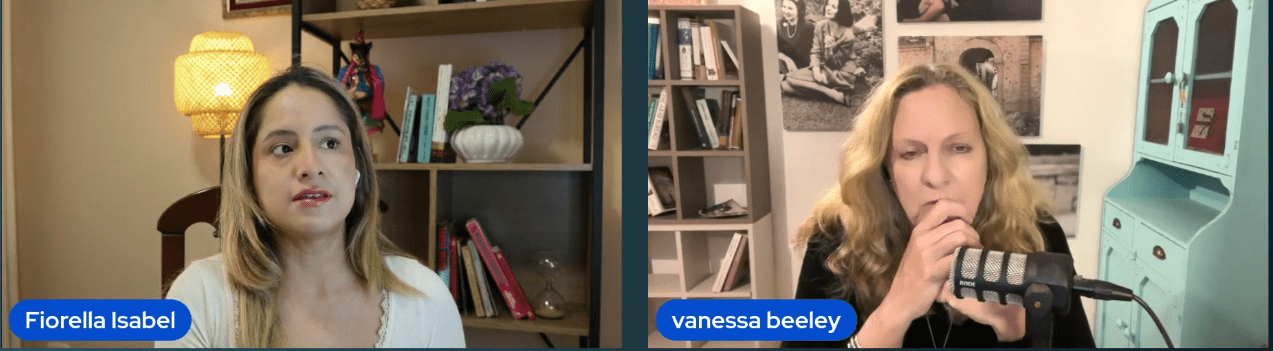
As Peru faces a battle between the far-right and the rural left, Zionism creeps into the Andes & indigenous Bolivia fights for its lithium & sovereignty against Washington’s multinational interests.
[Note: We’ve been speaking about this for approximately two years. It is not a secret any longer. From the Isaac Accord through to Hondurasgate and Shield of the Americas, right through to BRICS. Latin America and the Caribbean must start working their way out of being the so-called Empire’s hemisphere.]
Fiorella Isabel
and
vanessa beeley
Global attention remains fixated on West Asia, but a quieter and increasingly consequential transformation is underway across Latin America. From the Sacred Valley of Peru to the lithium-rich highlands of Bolivia, a coordinated expansion involving Israeli settlers, U.S.-backed political forces, and multinational corporations is reshaping the region’s political and economic landscape—for the worse. This development serves as a continuation of the broader Zionist expansionist project seen in Africa and the Middle East, but is being met with growing resistance from indigenous communities who recognize the patterns all too well.
In Peru, the impending June 7th runoff election has crystallized into a stark ideological confrontation. Leftist indigenous rights advocate Roberto Sánchez Palomino, who has been vocal in his support for Palestine and his commitment to freeing ousted president Pedro Castillo, is running neck-and-neck against Keiko Fujimori, the U.S.-backed daughter of the former dictator Alberto Fujimori. The election represents more than a routine transfer of power; it is a battle between a government rooted in indigenous heritage, sovereignty and rural collectivism versus one aligned with big business, multinational corporations, and the right-wing Zionist mindset that has increasingly found purchase in Washington and Jerusalem.
Beyond the electoral arena, the influx of Zionist tourists and their renewed interest in land purchasing and business operations is alarming local communities. In the Cusco-Pisac region, where a Palestinian diaspora has long coexisted with Quechua and Aymara peoples, there has been a marked influx of Israeli nationals over the past two years. Initially drawn by the Hummus trail, spiritual tourism and plant medicine ceremonies, these visitors are now buying land, establishing businesses, and, according to residents, behaving with an entitlement that has disrupted the local economy and priced out indigenous families. The Chabad Lubavitch presence in Pisac, established in 2006, has grown significantly, with hundreds of Israelis recently gathering in Cusco. Locals who have historically relied on tourism now find themselves confronting what they describe as a permanent, exploitative takeover rather than a transient economic boon-and they are not happy about it, hence the comments and videos on social media.

Bolivia presents an even more volatile picture and a clear targeting of the resistance-minded indigenous community. President Rodrigo Paz Pereira, a Spanish-born leader whom protesters consider illegitimate, faces a nationwide uprising against his economic and social policies—one led primarily by indigenous communities and workers in the mining sector. The demonstrators are demanding his resignation while rejecting multinational control over the country’s vast lithium reserves. Leaked documents from the Bolivian police, published by journalist Ollie Vargas, reportedly expose a joint operation between the U.S. military, DEA and elements of the Bolivian military and police to kidnap and kill former president Evo Morales. Argentina’s Javier Milei, a self-described Zionist ally, has reportedly offered tear gas and air defense systems to suppress the protests, while the United States and Israel have issued nearly identical statements condemning the violence against the government and blaming the protesters for the crisis.

The ideological threads connecting these disparate events are becoming impossible to ignore. The Isaac Accords, pushed by the Zionist lobby in coordination with Netanyahu, explicitly aim to bring Israel into Latin America. Argentina has already seen significant land sales and immigration of Zionists. Meanwhile, the Shield of the Americas initiative, promoted by the Trump administration and Marco Rubio, treats the hemisphere as an extension of U.S. dominion. When Washington and Jerusalem issue synchronized statements on Bolivia’s internal affairs—affairs they have zero business opining on—the distinction between the two powers effectively dissolves into a morphed blob.
Colombia’s upcoming first-round election on May 31st adds another layer of urgency. Ivan Cepeda, a protege of Gustavo Petro and candidate aligned with his leftist views, who is explicitly pro-Palestinian and anti-intervention—is leading. But he is closely followed by far-right Zionist candidate Abelardo de la Espriella, who has pledged to move Israel’s embassy to Jerusalem, while a third candidate, Paloma Valencia who serves as caucus chair for the Israel Allies Foundation in the Colombian Senate, further consolidates the pro-Israel bloc. Colombia, once a NATO partner, represents a critical battleground in the struggle for the Amazon and Andean resources, including water, copper, and lithium.
Despite the gravity of these developments, a parallel debate has emerged among Western commentators regarding Venezuela’s response and handling of the country, post the kidnapping of President Nicolás Maduro. Critics have been quick to label officials like Delcy Rodríguez as traitors and to pronounce Chavismo dead. However, such judgments, often issued from the comfort of air-conditioned homes in the United States and Europe, far away from the sanctions and bombs these countries export, fail to account for the impossible circumstances Venezuela faces: a U.S. air campaign it cannot realistically defend against, credible death threats against its leadership, and an urgent priority to secure Maduro’s survival and eventual release.
To put it bluntly, demanding that Venezuelans sacrifice themselves in a futile military confrontation while doing nothing to halt weapons manufacturing or the war machine in one’s own country is not solidarity—it is armchair imperialism.
The broader lesson, according to observers on the ground, is that resistance takes many forms, and it is not the role of Western activists to dictate strategy to those who bear the actual cost of fighting back, exactly how to fight or resist. Bolivia’s indigenous communities, who have mobilized thousands without weapons, offer a model of sustained civil resistance. Hezbollah, dismissed as weakened after the fall of Syria and the assassination of Sayyed Hassan Nasrallah, has since proven its resilience destroying many Israeli weapons and foiling their plants. The path forward lies not in condemning the besieged for their imperfect choices, but in dismantling the weapons infrastructure and political lobbying that enable Zionist expansion in the first place.
Beyond that the awaited discussion between Putin and Xi, coming out of Trump’s visit to Beijing is being analyzed in a very superficial manner, offering little else but cheerleading and wishful thinking. Trump and China also appear to consider themselves equal powers in economic exchange—clear in the fact that a pose of billionaires went to make deals and study the competition for tech and AI. Russia appears to maintain an uneven relationship with the United States, which has been giving them the run around regarding sanctions lifting. And despite much fanfare, China who considers it a strategic partner, benefits are more than Moscow.
An excellent overview Amarynth. So it looks like what some call Pax Judica is going for the great global brass ring. They have to strive for the” “one ring that binds them all.” They cannot help themselves. Lock the whole world inside one big alchemical vice. Well maybe such a… Read more »
it seems inevitable the indigenous populations from peru, boliva, west asia are @ the centre of this war. they are the indomitable, unadulterated seeds, impervious to monsanto & cargill, moderna’s gain of function: possessing an innate sense of good vs evil, truth from lies, born by an unassailable love of… Read more »